Folding Container Houses: Setup in 30 Minutes, No Crane Needed
Introduction: The Revolution of Folding Container Technology
The construction industry faces a persistent challenge: how to deliver quality housing quickly and affordably to any location. Traditional building methods demand heavy equipment, skilled labor teams, and months of on-site work.
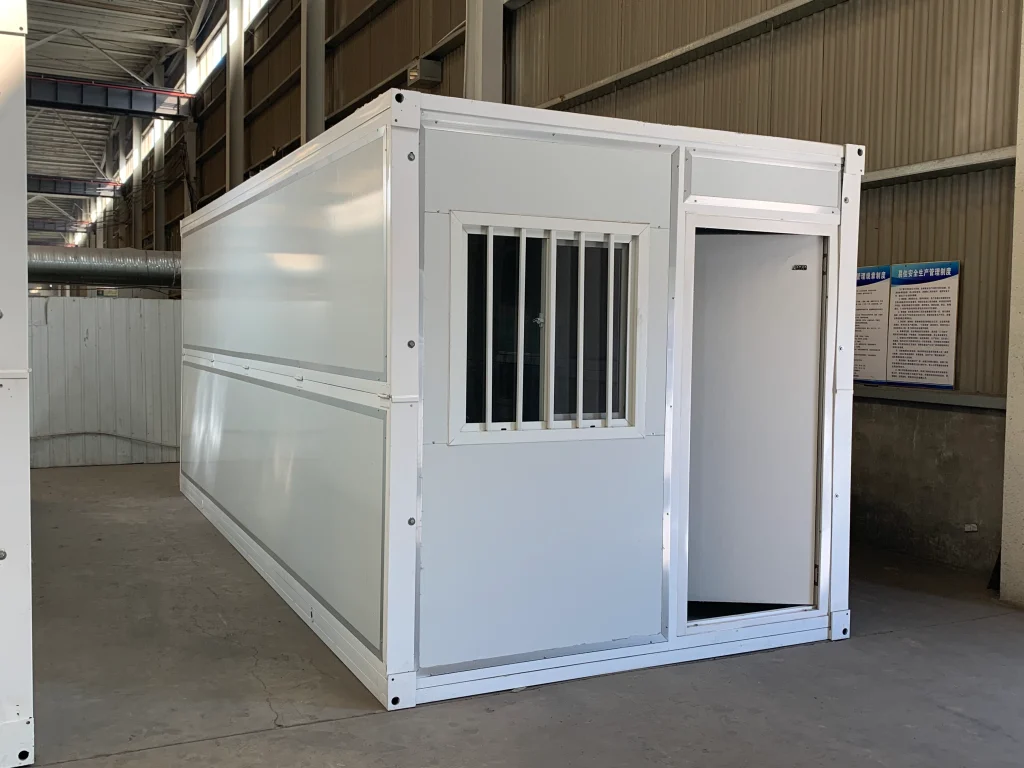
The folding container house eliminates these barriers entirely. This innovative structure arrives flat-packed on a standard truck and transforms into a fully functional living space in under 30 minutes — without a crane. As global demand for rapid-deployment housing accelerates in 2025, this technology reshapes how developers, governments, and businesses think about portable structures.
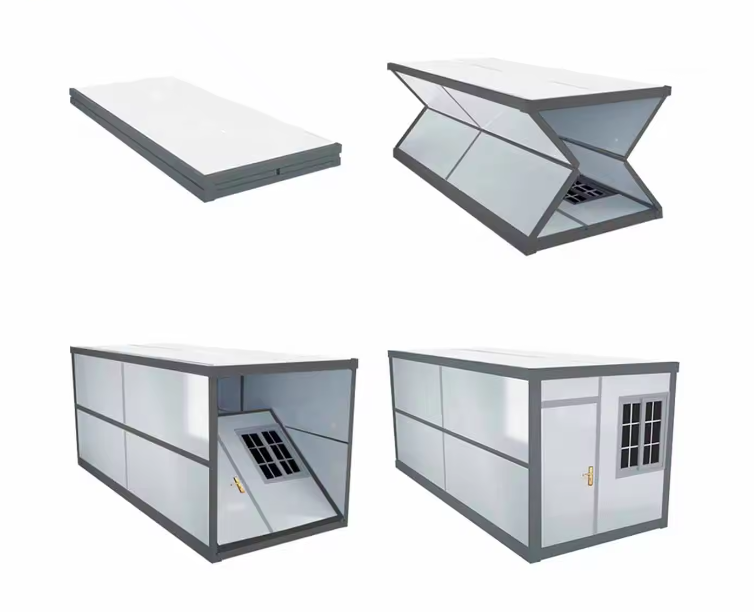
Step-by-Step: How a Folding House Unfolds in Under 30 Minutes
The setup process for a foldable container home is remarkably simple. Here is how it works:
Delivery— A standard flatbed truck transports the folded unit to the site. One truck can carry 4 to 6 folded units, dramatically reducing shipping costs.
Positioning— Workers place the folded structure on a level surface or basic foundation.
Unfolding— Two to three people manually unfold the walls and roof panels using a built-in hydraulic system. The entire unfolding process takes approximately 10 to 15 minutes.
Locking— The crew secures structural connections and locks all panels into place.
Finishing— Workers connect electrical lines and plumbing hookups. The space reaches move-in condition within 30 minutes total.
No specialized training or engineering background is required. Any small team can handle the entire process confidently after brief instruction.
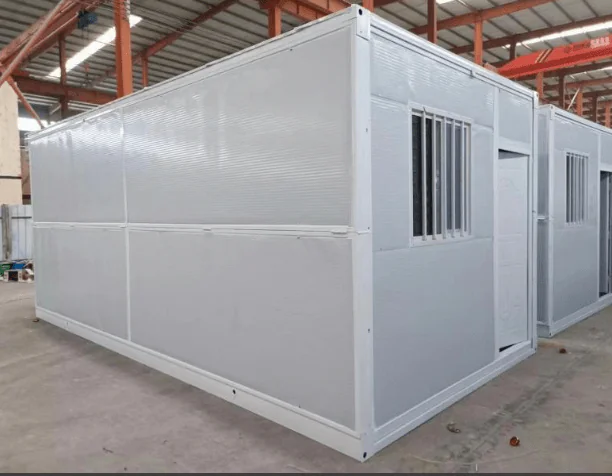
Folding House for Government Projects
No Heavy Machinery Required: Reduced Logistics Costs
Traditional modular units demand expensive crane rentals, oversized transport vehicles, and large setup crews. A single folding container house eliminates all of these requirements.
The flat-packed design reduces shipping volume by up to 80% compared to standard container homes. Project managers save thousands of dollars per unit on transportation alone. Remote locations, disaster zones, and developing regions — places where crane access is limited or impossible — benefit the most from this advantage.
This logistical efficiency makes the foldable container home the top choice for rapid large-scale deployments.
Structural Integrity and Weather Resistance
Despite its lightweight and foldable design, this structure delivers serious durability. Manufacturers build each unit with galvanized steel frames, reinforced wall panels, and weather-sealed joints. A quality folding container house withstands wind speeds up to 120 km/h, heavy rain, and extreme temperatures ranging from -30°C to 50°C.
The insulated wall and roof panels maintain comfortable interior temperatures year-round while resisting moisture, corrosion, and UV damage. These structures meet international building safety standards and perform reliably across diverse climate zones.
folding_houses
Comparing Folding House Price vs. Traditional Modular Units
Cost efficiency sets folding container houses apart from every competitor. Here is a direct comparison:
Factor
Folding Container House
Traditional Modular Unit
Unit cost
$3,000 – $8,000
$15,000 – $40,000
Shipping (per unit)
$500 – $1,500
$3,000 – $7,000
Setup labor
2–3 workers
5–10 workers + crane
Setup time
30 minutes
1–3 days
The folding house price typically runs 50% to 70% lower than traditional modular options when factoring in total deployment costs. Investors and project planners achieve significantly better returns per dollar spent.
Applications: Disaster Relief, Military Camps, Pop-up Retail
The versatility of foldable container homes supports a wide range of applications:
Disaster relief— Emergency agencies deploy hundreds of units within days to shelter displaced families
Military camps— Armed forces set up temporary barracks in remote areas without infrastructure support
Pop-up retail and events— Businesses create temporary storefronts, cafes, and exhibition spaces quickly
Construction site offices— Project teams establish comfortable on-site workspaces in minutes
Remote worker housing— Mining and energy companies house employees at isolated project locations
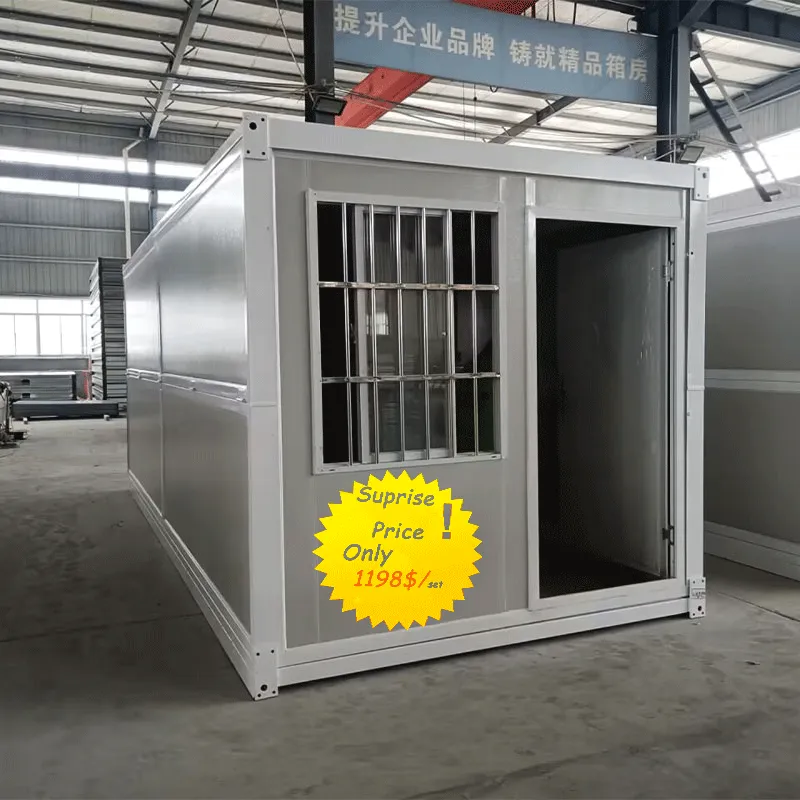
Real-World Deployment Examples
Government agencies in Southeast Asia deployed over 500 folding container units following a major typhoon in 2024. Teams set up an entire relief village in just 3 days. In the Middle East, a construction firm ordered 200 units for worker housing and completed full installation within one week — at a folding house price 60% below the original modular housing budget.
Maintenance and Lifespan Expectations
A well-maintained folding container house lasts 15 to 20 years under normal conditions. Owners should inspect steel joints and seals annually, repaint exterior surfaces every 3 to 5 years, and check roofing panels after severe weather events. These minimal maintenance tasks keep total ownership costs exceptionally low throughout the structure’s lifespan.
Conclusion: The Ultimate Plug-and-Play Housing Solution
The folding container house represents the most practical, cost-effective portable housing solution available today. It deploys in minutes, ships at a fraction of standard costs, and delivers reliable structural performance across any environment. Whether you need emergency shelters, workforce housing, or commercial pop-up spaces, the unbeatable folding house price and effortless setup process make this technology the smartest choice for 2025 and beyond.