Decentralization as the Answer to the Crisis: What Will a World Without Corporations and Governments Bring?
The world is changing rapidly, and we are on the brink of an era that could completely alter our perception of reality. In 2026, the future we’ve only dreamed of is becoming more and more real: decentralization. Blockchain technology, cryptocurrencies, and the concepts of Web3 promise to radically transform societal structures, the economy, and even politics. How? Let's dive in.

What is Decentralization and Why is it Important?
Decentralization is the process of distributing power, resources, and control from centralized authorities and organizations to independent participants in the system. Imagine a world where a few large companies or governments controlling data and making key decisions are replaced by a system in which every participant can be both a user and an owner.
For most of us, the world we live in resembles a pyramid: at the top are enormous corporations, banks, and governments, controlling resources and determining how we live. However, such a system is far from perfect: it leads to the concentration of power and resources, creating massive inequality and dependency on these "rulers." Decentralization breaks these traditional structures.
By 2026, we may witness the beginning of a global transformation: if blockchain and Web3 technologies continue to develop, the world will become more transparent, just, and democratic.
The Concept of Web3: Freedom and Privacy
Starting in 2026, we will see the Web3 concept, which makes the internet more decentralized, begin to take hold in more and more areas of our lives. In Web3, users control their data themselves, not corporations like Google, Facebook, or Amazon. We will no longer "sell" our data to companies in exchange for internet access. All data will be encrypted, and access to it will be granted only to the owner.
Example: You enter an online store to buy wine. Instead of revealing your personal information, the Web3 system uses Zero-Knowledge Proofs technology. This means the store will only know that you are over 18, but will not know your name, date of birth, or address. The idea is to keep you anonymous while confirming your identity only when necessary.
According to a Deloitte study, 74% of users in 2026 will be ready to use cryptocurrencies and digital wallets to simplify online transactions, while 67% will want to control their data independently, without third-party interference.
Smart Contracts and Decentralized Organizations
Today, companies are typically run centrally: there is a CEO, shareholders, and various departments. In 2026, everything could change. Traditional corporations will be replaced by DAOs — Decentralized Autonomous Organizations, which have no central leadership. This fundamentally new type of company makes decisions using blockchain technology and smart contracts. These contracts are automatically executed once the terms of the deal are met.
This will lead to the complete disappearance of traditional management systems, which are often based on individuals with personal interests and corruption. In the DAO world, everything will be transparent and automated. Example: if you work on such a project, your work will be evaluated by algorithms. Once your work is accepted, a smart contract will automatically transfer money to you. Everything will be done without delays and intermediaries.
Research shows that by 2026, 45% of jobs will exist within decentralized organizations, and 63% of companies plan to switch to such models in the next 5 years.
Financial Technology: How DeFi Will Change the World
Decentralization isn't just about organizational structures. In 2026, we will witness a true revolution in the financial sector. Traditional banks, which control the flow of money and loans, will give way to DeFi (Decentralized Finance). In DeFi, smart contracts will replace traditional banks and financial institutions. Loans will be provided based on blockchain technology, and the process will take just a few seconds, without intermediaries.
Example: To get a loan, you will no longer need to go to the bank and gather piles of documents. Instead, you will simply lock your digital asset in a smart contract, and the system will automatically provide you with the required amount in stablecoins. This all happens quickly, securely, and transparently. The traditional banking system, as we know it, will disappear.
Direct Democracy and Political Participation
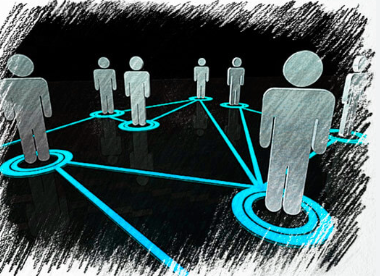
Decentralization will not only change the economy but also politics. In 2026, blockchain will allow each of us to directly influence political processes. If in the past we cast our votes in elections and could do nothing to change the situation afterward, in the future the system will become more flexible. Direct voting through blockchain will ensure transparency and speed, and you will be able to retract your vote if the elected representative breaks their promises. This idea of direct democracy, which you could observe in ancient times, becomes a reality in 2026.
Issues like the management of public funds, taxes, and expenditures will be decided via smart contracts, and every citizen will have the opportunity to participate directly in these processes.
The Benefits of Decentralization for Society
- Freedom and Independence: Everyone will become their own master, controlling their data, money, and reputation.
- Transparency: All decisions will be made based on algorithms, not human intervention, which eliminates the possibility of corruption.
- New Work Opportunities: DAOs and Web3 will open up new horizons for people: you will be able to work on global projects regardless of where you are.
- Gradual Elimination of the Middle Class: The emergence of DAOs and decentralized finance will allow people to become co-owners of projects, rather than just hired workers.
Risks and Challenges
- Personal Responsibility: In the decentralized world, you will need to independently ensure the security of your data and finances. Losing the password to your crypto wallet or digital identity could lead to catastrophic consequences.
- Lack of Censorship: The network will contain much content that we are currently used to removing. The network will be open to all: from brilliant ideas to undesirable material.
- Lack of Legal Protection: In a decentralized world, each person is responsible for their actions.
Conclusion: Reality or Utopia?
Decentralization promises to be one of the most exciting technologies of the future, and 2026 may become a pivotal year. However, it is important to understand that implementing such changes will take time, mass societal consolidation, and the rejection of traditional structures. Many large corporations and governments are unlikely to want to lose their power. But there are also other forces, tech enthusiasts, who continue to work on realizing this future. Whether it will be as we imagine it will only be revealed by time.
And while we can only speculate about the future for now, one thing is clear — decentralization has already started its journey. And 2026 will be its crucial milestone.