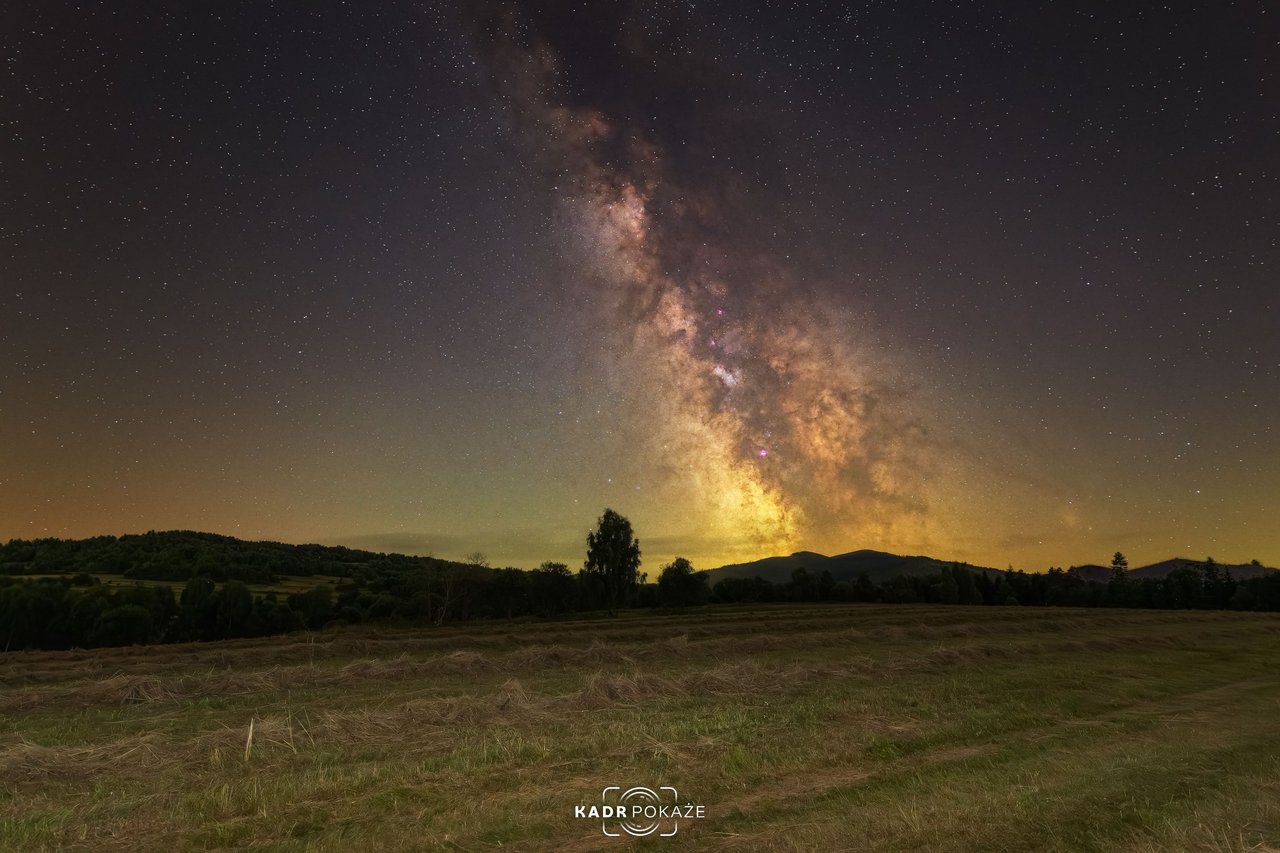
Stacked Milky Way Galaxy Photo
One warm July night, I went on a night photography trip. The goal of the trip was to photograph the Milky Way. I discovered a wealth of new and interesting information and tips on how to maximize the quality of Milky Way photos. How to take and process photos so that the details of our galaxy are clear, the stars aren't blurry, and the amount of noise is minimal. This is where stacking multiple exposures comes in handy.
This method involves taking a dozen or even dozens of photos. Unfortunately, when photographing night sky objects, we can't afford to extend the exposure time too much. This causes the stars to blur, appearing "elongated" rather than pinpoint (only in the star trail method is this acceptable, or even desirable). Because of this, we need to increase the ISO sensitivity, but this unfortunately increases the amount of noise. Stacking solves this very problem. By taking a large number of identical photos and then combining them (there are special programs that do all the combining for us), noise is reduced to a minimum. Such photos also have a wider dynamic range and allow for significantly more detail than from a single exposure.