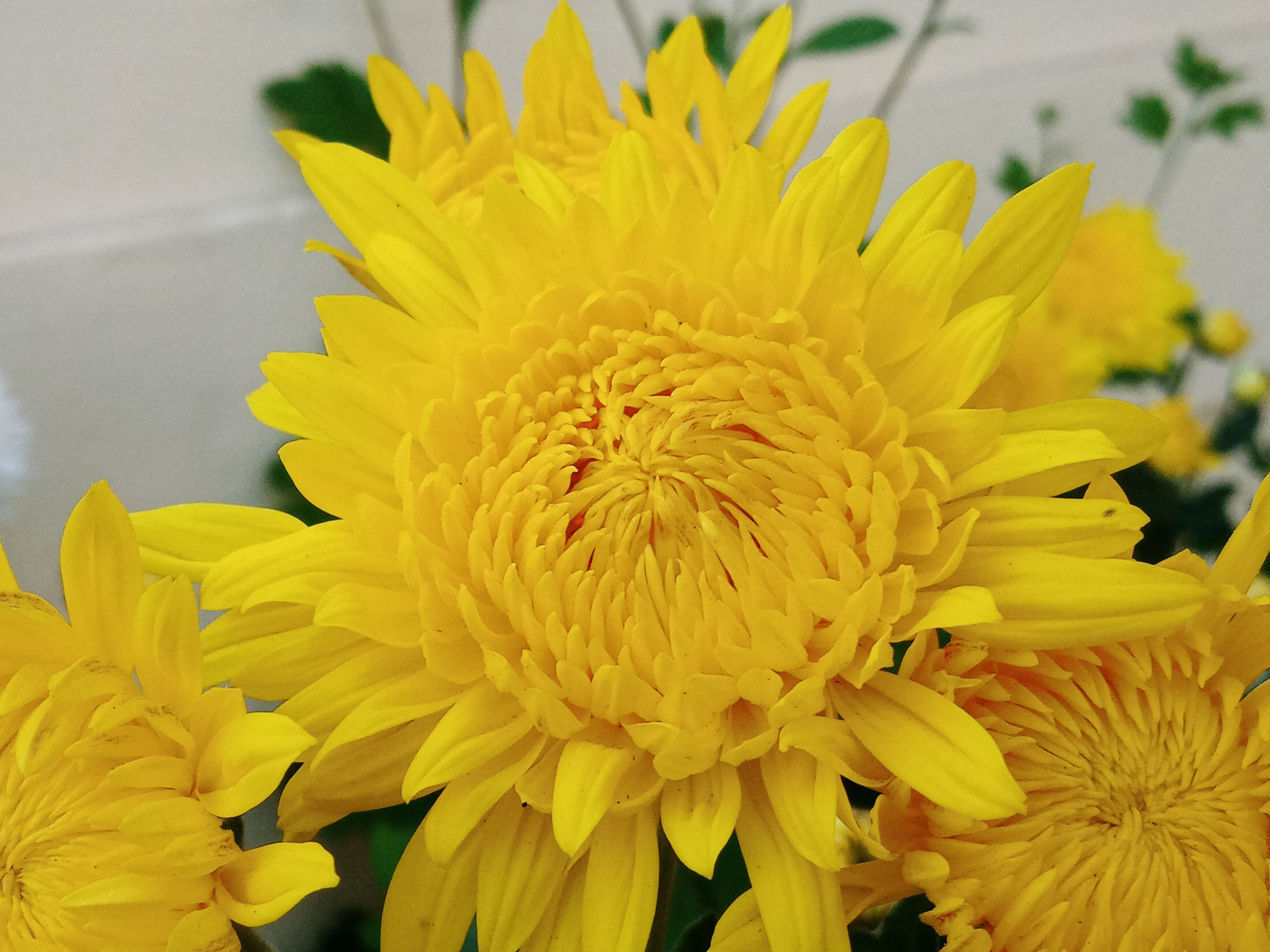
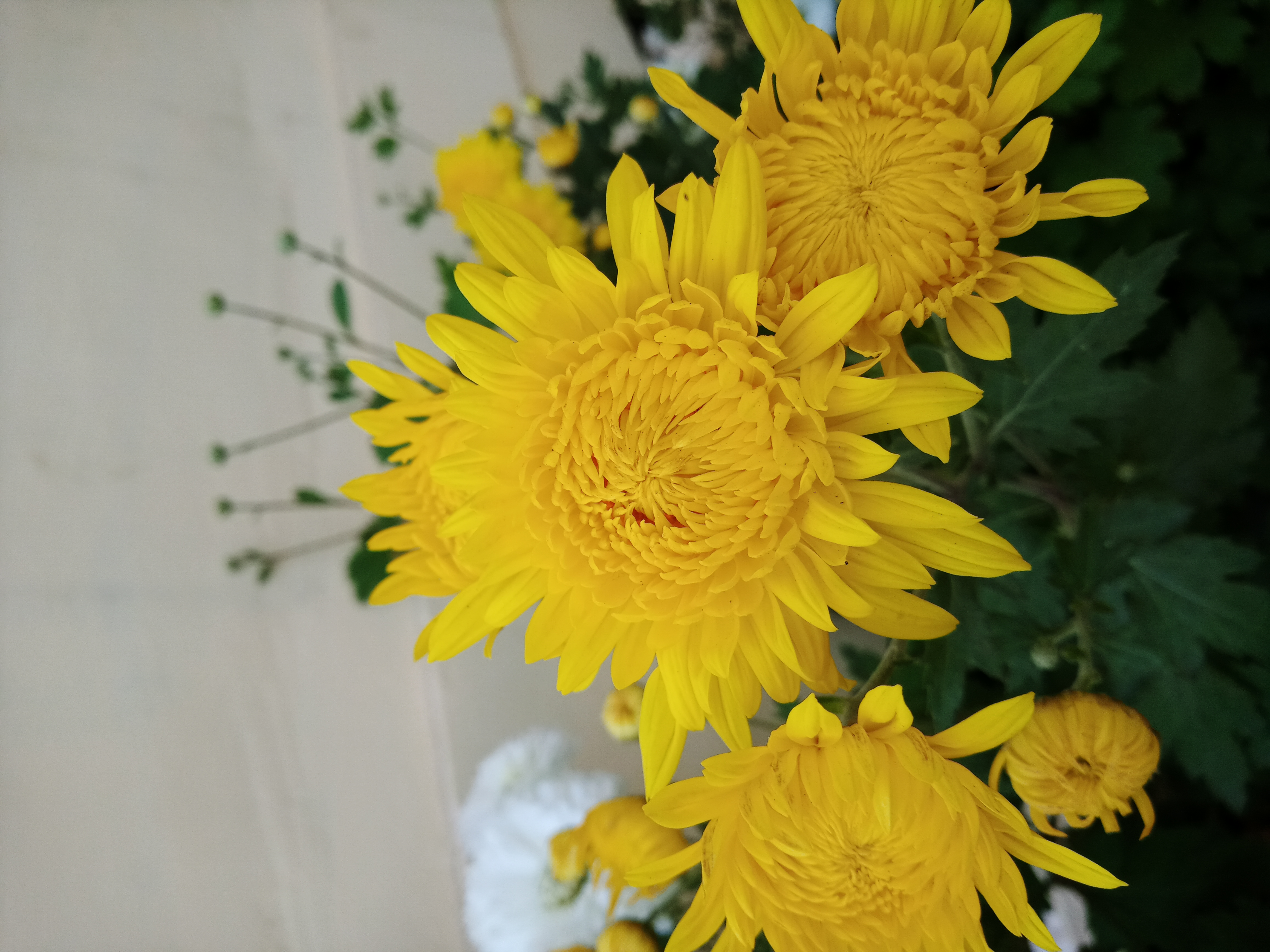
The chrysanthemum is primarily a winter flower.
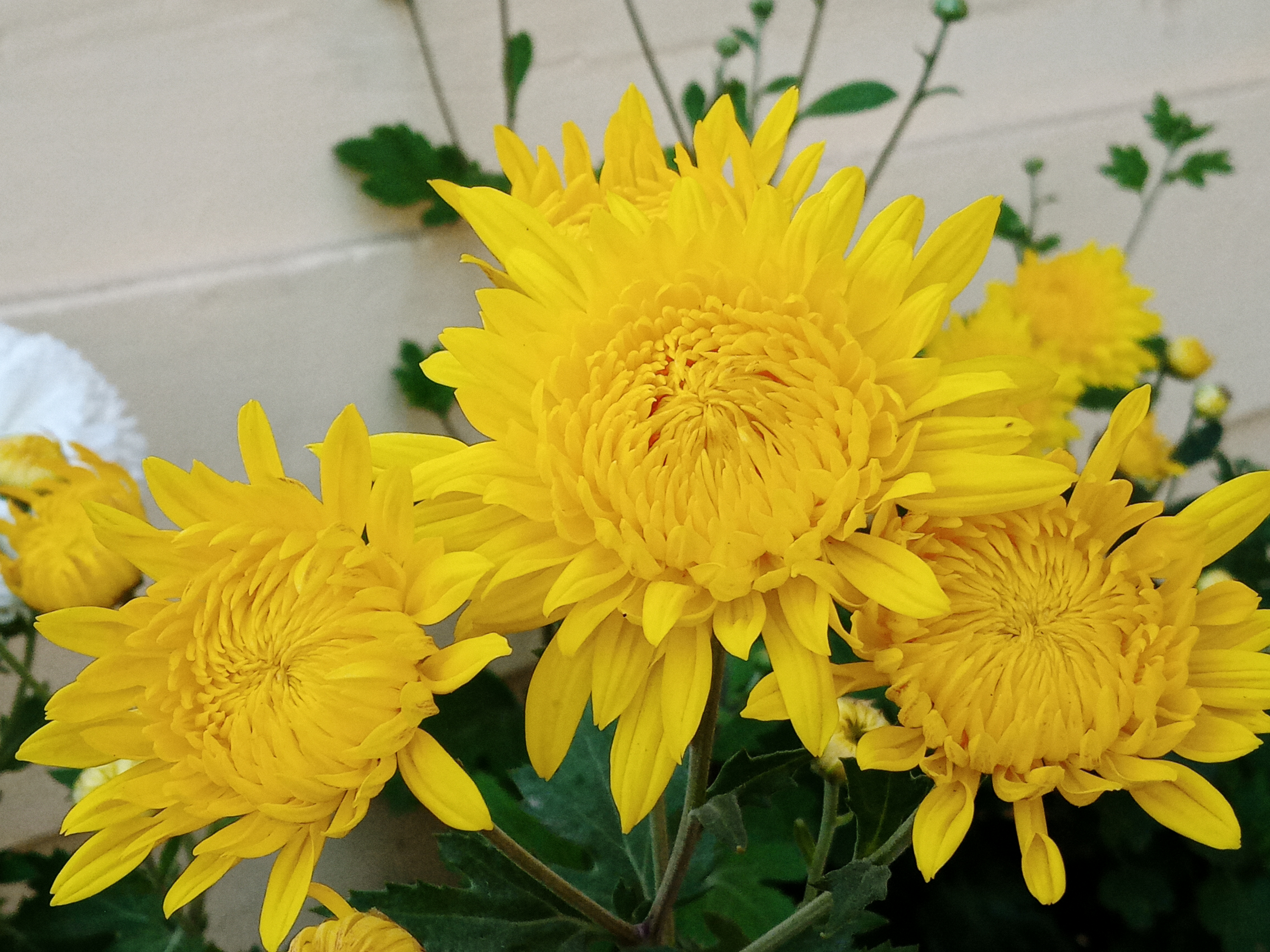
In India, this plant blooms profusely between November and February. This flower is renowned for its stunning array of colorful varieties:
Primary Colors:** Yellow, white, pink, red, purple, and maroon.
Special Feature:** Nowadays, thanks to hybrid techniques, one can even observe a blend of two or more colors within a single flower.
Cultural and Medicinal Significance
The significance of the chrysanthemum is not limited merely to its beauty; it offers numerous other benefits as well:
In India, chrysanthemum flowers and garlands are extensively used during festivals, weddings, and religious rituals. According to a NASA study, the chrysanthemum plant purifies indoor air by absorbing harmful toxins—such as benzene, formaldehyde, and ammonia—from the environment. In China and Japan, "Chrysanthemum Tea" is brewed from its dried leaves; this beverage has a cooling effect on the body and helps regulate blood pressure. This plant contains a natural compound called 'Pyrethrum,' which is used to manufacture repellents that ward off mosquitoes and other insects.Chrysanthemums can be easily grown in pots or garden beds. They require well-drained soil and 5–6 hours of direct sunlight daily. During the winter months, one should avoid overwatering, as this can lead to root rot.
| Photos captured by | @reetuahlawat |
|---|---|
| Camera Device | POCO M4 Pro Rear Camera 12MP |
| Lens | Default |
| Category | Photography, Flowers, Beauty of Nature |
| Location | India |
| Edited | Captured one |
| Thanks for visiting my post |  |