Jonagold Ghost Apples: When Nature Crafts Crystal Beauty #ghostapples
An Elegy for Fruits That Became Light
There are phenomena in nature that make us pause mid-sentence. That stop us in the midst of an ordinary day and remind us that the world is not merely concrete, screens, and schedules. Sometimes it is a museum of the impossible, a gallery of wonders whose doors open only to those who know how to see.
In February 2019, farmer Andrew Sietsema from western Michigan became just such a beholder.
The Morning That Changed Everything
That day near the town of Sparta began like a thousand others. Freezing rain—a frequent visitor to these parts—had draped the apple orchards in a crystalline veil the night before. Sietsema set out to prune branches, expecting nothing but routine work.
But the orchard had prepared a revelation for him.
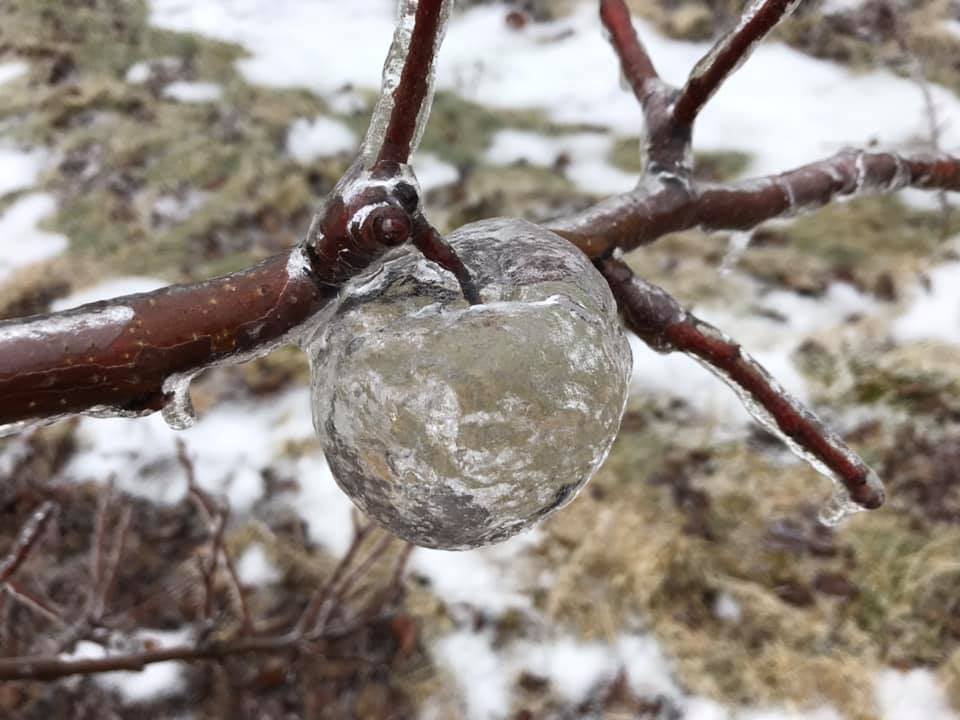
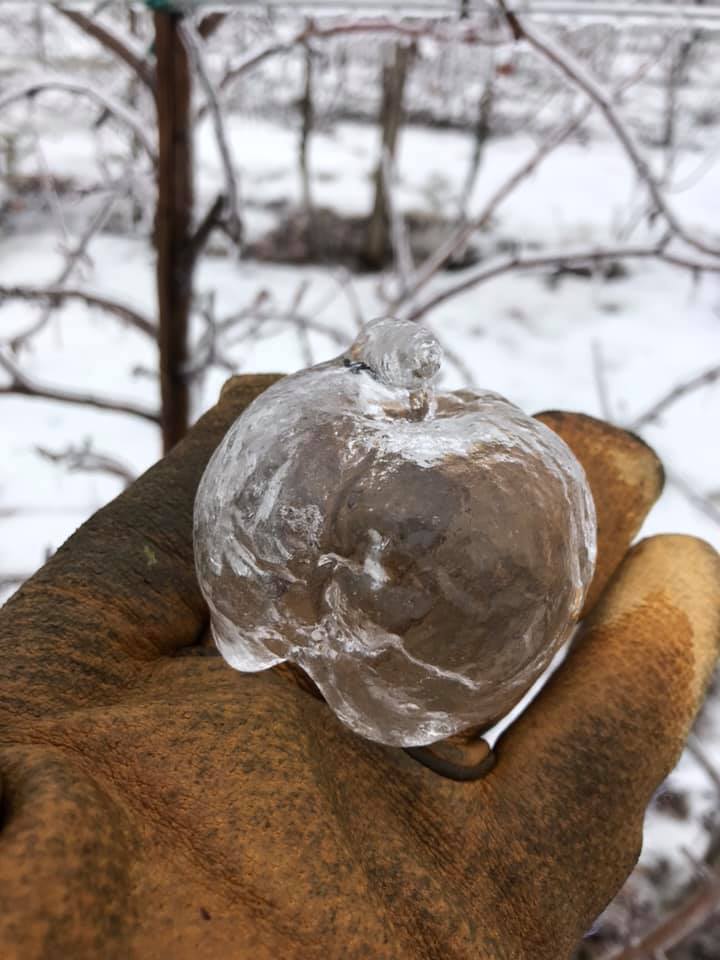
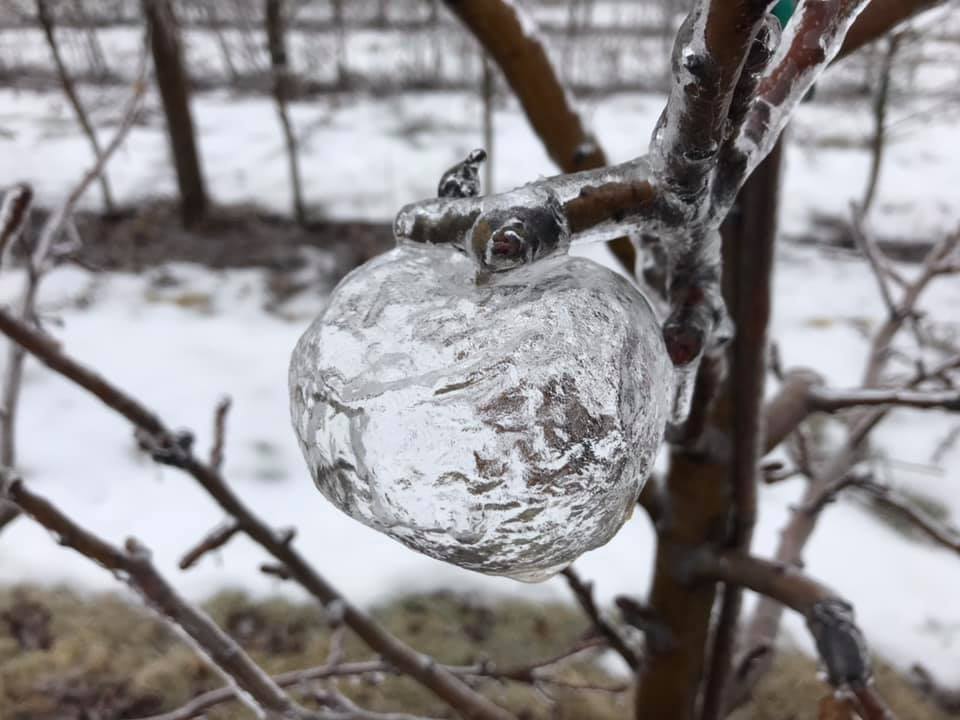
On the branches where forgotten autumn fruits of the Jonagold variety had hung just recently, there now swayed... voids. Perfect spheres of ice. Transparent. Flawless. Hollow within.
The apples had vanished. Their icy souls remained.
Andrew called them "Ghost Apples."
How the Impossible Is Born
What happened on that frozen night? Nature conducted a flawless chemical experiment—one that any scientist could write a dissertation about.
Act One: The Embrace of Ice.
Freezing rain is not simply cold water. These are supercooled droplets that remain liquid in the air but freeze instantly upon contact with a surface. They embraced each apple, replicating its form with a precision no sculptor could achieve.
Act Two: The Betrayal of Sugar.
Here a law known to every chemist comes into play: the cryoscopic effect. Pure water freezes at zero degrees Celsius. But apple juice is not water. It is a solution of sugars, organic acids, pectins. Fructose and glucose lower the freezing point to minus two, even minus three degrees.
The ice had already sealed the shell. But the apple's heart still beat.
Act Three: The Exodus.
Trapped within its icy sarcophagus, the apple continued to live—and to die. Cell walls collapsed. Flesh turned to mush. And when Sietsema touched the branch, this mush seeped through a tiny opening at the bottom—where the stem had once attached.
Only the shell remained. A crystalline memory of fruit.
Why We Had Never Seen This Before
Ghost apples are an exceptionally rare phenomenon. Their birth requires an incredible convergence of conditions:
— Freezing rain of a specific intensity
— Temperature within a narrow range: cold enough to freeze water, but not so cold as to freeze the apple itself
— Forgotten fruit—those left on branches after harvest
— Time—sufficient for the flesh to decompose, but not for the ice form to collapse
How many generations of farmers walked past, unseeing?
How many ghost apples melted before a single person raised their eyes to them?
A Virus of Beauty
Sietsema's photographs circled the globe within days. CNN, BBC, The Guardian—everyone wanted to tell the story of the miracle from Michigan. The hashtag #GhostApples gathered millions of views.
But it is not about virality.
It is about why these images struck people so deeply.
In the age of Photoshop and CGI, we have forgotten how to trust our eyes. Every wonder seems like montage, every beauty a filter. And suddenly—here it was. Real. Uninvented. Created not by algorithm, but by frost, rain, and chance.
Ghost apples reminded us: reality is still capable of wonder.
The Philosophy of Emptiness
Allow me a moment's departure from cryoscopy.
What is a ghost apple if not a metaphor? Form devoid of content. A shell that outlived its essence. Beauty born from decay.
The Japanese call this mono no aware—the bittersweet awareness of things. The recognition that all beautiful things are fleeting. That fragility is not a flaw, but a condition of beauty.
An ice apple will stand until the first thaw. Then—dripping, puddle, oblivion. But there is no tragedy in this. There is honesty.
We are all, in a sense, ghost apples. Forms striving to outlive their content. Traces remaining after departure.
Even in vanishing, life can leave behind a trail of blinding beauty.
Epilogue: Seeking Wonders
Andrew Sietsema was not a scientist. Not a photographer. He was a person who, at the right moment, looked.
And perhaps that is all that is required of us.
To look. To notice. Not to walk past.
Because somewhere right now—in an orchard, in an alleyway, in a shop window's reflection—nature is rehearsing another miracle. Small. Fleeting. Noticed by no one.
Until someone comes who raises their eyes.
Western Michigan, February 2019. Temperature: minus seven. Crystal spheres sway on the branches. Inside—nothing. Inside—everything one needs to know about beauty.
If you ever find yourself in a winter orchard after freezing rain, look closely at the branches. Perhaps you too will see ghosts—transparent, cold, and flawless.