I Thought It Was Just Getting Older
I Thought It Was Just Getting Older
Apparently, This Is What Sixty Looks Like
There's quite a gap between thinking, "Hmm, that's probably not normal," and actually doing something about it. In my case, that gap turned out to be several months.
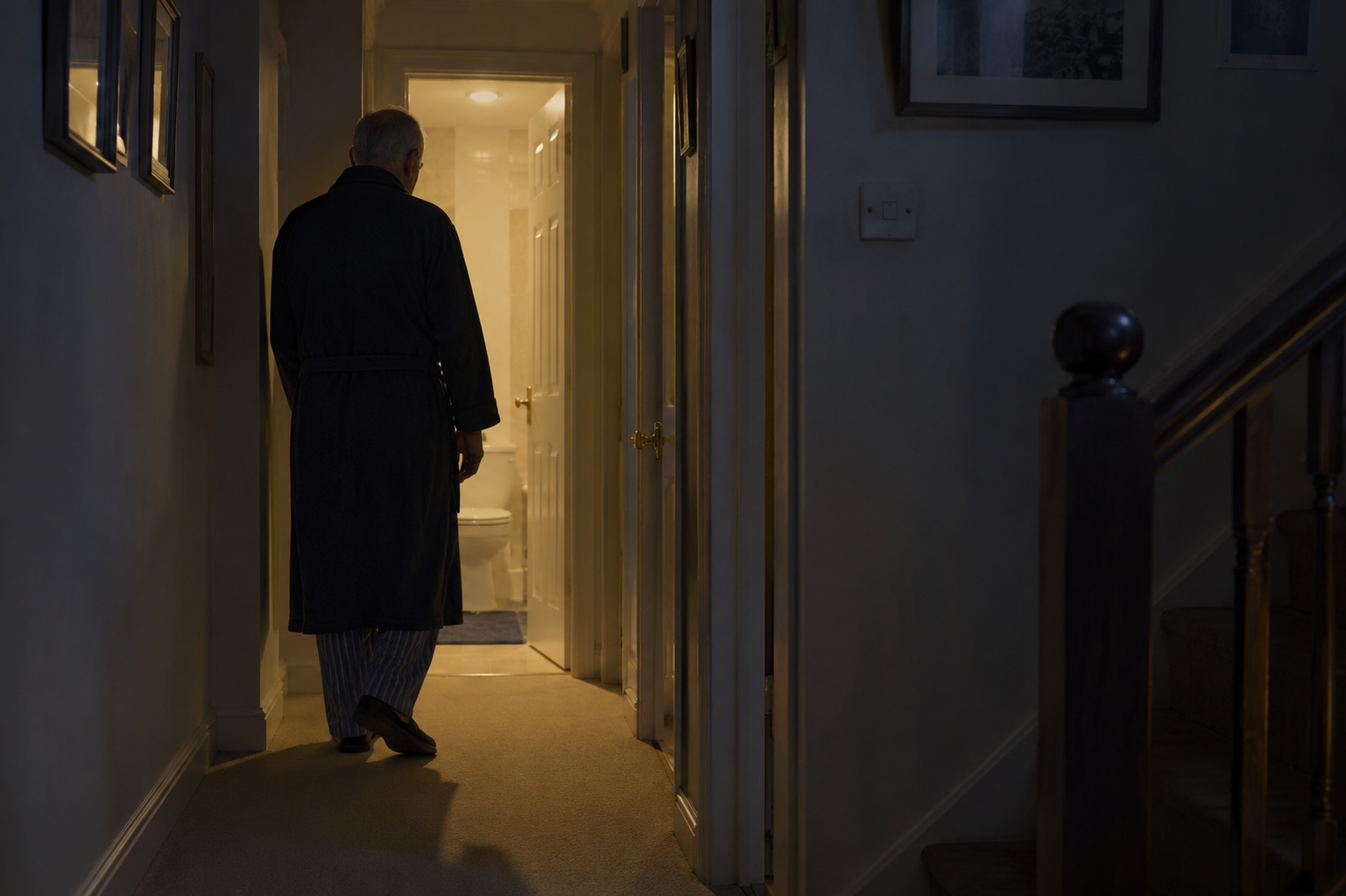
After all those broken nights, I'd finally accepted that something had changed. The sensible response would have been to make an appointment with my GP and get it checked. Instead, I did what I suspect quite a few blokes my age do: diagnosed myself with getting older and carried on regardless.
It was wonderfully convenient. Tired all afternoon? Getting older. Up twice in the night? Getting older. Taking longer in the bathroom than I used to? Well, Terrance, you're not 35 anymore. At this rate I could probably have blamed a flat tyre on my age.
Oddly enough, I wasn't particularly frightened of seeing a doctor. I simply didn't think my problems were important enough to bother one with. There was bound to be somebody who needed that appointment more than I did, or so I told myself.
Besides, I was still getting through the day perfectly well. The reality, which I conveniently ignored, was that I'd already started changing my life around something I insisted wasn't really a problem.
The Great "I'm Getting Older" Excuse
Once I'd decided age was responsible, explaining everything else became remarkably easy.
The nightly bathroom trips were the obvious nuisance, but there were other little changes creeping in too. My stream wasn't quite as strong as it used to be and occasionally I'd stand there waiting a few seconds for proceedings to begin. Nothing dramatic, nothing painful, just enough for me to notice.
Naturally, I tackled this development using the rigorous scientific method I'd perfected over sixty-odd years: I ignored it.
In fairness, getting older does provide an excellent alibi. Your knees click, your back objects when you bend down and hairs suddenly start growing enthusiastically from places where nobody invited them. Why wouldn't slightly temperamental plumbing be part of the same package?
I'd even joke about it with my wife. If I disappeared upstairs for the second time before we'd finished whatever detective drama we were watching, I'd announce that "the old plumbing isn't what it used to be."
Funny how easy something is to joke about when you don't particularly fancy examining it more closely.
There was also a strange reassurance in knowing that other men my age had similar complaints. You hear enough jokes about older blokes getting up during the night that eventually it starts sounding almost compulsory, like owning a pair of slippers or developing surprisingly strong opinions about the correct way to load a dishwasher.
So I carried on telling myself there was nothing unusual happening, while my body quietly declined to agree.
Getting Rather Good at Working Around It
Instead of dealing with the problem, I became increasingly efficient at accommodating it.
Before a long car journey I'd use the loo immediately before leaving, even if I'd only been twenty minutes earlier. At the pub I'd sometimes think twice about another pint, while unfamiliar walks increasingly came with a quick mental calculation about whether there was a café or public toilet somewhere along the route.
I wasn't sitting at home with an Ordnance Survey map plotting Britain's public conveniences in red pen, but give me another six months and I might have produced a fairly respectable guidebook.
Evenings became more regimented too. I'd started limiting what I drank later in the day in the hope of buying myself an uninterrupted night's sleep. Occasionally it worked, which allowed me to declare the problem solved. Then I'd be up twice the following night despite barely drinking anything after dinner, and another of Professor Hart's medical theories would quietly go in the bin.
What strikes me now is how ordinary all this felt. No single adjustment was particularly significant, so I never stopped to consider how many I'd accumulated.
I hadn't stopped doing the things I enjoyed. I was simply beginning to do them on my bladder's terms, and it was proving to be a surprisingly demanding little travel companion.
The Things Men Will Talk About
There's something peculiar about men and health.
Put three blokes together in a pub and we'll happily spend half an hour discussing a dodgy gearbox, football managers, the price of petrol, lawnmowers and why modern washing machines apparently require a degree in computer science to operate.
Mention anything going on below the belt, however, and suddenly we're all working for MI6.
I was no different. I had mates around my age and, looking back, I'm fairly certain some of them were dealing with exactly the same things. There'd be the occasional joke about getting up during the night or making sure you knew where the toilets were before ordering another pint, but nobody ever followed it with, "Actually mate, I've been having a bit of trouble."
Perhaps that's partly why I kept dismissing my own symptoms. If nobody talks properly about these things, you've got very little to compare your experience with. I honestly didn't know whether getting up two or three times every night was just par for the course at my age or something worth mentioning to a doctor.
Of course, I could simply have asked one, but that would have been far too straightforward.
My preferred medical strategy remained carrying on as usual and hoping my body eventually got bored of inconveniencing me.
The Day My Bladder Changed the Plans
The first time the situation genuinely embarrassed me happened during a day out with my wife.
We'd driven to a nearby town, had some lunch and spent the afternoon pottering around the shops. Nothing terribly exciting, admittedly, but that's one of the pleasures of retirement: you can spend forty minutes looking at something you've absolutely no intention of buying and nobody can sack you for it.
We were heading back towards the car when I suddenly needed the toilet.
This wasn't the familiar I'll find one in a minute feeling I'd become used to. The urgency arrived quickly enough that I immediately started looking around for somewhere to go.
Fortunately, there was a café across the road. I headed towards it at a pace that probably fell somewhere between "man in a hurry" and "trying very hard not to look like a man in a hurry." There was a toilet, there wasn't a queue and dignity remained largely intact.
From the outside, nothing had happened. For me, though, it felt different because this was no longer something that merely disturbed my sleep or annoyed me around the house. For those few uncomfortable minutes it had dictated exactly what I was going to do next.
When we got back to the car, my wife asked if I was alright.
"Fine," I said, deploying that wonderfully versatile word men use when we'd rather not begin a conversation we know perfectly well we ought to have.
I was quieter than usual on the drive home. The thought that kept nagging me wasn't what had happened, but what might have happened if that café hadn't been there.
This one was becoming harder to laugh off.
Not that I immediately rang the doctor, mind you. Let's not get carried away.
The Conversation I Wasn't Quite Ready to Have
The incident stayed with me for the next few days. Nothing disastrous had occurred and, had I mentioned it to anybody else, they probably wouldn't have given it much thought. I knew something had shifted, though. Until then I'd managed to classify the whole business as an irritating nighttime problem; now I'd had a glimpse of how it could interfere with ordinary life as well.
My wife had clearly noticed. A couple of evenings later, over dinner, she asked whether I'd been feeling alright lately. Apparently I seemed tired, disappeared to the bathroom more often and had developed a habit of asking about toilets whenever we went somewhere unfamiliar.
Presented with this fairly compelling body of evidence, I reacted like the mature, sensible husband I am.
I started talking about the shed roof.
It wasn't even subtle. I think I asked whether it needed another coat of preservative, which must rank among Britain's least convincing attempts to change a subject.
The truth was that saying it aloud would turn several minor annoyances into an actual problem. While everything remained inside my own head, I could keep negotiating with it. Once my wife knew, there was a fair chance she'd suggest doing something sensible about it.
I had an uncomfortable suspicion that I knew what that sensible thing would be.
Finally Running Out of Excuses
Over the next few weeks it became increasingly obvious that my grand strategy of waiting for everything to sort itself out wasn't producing spectacular results.
I was still waking during the night, the urgency hadn't disappeared and my stream remained weaker than I remembered. Occasionally I'd finish in the bathroom only to be left with the irritating feeling that I hadn't completely emptied my bladder.
None of it was unbearable, which perversely made procrastinating easier. I could always give it another week, couldn't I?
And then perhaps another.
Somewhere along the way, however, the question in my head changed. Instead of asking whether this was simply what happened as you got older, I started wondering why I was quite so determined not to find out.
That was a considerably less comfortable question.
There was probably some embarrassment involved, although realistically my GP had almost certainly encountered more interesting plumbing than mine before breakfast. Perhaps part of me was worried about what they might find. Mostly, I think I'd fallen into that very human habit of believing a problem remains less serious for as long as nobody officially confirms it exists.
Eventually even I had to admit the whole thing was becoming a bit daft. I'd spent my working life telling people that ignoring an electrical fault rarely resulted in it repairing itself, yet I'd somehow decided this was an entirely reasonable maintenance programme for my own body.
Apparently retirement hadn't improved my sense of irony.
So, after months of excuses, little adaptations and increasingly inventive ways of assuring myself everything was fine, I finally decided to make an appointment with my GP.
I wish I could say I felt enormously relieved once I'd made the decision. I did feel better, but another thought soon wandered in and made itself comfortable.
What if they actually find something?
That's where I'll pick things up next time.
Until then, take care of yourselves. If you've been putting off getting something checked because it seems minor, embarrassing or simply a faff, I'll leave you with something it took me far too long to appreciate: wondering about a problem for six months can be considerably more tiresome than having one awkward conversation about it.
Terrance Hart
Mi rutina de chequeos nocturnos incluye observar cuántas veces vas al baño; la ciencia dice que más de una visita después de los 60 años puede ser señal de hiperplasia prostática, aunque cada cuerpo responde de forma distinta. La foto del baño que subiste ilustra perfectamente ese “viejo plomería” que mencionás.