The “Cursed” Hospital Bed That “Killed on Schedule”: Anatomy of a Systemic Failure
In Hospital No. 6—on the sixth floor, in Room No. 6, in Bed No. 6—in the night from Friday to Saturday, a patient died. It happens. An ICU doesn’t promise miracles; it promises an attempt.
They put another patient in his place—waiting lists don’t care about superstitions. A week later: the same night, the same script, the same brief silence after the monitor goes flat, when any sound feels out of place.
The third… the fourth… the fifth…
At first the doctors joked—the way people joke when they’re not allowed to fall apart: “Unlucky bed,” “six is a bad number.” Then the jokes started to taste like dry anxiety, like gauze held too close to alcohol. Someone—an adult, rational person—bought a book about signs and curses. Someone began entering the room as if the floor weren’t linoleum but thin ice.
But you can’t leave an ICU bed empty: emptiness is a luxury there, almost indecent. So another patient was admitted. And again—exactly a week later, on that Friday-to-Saturday night—he was gone.
The Night of the Exorcism
And then the hospital decided to play its own legend to the end.
They placed a hospital orderly in Bed No. 6, disguised as a patient—a heavyset man, built like a doorframe. The toughest staff—strong in body and spirit—took positions around the room: people who aren’t afraid to look death in the face, yet are frightened by the thought that death might arrive on a timetable. The monitors glowed cold green. The night held its breath. The minute hand climbed toward twelve.
Midnight.
The door opened.
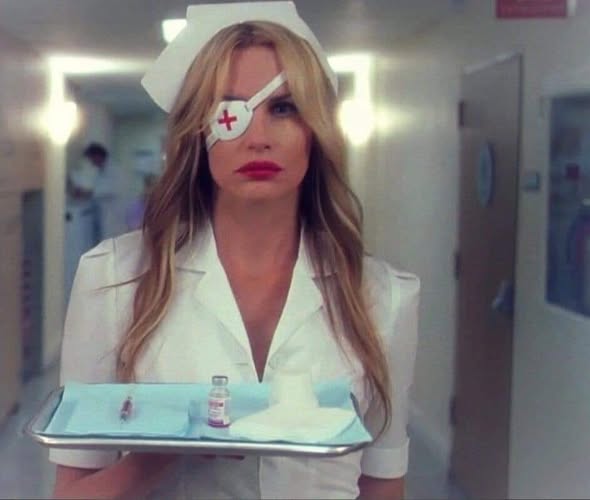
In she came… all in white…
It was Baba Manya, the cleaner. In her hands: a vacuum cleaner—confident and commanding, like the state.
She didn’t look at the orderly, or the doctors, or the sensors, or the tubes. She looked at the power outlet—and did what she had done hundreds of times before: she unplugged the ventilator, plugged in the vacuum, unhurriedly and thoroughly cleaned the room, then unplugged the vacuum, returned the ventilator plug “exactly as it was,” and calmly left.
The legend ended not with a ghost, but with an everyday gesture—precise, habitual, and therefore even more terrifying.
Why This Story Is Scarier Than Mysticism
Because there is no demon in it. There is a system.
In medicine, it’s long been understood that tragedies rarely come from a single malicious intent or one “fatal mistake.” More often, they’re a chain of small, human actions that align with vulnerabilities in the environment—and together produce a catastrophe. This logic is captured in the “Swiss cheese model”: multiple layers of defense, each with holes; disaster happens when the holes briefly line up. The model is associated with James Reason’s work on human error and “latent conditions” in organizations—hidden defects waiting for their moment. (James Reason, Human Error, 1990)
What looks like a “cursed bed” in a legend is, in reality, often an interaction of people, processes, and infrastructure: outlets, labeling, instructions, training, safety culture, fatigue, habit.
What Might Have Gone Wrong From a Patient Safety Perspective
Even if you read this as a parable, it helps to take an engineering view. In an ICU, life-support equipment should be connected in a way that makes it impossible to “accidentally unplug it instead of a vacuum cleaner.” In real practice, many approaches exist: dedicated power circuits, clear labeling, physical protection of critical outlets, cleaning protocols, prohibiting the same power points for housekeeping and medical devices, checklists, and staff training.
The key point: the cleaner is not the villain here. She acts out of routine in a system that never gave her a chance to understand what, exactly, she was unplugging. This is the classic “latent hazard”: an error becomes possible not because someone is bad, but because the environment allows the error to happen without resistance.
That’s why global healthcare has focused so heavily on systemic approaches to patient safety—from standardization to workspace design and team checklists. (WHO — Patient Safety)
Why “Exactly One Week” Feels Like Magic
The human brain doesn’t like randomness. It likes patterns.
There are well-studied cognitive effects: we tend to see order in noise and overestimate “streaks” of coincidence. These tendencies are discussed in research on heuristics and biases, including classic work by Kahneman and Tversky. (Kahneman & Tversky — overview, APA)
But—and this matters—sometimes a pattern really does exist. It’s just not supernatural; it’s written into schedules and routines: cleaning by timetable, night procedures, a shortage of outlets, identical room layouts, a lack of standards for how equipment is plugged in. A legend calls it fate. Analysis turns it into an action plan.
How a Legend Becomes Prevention
Good hospitals don’t go looking for a “cursed bed.” And they don’t go looking for “Baba Manya” as the single culprit, either. They do what safety culture calls for: a root cause analysis—what in the system made this possible, which barriers were missing, how to make the error hard or impossible. Different countries formalize this differently, but the logic is similar: learn from incidents rather than hide them.
https://www.jointcommission.org/resources/patient-safety-topics/sentinel-event/
And then—checklists. Not as bureaucracy, but as a way to offload memory and reduce dependence on “one person’s experience.” The idea of clinical checklists became widely discussed thanks in part to Atul Gawande’s work.
https://www.metropolitain.com/en/book/?isbn=9780805091748
An Epilogue You Want to Add
I like to think that in the end the doctors didn’t just exhale and laugh—they went and did the boring things that safety is made of:
- labeled outlets and moved “critical” devices to separate, protected power points;
- agreed that ICU cleaning happens only with confirmation from the charge nurse;
- added a simple line to the protocol: “before cleaning, ensure life-support equipment is on backup power / will not be disconnected”;
- and, most importantly, stopped being ashamed to discuss “near misses” as honestly as real adverse events.
Because hospital legends aren’t frightening for the mysticism they contain. They’re frightening for the truth they reveal about small things we don’t notice—until they start working against us.