Signs your hiking shoes need replacing
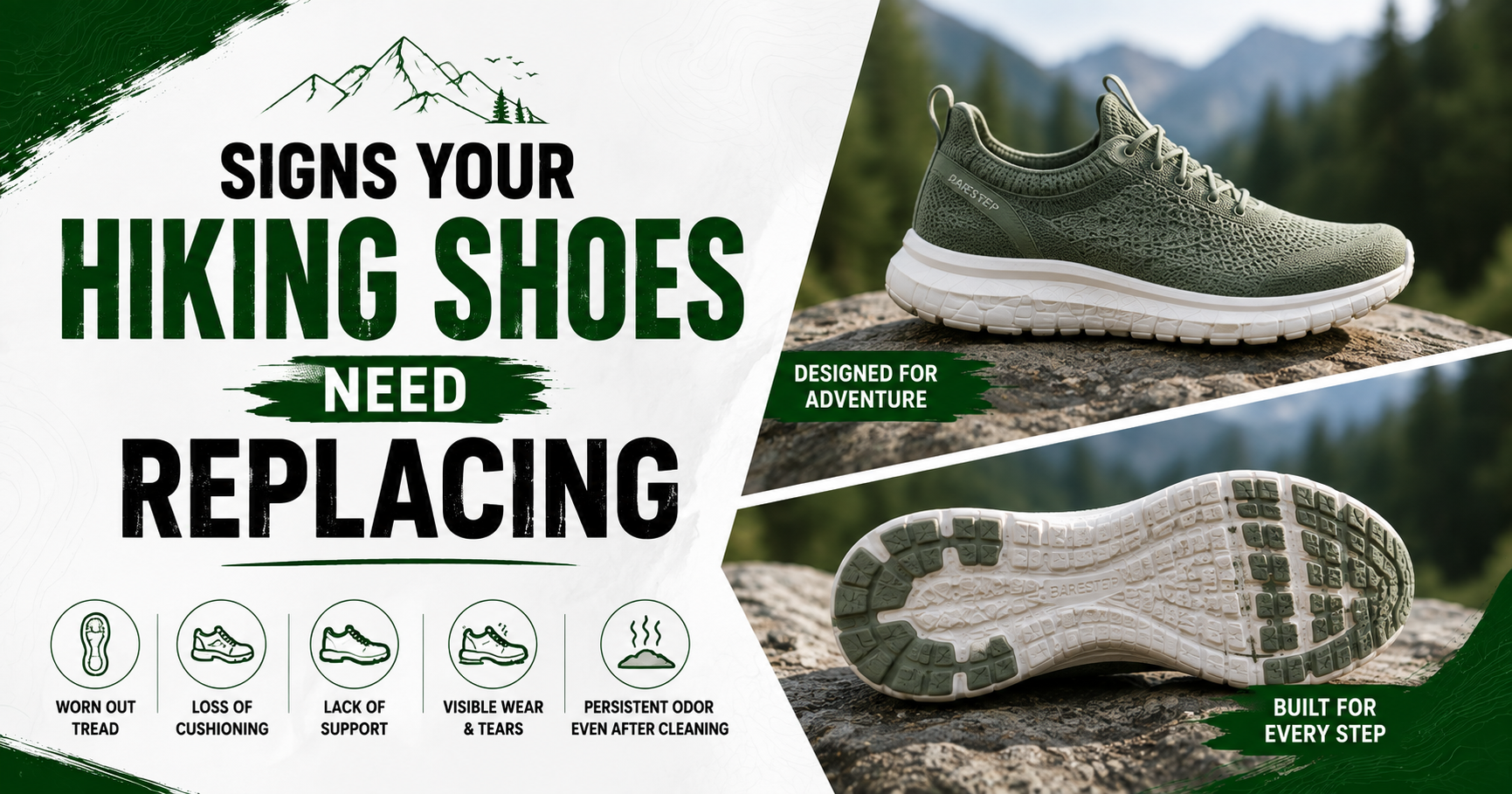
A good pair of hiking shoes can become your favorite piece of gear. The more you use it on the trail, the more you know them – where the flex points are, how they feel – but that doesn’t mean you necessarily want to hear that they need to be replaced. After all, every hiker knows that the right pair of shoes should feel like a second skin – which also means that after a certain point, it might not be the most comfortable time to admit they’ve worn out.
There are several subtle ways to tell when your pair of hiking shoes stops doing its job, so you know when it’s time to start looking for a replacement.
The Tread Has Stopped Holding Well
As you may already know, hiking boots or shoes provide the majority of the power on the trail – and the lugs on the bottom of the shoe provide the majority of the grip. However, as the shoes see repeated use on a variety of surfaces (from dirt and rocks to slippery roots and wet soil), the lugs wear down and lose their bite. On the next trail, this could very well lead to a slip that causes injury or unwanted fatigue. Check the treads on the bottom of your shoes – if they appear worn down, rounded, or generally unadventurous, it could be time to replace your shoes. However, it’s a good idea to look over other aspects of the shoes as well.
The Midsole Has Lost Its Pop
While the bottom of the shoe is important, the top isn’t far behind – namely the (often unsung) midsole. The repeated compressions of this portion of the shoe can cause it to flatten out, and what may have been an easy, comfortable shoe to hike in may become downright stiff. Take note if a trail you previously found easy now leaves your feet sore, fatigued, or achy – it might simply be that your shoes are worn out.
Note that there’s no magic number of miles for when shoes become worn out – it depends on the surface they’re hiked on, the frequency and duration of the hikes, your personal gait and preferred hiking style, and more factors. So it’s important to be aware of other signs that your shoes may have simply worn out.
The Upper Has Seen Better Days
It’s important to check the wear and tear on the entire show, not just the parts highlighted above. Take a look at the eyelets, the stitching, the overall condition and shape of the shoe. If the eyelets are frayed, the mesh is torn, the shoe stretches into odd shapes, or if the shoe appears generally ‘used up’, any of these could be warning signs that your shoes are close to (or past) the end of their lifespan. The ability to keep your feet protected and secured in the shoe is essential, and if the shoe can no longer perform this task well, it’s likely time to retire it.
Your Foot Slips Around in the Shoes
As shoes age, materials can stretch and break down. One of the telltale signs that your shoes are worn out is that your feet no longer have that secure, snug hold that makes hiking so comfortable. Extra foot movement can cause chafing, blisters, and general discomfort, plus added stress on your feet and legs as you hike. On downhills in particular, the extra movement can cause your toes to repeatedly bang against the front of the shoe – not ideal for long hikes or trails. In many cases, this can’t be remedied by simply tightening your laces. It could be that the shoe is simply worn out and no longer provides the snug, secure fit that keeps you comfortable and safe on the trail.
Your Feet Feel More Tired Than Usual
One of the best methods for telling if your shoes are worn out is to simply pay attention to how your feet feel on each hike. If you notice that they start to hurt sooner than they normally would, or are simply more sore or tired after a hike than they were before, this is a good sign that your shoes may not be up to the task. When your footwear begins to change, it can affect your feet – and that change should be noted. This is a good opportunity to evaluate your gear and shoes and determine if they’re still the best fit for you.
The Shoes Are No Longer Fit for Purpose
Your shoes need to be up to the task for whatever you plan to do with them. If you’ve outgrown a lightweight pair of shoes and regularly hike more technical trails, you may need a more durable, higher-performance pair of shoes for better protection. The National Park Service has excellent advice on choosing the right footwear for dirt trails: “Choose sturdy hiking shoes or boots that will protect your ankles and allow flexibility while walking on rocky, uneven ground.” The right shoes are also essential on more technical trails. As your hiking needs change, your shoes should change as well – so that your gear is always up to the task.
In many cases, it’s not always obvious to notice when a pair of hiking shoes is reaching the end of its lifespan. The best way to avoid being caught mid-hike with worn-out shoes is to test a replacement on smaller, easier trails before attempting to hike a larger mission with them. That way, you’ll give yourself enough time to test a potential pair of shoes to ensure that their fit, lacing, socks, and comfort level are up to your standards. And, of course, it’s important to keep your feet and footwear clean and well-groomed before and after every hike.
Keep Your Eyes on the Laces
Keep your eyes on your laces (and your feet) before every adventure – pay attention to the signs that your shoes may be reaching the end of their lifespan. While the laces, midsoles, traction, and stitching may still look good, your feet are likely telling you they’re uncomfortable with every hike. Your feet shouldn’t be the most uncomfortable part of your outdoor adventures – and if they are, it may be time for new footwear. It’s always a good time to consider replacing your hiking shoes when signs clearly show that they have stopped performing like new footwear. Remember, shoes are an important – but only one – piece of the hiking puzzle. Your socks, foot support, and overall hiking wellness should still be key considerations. Barestep can be a great addition to every hiker’s routine, offering greater support and comfort while helping you stay on top of foot health and overall outdoor readiness.
The best time to replace your pair of hiking shoes is before they begin to negatively affect your outdoor adventures. Signs that your hiking shoes need to be replaced include a decrease in lugs on the bottom of the shoes, loss of midsole grip, decreased foot security, and greater foot fatigue after hikes. When your feet are uncomfortable on the trail, it can lead to added stress on your legs, joints, and even your spine – so it’s important to keep them healthy and well-supported. Your feet should be able to carry you through every hiking adventure – and when they can’t do that, it’s time for a new pair of shoes.