The universal income of Sam Altman and Elon Musk
The universal income of Sam Altman and Elon Musk
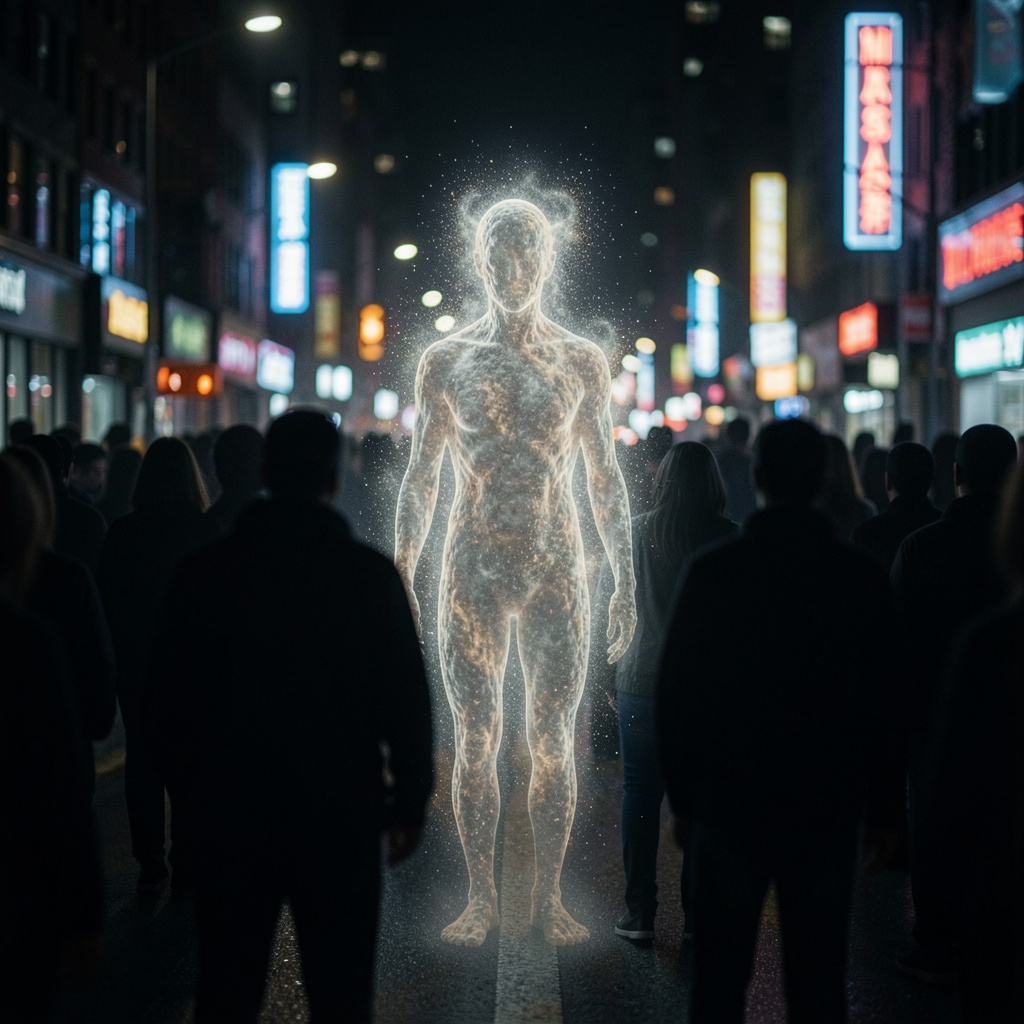
AI
But now that logic is slowly beginning to come into conflict with technology, as generative artificial intelligences, humanoid robots and autonomous systems advance, some of the biggest figures in Silicon Valley began to defend an idea that a few years ago seemed too radical, even for academic debates, universal basic income.
And perhaps the most curious thing is to notice who is saying it, people like Sam Altman and Elon Musk talk about basic income as social charity, they talk about it almost as a mathematical necessity of capitalism itself in the face of automation, we are not talking about socialist utopias, but rather that there is a paradox that is beginning to appear. They know that if machines produce wealth more and more efficiently while eliminating so many jobs, capitalism will simply collapse if people have no money to consume.
It was precisely trying to understand and prove this that Semotman financed one of the largest basic income experiments ever carried out through Open Research, for 3 years, thousands of people received close to $1,000 per month without any specific requirement, without obligation to work, without goals and without conditions. The results attracted attention for a simple reason.
People did not stop living their normal lives, much of the money was allocated to health, education, emotional stability and even opening small businesses. Instead of abandoning any activity, many participants began to make less desperate decisions about their own lives and perhaps that reveals something important about human behavior, because much of modern work does not exist only to generate economic value, it often exists because people need to survive financially within a system based on artificial scarcity of income, only artificial intelligence is slowly beginning to break that logic.
So the inevitable question arises, where will that money come from for billions of people? Some economists and businessmen defend completely new models of wealth distribution. Bill Gates, for example, has already suggested something similar to a tax on robots, where companies that use a robot to replace a human worker must pay the equivalent in taxes to finance basic income.
Sam Altman follows another line, he proposes sovereign funds bequeathed to AI companies, allowing part of the valuation generated by automation to be distributed directly to the population, the idea is simple, revolutionary and in some cases controversial. If artificial intelligences were capable of generating practically unlimited wealth, perhaps human beings would stop depending exclusively on their own work to access basic resources and here the discussion stops being economic and begins to become existential. If machines do everything, what are we left with? The end of compulsory work opens space for what philosophers call the post-work era, without the pressure for survival, humanity will be able to focus on arts, sciences, space exploration and philanthropy.
The economy will stop being based on physical production and will focus on creativity and well-being, universal basic income is not a way to sustain the unemployed, it is the key to freeing human potential from the slavery of repetitive work, that is what those who support this idea say. And if perhaps for the first time humanity enters an era where survival and employment cease to be synonymous for better or worse, I confess that this has been brewing for a long time, but one thing can be said and affirmed, that future also brings enormous risks, extreme inequality, absurd concentration of technological power and total economic dependence on large corporations.
Those are real possibilities. Now tell me, in the best case scenario, what would you do with your life if money was no longer a concern? Would you continue in your current job as a hobby or would you look for a new passion?
Souce
Congratulations!
Your post has been selected and upvoted by the SteemPro Team 🚀
Explore more on SteemPro:
🌐 https://www.steempro.com
🎮 Play SteemHeights: https://www.steempro.com/games/steem-heights
💬 Join our Discord: https://discord.gg/Bsf98vMg6U
💪 Supporting the growth of the Steem ecosystem together.
🟩 Vote for witness faisalamin:
https://steemitwallet.com/~witnesses
https://www.steempro.com/witnesses#faisalamin
This is an automated message.