Acoustic Levitation: Can Sound Really Make Objects Float?
Imagine seeing a small object floating in the air without any wires, magnets, or visible support. It may look like a magic trick, but scientists can actually make tiny objects float using sound waves. This technology is called acoustic levitation. It uses carefully controlled sound waves to create areas of pressure in the air where lightweight objects can become suspended. Researchers are studying this unusual technology because it could provide completely contactless ways to handle materials, chemicals, and even tiny biological samples in laboratories.
Acoustic levitation works by using multiple sound sources that produce high-frequency waves, usually beyond the range of human hearing. When these waves meet, they can create a pattern of high and low pressure called an acoustic field. A small object placed in the right position can become trapped in one of these regions and remain suspended. Scientists can carefully adjust the sound waves to move the floating object from one location to another. The technology is especially useful because the object does not need to touch a container or surface.
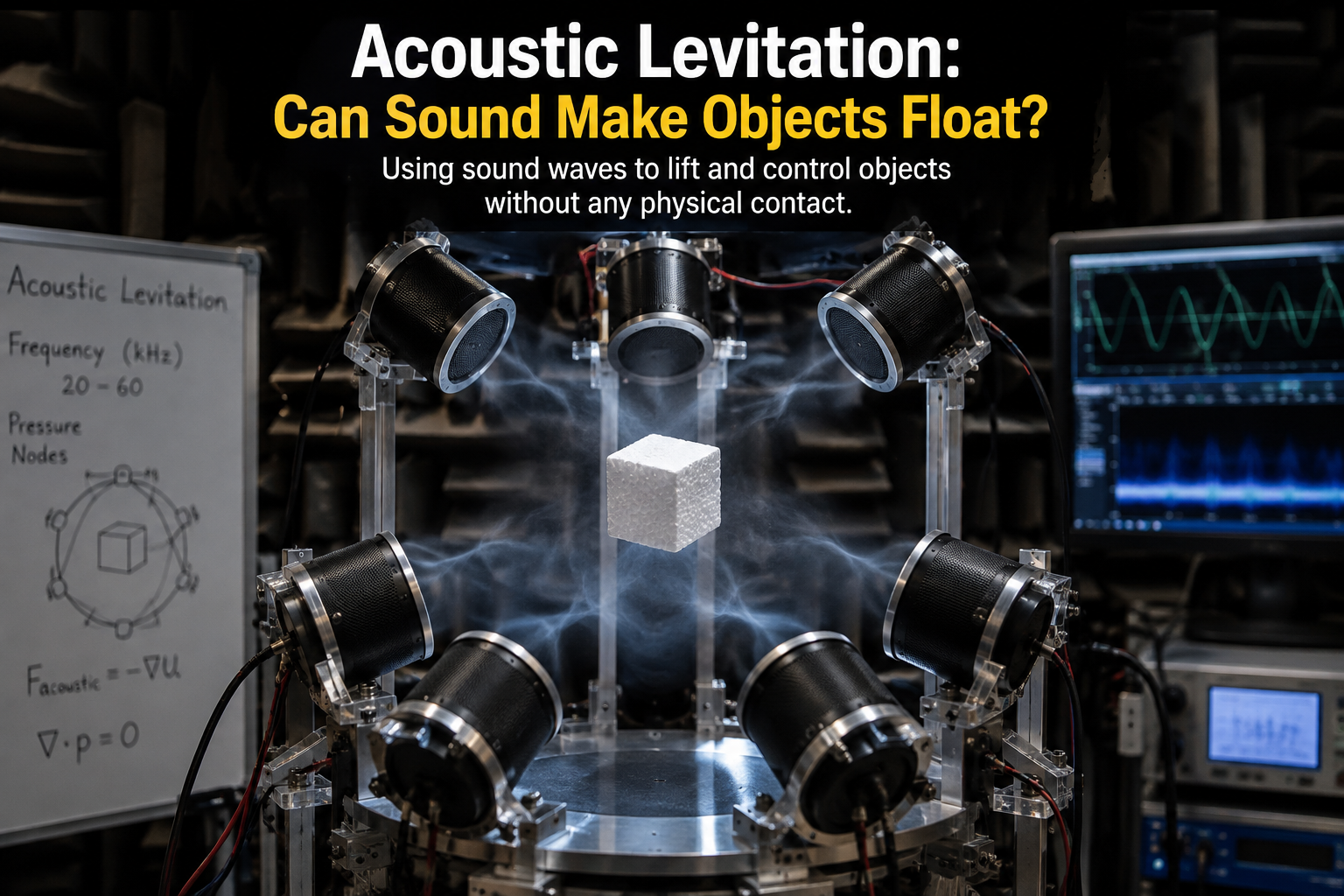
The possibilities are fascinating. In laboratories, acoustic levitation could allow researchers to study chemicals without contamination from containers. It may also help scientists handle delicate biological materials or examine tiny particles under controlled conditions. Engineers are exploring ways to improve the technology so that larger or heavier objects can eventually be manipulated. However, there are still limitations, including the amount of weight that can be lifted and the precision required to control the sound field.
Personally, I think acoustic levitation is one of the most fascinating examples of how invisible forces can be turned into useful technology. We normally think of sound as something we hear, but scientists can use it to move and control physical objects. As the technology improves, it could open up completely new possibilities for laboratories, manufacturing, and future machines.
What Are Your Thoughts?
If you enjoyed this article, your support through an upvote would mean a lot to me. Thanks for reading and supporting my work!