It confirms that 3I/Atlas is older than our solar system.
in Popular STEM12 hours ago

It confirms that 3I/Atlas is older than our solar system.


Souce


3I/Atlas is already on its way out of the solar system, though it isn't moving particularly fast; it will still take several thousand years to exit. An article published in the scientific journal *Nature* on June 22 provides more data on 3I/Atlas—specifically better measurements regarding its composition and, above all, confirmation of its age. There was previously a wide margin of uncertainty—ranging from 7 billion to 12 billion years—and one figure even suggested 14 billion years (older than the universe itself), though I assume that was a measurement error.


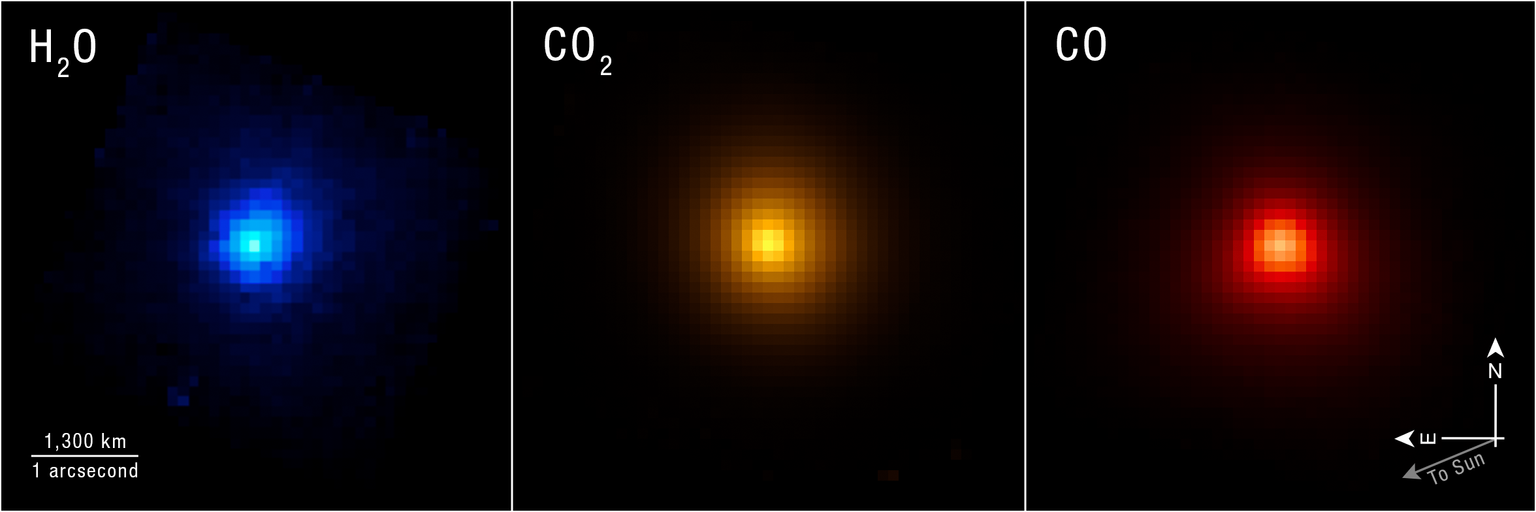
The fact is, it was suspected from the start to be older than the solar system. Now, after measuring the isotopes and the coma of 3I/Atlas—since it exhibited cometary behavior, including a coma (a cloud of gas and dust surrounding it)—we have more information. In fact, that cloud, along with a faint tail and antitail, is all we have ever seen of it; we have never actually seen the nucleus. We do not know what the nucleus of 3I/Atlas is really like, though it is estimated to be about 4 km in size now; it may have initially been 5 km, but the material it has expelled could have reduced it to 4 km.


Initial measurements suggested a diameter of 20 km, but the current average estimate is 4 km. One specific detail that has been clarified concerns deuterium—also known as heavy water—which is used, for instance, in fusion reactors to generate fusion energy. It is an isotope of hydrogen, and the amount present is staggering: it is 30 times greater than the levels found in any comet in the solar system and 30 to 40 times higher than the concentration in ocean water.


Every time we drink a glass of water, it contains a tiny amount of deuterium atoms; however, this object holds 30 times that concentration. This serves as a clue indicating that it formed in an extremely cold environment. Measurements of carbon isotopes also show significant levels of carbon, CO2, and some basic organic molecules. I am convinced that new reports detailing the discovery of more complex molecules will be released soon, but for now, this is the picture we have.


The latest news confirms that it is indeed much older than the solar system; its age has been narrowed down to a range of 10 to 12 billion years—dating back to shortly after an intense period of star formation in the Milky Way. That 12-billion-year mark places it at a point when the universe was beginning to settle down a bit following its initial expansion—a time when there was finally some "breathing room" (so to speak) between galaxies and stars, free from the saturation of supernova explosions, collisions, and black holes everywhere, which would have otherwise created a chaotic environment.


It is estimated that during the universe's first 1 to 2 billion years, life would have faced significant challenges; supernova explosions and cosmic events were frequent and occurred in close proximity to one another. Furthermore, there was a scarcity of the organic molecules and heavy elements required to form rocky planets like Earth. Yet, the 12-billion-year-old 3I/Atlas demonstrates that even back in that primitive era, organic molecules and elements were already present. While we haven't found the complete "kit" for life just yet, the building blocks necessary for astrobiology—the ingredients for the formation of living beings and planets—were already there 12 billion years ago. It is truly mind-boggling.


Source


The images without reference were created with AI
Thank you for visiting my blog. If you like posts about #science, #planet, #politics, #rights #crypto, #traveling and discovering secrets and beauties of the #universe, feel free to Follow me as these are the topics I write about the most. Have a wonderful day and stay on this great platform :) :)


! The truth will set us free and science is the one that is closest to the truth!


Posted using SteemX