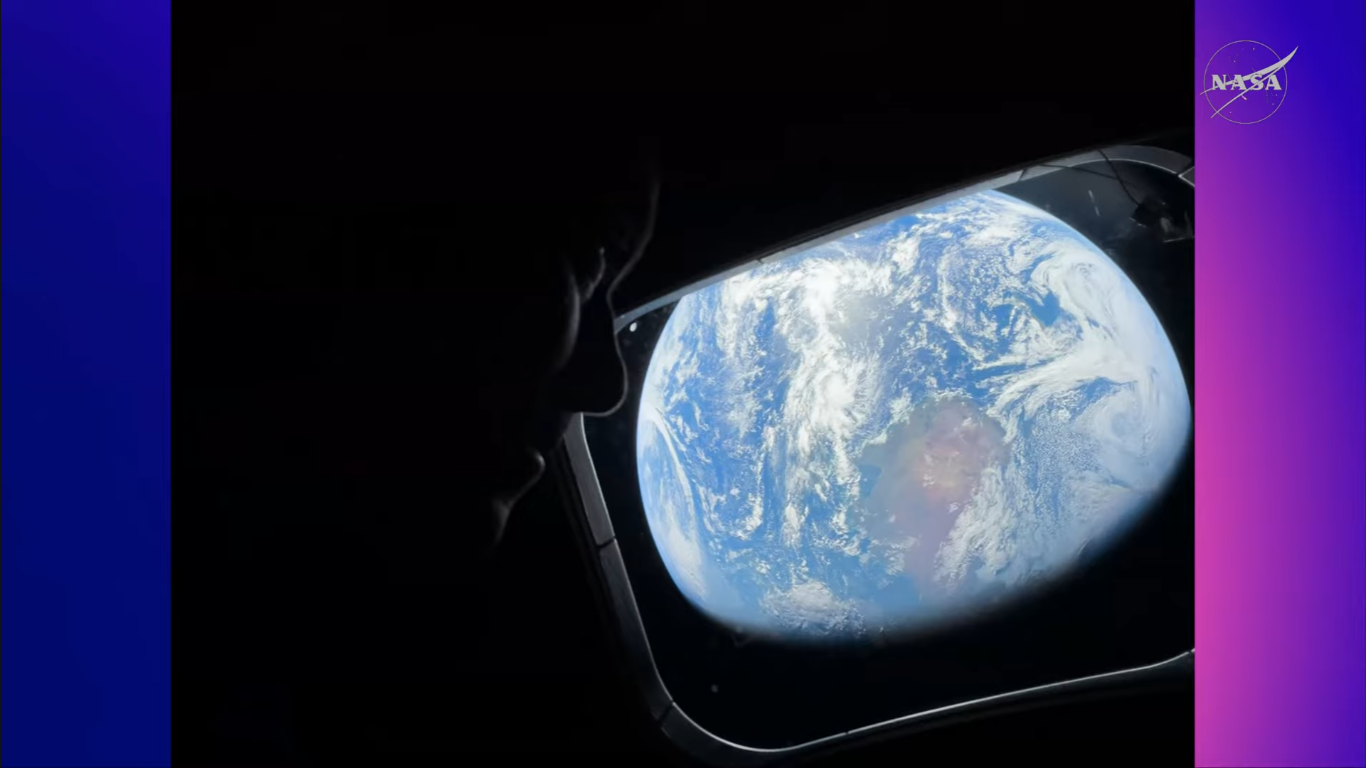
Remains of the Artemis II mission

in Popular STEM16 hours ago

Remains of the Artemis II mission


Souce


It has been more than four days since the Artemis mission left Earth and among the challenges that they will have to overcome are the dangers that exist in navigation through deep space and here we must clarify one thing, because we have become accustomed to the image of the astronauts in the orbital stations, both the international one and the Chinese one and we assume that they are in space, but although it is true that they have surpassed the Karman line, which is about 100 km high and which marks the limit with space, although it is a limit of convenience, it is a legal limit.

In reality, the orbital stations are still located within a layer of the Earth's atmosphere, a layer called the thermosphere, which extends from 80 or 85 km altitude to 600 or 700 km altitude. The orbital stations are approximately 400 to 420 km from the Earth's surface, therefore, they are actually thermospheric stations, but of course, the name does not sound as epic as a space station. The important thing is that the orbital stations are still protected by the Earth's magnetic field, a shield that astronauts who travel to the moon do not have.


Souce


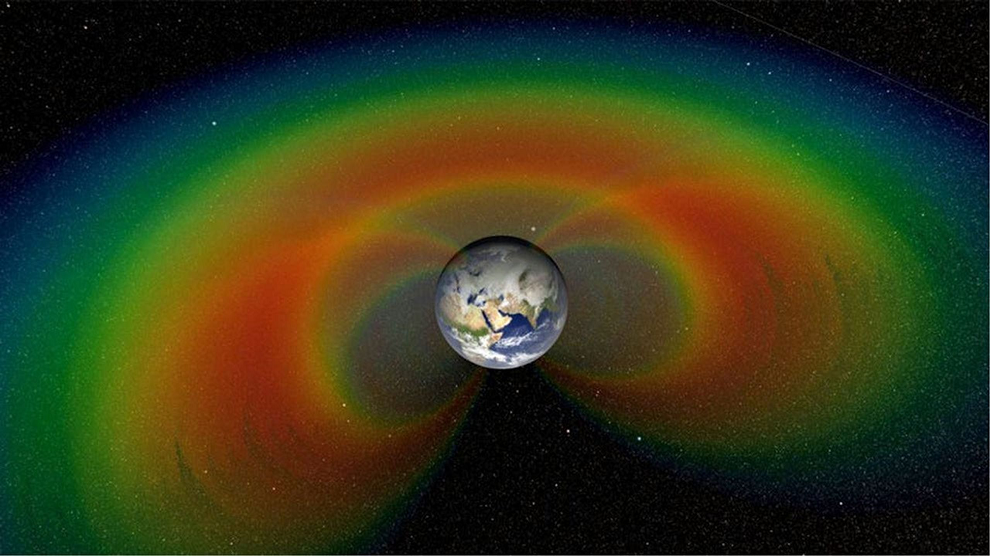
So, there are three risks of external origin, without mentioning the problems that may occur on the ship, the first, the Van Allen belts, are two areas of energetic particles trapped by the Earth's magnetic field, they are shaped like a ring or donut, the inner belt extends approximately between 600 to 13,000 km high, while the outer one goes from 19,000 km to about 60,000 km away from the Earth.

In 2013 it was discovered that a third belt is forming, a temporary belt. It is created between the lower belt and the outer belt when there is a geomagnetic storm or strong solar storm and although it is temporary, it is made up of electrons that move almost at the speed of light, so, although it is small and does not last long, its level of radiation is also important.


The Van Allen belts are famous on social media, as some believe that they are an insurmountable barrier, a deadly barrier, and they use it as an argument to justify the story that the United States never went to the Moon and that the whole Polo program thing was a movie, but they really are deadly, the answer is yes, they are, the radiation inside them can be very intense and potentially lethal, but only if you stay there inside the belts, exposed to them for a long time.


The Apollo missions stayed there. They took between 52 to 60 minutes to cross them on their way to the moon, their objective was not to stay orbiting the Earth in a Van Allen belt, but to go to the Moon and it took the same amount of time to return, so in total, at most, they were in the belts for 2 hours, the dose received by the astronauts in that time was very small, hundreds of times less than what would be potentially lethal, to be exposed to deadly radiation in those belts, you would have to be in there for weeks and also in the most intense areas and with minimal armor on your ship. The astronauts of the Apollo missions received doses well below what was dangerous, precisely because they were only passing through, they did not stay there and the same thing happens with the astronauts of the Artemis mission.


Souce


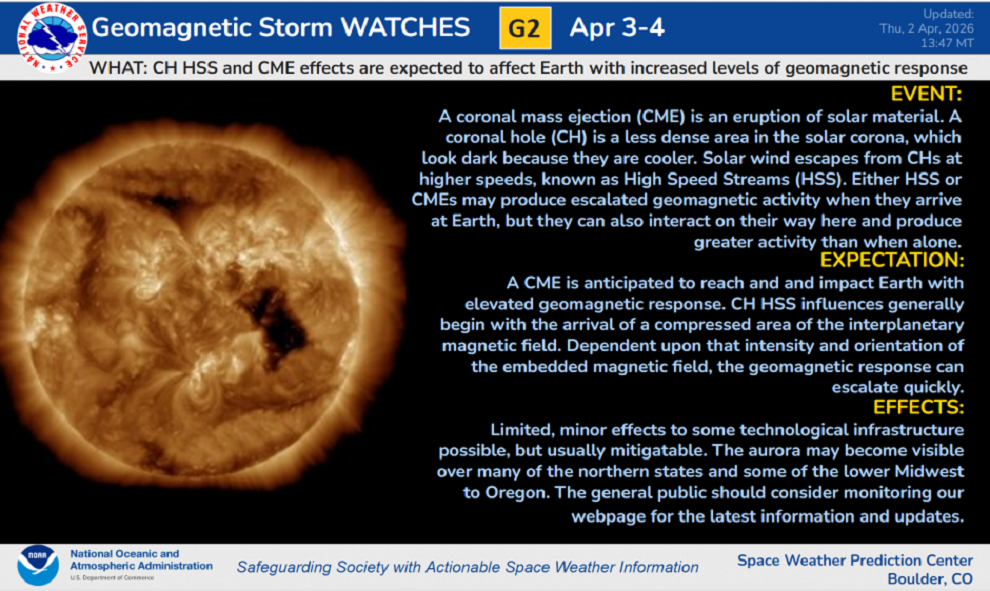
Second, solar storms: several factors come into play here that, although related, are distinct and pose different levels of risk. To illustrate this, we can look at what is happening right now: NOAA, the U.S. National Oceanic and Atmospheric Administration, issued a warning about a moderate-level G2 geomagnetic storm—or solar storm—for April 3 and 4. NASA does not consider this to be a cause for concern because the alert affects Earth’s magnetosphere; therefore, among other things, it may cause problems for satellites orbiting Earth and for communications systems. However, there is no warning of a solar radiation storm; while it may be linked to solar storms, it is a different phenomenon.

While solar storms are measured on a scale ranging from G1, G2, G3, G4, up to G5, the scale used to measure radiation storms is the S scale, and this is what is truly concerning when traveling in deep space. Radiation storms are bursts of protons ejected by the sun due to extremely powerful events, for example, an X-class solar flare—though preferably the X-class ones, but the strong ones, an X5 or higher—combined with a coronal mass ejection, which is a cloud of plasma. If that coronal mass ejection is fast, massive, and directed straight toward Earth, it may be accompanied by a burst of protons, because these events have the annoying habit of acting as a particle accelerator and accelerating vast quantities of high-energy protons and other particles to a speed that is a fraction close to the speed of light—that is a tremendous amount of kinetic energy.


And these protons travel approximately 150 million kilometers—the distance between us and the Sun—in about 20 to 30 minutes, but what’s worse, they penetrate the magnetosphere, and what’s even more concerning is that they pass through the hulls of spacecraft like Orion. Alarms at NASA would go off when that burst reaches S3 level; there are about 10 of these on average per solar cycle. Solar cycles last about 11 years, and we are currently at the peak of solar activity.


We recently had an S-class event; on January 19, we had not an S3, but an S4, which is a higher level. The S4 event that day, which also included strong S3 levels in the preceding days, was triggered by an X1.9-class solar flare combined with a coronal mass ejection. These two factors combined to create the most intense event of the year so far, triggering alerts for astronauts on space stations as well as for aircraft flying over or near the poles.


Souce


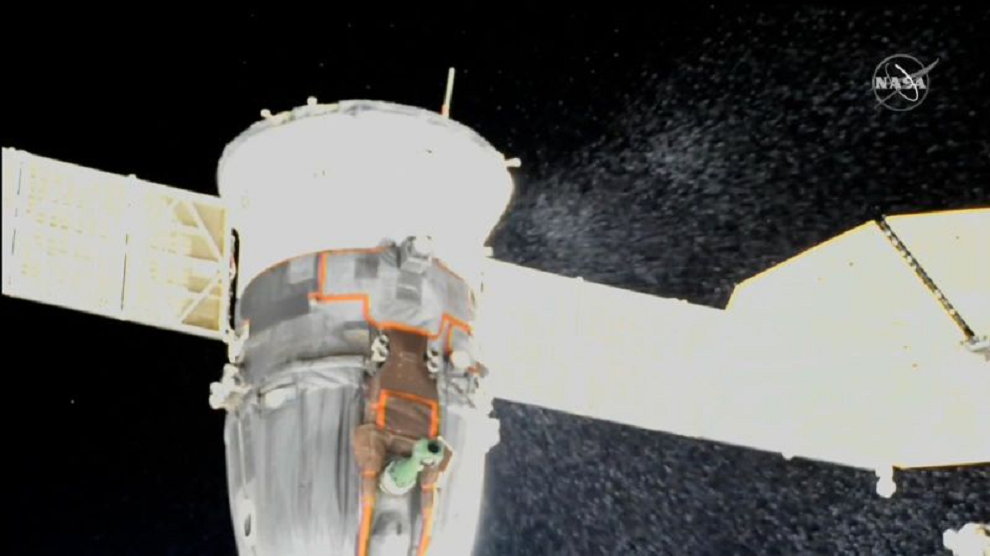
The third problem is micrometeorites, in October 2025 Spain lost a large military satellite when this satellite was about 50,000 km from Earth, it was due to the impact of a micro meteorite, in 2022, the Soyuz MS22 spacecraft, which had taken three astronauts to the international space station, suffered a massive coolant leak in its external thermal control system due to the impact of another micro meteorite that caused a hole of approximately only 0.8 mm.


Under normal conditions, such a small hole would not have caused any problems, the spacecraft would have been able to function, even if it had been able to patch, but what happened to Soyez 22 shows us that more important than the size of the micro meteorite is where it impacts, it is a lesson that NASA engineers have learned with the Orion spacecraft. An impact with a micro meteorite, although very unlikely, on a 10-day flight, is something that cannot be avoided. We still do not have the technology to detect particles smaller than a grain of rice that travel at thousands of kilometers per hour, but multilayer shields can be created, which is what the Orion ship carries.


Shields that will protect the most sensitive areas such as coolant pipes, high voltage cables, critical sensors. etc. In addition, NASA has a new software called Bumper, which combines models of the space environment, a detailed 3D model of the Orion ship and thousands of impact tests, thereby calculating the probability of damage in each area of ​​the ship and thus with this software NASA and especially the astronauts who are on the ship will be able to know exactly what has happened and how they should react.


I hope everything turns out well.


The images without reference were created with AI
Thank you for visiting my blog. If you like posts about #science, #planet, #politics, #rights #crypto, #traveling and discovering secrets and beauties of the #universe, feel free to Follow me as these are the topics I write about the most. Have a wonderful day and stay on this great platform :) :)


! The truth will set us free and science is the one that is closest to the truth!


Sort:  

Congratulations!

Your post has been selected and upvoted by the SteemPro Team 🚀

Explore more on SteemPro:
🌐 https://www.steempro.com
🎮 Play SteemHeights: https://www.steempro.com/games/steem-heights
💬 Join our Discord: https://discord.gg/Bsf98vMg6U

💪 Supporting the growth of the Steem ecosystem together.

🟩 Vote for witness faisalamin:
https://steemitwallet.com/~witnesses
https://www.steempro.com/witnesses#faisalamin

steempro-cover-black.png
This is an automated message.

Coin Marketplace

STEEM 0.06
TRX 0.32
JST 0.063
BTC 67298.73
ETH 2054.14
USDT 1.00
SBD 0.48