Seeking stability in Quantum Computing.
Seeking stability in Quantum Computing.
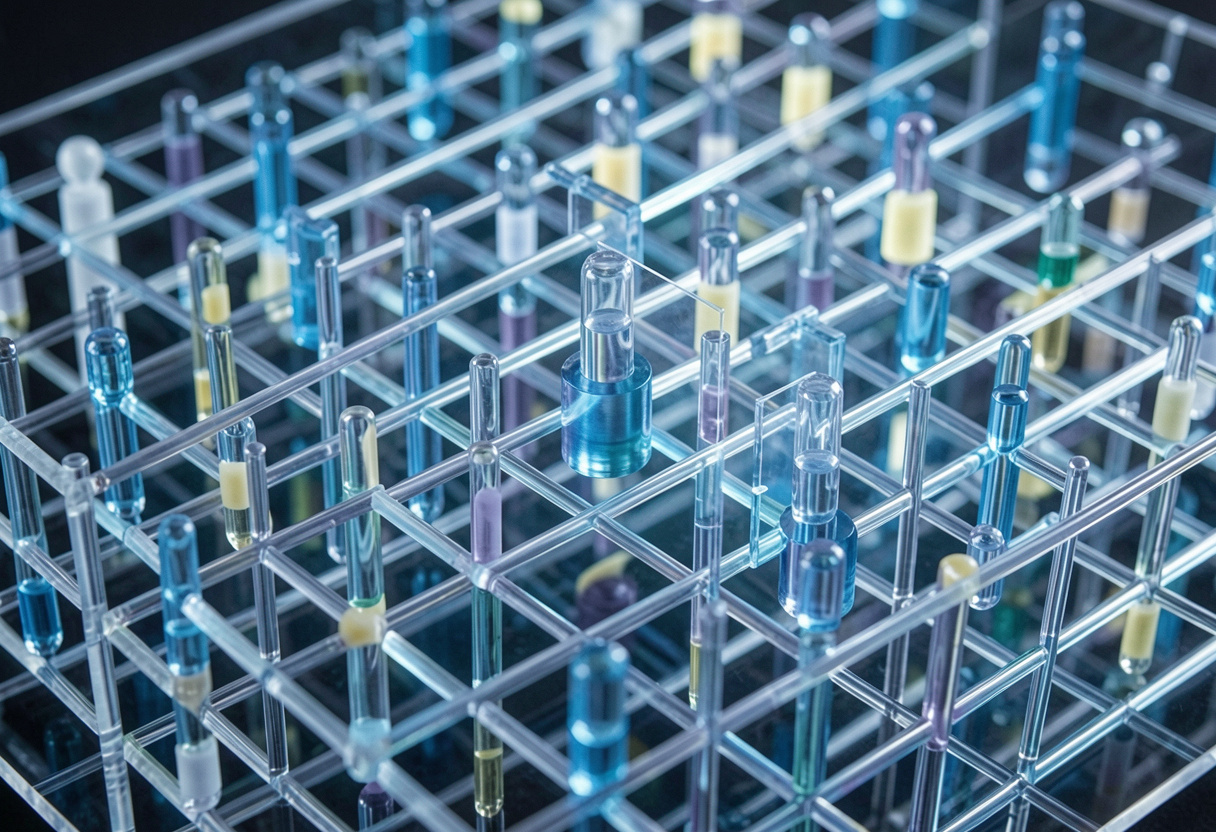
Swiss researchers at ETH Zuric claim to have developed a new approach to quantum operations called swapgates, reaching a level of stability that brings practical quantum computing closer to reality and honestly, the most important detail is not in the speed, it is in the reliability.
Quantum computers work using qubits, quantum units that can exist in multiple states simultaneously thanks to the phenomenon of superposition, this allows certain calculations to be carried out in parallel in a way impossible for traditional computers, but there is a huge problem, qubits are extremely sensitive to the environment, small variations in the lasers used to control atoms already introduce enough errors to compromise entire operations.
While classical computers work with practically insignificant error rates, quantum systems still coexist with much more frequent failures. So the ETH researchers decided to follow a different path - instead of relying exclusively on the absolute precision of lasers, they began to explore something called geometric phase.
The idea is quite elegant, making the stability of the operation depend more on the trajectory followed by the atoms than on small momentary variations in the system. To do this, the scientists created a kind of artificial light crystal using crossed laser beams that keep atoms suspended in extremely controlled positions.
When two potassium atoms come close enough within this structure, their quantum waves begin to superimpose and their states begin to interact and this is where the so-called quantum exchange occurs. The difference is that in this new approach the final behavior of the system depends much less on external oscillations.
The result is a much more stable operation and the numbers are impressive.
The team managed to achieve 99.1% accuracy in operations involving 17,000 pairs of qubits, all happening in just a thousandth of a second, but perhaps the most important part in the so-called half-trucks. Instead of completely exchanging state between two qubits, these operations perform partial exchanges capable of creating complex quantum correlations, something essential for truly advanced algorithms.
In practice, this brings quantum computing closer to real applications mainly for the evolution of artificial intelligences, only there is an inevitable problem in this technological race, energy, because the more powerful artificial intelligence becomes, the greater its computational hunger also becomes.
Follow my publications with the latest in artificial intelligence, robotics and technology.
If you like to read about science, health and how to improve your life with science, I invite you to go to the previous publications.
Follow my publications with the latest in artificial intelligence, robotics and technology.
If you like to read about science, health and how to improve your life with science, I invite you to go to the previous publications.