Very advanced communication of sperm whales.

Very advanced communication of sperm whales.
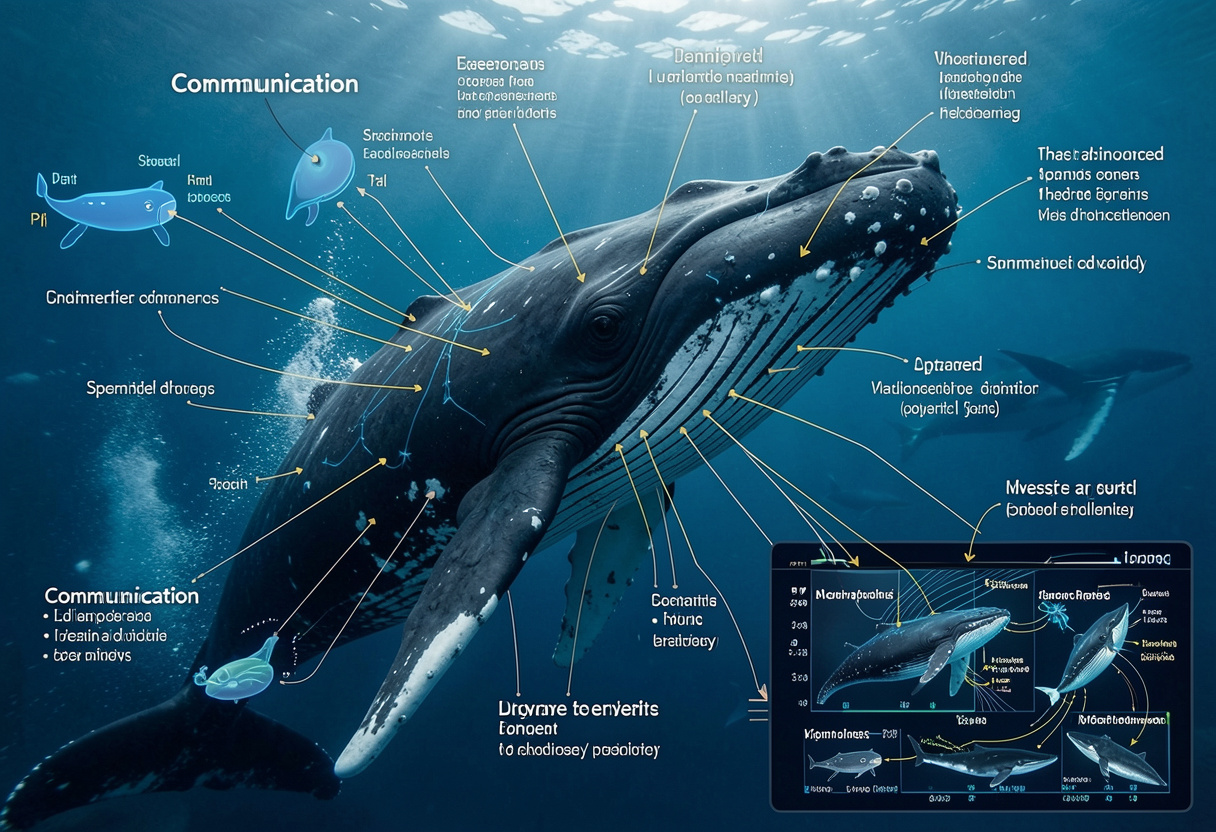


Technology has been used to understand more and more of the life that resides with us here on earth and in this case MIT discovered that the calls of sperm whales are much more complicated than we imagined, revealing themselves to be a form of animal communication almost as sophisticated as human language.


This research is led by researchers from the Massachusetts Institute of Technology. The study revealed impressive communication patterns in whales from the Caribbean region. Daniela Ross, a key figure in the research, expressed her astonishment at the discovery, highlighting the extraordinary communication capacity of another species on this planet that we previously believed was exclusive to humans.


The sounds of sperm whales were already known as a form of communication, their complexity was still poorly understood. By studying thousands of conversations recorded over several years, scientists learned a lot about how these whales communicate with each other.


Sperm whales known for their long lives of strong family bonds use sounds to communicate as they swim together in the depths of the ocean, performing activities such as diving, eating, and mating in sync; Researchers discovered that these marine beings have their own communication alphabet composed of elements such as rhythm, time and ornamentation, which combine to form patterns of “clicks” called codas, adjusting these codas according to the situation, adapting the duration and adding additional “clicks” as necessary.


By analyzing almost 9,000 sperm whale calls, the researchers identified 18 basic click patterns, which they can combine in various ways to create a variety of different sounds. Additionally, whales use different coda patterns during their conversations, allowing for subtle and differentiated communications. These findings challenge the previous notion that only humans have complex communication, showing that other species such as sperm whales possess significant levels of complexity in communication.


The next step of the research will be to understand the meaning behind these conversations and how they affect the behavior of the group. This discovery represents an important advance in the understanding of animal language and highlights the continuous need to explore and preserve the life of our planet. The study was published for the first time in the journal Nature Communications. If you want to consult it, I leave you the link .


Sorry for my Ingles, it's not my main language. The images were taken from the sources used or were created with artificial intelligence
