Crown Flower: The Resilient Beauty
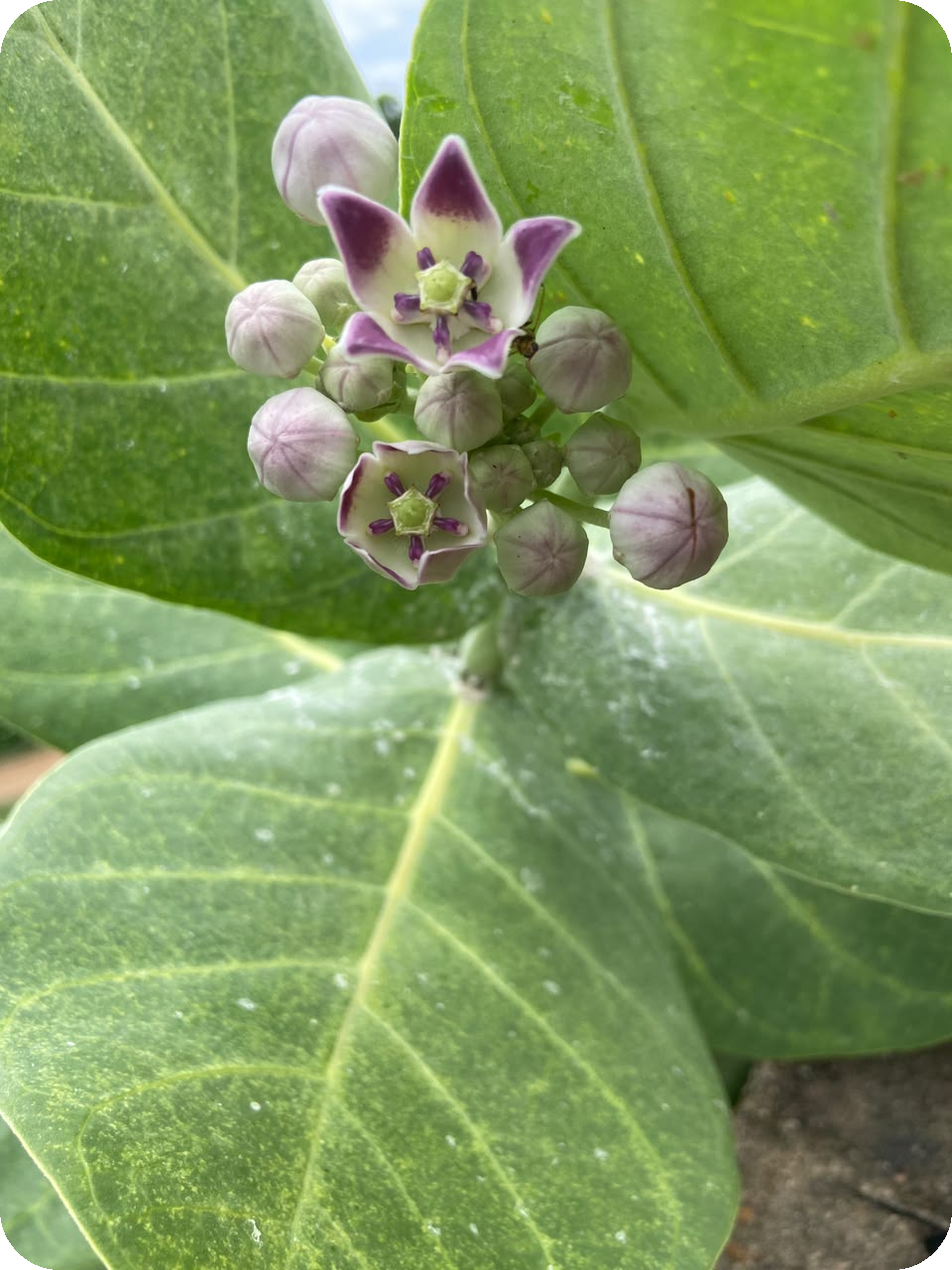
Crown Flower🪴
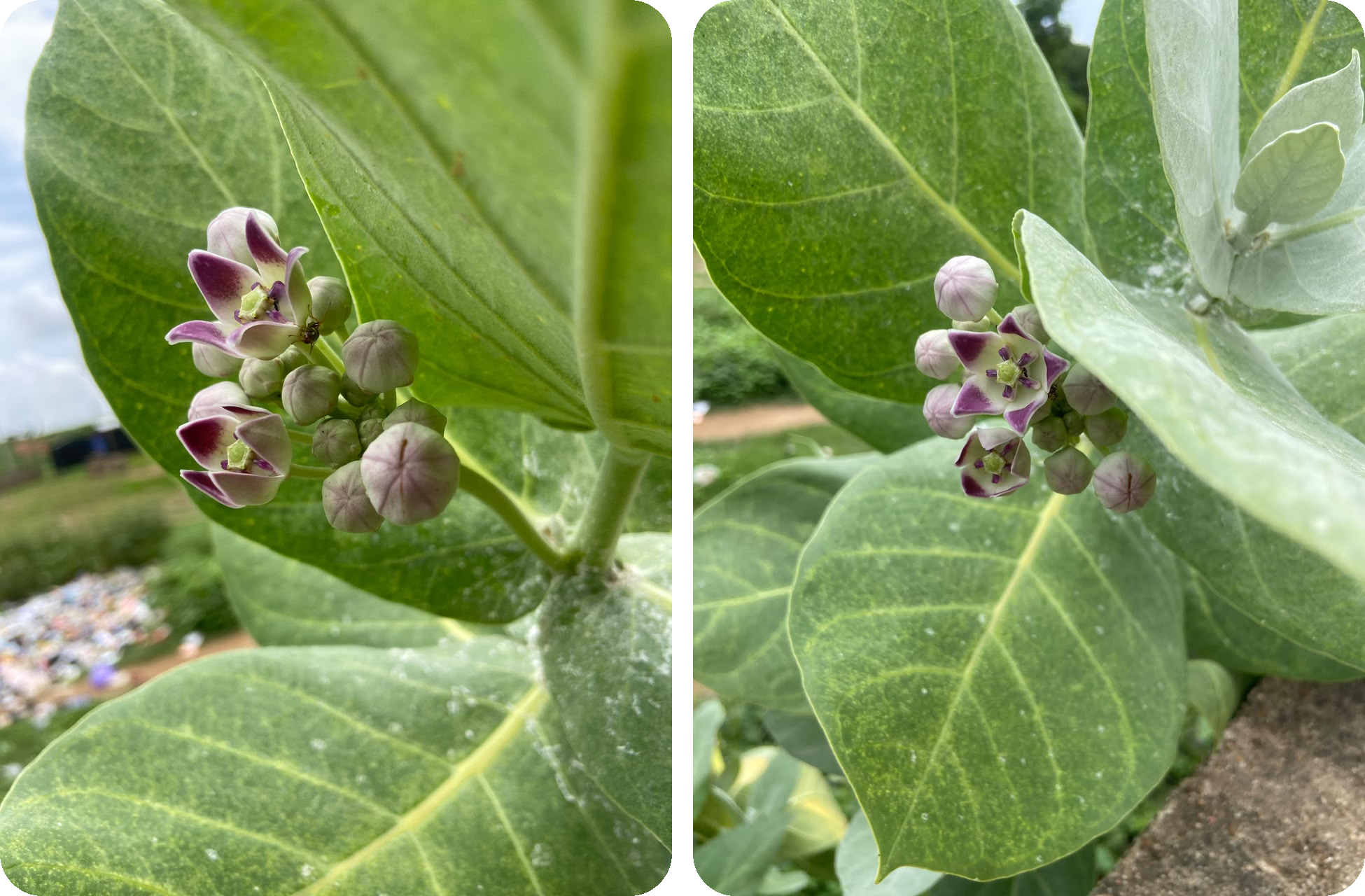
Walking around in the vicinity of my home I stumbled upon a plant so beautiful I couldn't keep it all for myself. Turns out it is know as the Calotropis gigantea (also called Crown Flower, Giant Milkweed, or "Akond"), a shrub in the milkweed family (Apocynaceae/Asclepiadaceae). It features thick, pale grey-green, felt like oval leaves with a waxy coating, star shaped flowers with five reflexed petals, white at the base fading to purple tips, a distinctive raised "crown" (corona) in the center of each flower, typical of milkweeds, clustered flower heads (umbels) with buds at various stages
It's common across South and Southeast Asia and parts of Africa, often growing wild in disturbed or dry, sandy areas which matches the roadside/open-lot setting in your photo. The sap is milky and toxic if ingested, so it's best handled with care, though the plant is ecologically important as a host for monarch-relative butterflies (like the plain tiger).
Beyond its ornamental appeal, Crown Flower plays an important ecological role. It serves as a host plant for the plain tiger butterfly and other milkweed butterflies, whose caterpillars feed on its leaves and absorb its toxic compounds as a defense against predators. Caution is warranted, however: the plant's milky sap is toxic if ingested and can irritate skin and eyes. Despite this, various parts of the plant have long been used in traditional medicine across Asia and Africa, and its fibers have historically been spun into textiles. Hardy, adaptable, and quietly striking, the Crown Flower remains an unsung fixture of the landscapes it inhabits.
🪴🪴
Stockphotos has been of great help
Thank y'all for having me see y'all on the next one