The Documentary "PESTA BABI" Without the Pigs
Our beloved homeland, Indonesia, is currently in an uproar over a documentary film entitled Pesta Babi. Muslims, who are the majority, may be a little surprised by the title of the film. However, Muslims are never worried because the film does not fully highlight the animal, which is strictly forbidden in Islam. The documentary Pesta Babi, a work by Dandhy Laksono and Cypri Dale, is not about animals. This documentary tells the story of several tribes in South Papua Province, namely the Marind, Yei, Awyu, and Muyu, who lost their forests and traditional lands due to the expansion of oil palm plantations, sugar cane, and several other large-scale food projects.
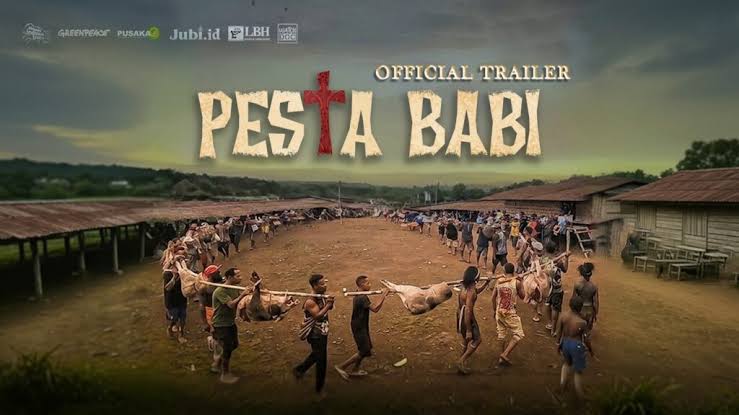
The title is taken from the Awon Atatbon tradition, a traditional ritual of the Muyu tribe that involves pigs as a symbol of social and cultural life. Without forests, there are no pigs. Without pigs, there is no party. And in the end, what is lost is identity itself. The film Pesta Babi had not finished screening in many places when reactions began to come. At least 21 instances of serious intimidation were recorded during film screenings in various regions, ranging from pressure to cancel screenings, phone calls from security forces, surveillance by intelligence agencies, and forced dispersals.
The threats and violence involved in forced dispersals have the potential to constitute criminal charges. Legal action should be taken against those who threaten and disperse them, not against those organizing the screenings and discussions. To date, there has been no official statement regarding any legal violations in the film screening. However, the bans have occurred repeatedly, in many cities, by different actors. Films may only be banned based on court decisions and laws. Parties without legal authority are not permitted to prohibit the screening of films in public spaces. Films are part of the creative expression of society, which must be respected in a democratic state.
In a state governed by the rule of law, bans must be based on clear and legitimate norms. Anyone who disrupts a legitimate public activity without a valid legal basis is breaking the law in the first place. The film "Pesta Babi" tells the story of an indigenous community that lost its Awon Atatbon tradition. Their pig feast disappeared not because someone officially banned the ritual, but because the forest and land that were necessary for it had already been taken. If the state is reluctant to provide space for the screening of a film about this loss, it is seeking to do the same in other areas.
Regards,
@fadlymatch
Si hay personas de poder que se oponen a la proyección de esta película es porque aborda verdades, y a la mayoría de las personas no les gusta que se evidencie el colapso natural y cultural que se aborda en este documental, donde se plasma:
Thank you @ruthjoe