Calling on Steem's Hive-Mind for a Wildlife Guessing Game [🔥🔥burnsteem100🔥🔥]
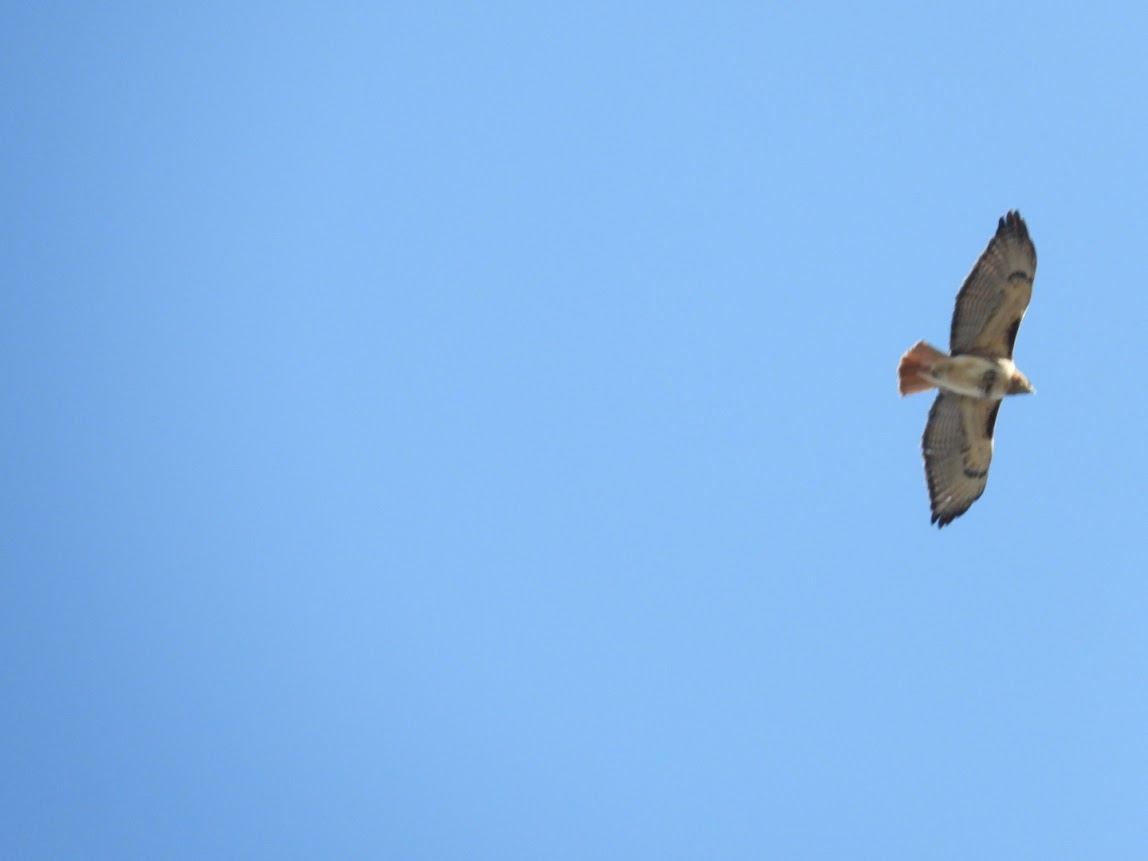
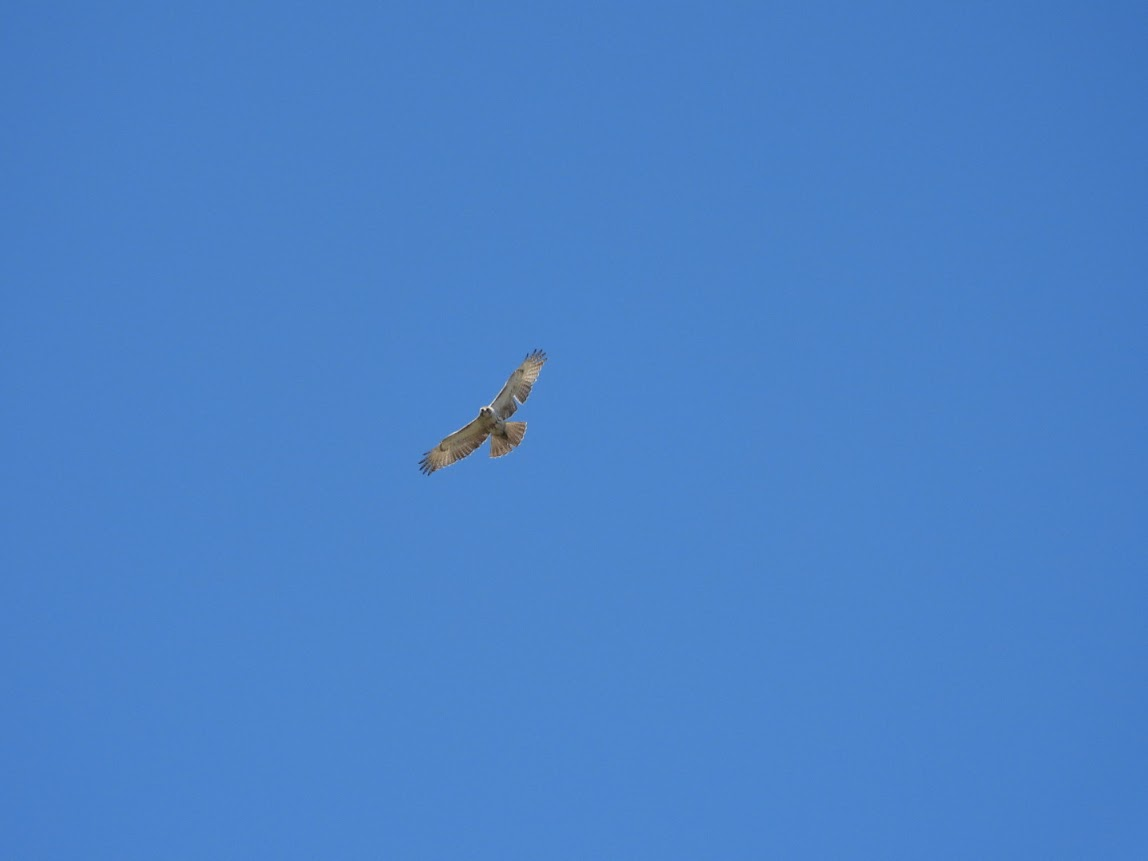
Here are two unedited photos of Red-tailed Hawks, both taken this spring in my neighborhood in southeastern Pennsylvania. Are they showing the same individual animal?
Burn tokens by voting for the Yes/No comment that you think is correct, and reply with your own argument about why, or why not.
| Image 1 (1360) | Image 2 (3179) |
|---|---|
| ƒ/5.6; 1/500; 234mm; ISO320 | ƒ/4; 1/1250; 30.5mm; ISO180 |
 |  |
For the record, I don't know the right answer (though I have a pretty strong guess), so we're just looking for a consensus opinion.
Factors to consider:
- Based on camera settings and lighting conditions, similar real-world colors can sometimes look very different in photos (and vice versa)
- Does the animal's coloring change over the course of the year?
- High zoom vs. low zoom alters the bird's apparent size.
- Does the animal have sex-specific differences in appearance?
- Do adults and juveniles look different?
- What else?
I would say the pattern on the underside is/looks different.
I agree that the pattern definitely looks different. I can't tell 100% if that's only because the feathers are fanned differently, though.
In Image 1, I think the feathers are sort-of tightly packed together. In Image 2, they're more fanned out - which changes the shape of the markings, especially on the wing tips and trailing feathers. I have a hard time imagining what that Image 2 pattern would look like if the feathers were packed together like they are in Image 1.
I'm not sure either. In the picture on the right, the bird's feathers are spread out, but I imagine it with its feathers closed, so I don't think the proportions quite match those in the picture on the left.
As noted, here, I agree. I'm basing my opinion on the apparent different sized gaps between the patagial marks and the comma.
They seem to be different to me.
I had the same hesitation because of the difference in angle and distance, and the feathers in a different state. But the tell for me is the underside - one seems to have :
The other bird exhibits a more or less straight belly band, a more rounded tail marking, and deep projections under from the edges of the wing band as well as some apparent breaks in the dark pattern
One more tell, depending on the sequence and timing of these captures:
that missing feather!
What else did you observe during these two sightings that gives you an idea?
The "missing" feather, might not actually be missing. Apparently, they sometimes create those gaps for aerodynamic reasons when they're gliding. You see that a lot with the Turkey Vultures. It would be like a person making the "Live long and prosper" signal with our fingers.
Good idea to focus on the belly, though. I think that doesn't change based on feather position, and I doubt if it would change much over the course of a single spring (these photos were taken a couple weeks apart, mid-March and early April).
I agree that they're probably different animals. My reasoning is based on the "dash comma" section on the leading edge of the wings. In Image 1 both wings have a pronounced dash and a pronounced comma. In Image 2, the dashes and commas almost run together.
I suppose the difference could have to do with flight position and camera angle, but it looks "real" to me.
(For the "dash" and "comma", you can see this reference diagram. The "dash is actually the "patagial mark", but I can never remember how to spell that.)
Finally, I have a bit of "insider information. I saw two hawks together in May that I think are almost certainly a local resident pair. Claude and I named them "Frosty" and "Toasty" based on the head colorings (even though that coloring could just be a trick of the lighting and camera angle).
It's really hard to make out the head colorings in these photos, but I'm guessing that Image 1, up above, is Toasty and Image 2 is Frosty. OTOH, in this image Frosty doesn't have the triangular tail marking that you mentioned , so maybe not. But, I'm thinking the triangular mark could just be a side-effect of the fanned out tail feathers, or it might even be the feet.
Ah; interesting point! I know that hawks sometimes lose a feather that gets tangled in a barb during landing or takeoff, and they molt a feather or two at a time so they don't interrupt their flight control too much. I didn't think they could spread their non-wing-tip feathers quite so much. (And I now know that's not accurate; they actually can't spread those feathers - see below, where I've detailed some of my research.)
Just to be sure, I looked it up and found out that movement in the secondary flight feathers is not an action like us spreading our fingers—not for those feathers, anyway!
According to a Gemini search summary, those feathers are controlled individually and involuntarily by a group of muscles connected to one follicle per feather. These muscles help adjust the "camber" of the feather. This adjustment intentionally does not allow for feather separation the way we see in that photo because those feathers serve as an airtight sail by interlocking, and moving together as the camber is adjusted; fascinating!
Tiny specialized sensory feathers called filoplumes help sense and react to various changes in wind to make these tilting adjustments across the secondary feathers automatically. Interestingly, red-tailed hawks evidently have "many spectacularly long filoplumes associated with a single flight feather".
So it seems that is almost certainly a missing or broken feather!
And Oh My Goodness! there is a lot of information about feathers. Maybe we should do a series just on feathers—it would last a long time!
I don't know much about birds and I'm actually learning about birds through your post. Couldn't tell any apart
Me too. I'm learning as I go.
Your post have been rewarded by the Speak on Steem curator team!
Now become a plus member delegating at least 500 SP
Ways to support us:
Curated by @marvinvelasquez