Curiosity: The Bug Zapper and the Multimeter.
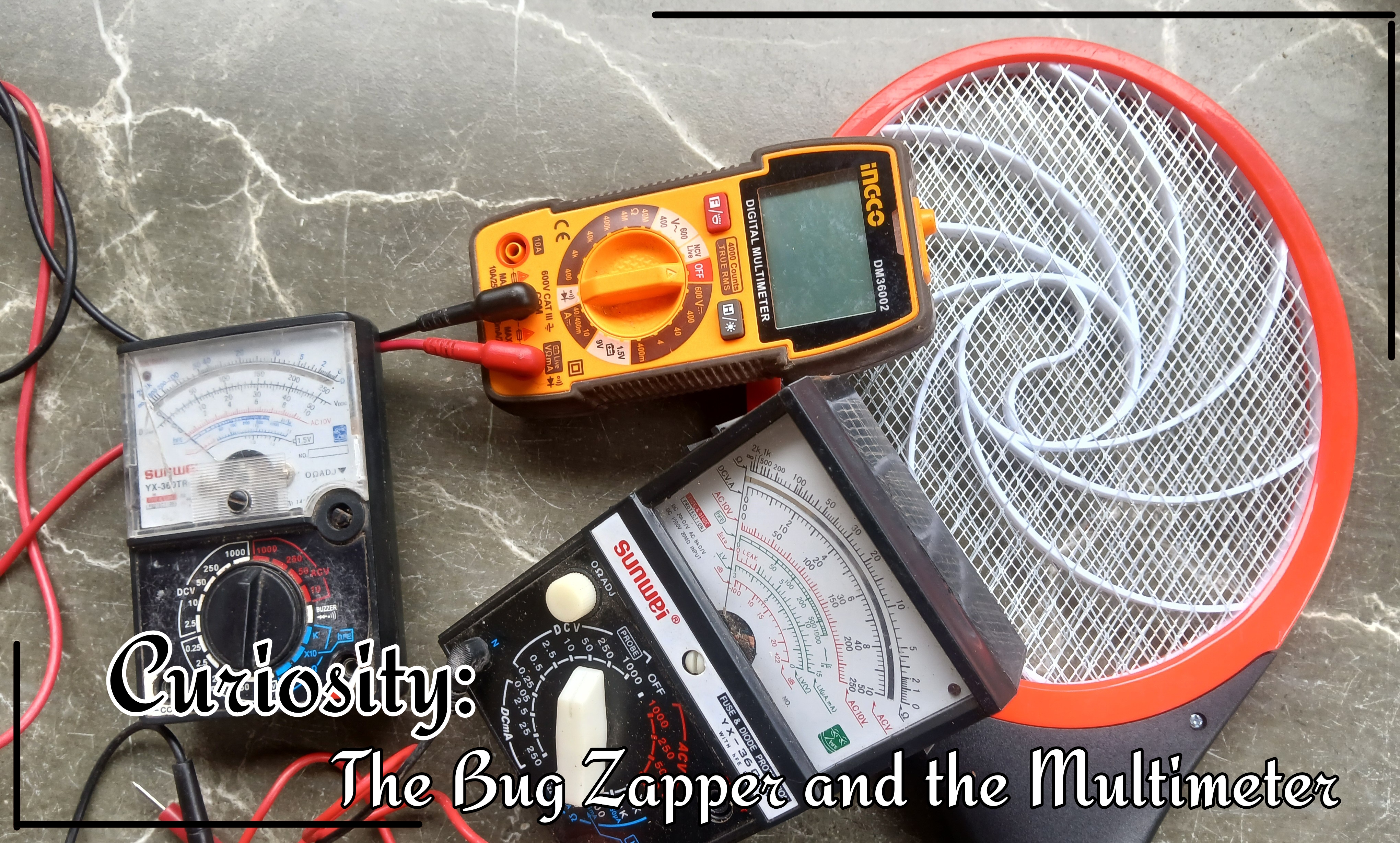 Captured with Galaxy-A15
Inside the Bug Zapper.
I am holding the weapon that broke the siege and brought down the daughter of House Culicidae, a fierce warrior of the Animalia kingdom. This story is recorded in the book that details the major war stories. You may remember it. The first time it sparked, the night itself cried out. That was the bug zapper, and that was where this war began.
I just imagine such power in the hands of more people. Which led to the thought of multiplying it — an idea that required studying the weapon, its components and systems. That is why I invited the screwdriver and now the multimeter.
As expected, the INGCO multimeter came with a team of three, comprising both digital and analogue capabilities, ready to test quantities like resistance, capacitance, voltage, current and continuity. With this, the diagnosis team was assembled.
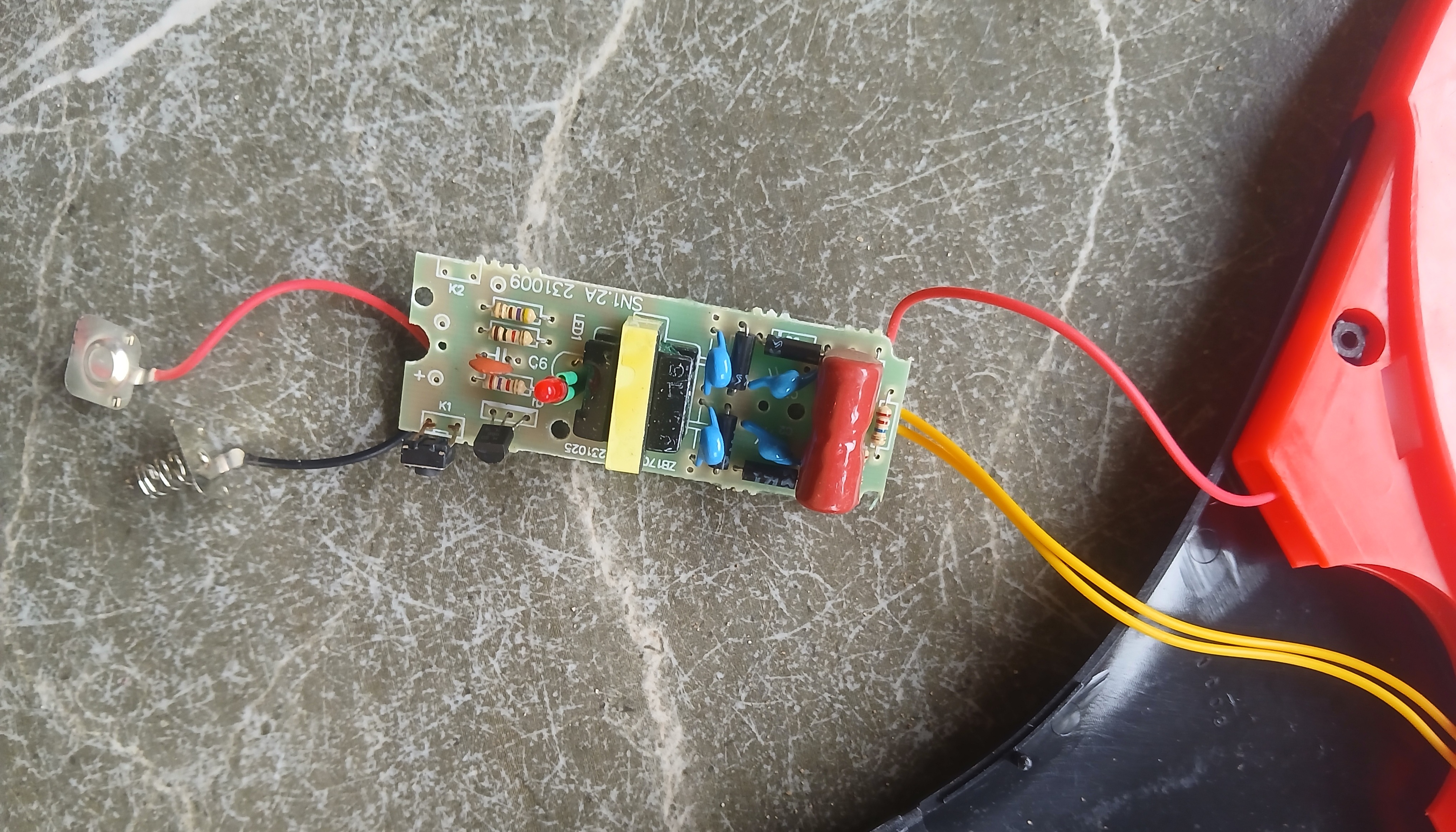
This is the core of the bug zapper.
Energised by two 1.5-volt AA batteries with a combined voltage of 3 volts. And that is all you can get from two AA batteries.
The 3 volts is routed past a push switch that only activates and delivers power to the circuit when there is pressure on the switch. Once released, the circuit is opened and voltage supply is cut.
Both INGCO and Sunwɐi emphasised the fact that measuring values while circuit components and systems are still fully connected to the circuit would result in inaccurate readings due to something called parallel paths and residual charge.
The suggestion was simple: Isolating some systems or circuitry, some components will have to be extracted. They gave examples, citing that a 10kΩ resistor may read as three thousand ohms because the power is flowing through a path of minimal resistance.
Permission to mutilate the circuit was not granted. What if there was an attack when the weapon had already been dissected? And worse still, what if after reassembling it, it fails to reanimate?
While experiencing an awkward silence for the few minutes following the decision not to tamper with the zapper, two voices broke it.
Sunwɐi XY-360 TR, and a member of the INGCO team whose specialty is analogue systems.
Both said the same thing: "Read the markings. Don't cut."
Their suggestion was like a non-invasive diagnosis. The components could be identified and rated based on the inscriptions on the circuit, the values or colour code printed on each component.
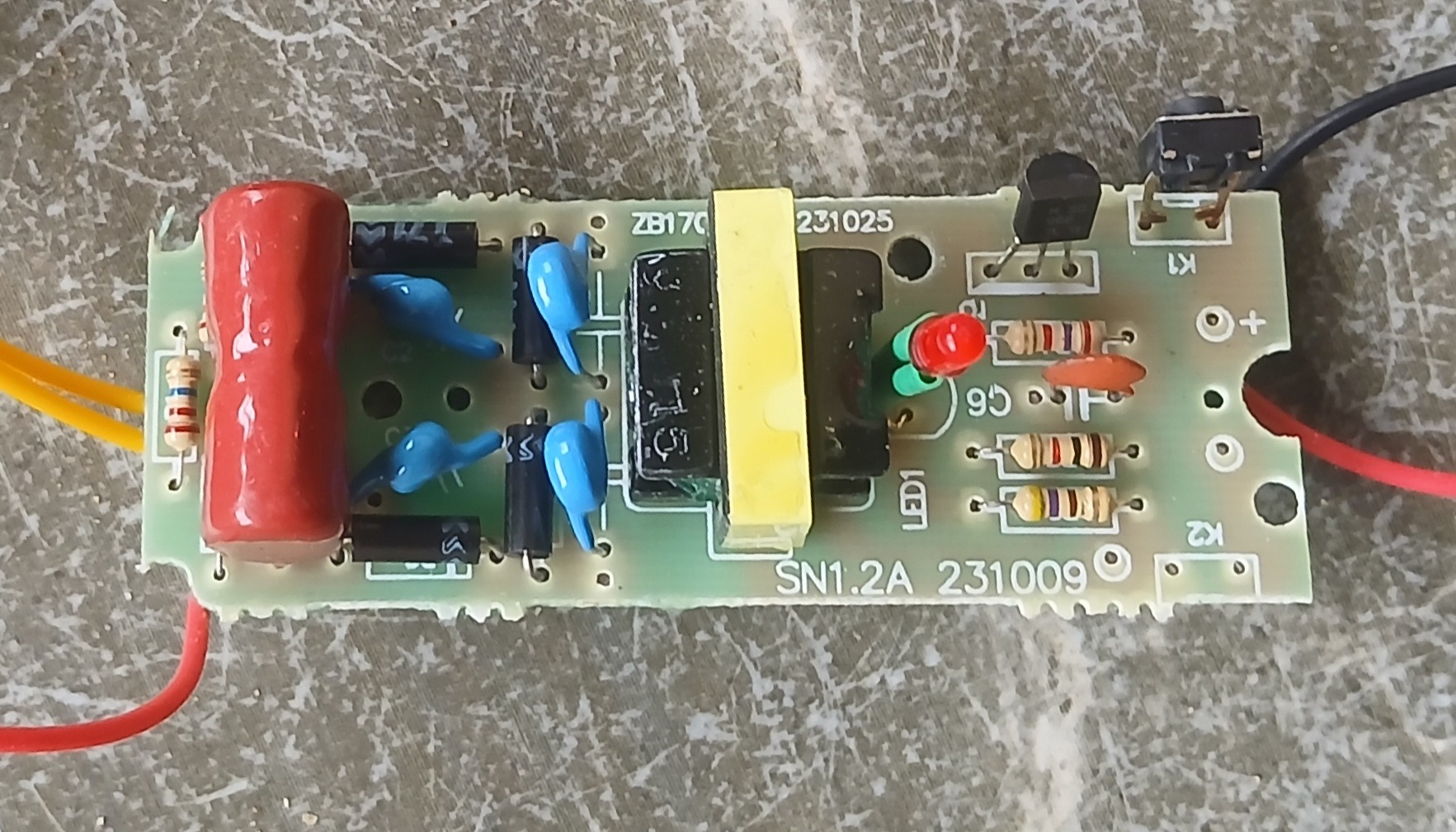
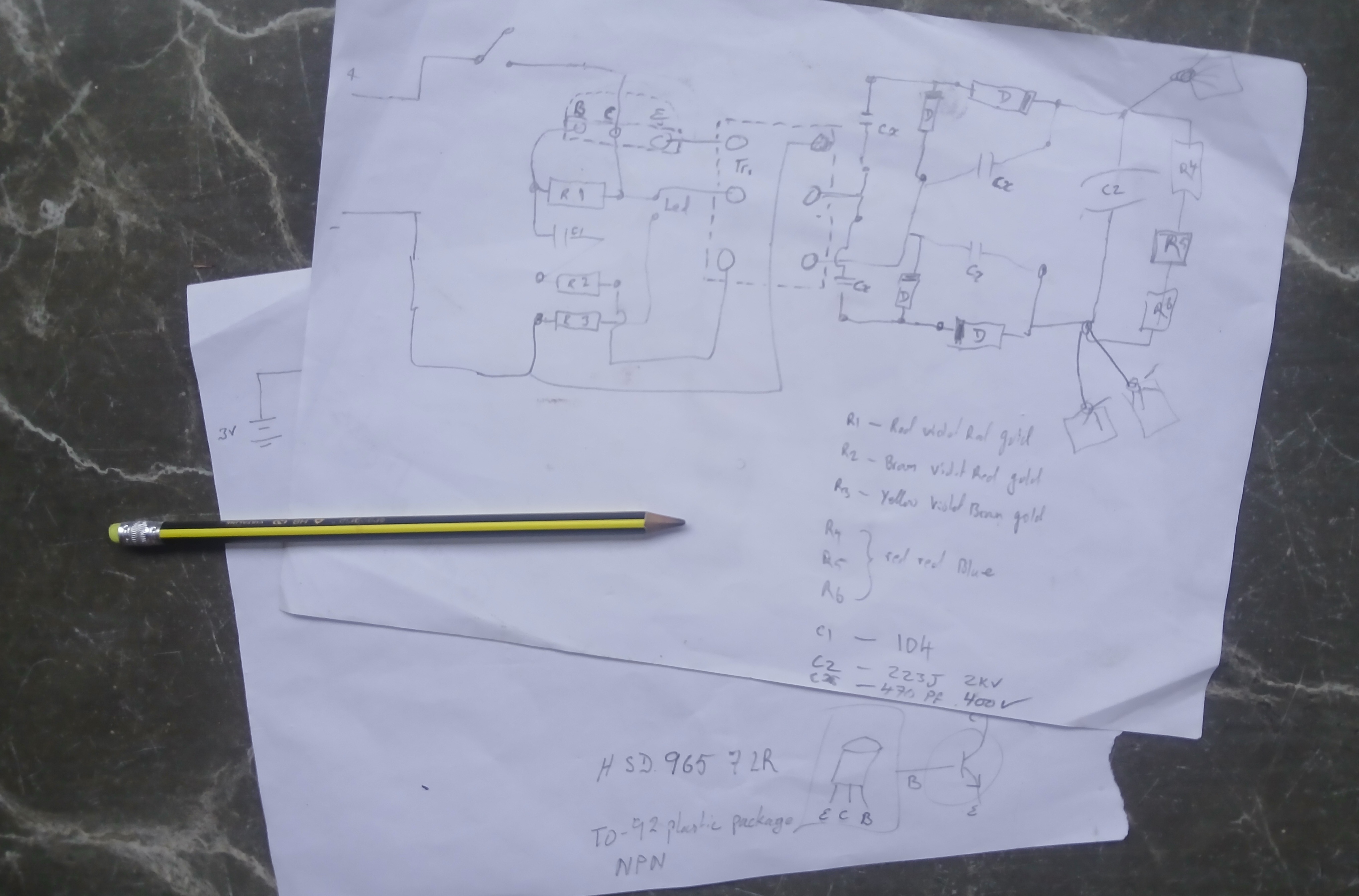
The resistor labeled R3 with colour code Yellow-Violet-Brown-Gold sets the conditions to keep the red light emitting diode functioning, by cutting down the voltage going through it. Call it the LED's bodyguard: 470Ω, and you will still be technically correct.
Besides the switch and the LED, other components are part of a booster circuit, sometimes referred to as a joule thief: A tiny coil, a transistor, and a capacitor working together to take the 3V and punch it up to 200V, to 400V, to 800V, to 2000V and beyond. The switching transistor and coil are the key players.
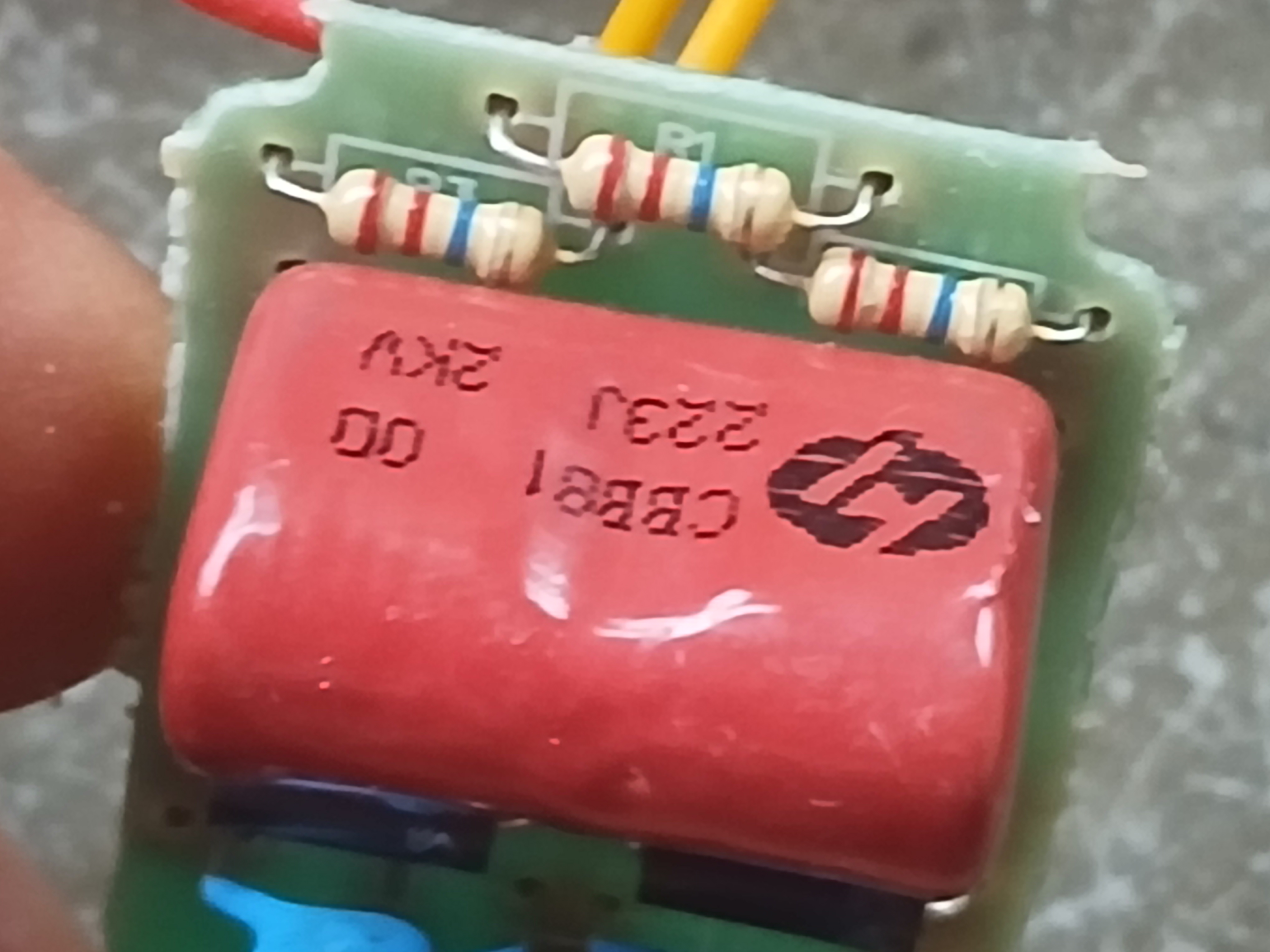
They help build up the charge in the capacitor rated 233J, 2kV. The built-up voltage is passed to the wire mesh, waiting for any bug to generously gift it all.
The three resistors in series, Red-Red-Blue-Gold, with a combined resistance of 22MΩ, act as a drain that discharges the capacitor to zero in a fraction of a second, after the power switch is released.
But there is a problem. The device warns of 3000 Volts. That is plenty. INGCO can handle a maximum of 600V and Sunwɐi XY-360 TR can only safely handle a maximum of 1000V.
Conclusion
The diagnosis was complete, the bug zapper is returned to its place, armed and intact. Ready for the next night. Ready for the next daughter of House Culicidae.
We have the schomatics, we will be attempt to recreate. We will not give up.
I am inviting @josepha, @lhogic, @sergeyk and @bossj23. Please tell me in the comment section, now that we have more information, can we still consider replicating it?.
This post is the third in a series
| The Bug Zapper Adventure |
|---|
| 1: How the Bug Zapper Works. |
| 2: The Bug Zapper and the Screwdriver. |
| 3: The Bug Zapper and the Multimeter. |
Media Credit |
|---|
| Composer | @manuelhooks |
|---|---|
| Captured with | Galaxy-A15 |
| Posting Date | [Tuesday 25th August] |
| (@) 2026 |
#learnwithsteem #club5050 #writing
#steemexclusive #technology
#creativewriting
#nigeria
X
https://x.com/manuelhook41759/status/2095617138002145541?s=20