SLC-S31W6- My Taste My Culture (Unity Through Food)/ (Patishapta Pitha)!
Greetings everyone! This Mohammad Sumon! from #Bangladesh
Hello everyone! I hope you all are doing well by the grace of the Almighty.
Today, I am very excited to share my entry for the Contest organized by the Ladies Universe community. A special thanks to the community admin & modarator@alexanderpeace, for hosting such an engaging competition.
Spreading positivity and creativity through my words.
SLC31-W6: My Taste My Culture (Unity Through Food)
In my opinion, food not only satisfies our hunger, but it also connects us to our culture, traditions, and people from one region with those from another. As people have migrated from one place to another for thousands of years, they have also taken their cooking techniques and tastes with them. As a result, some foods have united people from different cultures, even across geographical boundaries.
 |
|---|
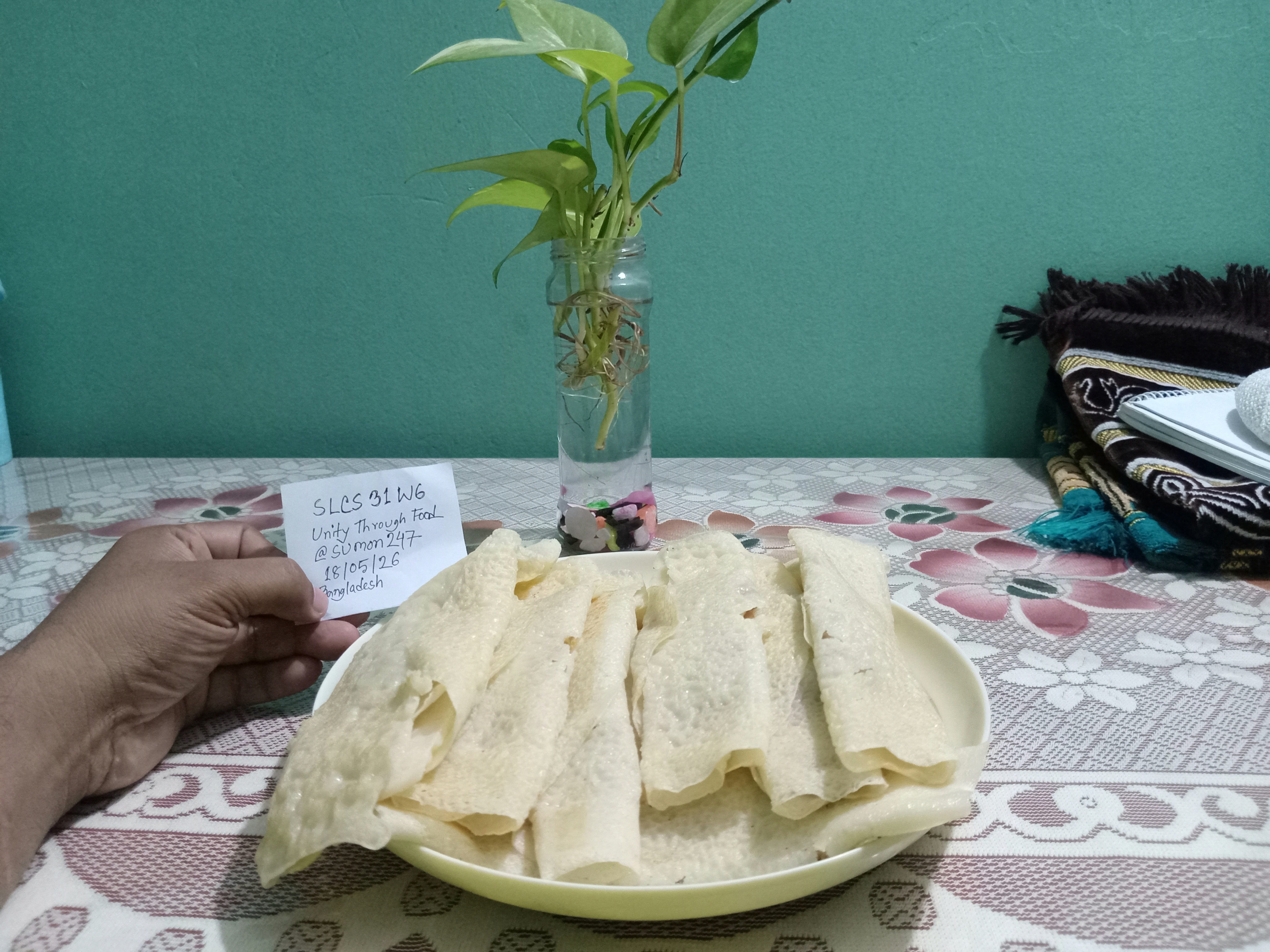
In this last week of the Steemit Engagement Challenge, I have come up with a traditional sweet dish that is very dear to my own culture, and at the same time it connects the cultures of different countries in Asia. My presentation today is Patishapta Pitha.
Patishapta Pitha
Task 1: Preparation (Ingredients and preparation process) |
|---|
Patishapta Pitha is basically made in two steps: making the inner filling (kheer or pursa) and making the thin bread or batter on top. Below is its simple recipe:
Required Ingredients:
| Ingredients | Amount |
|---|---|
| Liquid milk (for the inner kheer) | 1 liter |
| Jaggery | 4 tablespoons |
| Rice powder | 3 cups |
| Flour (Atta) | 1 cup |
| Egg | 1 piece |
| Soybean oil | 30 gm |
| Salt | As per taste |
Preparation process:
Step 1 (Making kheer)
 |  |
|---|
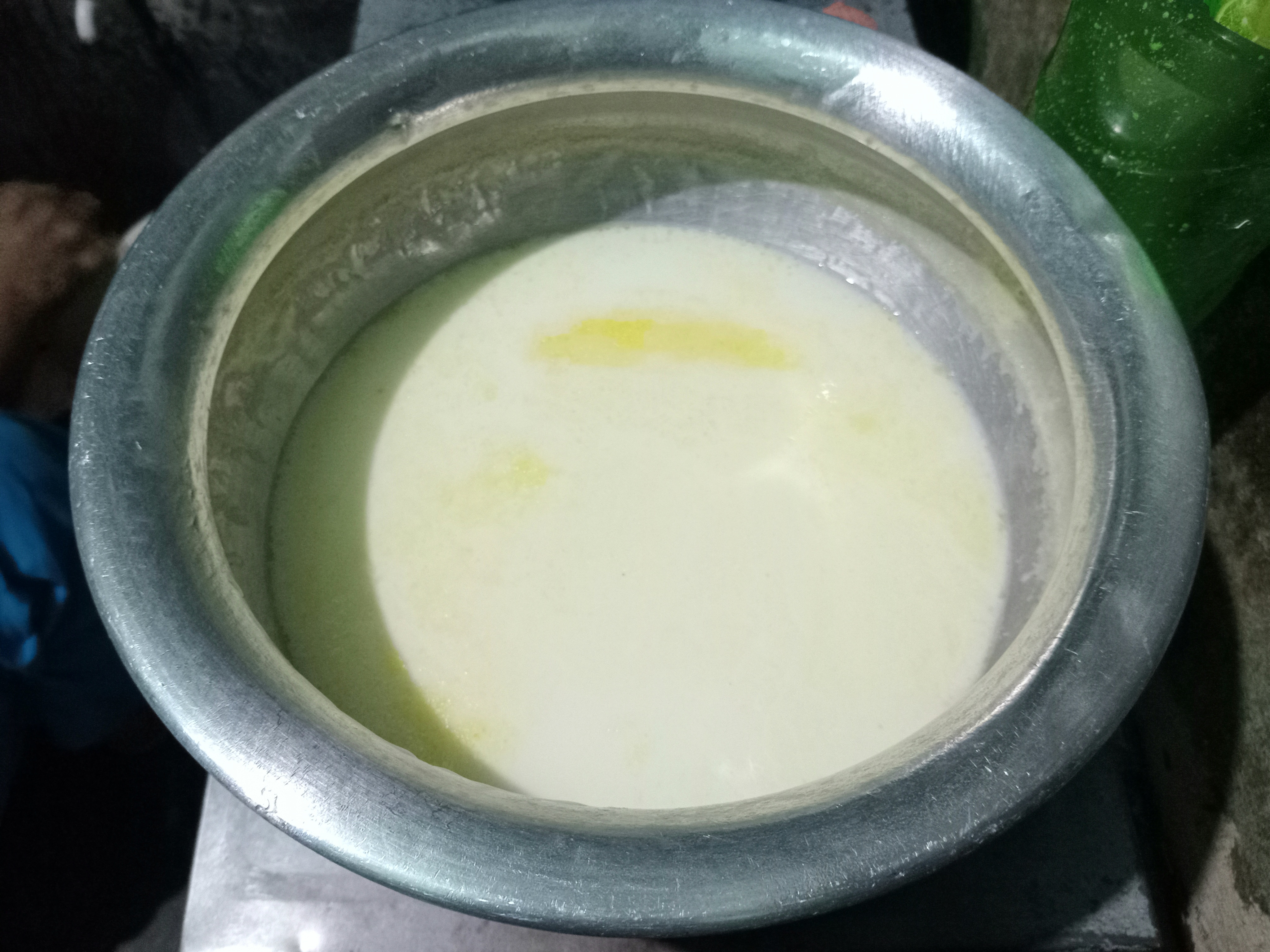
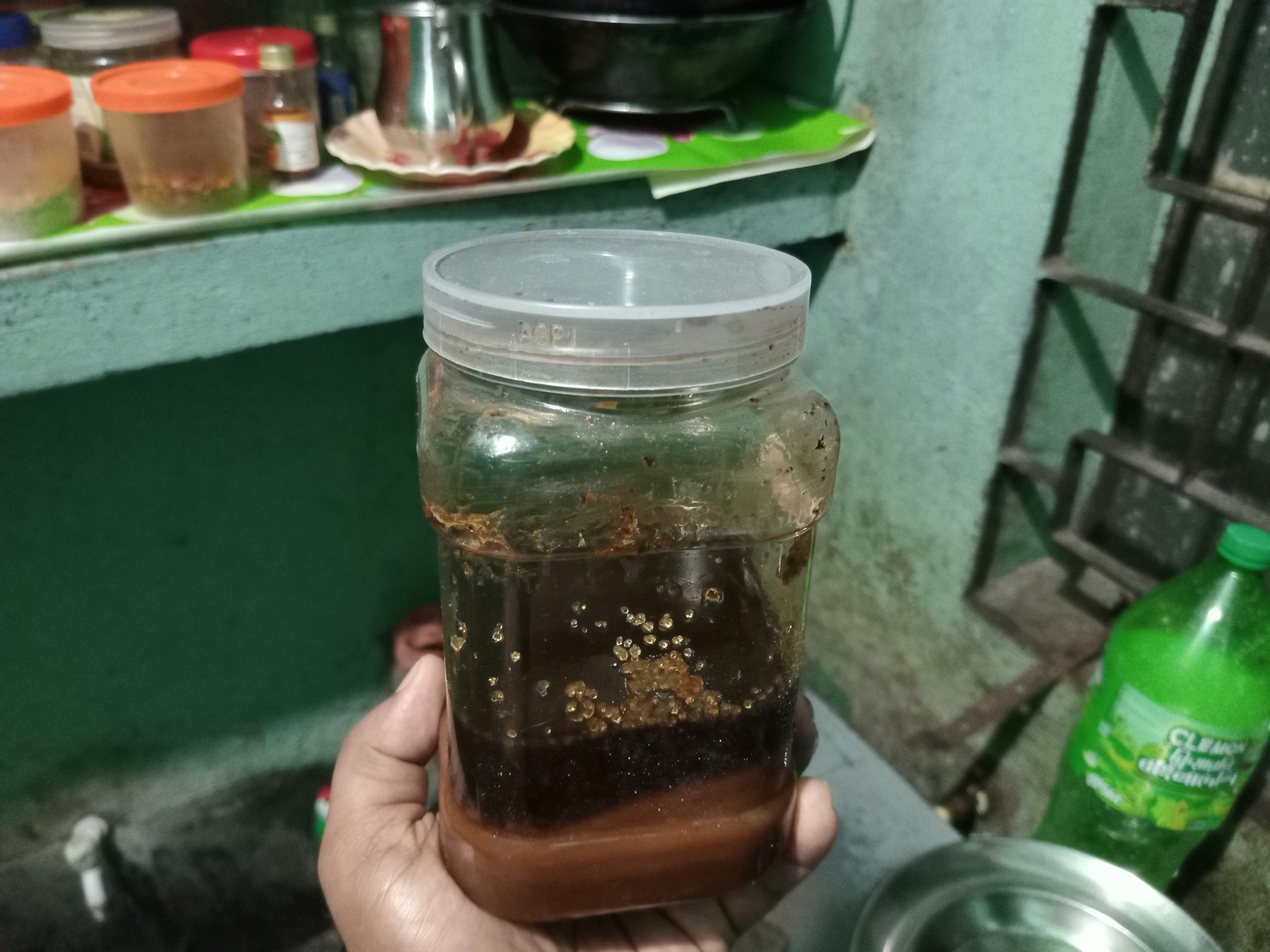
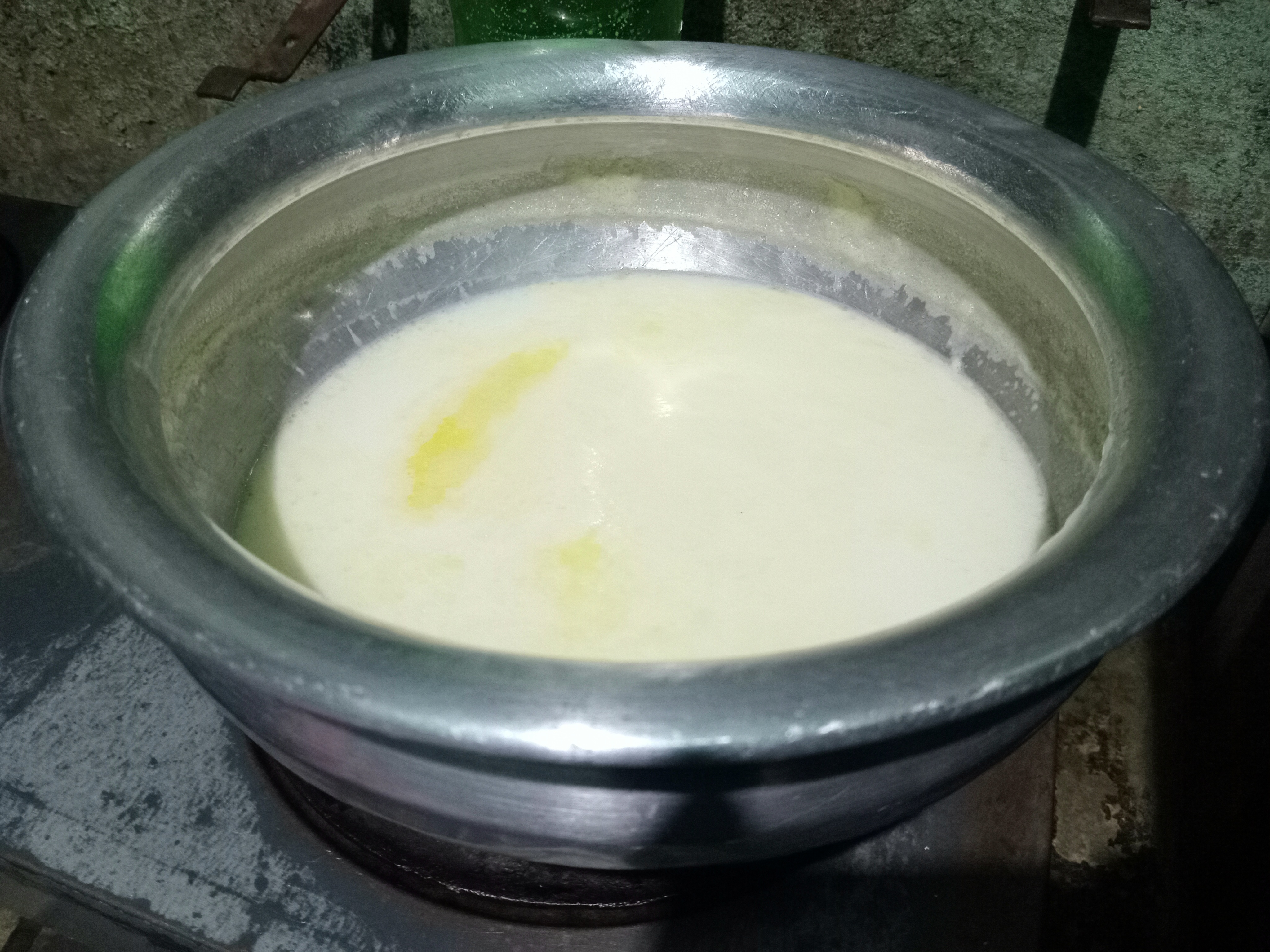
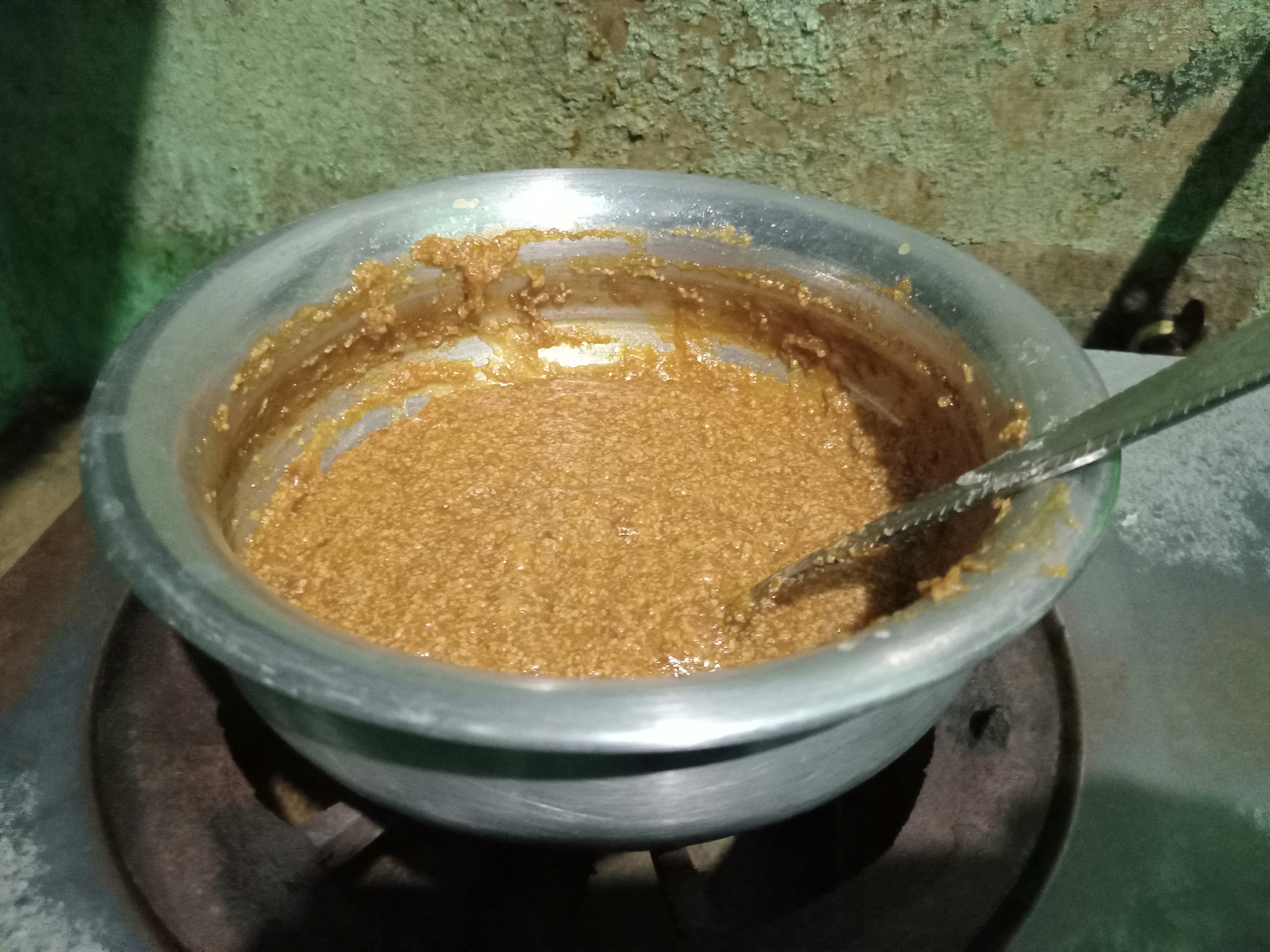
First, boil the milk in a pot and thicken it. When the milk thickens, I use liquid jaggery (many people use sugar). I made kheer by simmering it in the oven for a long time, I kept it in the oven for about 20 minutes. When the mixture thickened like halwa, I took it out and cooled it.
 |  |
|---|
Step 2 (Making the Batter)
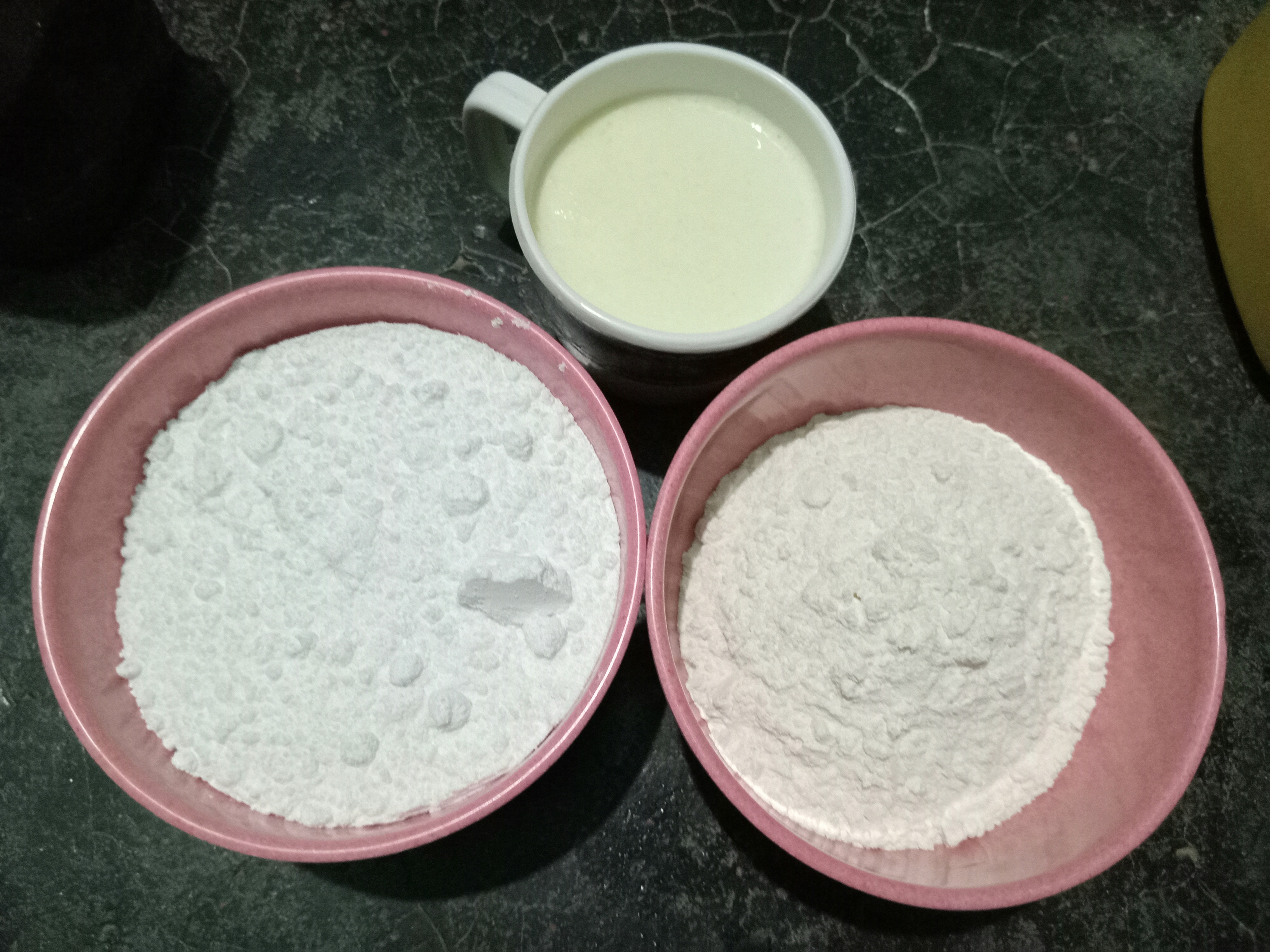
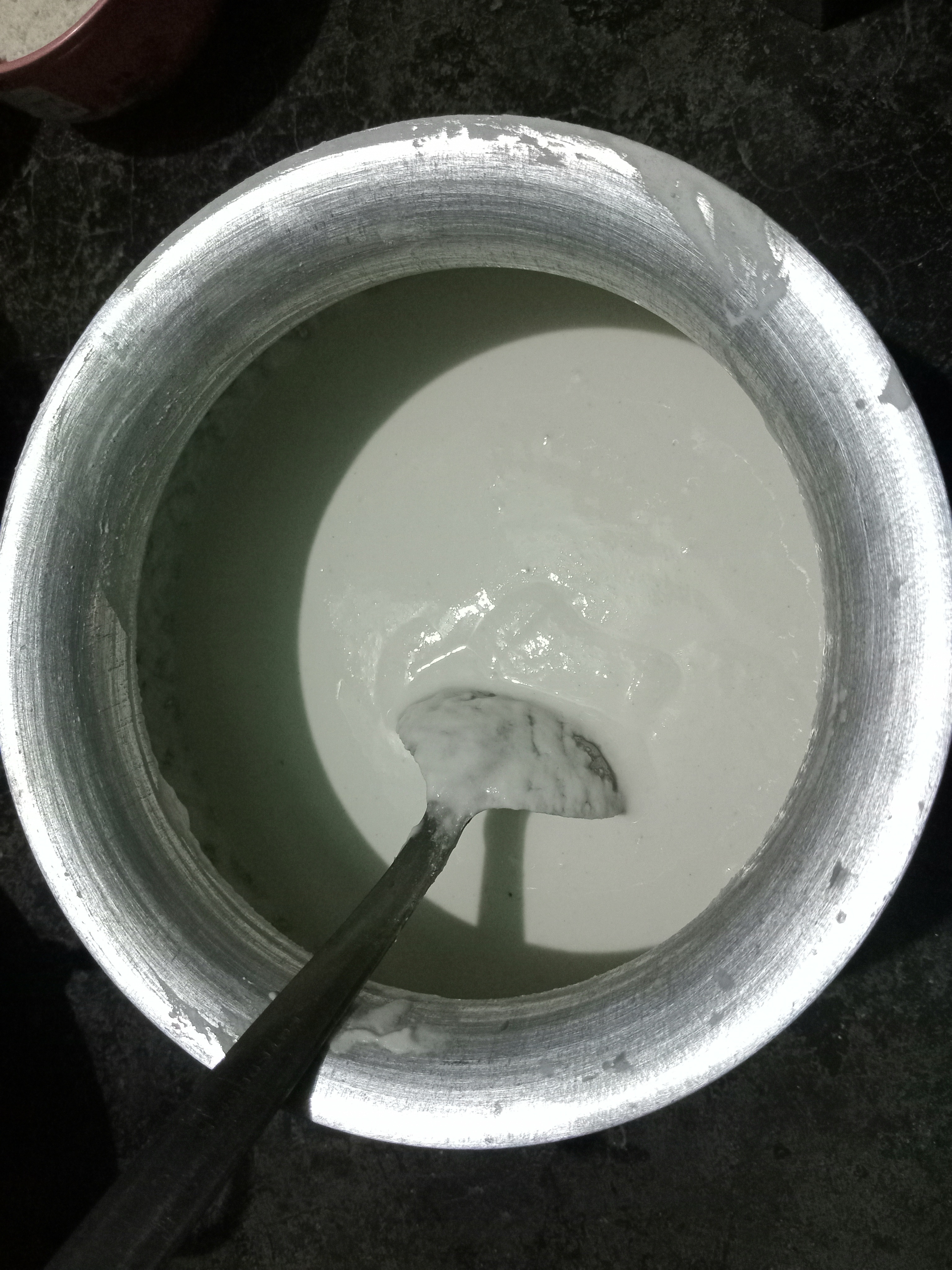
In a large bowl, mix rice powder, flour, eggs, and a little salt and jaggery. Now add liquid milk little by little to make a smooth and thin batter (ball). The batter should not be too thick or too thin. I kept it covered for 30 minutes.
 |  |
|---|
Step 3 (Making the Pitha)
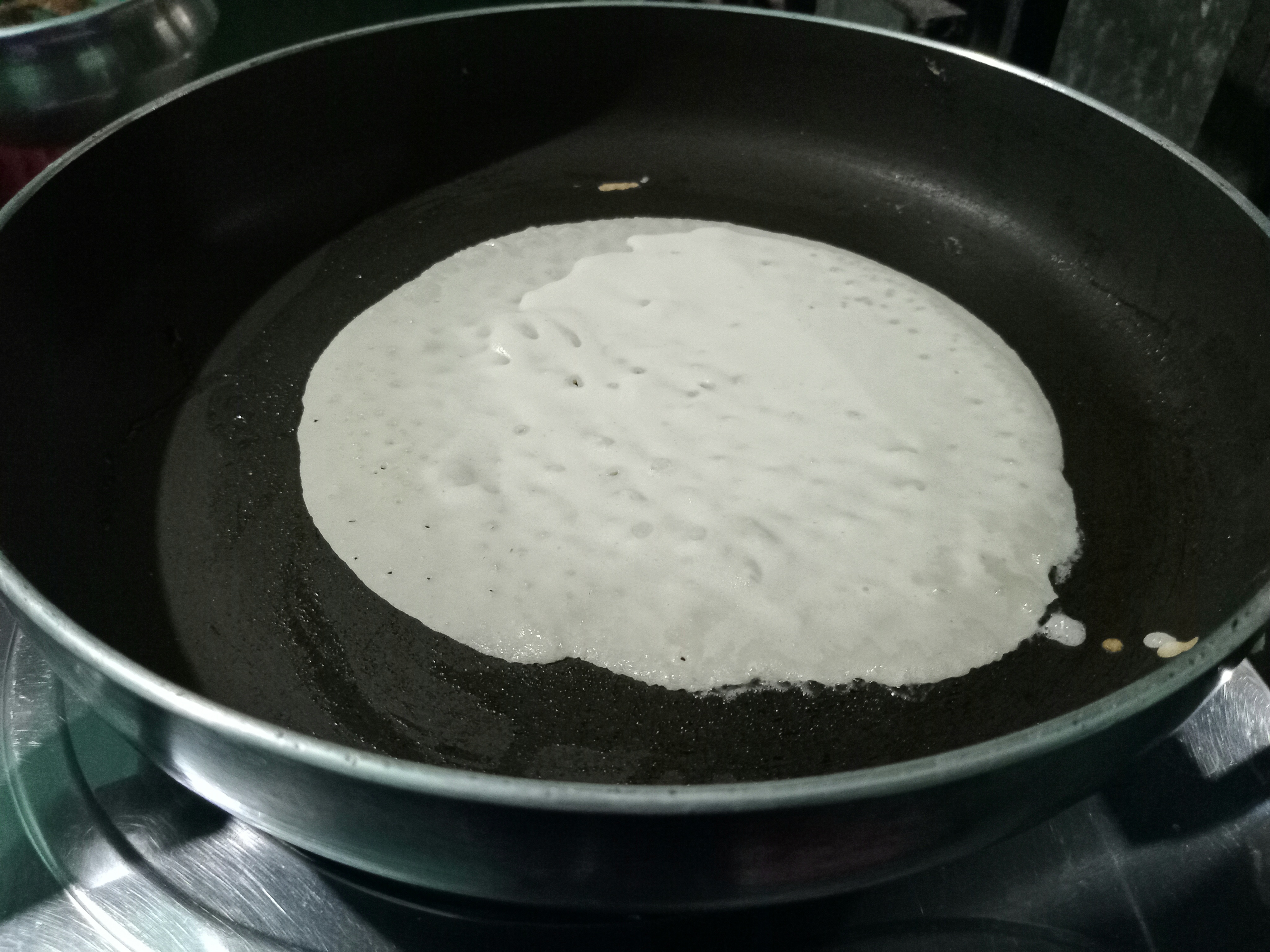
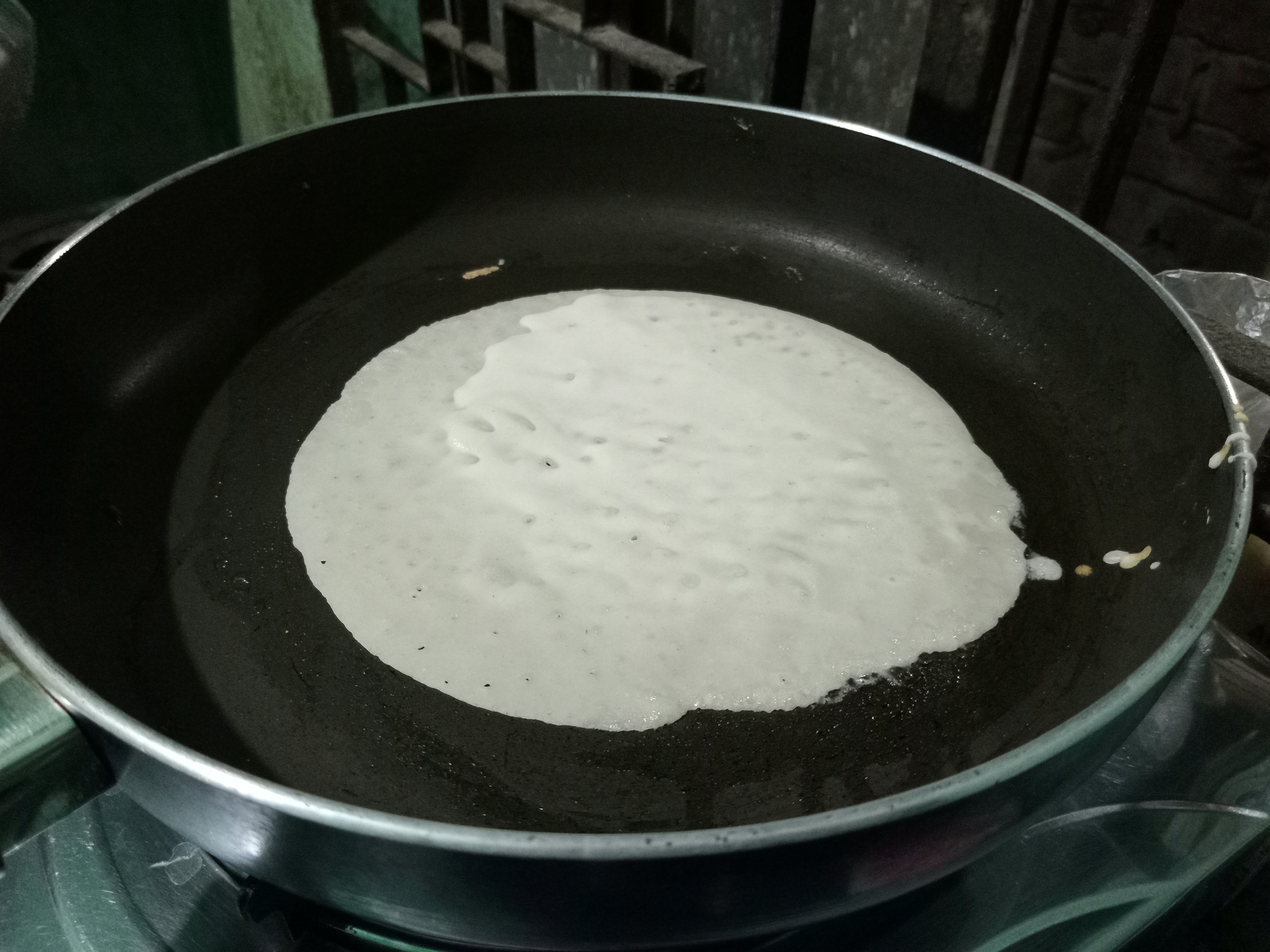
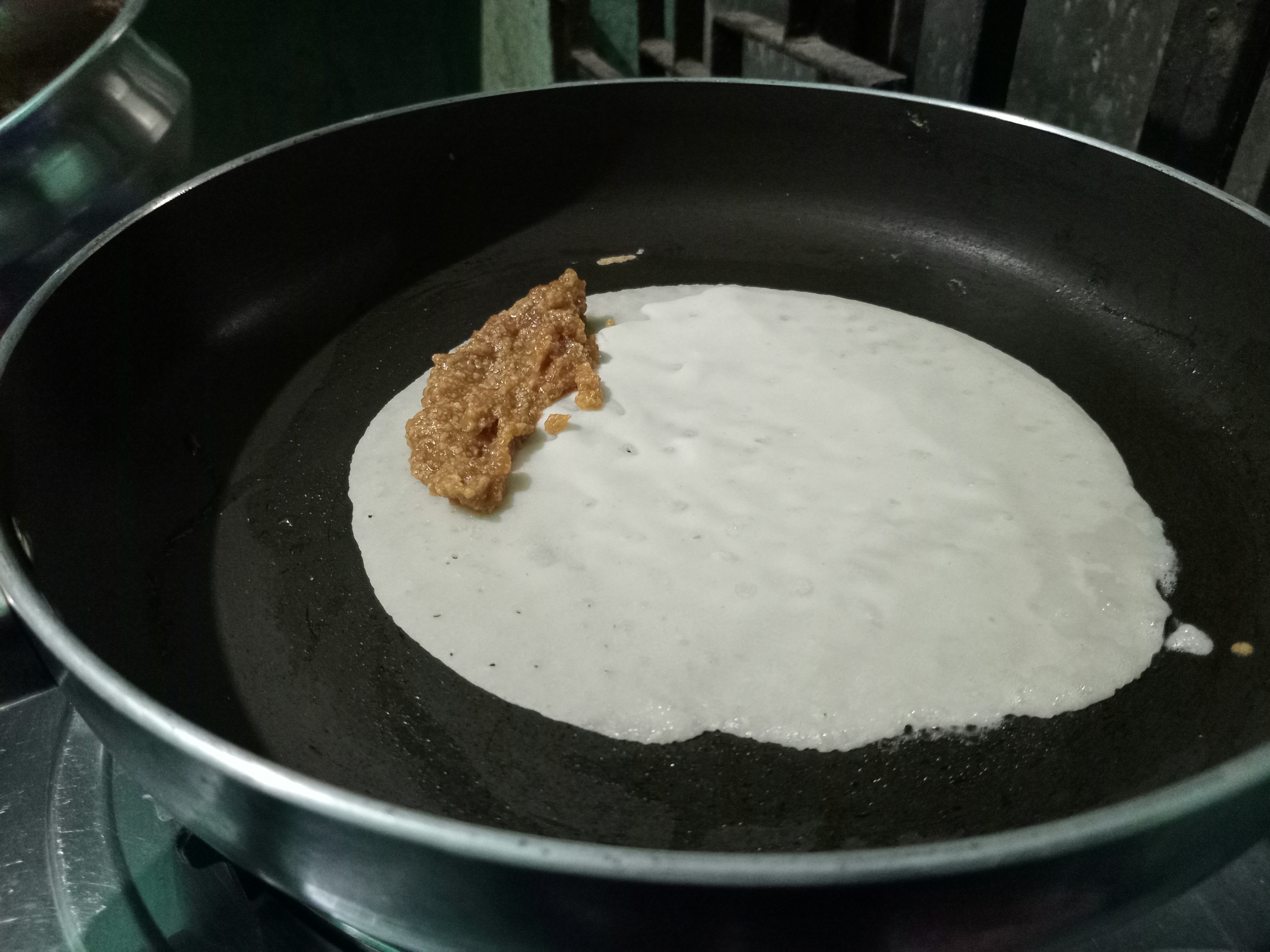
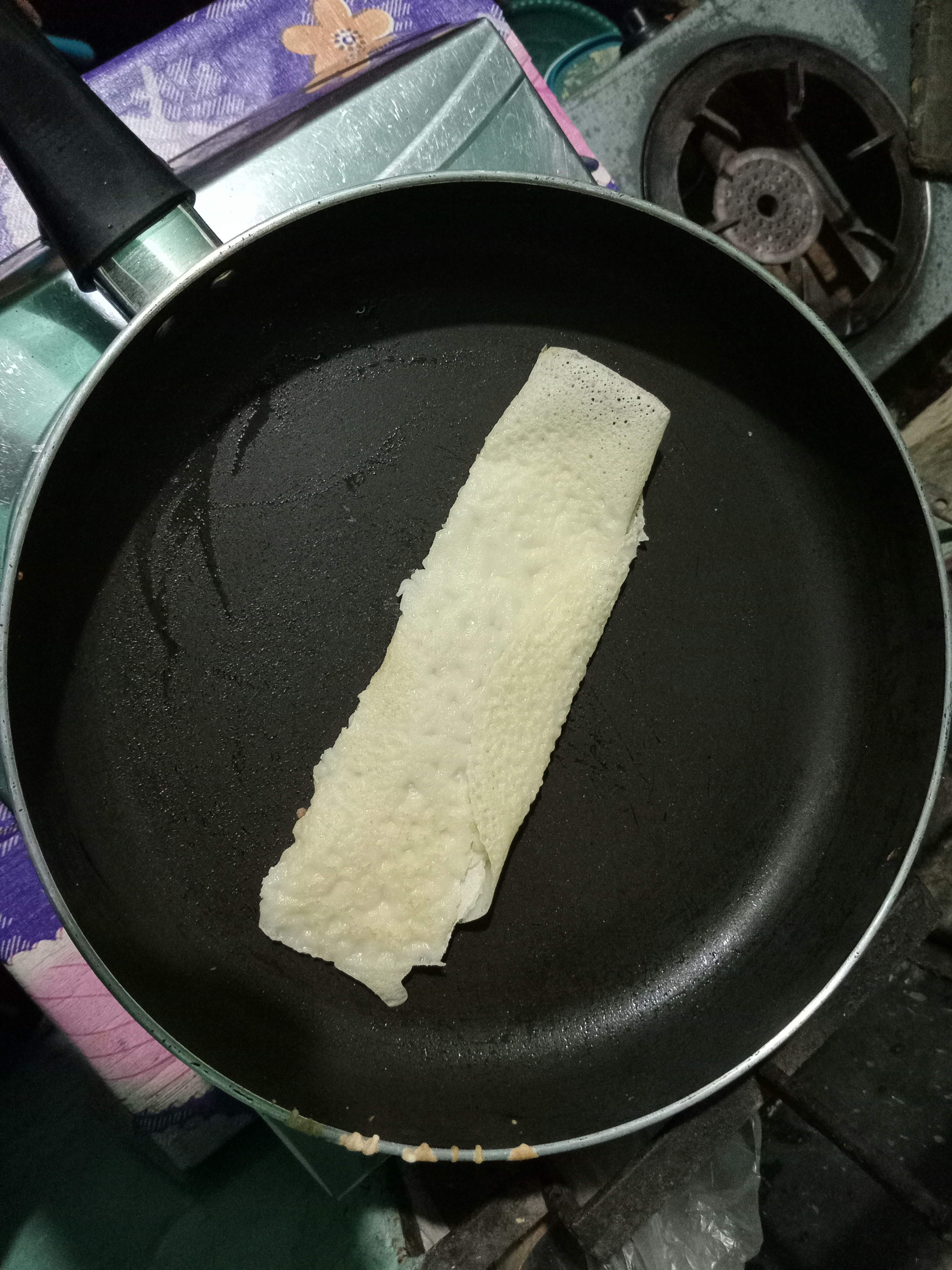
Brush a little oil or ghee on a non-stick pan. When the pan is medium hot, pour a spoonful of batter into the pan and spread it like a round roti. However, since my non-stick pan is a bit big, I had a little trouble.
 |  |  |
|---|
Step 4 (Filling and Folding)
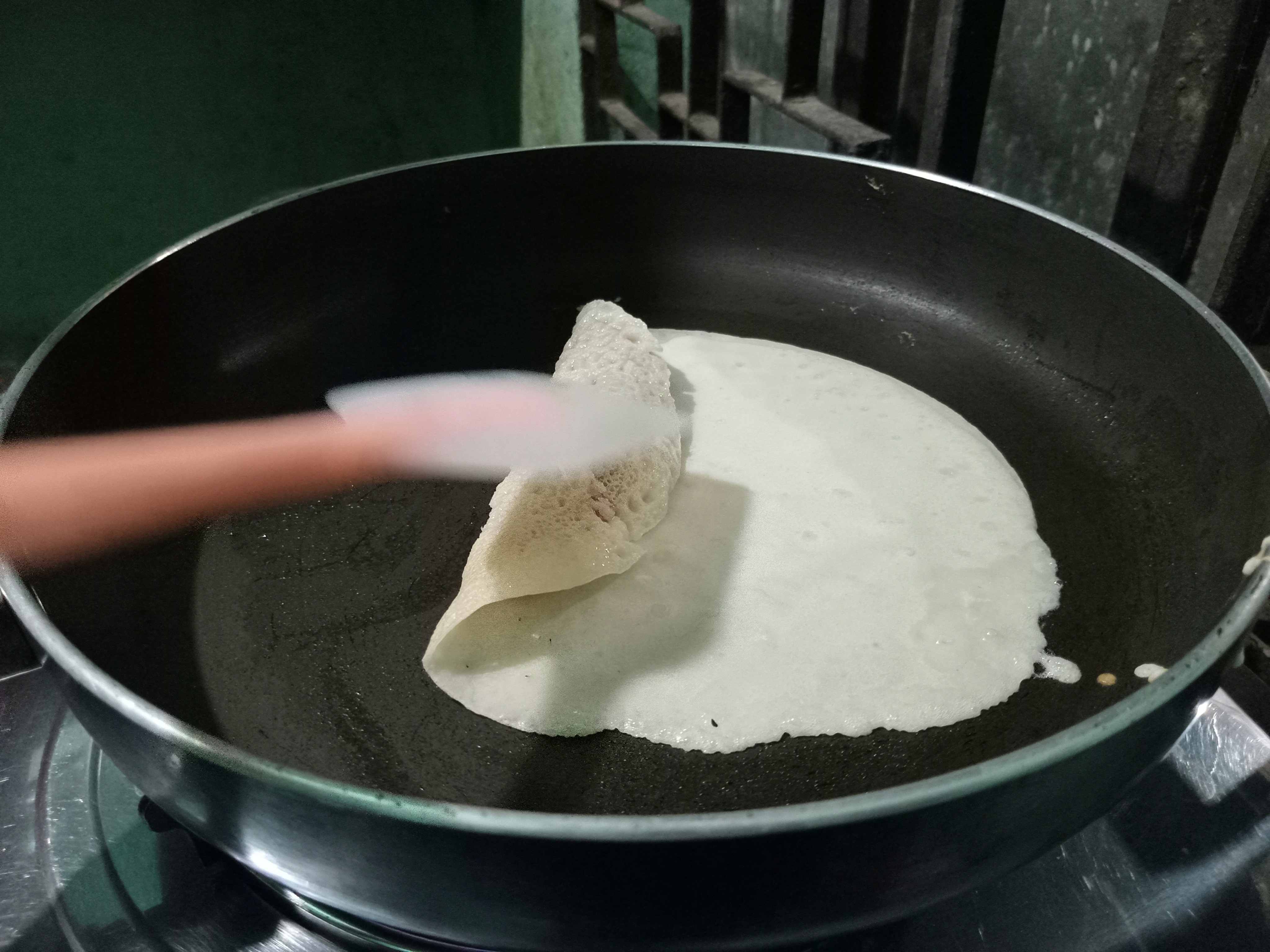
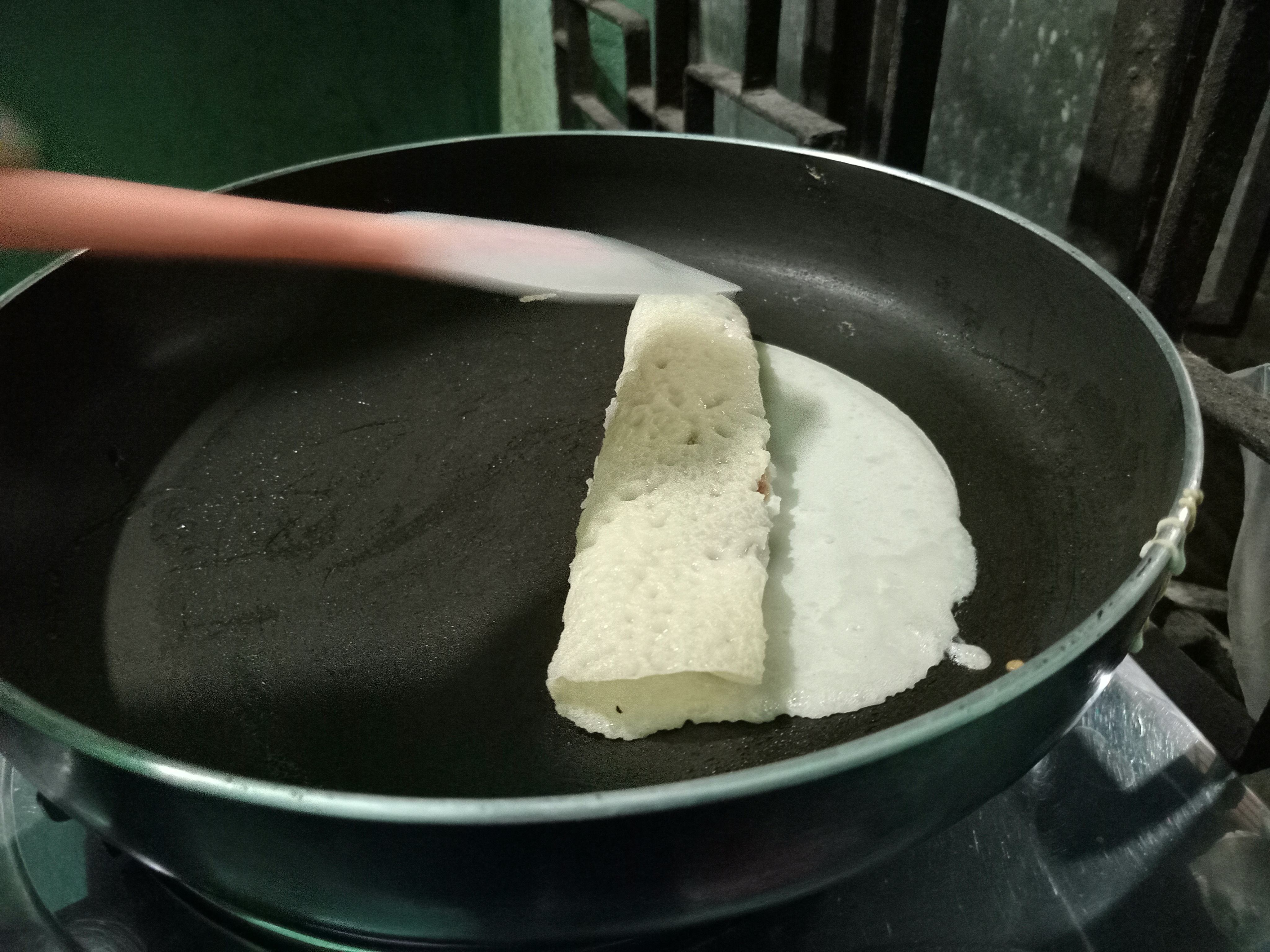
When the roti is slightly baked, spread the kheer prepared earlier on one side. Now carefully fold one side of the roti and give it a roll or patisapta shape. After baking for a few seconds on both sides, the hot patisapta pitha is ready.
 |  |  |
|---|
Task 2: Cultural Connections |
|---|
Before posting today, I checked the internet and found out that Patisapta Pitha is not only a tradition of Bangladesh but also has deep connections with the cultures of several Asian countries. I am trying to discuss two main cultural connections.
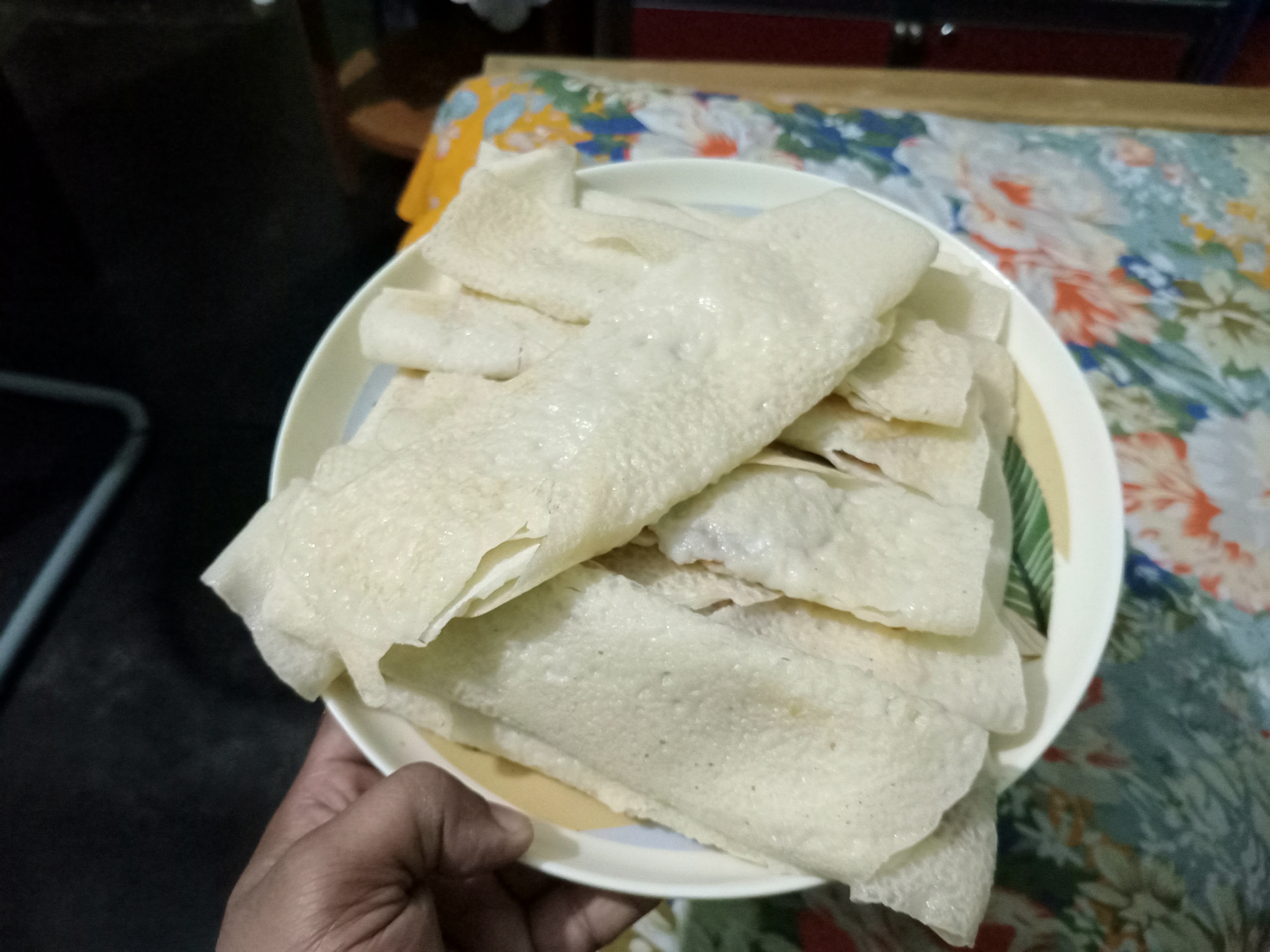
- Bengali Culture (Bangladesh and West Bengal, India): In our Bengali culture, winter means the festival of Pithapuli. Patisapta is one of the main attractions of the house-to-house preparation of pitha after the new rice has sprouted during the Navanna festival. It is a symbol of our family bond, hospitality, and festivities.
 |
|---|
- Indonesian and Malaysian Culture (Dadar Gulung/Kuih Ketayap): A similar dish is very popular in the Southeast Asian countries of Indonesia and Malaysia, which is known as "Dadar Gulung" in Indonesia and "Kuih Ketayap" in Malaysia. Similar to our Patisapta, it is made by rolling a thin rice flour bread inside with a filling of coconut and palm jam (gula melaka). The only difference is that they use fragrant pandan leaf juice in the batter, which gives their pitha a greenish color.
Shared Ingredients and Traditional Similarities: When we look at the food of these two cultures, we see that the main ingredients are the same—rice flour and sweet filling. Rice is considered a staple grain in both cultures, and the tradition of serving this sweet, rolled pitha as a festival or afternoon
Task 3: Unity & Shared Humanity |
|---|
I think that dishes like Patisapta or Dadar Gulung carry a unique message of our global unity, migration, and shared humanity.
In terms of migration and cultural exchange, I can say that in ancient times, this cuisine spread from one region to another due to sea trade and the movement of people from one country to another. When people went to a new country, they used local ingredients (such as pandan leaves in Indonesia or palm jaggery in our country) to give a new look to their familiar recipes.
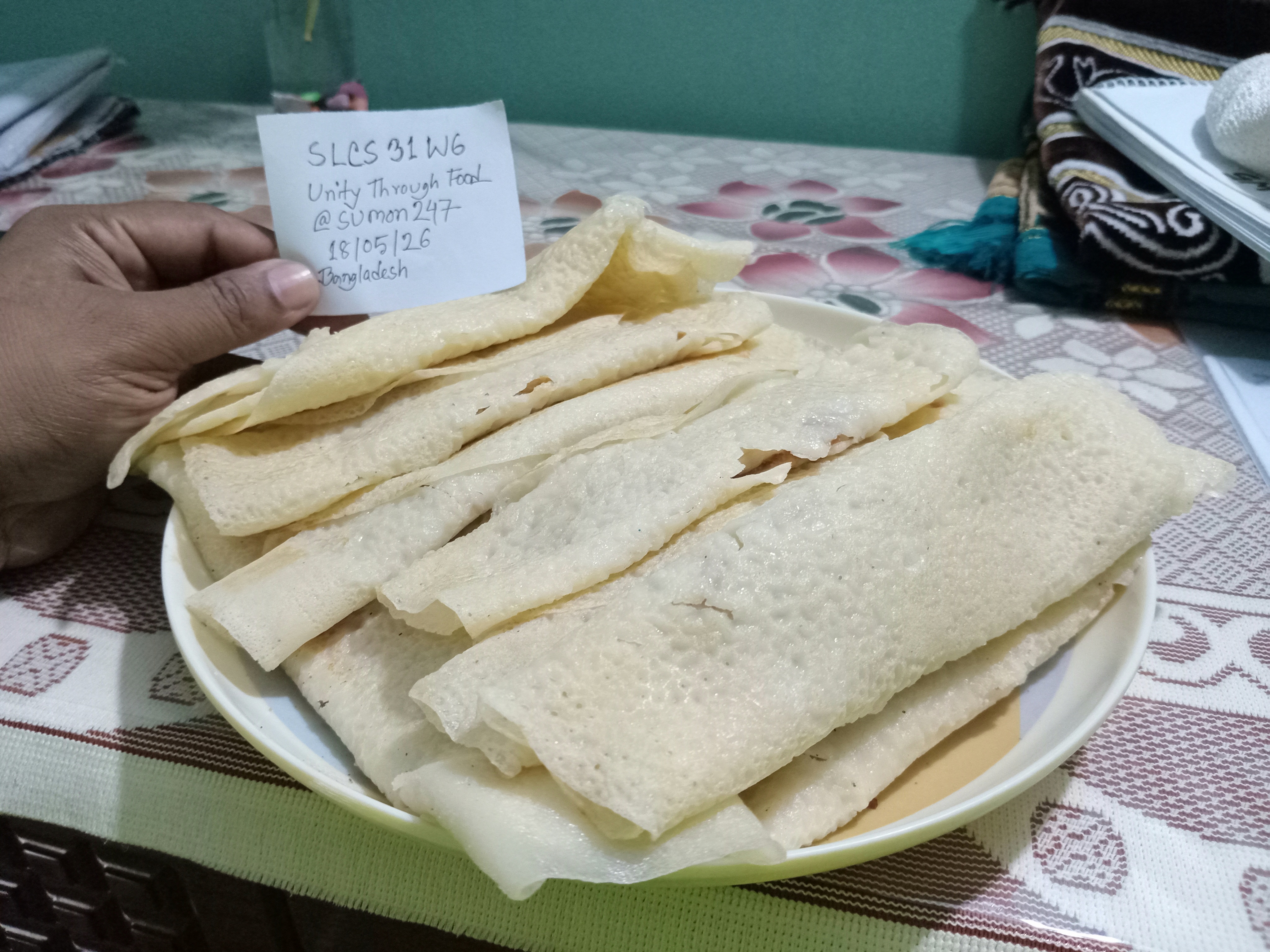
Unity amidst differences: In this case, I think that we may be different from each other due to language, religion, or geographical boundaries, but when we come to the dining table, we all become one. When a Bengali puts Indonesian 'Dadar Gulung' in his mouth, he will instantly find the taste of 'Patisapta' from his mother's hand.
 |
|---|
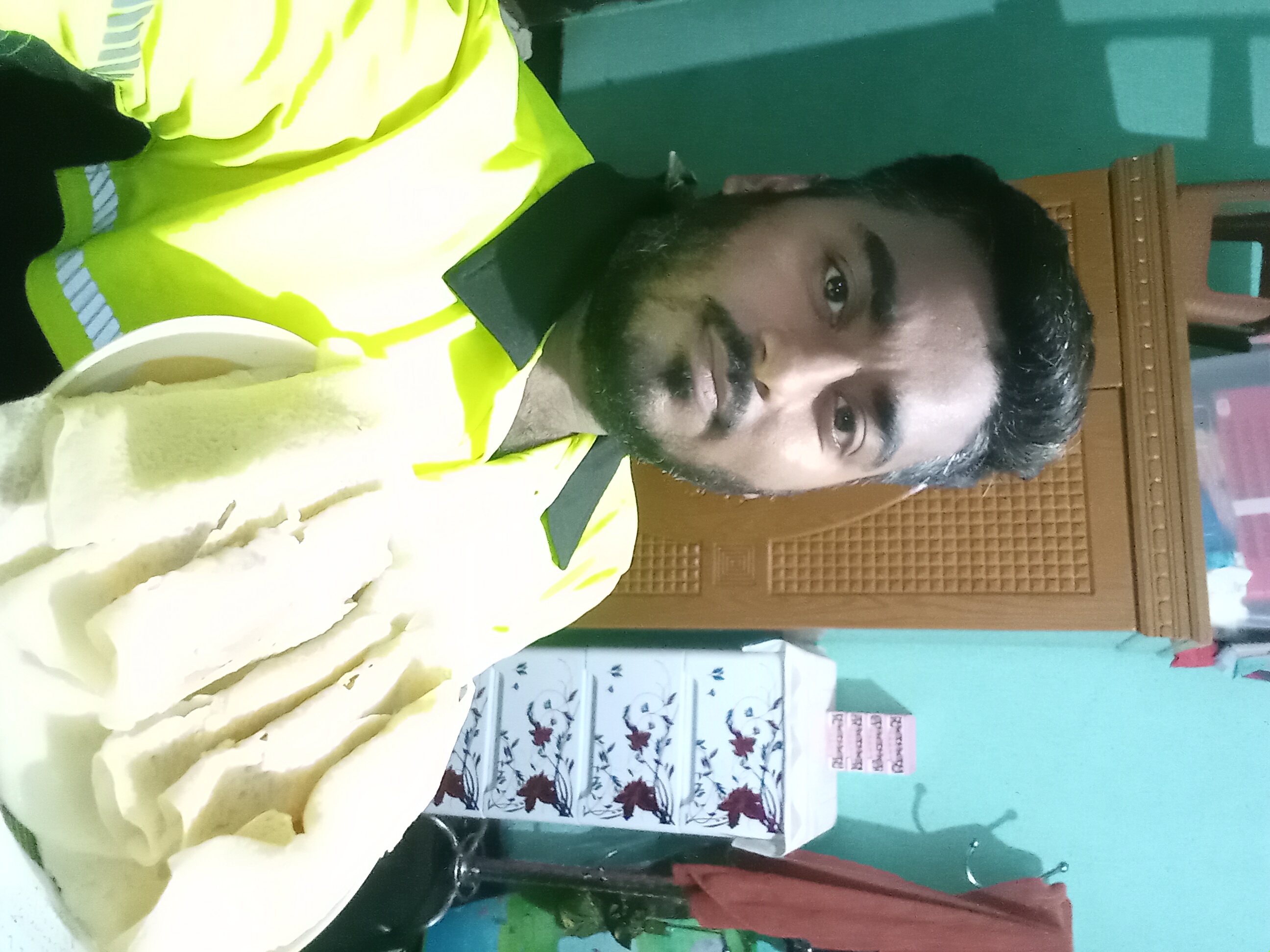
In terms of collective humanity, I can say that this food reminds us that the basic emotions of humans, expressions of joy, and sense of taste are the same in all corners of the world. Food knows no boundaries; it brings people closer, removes all cultural distances, and creates an unprecedented human unity.
 |
|---|
Food knows no boundaries, and Patisapta Pitha is living proof of that. Just as it holds my childhood memories and Bengali heritage, it also connects my taste buds with people from faraway cultures. I am truly delighted to be able to showcase my culture on the world stage through this beautiful competition and to realize this global unity within food.
I would like to invite @radjasalman, @kouba01, and @saxopedia to participate in this contest. Hope to see your wonderful entries! 🙂

If you enjoyed my post, feel free to upvote, comment, and share your thoughts. Your support keeps me motivated!
Thank you very much ❤️
Upvoted! Thank you for supporting witness @jswit.