Cryptocurrency Fraud, Ponzi Schemes, and Investor Protection Mechanisms
Cryptocurrency has proven to be one of the most significant financial innovations in the world. It has revolutionized the concept of money, investment and online payment. Nowadays, quite a few million individuals are purchasing, trading, and selling digital currencies like Bitcoin, Ethereum, and a lot more. The main reason for the rise of cryptocurrencies and their associated investment opportunities is the ease with which they can be used, however it has also enabled criminals to exploit investors through fraud and Ponzi schemes. Therefore, it is extremely crucial that investors are aware of how these scams operate and how they can safeguard themselves.
Cryptocurrency fraud is any type of scam in which a criminal exploits someone to lose their cryptocurrency or cash. These scam artists come in many forms that make people think they are investing in a real project, but then it's just a scam. If you have lost your money, it is hard to recover cryptocurrency transactions. You've seen others talking about making big profits in cryptocurrencies, and that's what you see as a draw. Unfortunately, sometimes this excitement leads them to neglect warning signs.
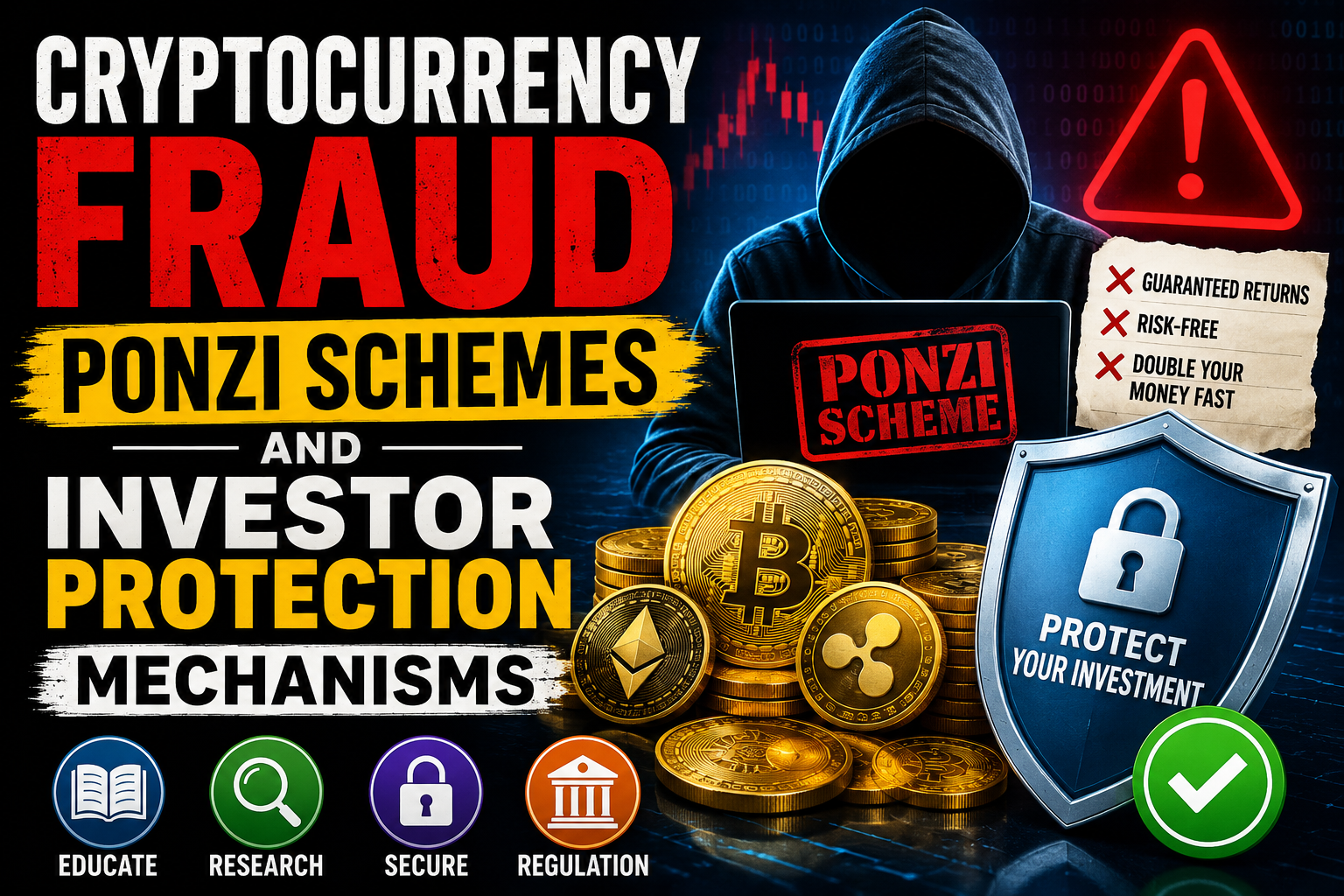
The most frequent cryptocurrency frauds are Ponzi schemes. The Ponzi scheme is a form of investment fraud in which individuals are promised high profits on their investments. Scam will typically guarantee and offer very high returns in a short amount of time. Initially, the organiser pays to the early investors to build trust and attract investors in. The more people who join, the more the scam spreads. But if there are not sufficient numbers of new investors to maintain it, it will fall. Most investors lose their entire investment and a handful of early investors may get some money.
In the cryptocurrency world, ponzi schemes have emerged in popularity due to the lack of many people's understanding of digital assets. Fraudsters frequently develop websites that are appealing, fake mobile apps and social media pages that look professional to make their projects look real. They promise high returns such as "guaranteed profit," "risk-free investment" or "double your money in thirty days. In fact, such returns aren't guaranteed by any real investment. The price of cryptocurrencies is volatile, as it can go up or down at any given time.
Other scams include fake celebrity endorsements, fake trading platforms, phishing websites, romance scams and giveaway scams. In some instances, they pretend to be customer support staff from cryptocurrency exchanges and ask people to share their wallet passwords and/or private keys. Once in, all the money is in their hands and they're gone! I think one of the largest errors made by many investors is to take the word of people they don't know on social media.
Cryptocurrency fraud can have significant consequences. Victims end up losing their life savings, they experience emotional stress and lack trust in digital investments. Families can also suffer financial hardship when funds are used for education, business, or health care are not used for education. Broader, the high-profile frauds have a negative impact on the cryptocurrency market's reputation and deter new investors from engaging in legitimate blockchain initiatives.
Luckily, there are a number of investor protection mechanisms that can minimize risk of being a victim. Education is the primary and most crucial form of protection. It is essential that every investor knows the basics of cryptocurrency prior to investing in it. By familiarizing themselves with the workings of blockchain technology, grasping the concept of digital wallets, and comprehending the associated risks, people can make informed decisions. I always think that it is better to take time to learn about something rather than making a quick investment due to either excitement or fear of missing out.
The other measure of protection is having done proper research prior to investing. Investors need to thoroughly analyze the company, the development team, the project's goals and purpose, and the whitepaper. When information about a project is not readily available or when project participants are not identified, it is a red flag. Investors can also find reviews and community feedback that will highlight potential scams.
Another good way to be safe is to stick to reputable cryptocurrency exchanges. Popular exchanges typically offer more robust security features, including customer support, fraud prevention systems, and identity verification. Two-factor authentication should be activated on investor accounts, strong passwords used, and private keys and recovery phrases not shared with anybody. Many types of theft can be averted with these easy security measures.
The protection of investors is also important through government regulations. In many countries, new laws are being put into place that will make cryptocurrency businesses more akin to financial institutions, with the goal of requiring them to adhere to financial regulations, confirm their clients' identities, and report unusual activity. While regulations are not a foolproof solution to fraud, they do the job of making it more difficult for criminals to make money without being held accountable under law and they give investors a legal shield.
There's another basic rule to keep in mind for investors: “If it's too good to be true, it's too good to be true.” Any investment comes with some risk and no genuine company can guarantee high returns. Individuals should never make an investment decision when they feel pressured, fearful or excited. It is important to carefully consider the choices before you make a financial commitment.
Overall, cryptocurrency presents intriguing opportunities, but with that also come potential dangers. The fraudulent activities involving cryptocurrencies and Ponzi schemes still continue to permeate those who are seeking rapid wealth. Investors can safeguard themselves from financial losses by comprehending the modus operandi of these scams, adopting a lifelong learning approach, conducting thorough research, choosing secure platforms, and adhering to sound security measures. My #1, #2, and #3 defense against cryptocurrency fraud is knowledge, patience, and careful decision making. Rather than maximizing unrealistic profits, investors should be guided towards making smart and responsible investment decisions that can lead to long-term financial growth.
https://x.com/i/status/2070892469978288392
https://coinmarketcap.com/currencies/pussfi/
https://x.com/i/status/2070892878407069974
Note:-
Regards, @adeljose