The Rise of Web3 Technologies and the Decentralization of the Internet
The Internet has revolutionized the ways people talk, learn, work and conduct business. Most of the activities that were done online for many of the years were under the control of big companies, who own sites, platforms in the social media and online services. Although these platforms have made life easier, they also have a lot of control over people's data and their online experience. A new concept called Web3 is gaining traction today, as it seeks to develop a decentralized web where users have more control and ownership.
Web3 is the next generation of the internet, which is primarily decentralized and built using mostly blockchain technology. Blockchain is a digital system with the information distributed across multiple computers rather than residing in one central place. The information is spread out, making it harder for any individual, company or organization to control or manipulate it. One of the primary motivations for many to think Web3 may revolutionize the internet's future is this aspect.
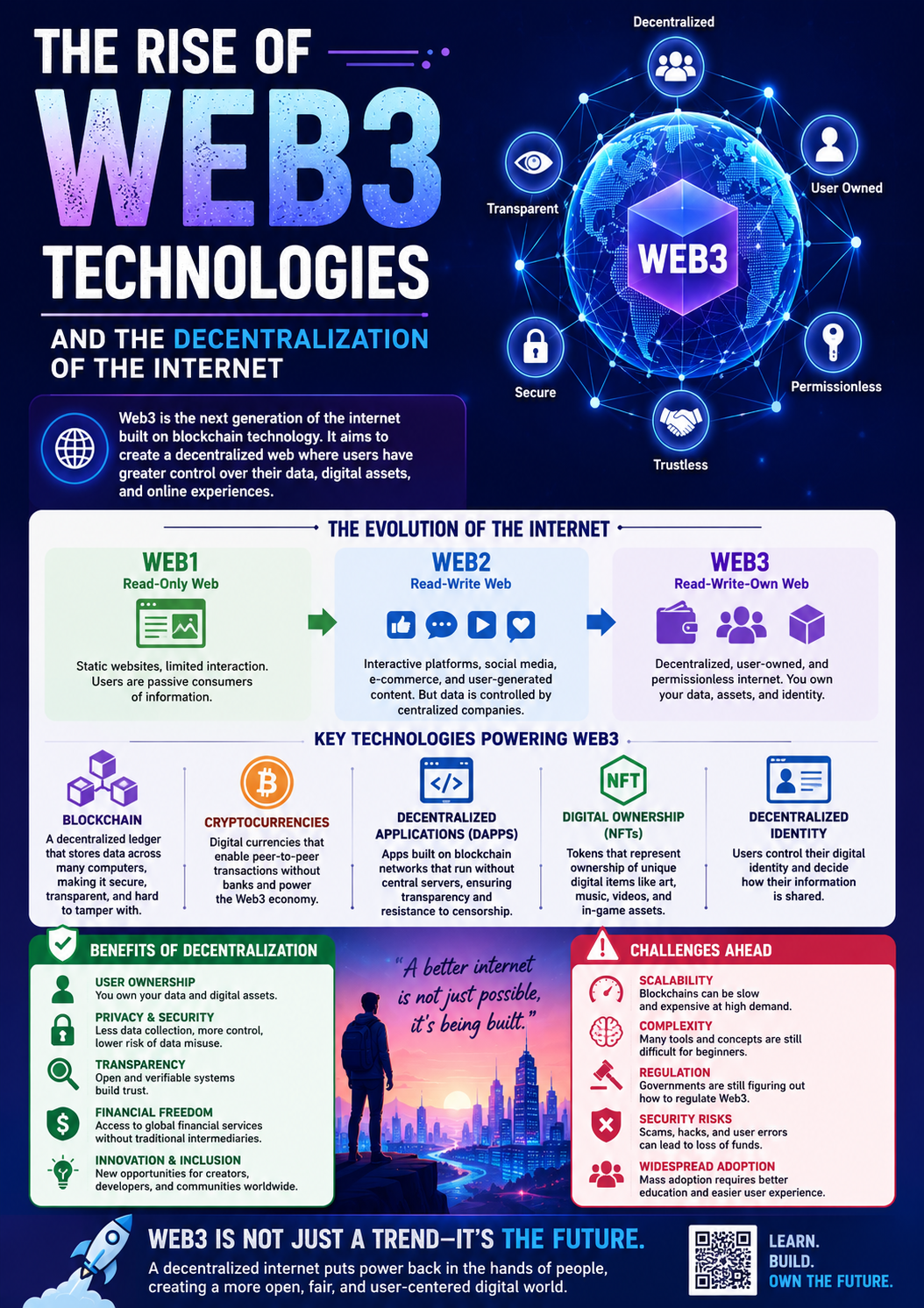
It's important to understand the evolution of the internet to better grasp what Web3 is. Earlier on the internet, people used to read information, which is known as Web1. Websites were basic and users had not many interactions with the content. Then there was Web2, the web most know and use. Web2 brought in online shopping, social media, video sharing and interactive platforms. Web2 had a lot to offer, but it also gave rise to massive amounts of user information being captured, and to big tech firms having a strong say in what goes on online.
One of the goals of Web3 is to overcome some of these obstacles by granting ownership of content and data to the user. Blockchains don't store data in a single company's data center, they store it on many independent computers. This will give users greater control over online identities, digital content and financial transactions.
Cryptocurrency is one of the most crucial technologies for Web3. Cryptocurrencies can be used to transfer money without the need for a traditional bank, like Bitcoin and Ethereum. They are digital currencies that run on blockchain networks and are used to support a variety of Web3 applications. Users can directly engage in decentralized systems and services via cryptocurrencies.
One of the other key elements of Web3 is decentralized applications, or dApps. Unlike centralized applications, which are hosted on servers, dApps are hosted on blockchain networks. This renders them more clear and less subject to censorship. These applications can be directly interacted by users without relying completely on a central authority. These can include Decentralized Finance (DeFi) platforms, blockchain games, and digital marketplaces.
Digital ownership is another concept that Web3 has brought to the forefront. With the help of technologies like Non-Fungible Tokens (NFTs), creators can establish their ownership of digital art, music, videos, and other content. This can be a way for artists and content creators to monetize their creations without much middleman involvement. I'm fascinated by this part of Web3 as it opens the door for creatives worldwide to be discovered and monetized.
Decentralized Internet can also enhance privacy and security. A number of internet users have concerns regarding the use, collection and storage of their personal information by companies. In a decentralized system, users can potentially have more control over their information and determine its sharing. This can minimize the possibility of misuse of large amounts of data, and build trust in online platforms.
Web3, however, has some hurdles. Scalability is one of the primary challenges. When there are a lot of users using a blockchain network, some can become slow and costly. Another challenge is technical complexity of Web3 systems. Blockchain wallets, private keys, and decentralized applications continue to be challenging to understand and employ by many. These technologies need to be made more accessible and easier to use to make Web3 more widespread.
Regulations and security concerns are also a concern. Technological malfunctions and scams, as well as hacking and weak security can cause users to lose money despite the fact that the blockchain technology is secure in general. The regulations and solutions regarding cryptocurrencies and decentralized platforms are still under consideration by the governments of different countries, which are trying to promote innovations while reining them in.
I think that Web3 is a promising development in the internet evolution. While still in the process of being developed, the decentralization, transparency and user ownership approach to it provides a way of thinking about how the online world might function. It promotes more user control over digital life instead of relying solely on big corporations.
In conclusion, the rise of Web3 technologies is changing the way people think about the internet. Web3 aims to revolutionize the online landscape by leveraging blockchain and cryptocurrencies, decentralized applications, and digital ownership systems to foster a more open and user-centric experience. Although there are still hurdles to overcome, decentralization can change the way we communicate, pay for things, do business, and interact with each other online in the future. With the ongoing evolution of technology, the future of Web3 could be a major factor in the future of the internet for generations to come.
Note:-
Regards, @adeljose
@adeljose
@adeljose
I have done it
https://x.com/i/status/2038990196453126632
https://coinmarketcap.com/currencies/pussfi
https://x.com/i/status/2036134193260802100