Understanding Blockchain Sharding and Its Benefits
Blockchain technology has come into great significance in the digital world. It's utilized for cryptocurrencies, online transactions, digital contracts, supply chains, and various other sectors. One of the key reasons for people's love of blockchain is its security and transparency. But, blockchain has its own issues. The most significant issue is that many blockchain networks slow down when they are used by too many users simultaneously. This problem is known as a scalability problem. A solution to this challenge has been developed, called blockchain sharding.
Before understanding blockchain sharding, it is crucial to understand how the blockchain works. A blockchain is a digital record book that keeps data in groups, known as blocks. The blocks are made to link in sequence.The blocks are linked in sequence. Numerous computers in the network store a copy of the blockchain and verify transactions. This makes system very secure if one person wants to change information, it is difficult. If all computers have to check all individual transactions, however, then the system can become slow when millions of people use it.
Sharding is one way to break up a large blockchain network into smaller pieces. Each smaller part is known as a shard. Each computer doesn't have to process all transactions; multiple groups of computers can process multiple transactions simultaneously. I like to think of this as sectioning one of my very large classes into smaller groups! When one teacher attempts to serve 100 students, the work could be slow. However, if students are split up into smaller groups with someone supporting them, it can be done in much shorter time.
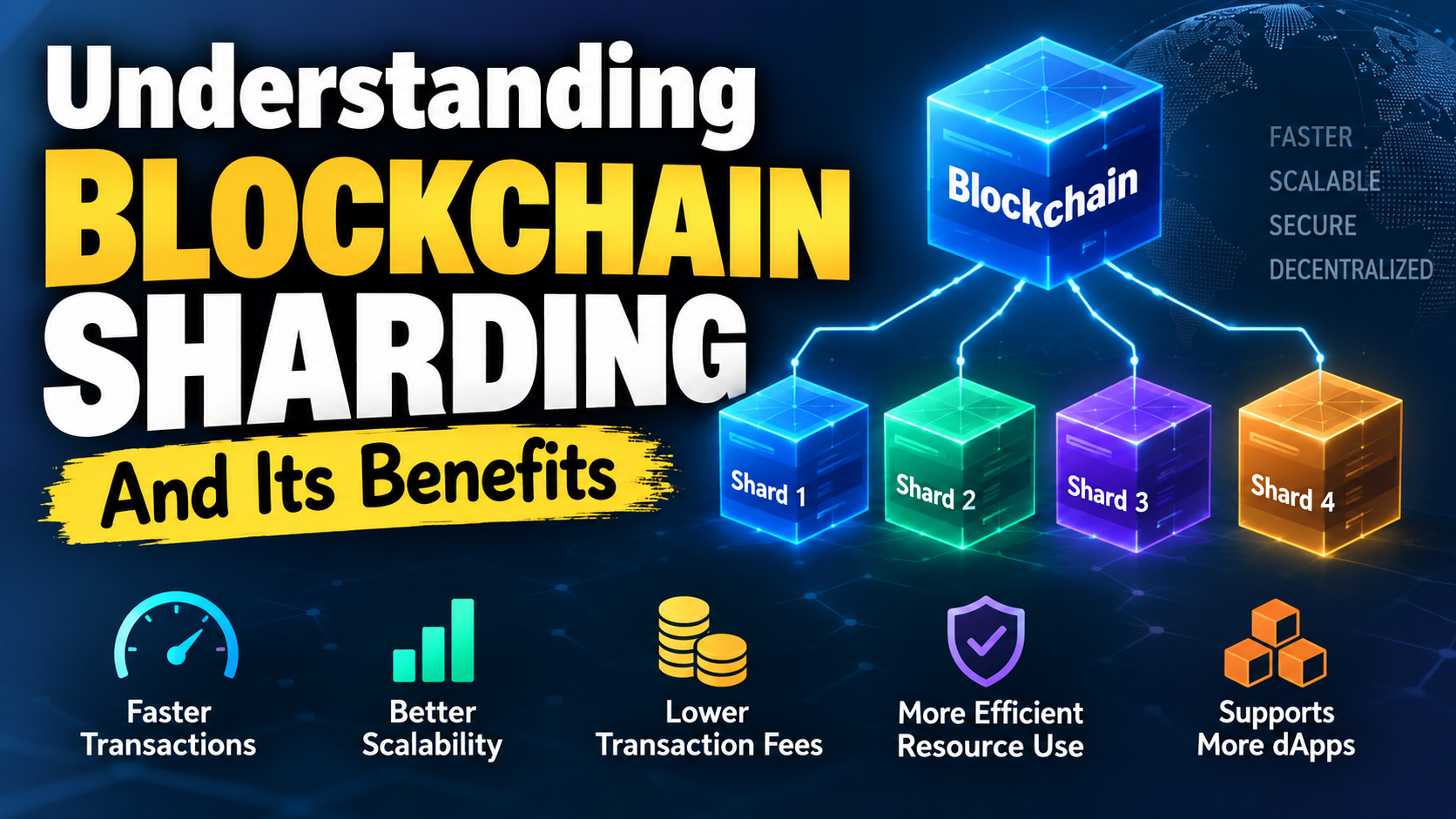
Sharding is primarily aimed at enhancing the speed and performance of blockchain networks. With a regular blockchain system, without sharding, all transactions can be required to travel through the identical system. When it's busy, users might need to wait a long time for their transactions to be confirmed. With sharding, transactions can be shared among different shards. This enables several transactions to be completed concurrently.
For instance, if there are 10,000 transactions submitted to a blockchain in a single second. If there's no sharding, then the network might attempt to perform the transactions in sequence or in small batches. This can lead to delays. In Sharding, the network can split up the 10,000 transactions into multiple Shards. On one shard transactions are executed one way and on another shard, transactions are executed in another way. Due to the division of work, the entire network can become quicker.
Blockchains have several components that can be sharded. One is transaction sharding. This results in multiple shards being responsible for various transactions. The other is sharding the network, which split the computers of the network into groups. In addition there is state sharding. The state of sharding is to separate the information stored by the blockchain across different shards. That is, not all the information in the entire network has to be stored in every computer.
Scalability is one of the significant advantages of blockchain sharding. A system that is scalable can accommodate additional users and additional workload without becoming too slow. With the widespread adoption of blockchain technology, millions of people could want to use the same network. If it isn't scalable, the blockchain can become slow or costly. The benefit of sharding is that it allows more transactions to be processed simultaneously, making the network more scalable.
One of the other great advantages is that of speeding up transactions. Users of blockchain typically want their transactions to be verified in a timely fashion. It is frustrating to wait for a long time if somebody is sending money or making a payment. Each shard handles a part of the workload and transactions can be executed more quickly. I think this is really crucial for the blockchain to be able to compete with the traditional payment system.
A further benefit of sharding is that it can also help to lower transaction fees. In some blockchain networks the fees of transactions can skyrocket when a lot of people use the network. This is because there is a shortage of space among users. If sharding scales up the workload of the blockchain, there might be less pressure on the network. This can help reduce the cost of the transaction.
One advantage is increased computer resource utilization. A non-sharded blockchain requires all computers to handle and store a lot of data. This may need high powered computers with extensive storage. Sharding enables the work to be split. A computer only need to focus on the information related to its shard. This can facilitate a wider participation of the blockchain network.
Blockchain sharding also has the potential to enable the development of decentralized applications, or dApps. These are applications that run on blockchain networks. Some dApps are being utilized for financial services, games, online markets, social media, and much more. These applications can also be slow if the blockchain is slow. Sharding provides a developer with a faster network that will allow him/her to create an application that can support several users.
There are also some challenges to blockchain sharding. There's a problem with shard communication. The information stored in some of the transactions may exist in two shards. The shards need to communicate properly in order to complete the transaction. This can make the system more complicated. Safe ways for the various shards to exchange information need to be developed by blockchain builders.
Security is also a key consideration. When the network is divided into smaller groups, attackers can attempt attacking shard rather than the entire blockchain. Each shard needs to be secured by the developers. They can also randomly allocate computers to certain shards, making it difficult for attackers to manage a specific group of computers.
The other problem is that sharding is not easy to design and manage. The technology of blockchain can be complex enough on its own. More rules about how to divide computers, information and transactions, when shards are added. The network must ensure that all the shards continue to function as a single blockchain as well.
Note:-
Regards, @adeljose
Please I have edited it
Can you help me review it
@adeljose
@adeljose
https://x.com/Sloaneoluchi/status/2099905080396853471
https://coinmarketcap.com/currencies/pussfi/
https://x.com/i/status/2088342261742580216