Allergic
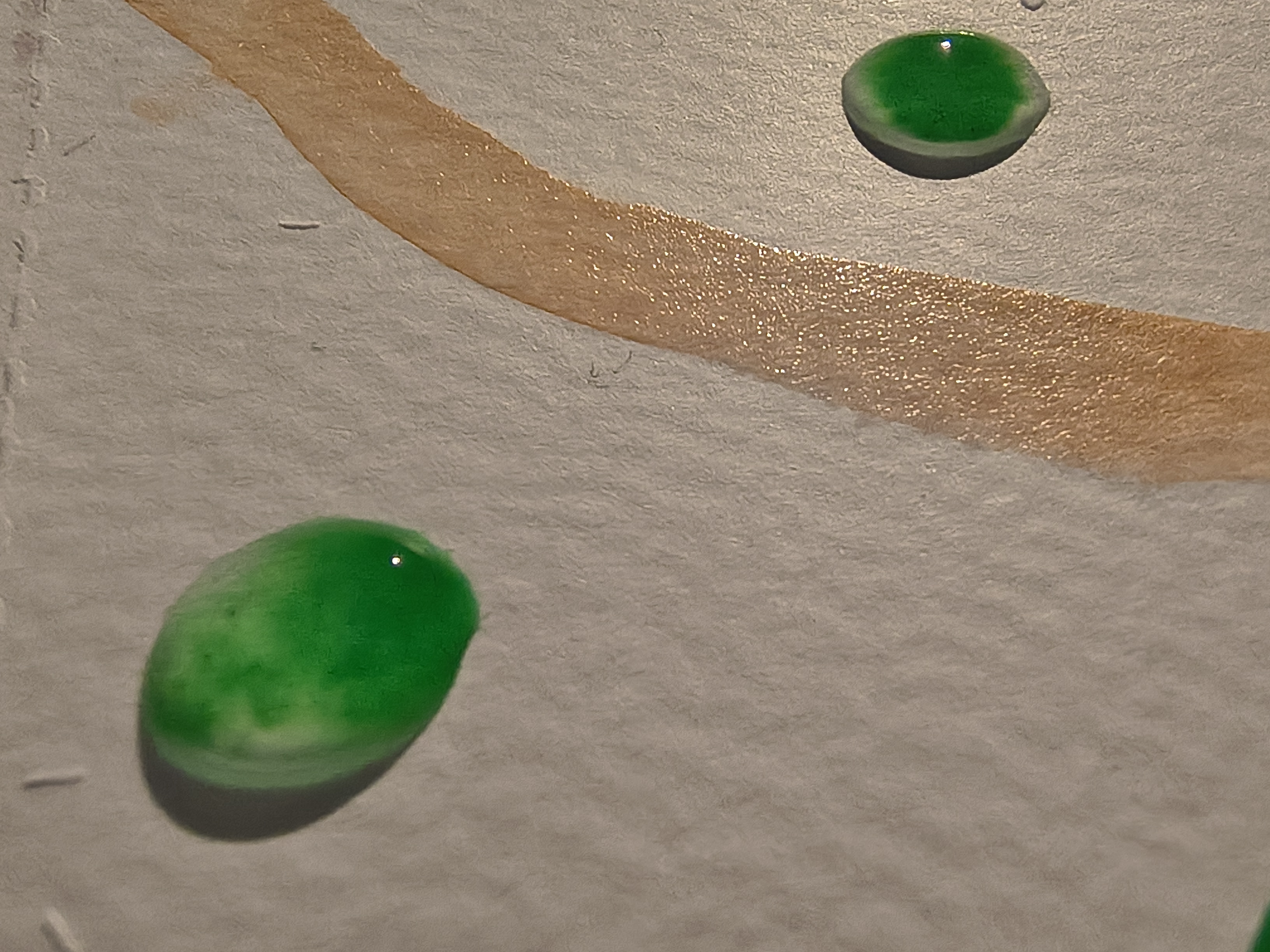
Yesterday I had a conversation about allergies and dry skin. It’s a nuisance when you suffer from it, and the dry skin is also accompanied by cracks. Cracks in the hands, in the fingers, in the skin folds and on the heels. It turns out it’s not nearly as rare as I thought. Indeed, it seems that humanity suffers from this on a massive scale, and animals are not spared either
I too suffer from allergies, and it’s not all in my head. For years I used medication, with all the consequences that entailed. A few years ago I stopped taking it from one moment to the next, even though doctors said this was impossible. Perhaps it would have been impossible before, but certainly not at that moment, and I’m still doing very well. Well, actually, I’m doing much better than I was during the period when I was taking medication. It seems that the many side effects also caused allergies that I didn’t have before.
And this brings me to the side effects.
Side effects will always be there, and the average doctor won’t tell you about them. I now know that this isn’t always deliberate, but simply because that doctor doesn’t even know what sort of medicines he’s prescribing. Prescribing medicines is often done on the advice of Big Pharma, or rather the sales representative who drops by and tells the doctor what to give the patient for which ailments. It has even got to the point where doctors are calling salespeople for help – people who have never had any medical training. As I said, the average doctor goes along with this because they earn money from it.
Many doctors these days are no longer very motivated, and I should know. What a huge difference from the GPs of the past who worked alone, 24 hours a day and every day of the week, without holidays. Doctors with knowledge, who also performed (minor) operations and even made house calls. Nowadays, a doctor no longer makes home visits, no longer works at the weekend, nor after 4 pm unless absolutely necessary – and ‘not necessary’ means he is off duty. Getting to know one’s own patients is also a thing of the past. As a patient, you have to regurgitate your entire medical history every single time. Laziness is also a trait of many doctors who are not willing to look at a file.
It is therefore not surprising that the average GP knows and can do very little, apart from setting the timer for 10 minutes and then sending you on your way, shrugging their shoulders somewhat sheepishly or referring you to a specialist. And the GP earns money from this too.
Incidentally, I can well imagine that the GP will be replaced by AI. Actually, that started years ago, the replacement of the GP, I mean. In many cases, the nurse took over the work, and then we got the ‘doctor’s services’. Just someone who answers the phone for a group of doctors and looks in an encyclopaedia (nowadays the internet) to see what the ailment you have might be. To do this, you answer a few questions and then this person decides whether or not you should see a doctor. I think that if you’re left to your own devices and fobbed off like that, because it happens quite often, it’s more practical to have a quick look online yourself to see what might be wrong with you. This, incidentally, is something doctors hate, even though they don’t always want to be available themselves.
I asked Copilot about dry skin. I didn’t think the answers and questions were bad in themselves, and of course I could easily find them myself, but here and there an interesting connection was made that I’d never come across online. What I found even more off-putting was that with every short question or comment, the same thing was said over and over again: ‘This isn’t medical advice’, ‘I don’t know either’, ‘It’s not your fault’ (why on earth would it be my fault???), ‘You’re not doing anything wrong’, ‘You don’t have to do this alone’, and so on and so forth.
Of course, the conversation went off the rails because I literally had to spell everything out and assumptions were made that were completely wrong. I also noticed that Copilot puts words in your mouth, and correcting them is a real struggle, if you manage to do so at all.
In the end, I decided just not to respond anymore because Copilot also has a habit of repeating itself and constantly asking the same questions to help you, questions that were answered less than three minutes ago. And I’m highly allergic to that too.
So there’s still quite a bit of work to be done on AI before it’s intelligent enough (or seems intelligent enough?) to have a proper conversation with. As for replacing the doctor, there’s still a fair bit that needs tweaking. Not just with AI, but with the average person too. Because anyone dealing with AI will also need to be able to carry out the specified steps correctly, and in the context of health, this will be far more difficult than simply printing or copying a piece of text, or following a few steps such as when removing a battery. Here too, reading comprehension is important.
Read!
Not just memes or comic books, but also leaflets and long texts, and ask yourself: What is this about, what is the crux of the matter, is what is being claimed accurate? Where can I find more information, and explore as many different sources as possible. You don’t need a degree for this. A bit of common sense and instinct (listen to your gut and your body) is enough.
20-4-2026
Prompt: see title
Cracks in the folds are so painful especially when it's on the joint of the fingers.
Do you suffer from that too?
I have rhinitis and eczema. My fingers cracked a lot during the days I was working as an esthetician. Couldn't use heavy cream too, it would itch.
Exactly... Just a little common sense and paying attention to the signals your body gives us.
And not believing all the nonsense doctors (or AI) tell you. Doctors stating that vaccinations do a better job than the immune system can also not be trusted.