The Cable That Got Left Behind
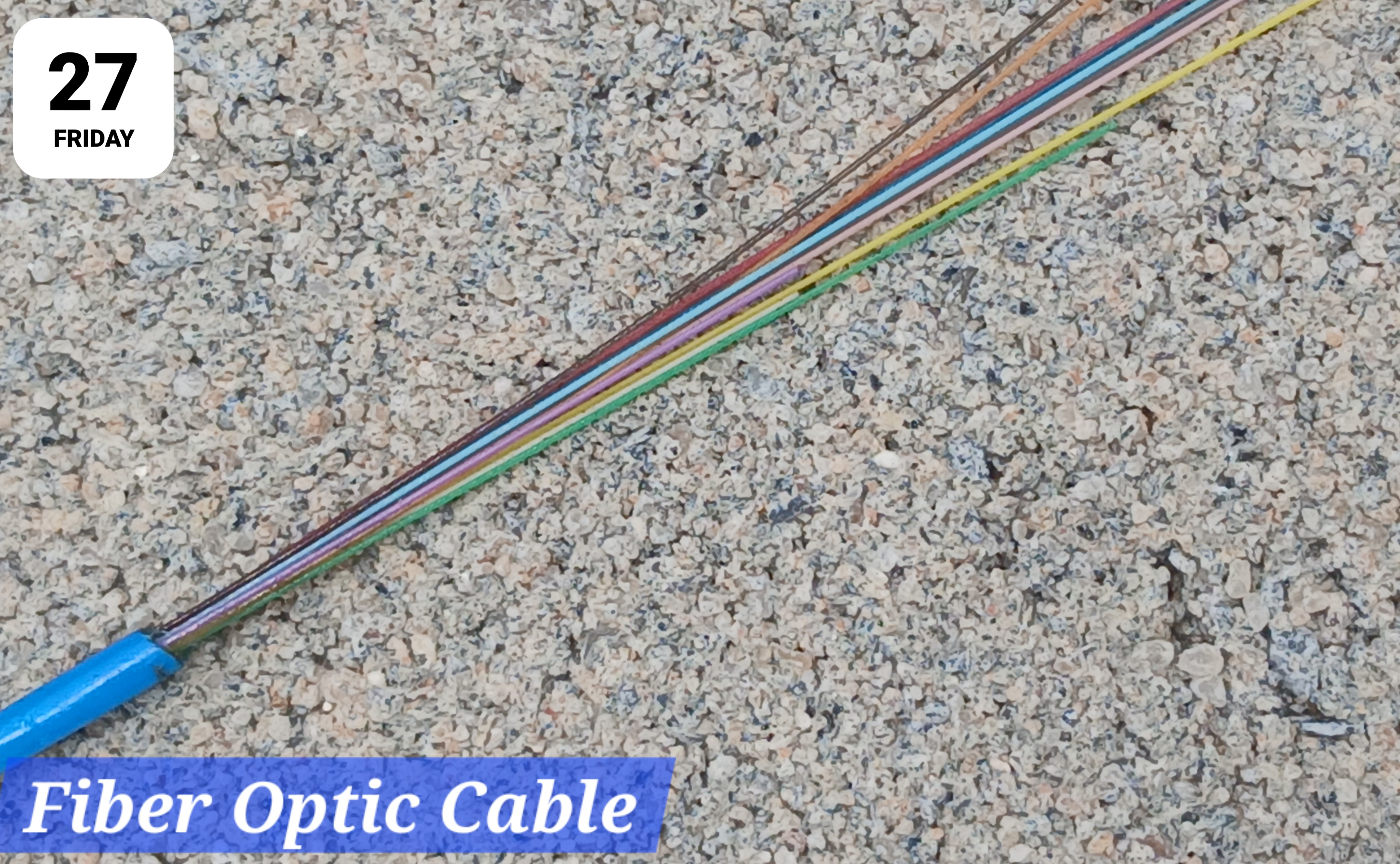 The individual strands in a fibre optic cable Captured with GalaxyA15
Fibre Optic Cable
Today at work, I stumbled on something special as I was going through a section outside the perimeter where another company was excavating for an underground drainage system.
It is probable that the excavation unearth a piece of technology which I now had the opportunity to meet in person for the first time.
At first, it looked like a regular armoured cable, though evidently it was protected inside a sheath of tough PVC piping.
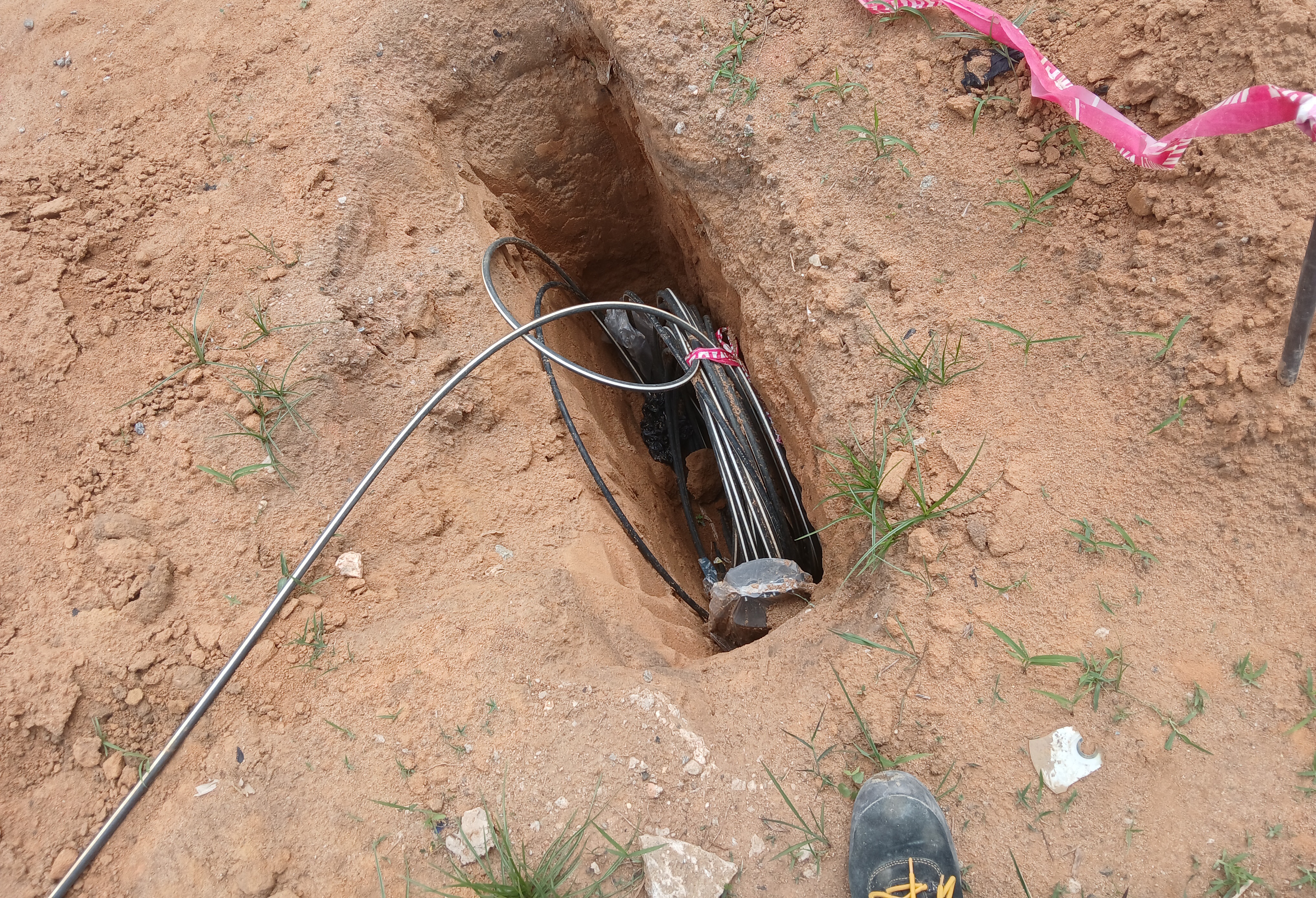
It was strange because the scavengers that rome this areas would not spare an exposed armoured cable. The question I was asking was; why did this cable survive?, Why is it still here? On a normal day, it would have been stripped of its none conducting cote or burnt to harvest the metal core inside.
The fact that it was still there woke my curiosity, so I had to activate my inspect mode.
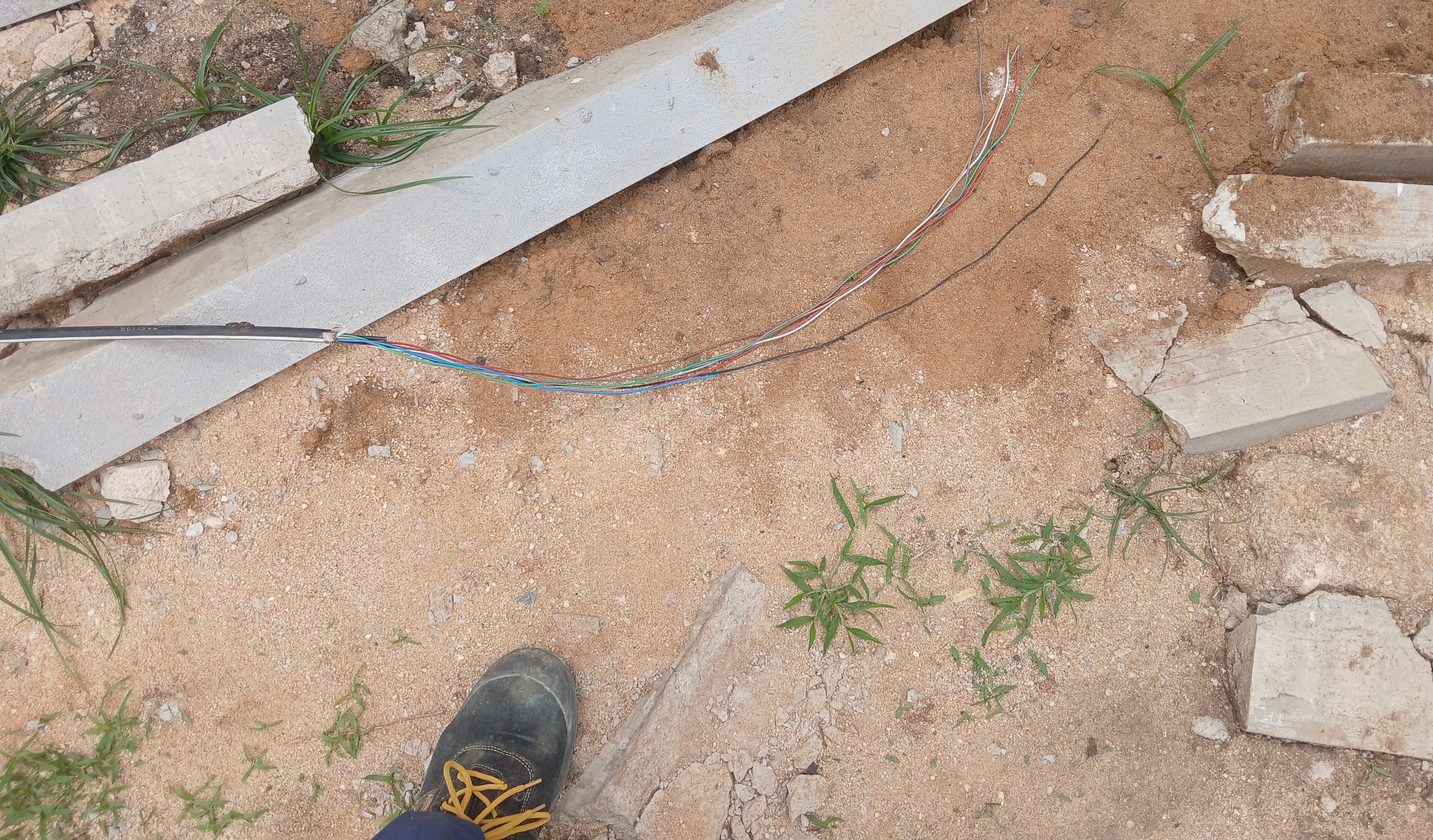
I could tell the cable had been cut, stripped but disappointingly abandoned because it had no market value for a scavenger. But why would a scavenger abandon an armoured cable?
Because it was not the usual armoured cable, this one was different, it did not have any metal component like the usual armoured cable that houses a fine copper core.
What is it
What is it? They must have asked. It's some kind of strange cable with no value.
Even a shielded twisted pair cable still has small copper cables inside it, about eight strands. And a coaxial cable has one solid copper core at its centre.
Unfortunately, they are most likely not here to read and get answers to that question.
That cable is the fibre optic cable I have always dreamt of meeting in person. I have only seen it in books and online. I had never had an opportunity to meet a real sample.
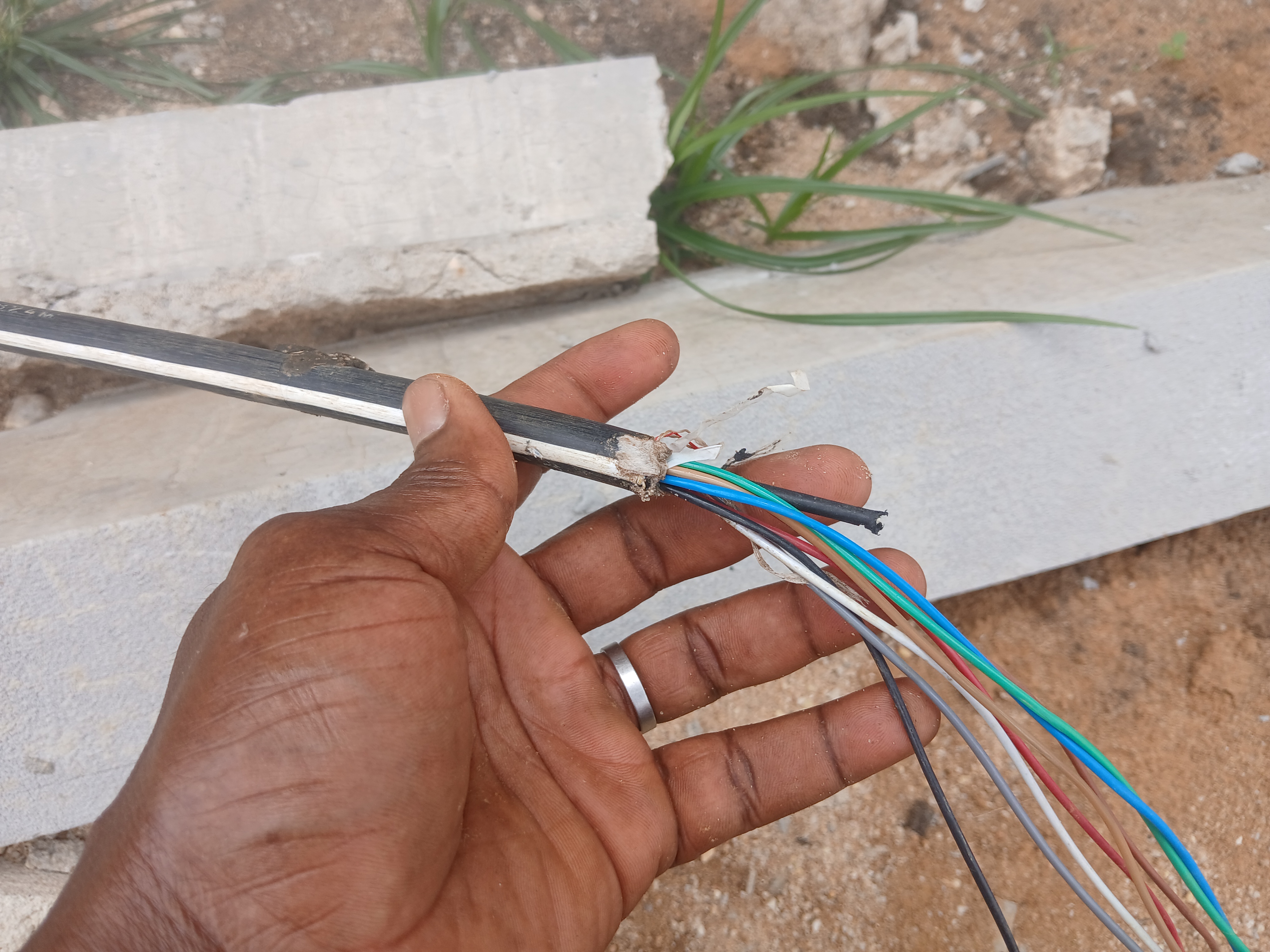
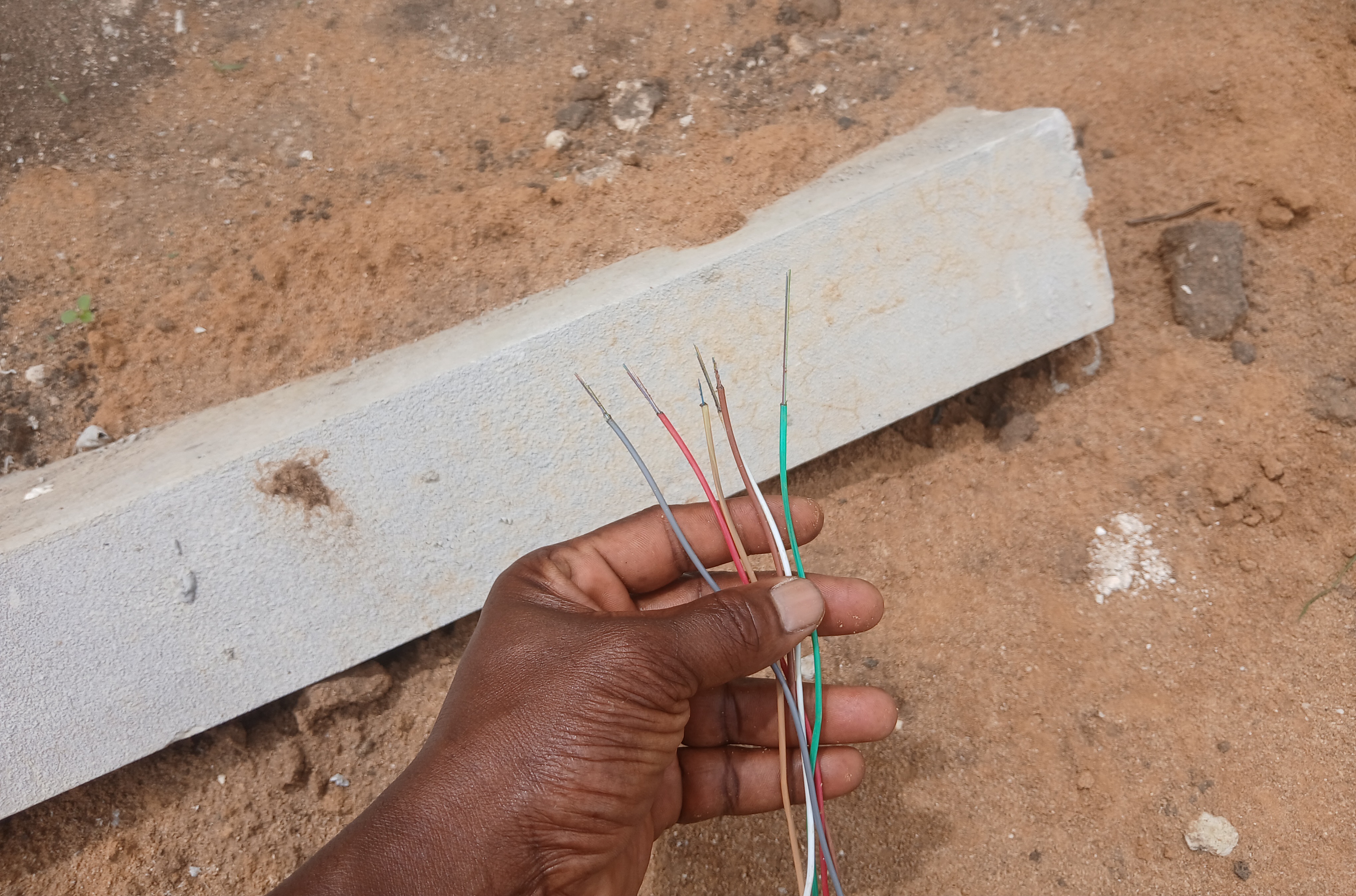
At face value, this one was made up of nine strands of various colours: black, grey, white, red, brown, blue, green, beige and a thicker black one.
But that was not all. I still looked closely and found out these were not the actual cables, they were sub-bundles containing the real fibre optic cables.
When I picked up the blue one, I could see a number of thin hair-like strands. They were about eleven or twelve strands, all coated with colours. They were so tiny I had to zoom to capture the picture below.
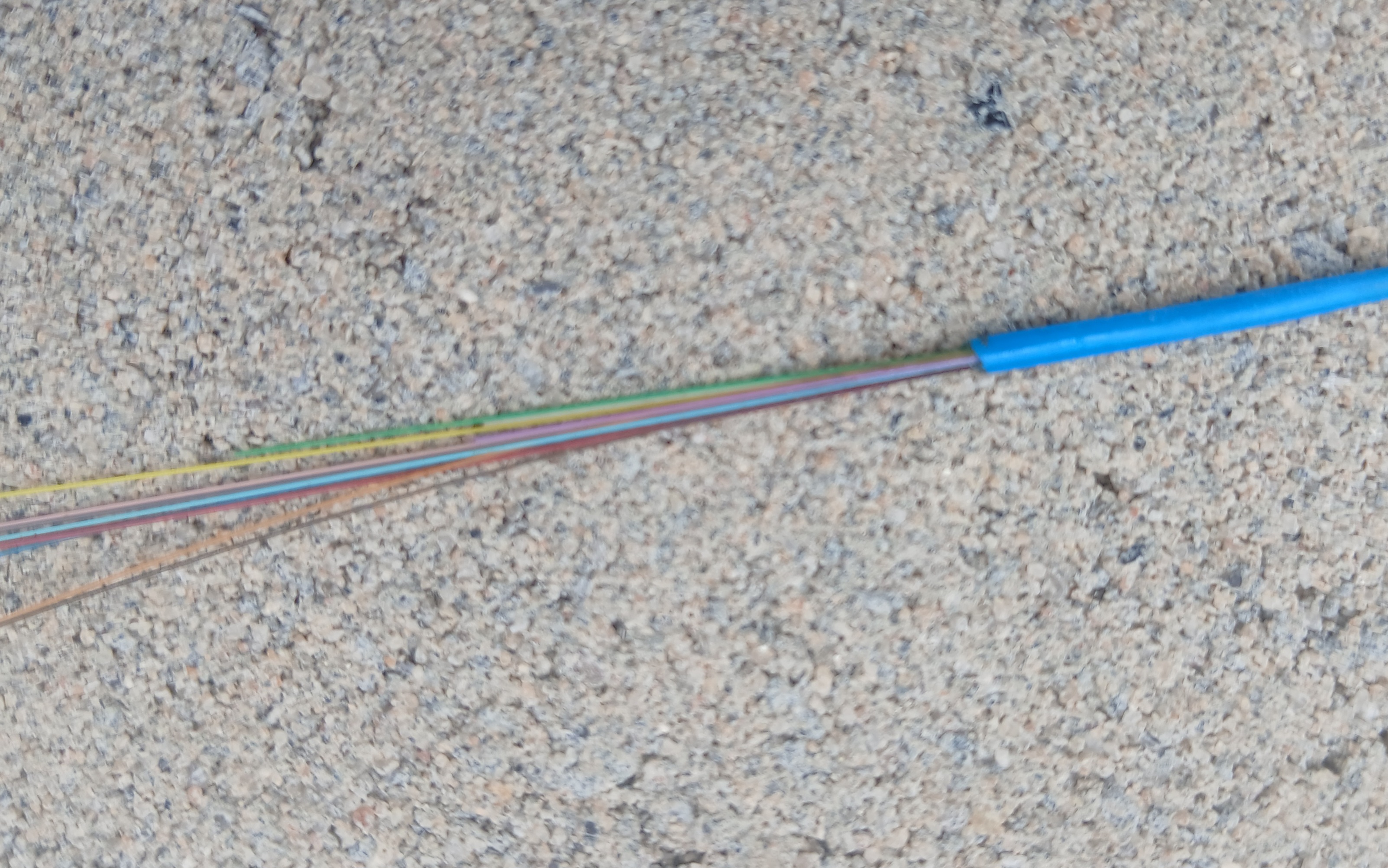
The strands were tough yet flexible, it felt like plastic because they were some kind of plastic and definitely not metal. And because it is not a metal, it can't conduct electricity. Instead of electric pulses, this cable transmits data as pulses of light beamed in from one end and travelling inside each strand at a fraction less than the speed of light.
If the blue cable housed 12 strands, and the whole thing had 9 such sub-cables, that would make it 108 strands of fibre optic cables all bundled in an armoured cable and buried underground in a protective sheath by a telecom service provider for high speed transmision of data.
Conclusion
Tech treasures like this are not discovered every day. I am happy I got the experience and was moved to read more about this technology. I wish I could get a strand, flash a light from one end and confirm it really reflects out the other end.
Just margin a computer system that runs and processes data as pulses of light instead of electricity. Will pulses of light respect an optical version of logic gates? Or is it only applicable for data transmission?.
@josepha
@utbros12345 @rmm
@ubongudofot @scottrollins
@joslud @xavuno @bountyking5
Media Credit |
|---|
| Composer | @manuelhooks |
|---|---|
| Captured by | @manuelhooks |
| Captured with | Galaxy-A15 |
| Location | Uyo, Nigeria |
| Posting Date | Fri, 27. March |
| (@) 2026 |
#steemexclusive #technology #club5050
#discovery #education #nigeria
#learning #science #data
#communication
#electronics
#user
Felicitaciones por tu interés en aprender. Te invito a que sigas estudiando y que no sòlo busques entender las propiedades del cable de fibra optica sino que busques algun uso alternativo que le puedas dar para beneficiar a tu comunidad. Te doy una pista: Las compañías que instalan internet por fibra óptica siempre desechan los puntos finales, es decir, siempre cortan y les sobran retazos de mas o menos medio metro en las puntas. Te pueden servir para hacer las pruebas que quieres. un abrazo!