Blockchain Adoption in the Real Estate Sector and Property Ownership Digitization
As blockchain technology evolves, it has transformed the way people have been buying, selling, and owning property. In the past, there were numerous papers involved in real estate transaction, agents, lawyers, banks and government offices. This process may be slow, stressful and costly. By maintaining vital property details in a secure digital system, blockchain can simplify the process of property ownership.
Blockchain is a digital ledger that is difficult to alter or destroy. After putting information on it, lots of people in the network can validate it. In the property sector, blockchain could document property, houses, buildings, consumers and sellers, and property ownership documents. Having this information may be beneficial to those who want to find out who the owner of a property is.
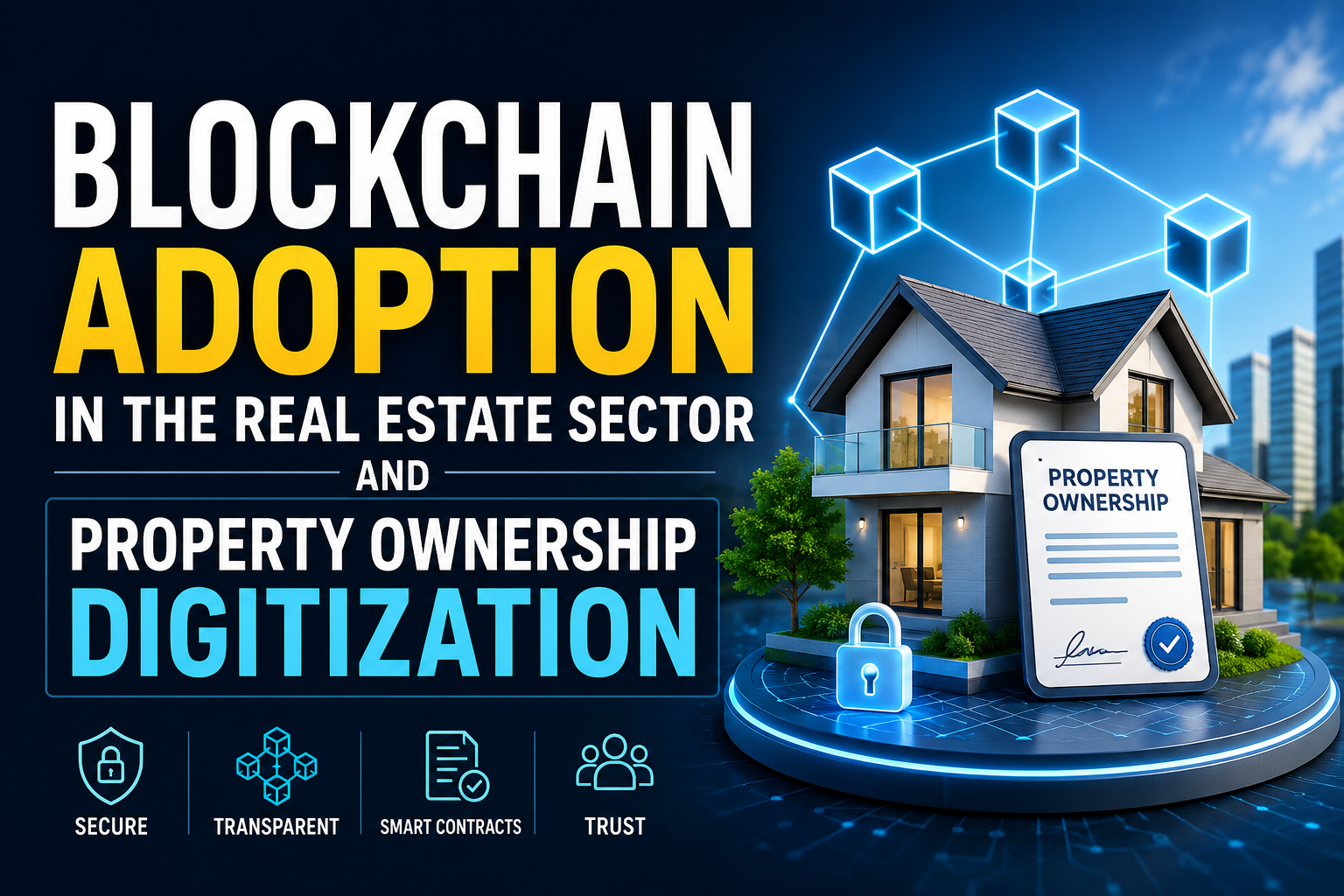
Transparency is one of the key advantages of blockchain in the real-estate market. Many people purchase real estate or houses they are unaware that someone has already purchased them. Sometimes fake documents are presented to claim land ownership. Property records can be easily accessed on blockchain. I think this can minimise land fraud particularly in areas where the land documents are not well organised.
Another advantage of blockchain is that it can speed up the time of real estate transactions. With the normal buyer, a lot of days or weeks can be required for documents to be reviewed and approved. Using digital records can make the process faster. Smart contracts may be utilized too. Smart Contract is a digital contract that executes itself once it meets all the conditions. For instance, if it is agreed, the ownership documents can be automatically transferred to the buyer when the sale price is paid.
The other key element of this transition is the digitization of property ownership. It refers to digitizing documents relating to property. People are not required to keep only paper evidence in files, they can now have secure digital evidence of ownership. This can make it simpler for owners to access their paperwork if required. It can also aid government agencies to have better records in respect of land and housing.
One intriguing suggestion is Property Tokenization. This involves "financializing" a property by creating small digital parts called tokens.It involves "financializing" a property, or dividing it into small digital parts called tokens. Individuals can purchase smaller units in a building rather than the entire building. I believe this can assist less affluent people in investing in real estate. It can also increase the opportunities for young people and small investors as well.
But there are still challenges in the adoption of blockchain. Proper laws are needed by government, improved internet access is needed and people should know how the technology works. An excellent level of security against scams and hacking is required too.
Overall, the real estate industry stands to gain from blockchain technology, as it can enhance the security, speed, and transparency of property transactions. It can be helpful in the fight against fraud and simplify the property investment process for some.