The Strait of Messina Bridge Project: Italy's Monumental Link to Sicily
The Strait of Messina Bridge is a landmark infrastructure project that will connect the island of Sicily with mainland Italy's Calabria region. In August 2025, the Italian government granted final approval to a €13.5 billion ($15.6 billion) plan to build the world's longest suspension bridge, marking a pivotal moment for one of the most ambitious and debated engineering endeavors in modern European history. Once completed, this single-span suspension bridge will revolutionize travel between the mainland and Sicily, significantly reducing the current 100-minute ferry crossing to just 10 minutes by car.
Background and Historical Context
The vision of a fixed link across the Messina Strait is not new. The concept dates back over 2,000 years to Roman times, when the Romans are said to have constructed a temporary floating bridge using barrels and boats. Modern plans for a suspension bridge began to take shape in the 1990s, and the project has seen numerous false starts since the Italian government first solicited proposals in 1969. The idea was revived under Prime Minister Giorgia Meloni's administration in 2023, and the August 2025 approval marks the furthest stage the ambitious project has ever reached.
Design and Engineering
The bridge's design is a masterpiece of modern engineering, aiming to set several world records and push the boundaries of suspension bridge technology.
Record-Breaking Scale
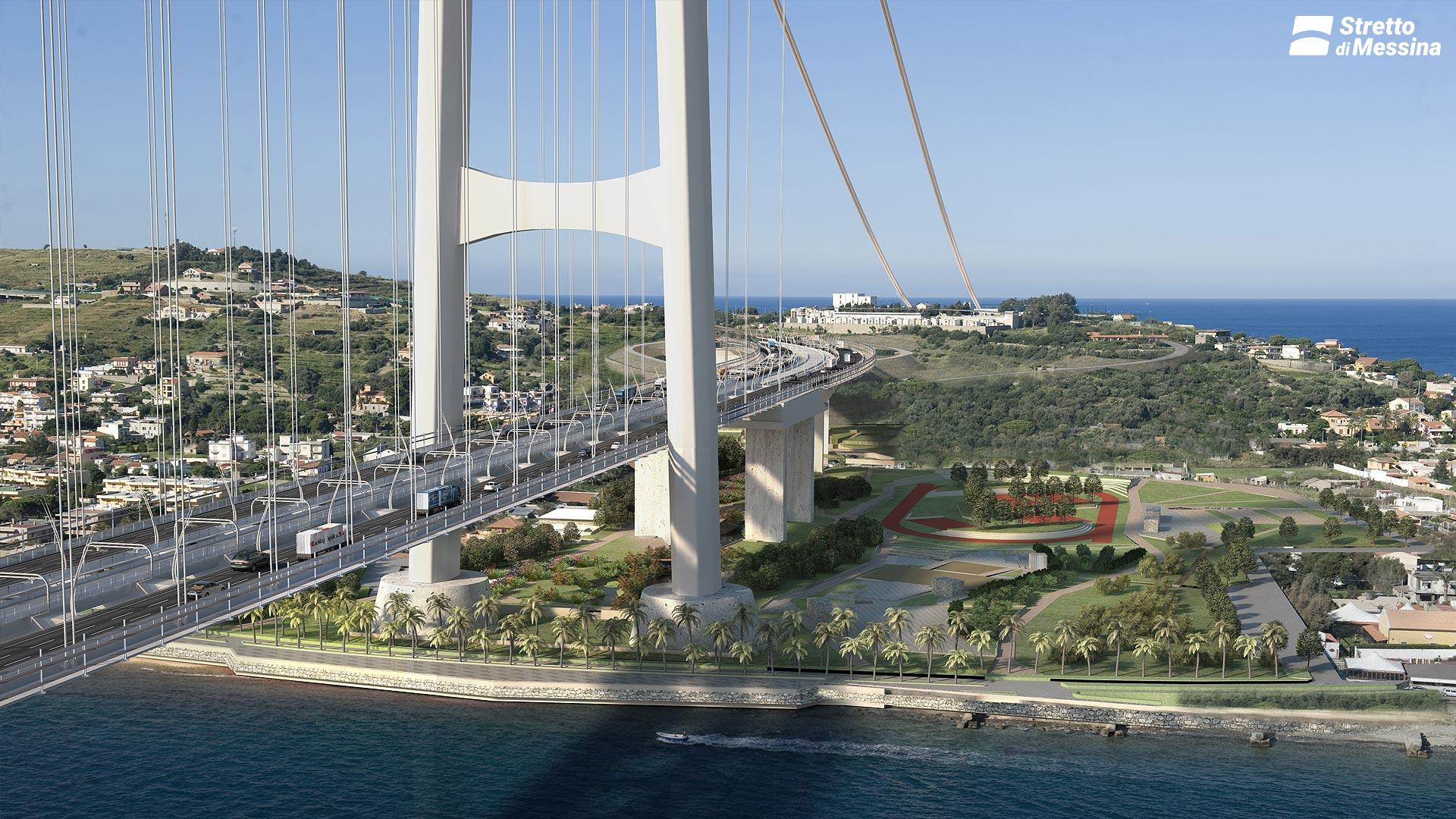
Span and Dimensions: The bridge will feature a central suspended span of 3,300 meters (approximately 2.05 miles), surpassing Turkey's 1915 Çanakkale Bridge—the current record-holder—by about one kilometer. The total length of the steel deck between expansion joints will measure 3,666 meters.
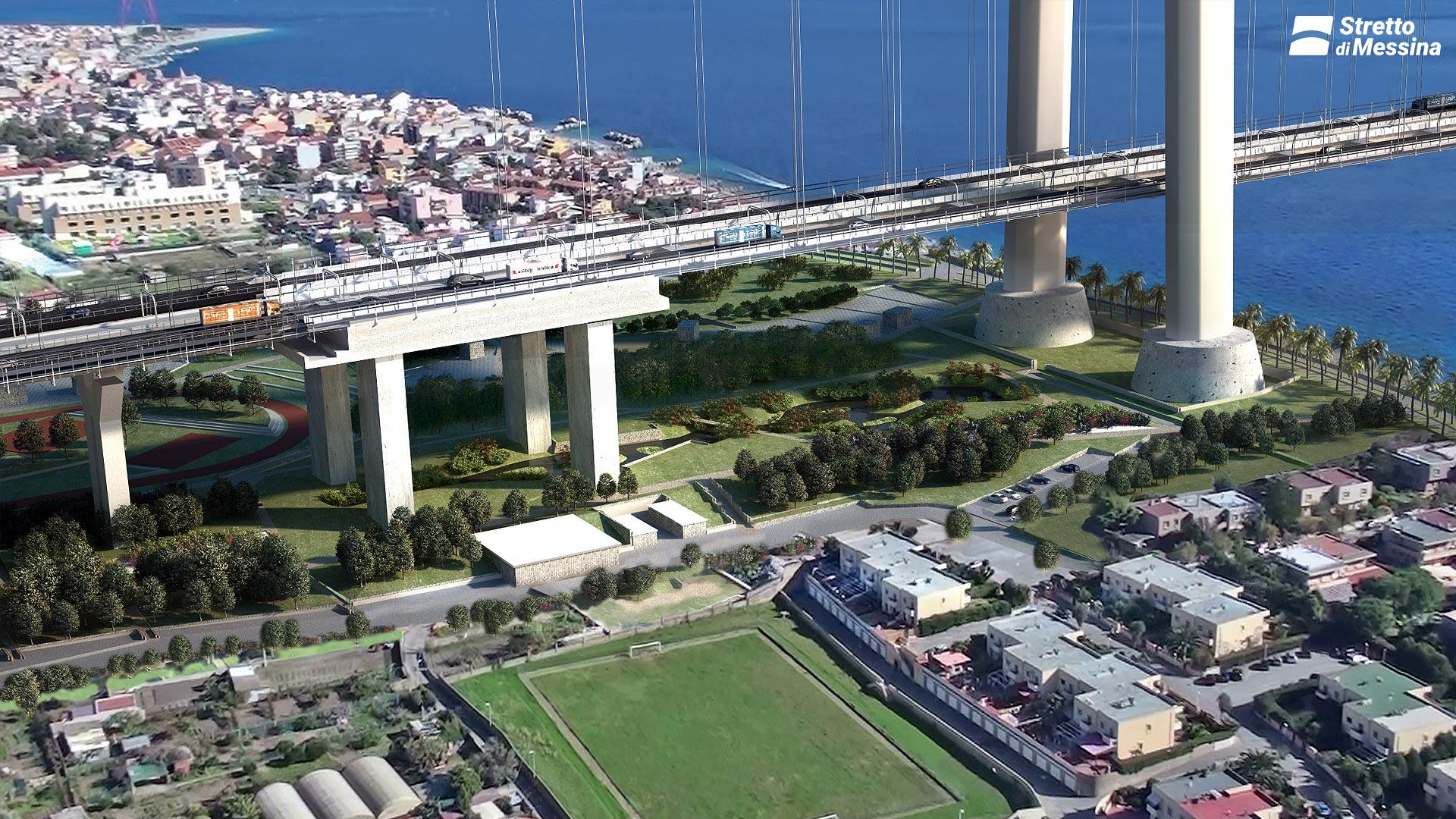
Towers: The bridge will be supported by two towering steel pylons reaching 399 meters (approximately 1,300 feet) high, making them among the tallest steel towers in the world.
Suspension Cables: The main suspension cables will measure an impressive 1.26 meters in diameter and extend more than 5 kilometers across the strait.
Deck and Capacity
The bridge's deck is designed to be approximately 60 meters wide, accommodating three vehicle lanes in each direction, two railway tracks, and two service lanes. This configuration will support up to 6,000 vehicles per hour and 200 trains daily, including two 750-meter-long freight trains or two passenger trains crossing each other on the bridge.
Aerodynamic Innovations
A key technological leap for the Strait of Messina Bridge is the multi-box girder deck, which features transparent windshields fitted with aerodynamic dampers. This design ensures aerodynamic stability and full efficiency, addressing the region's strong wind challenges. The bridge has been designed to withstand winds up to 216 km/h, well above the highest wind speed recorded in the area over the last 20 years.
Seismic Resilience
Perhaps the most critical engineering challenge is the region's high seismic activity. The strait is one of the most seismically active areas in the Mediterranean, and the infamous 1908 earthquake was the deadliest in European history. To address this, the bridge has been meticulously engineered. According to Stretto di Messina, the bridge has been designed to withstand earthquakes with a magnitude of up to 7.1 on the Richter scale. The seismic accelerations were checked using the very latest state-of-the-art methods, identical to or more advanced than those used for major international projects. Furthermore, geoseismotectonic studies ensured that the contact points of the bridge were deliberately positioned to avoid active faults. The bridge is designed to withstand earthquakes of far greater intensity than those taken as the basis for Italian and international technical standards for other structures.
Intelligent Monitoring System
The bridge will be equipped with an intelligent structural health monitoring system to support predictive maintenance and adapt to extreme weather and seismic events. This system will ensure the bridge's long-term safety and operational efficiency.
Construction and Project Delivery
The project is being delivered by a consortium led by Italian engineering giant Webuild, which also won the initial bid in 2006 before the plan was cancelled. The general contractor consortium, Eurolink, includes other Italian firms Condotte and Itinera, as well as Spanish construction group Sacyr and Japanese suspension specialist IHI Corporation. The design has been developed with input from Danish firm COWI.
The construction is scheduled to be completed in three parallel phases:
Phase 1: Road and rail connections, due to start in May 2026.
Phase 2: Tunnels and three new stations, starting in September 2026.
Phase 3: Bridge construction, set to begin in March 2027.
Completion is scheduled for 2032, with the bridge expected to be operational between 2032 and 2033.
Complementary Infrastructure
The bridge is just the centerpiece of a much larger investment in Southern Italy's infrastructure. The project includes over 40 kilometers of connecting roads and railways on both sides of the strait, incorporating around 10 viaducts. In Sicily, 17.5 kilometers of new railway will be built, 93% of which will be in tunnels, along with three new underground train stations in Messina at Papardo, Annunziata, and Europa. In Calabria, approximately 10 kilometers of new roads and nearly 3 kilometers of rail lines will link the bridge to both historic and future high-speed rail lines. A multi-use center, incorporating commercial facilities, restaurants, and a convention hall, will be constructed in Villa San Giovanni to serve as a management hub.
Economic Impact and Regional Development
The Strait of Messina Bridge is expected to generate significant economic momentum in Southern Italy, a region historically challenged by underinvestment and higher unemployment rates than the national average. The project's total cost is €13.5 billion, which Stretto di Messina says will be entirely covered by resources already allocated in the 2024 state budget.
Job Creation and GDP Boost
Over 100,000 to 120,000 jobs are anticipated, directly or indirectly, during construction. The estimated boost to regional GDP exceeds €23 billion, with €10.3 billion in tax revenue for the state. The bridge's annual revenue during its operation phase is projected to reach €162.8 million in 2033 and €336.4 million by 2062.
Reduction in Travel Time
The bridge will cut the current 100-minute ferry crossing to just 10 minutes by car, and trains will save up to 2.5 hours in transit time. This drastic reduction in travel time is expected to act as a catalyst for growth in tourism, culture, industry, and commerce, ultimately reducing isolation and fostering greater integration between Sicily, Calabria, and the broader Italian and European markets.
Challenges and Controversies
Despite its transformative potential, the project has faced and continues to face significant opposition and hurdles.
Political and Bureaucratic Hurdles
The project has been approved and canceled multiple times since 1969. While the August 2025 CIPESS approval was a major milestone, the project still requires rubber-stamping by the Italian Court of Auditors and environmental agencies at both national and EU levels. In April 2026, the Audit Court ruled illegitimate a third clause regarding the bridge plan, extending a pause on the long-discussed project.
Environmental Concerns
Environmental groups have raised complaints with the European Union, warning of potential disruption to migratory birds and a lack of proof that the project meets public interest thresholds. Local opposition groups also argue that its construction would use millions of liters of water a day while both Sicily and Calabria regularly struggle with drought.
Mafia Infiltration Fears
There are longstanding concerns that huge amounts of taxpayers' money could be siphoned off by the Sicilian and Calabrian mafias, which have a broad influence over politics and society in southern Italy. Transport Minister Matteo Salvini has insisted that "keeping organised crime out of the project is the top priority".
Seismic and Safety Doubts
Critics remain unconvinced about the bridge's ability to withstand the region's intense seismic activity, pointing to the 1908 earthquake that killed over 100,000 people. However, the project's designers and engineers maintain that the bridge will be able to withstand earthquakes and that similar bridges have been successfully built in seismically active areas, including Japan and Turkey.
Local Opposition
Local politicians and grassroots committees, such as "No to the Bridge," have slammed the government's decision, calling the project "controversial and divisive" and arguing it would divert "crucial resources from local transportation, modern infrastructure, safe schools and quality healthcare facilities". The mayor of Villa San Giovanni, a town near the bridge's planned site on the Calabrian shore, has also urged more time for consultations.
Strategic Significance
Rome has indicated it hopes to classify the bridge as a military expenditure to help it count towards NATO's target of 5% of GDP spent on defense, arguing that the bridge would form a strategic corridor for rapid troop movements and equipment transport. This "dual-use" classification has, however, caused controversy, with over 600 academics warning that it would require further military safety assessments and could make the bridge a potential target.
The project forms part of the EU's Trans-European Transport Network (TEN-T), specifically the Scandinavian-Mediterranean Corridor, which seeks to boost connectivity across Europe.
Recognition and Global Significance
Upon approval, Prime Minister Giorgia Meloni stated that the bridge would become "an engineering symbol of global significance," while Transport Minister Matteo Salvini hailed it as "the biggest infrastructure project in the West". When completed, it will claim several world records, including the longest main span and tallest towers on a suspension bridge.
The Strait of Messina Bridge is a project of extraordinary ambition and complexity. After over two millennia of dreaming and more than 50 years of modern political debates, it has finally received the definitive approval to proceed. As a marvel of modern engineering, it is designed to overcome immense natural challenges, including seismic activity, strong winds, and deep waters. While the road ahead is still paved with bureaucratic hurdles, environmental concerns, and fierce local opposition, the bridge's potential to revitalize Southern Italy's economy, drastically reduce travel times, and stand as a global engineering icon is undeniable. The world will be watching as this monumental project moves from the drawing board into the Strait of Messina.