Perhaps ~ Forse : Multilanguage: Eng/Ita
The flickering lights, a tired and magnetic amber hue, still pulse among branches heavy with memories, casting long, uncertain shadows upon the walls of a room that suddenly feels too vast, too silent. It is a slow dance, that of the electric filaments—an artificial heartbeat desperately trying to keep alive an atmosphere that has already evaporated, leaving behind that sweet yet bitterly sharp aftertaste we call nostalgia. I gaze at the tree, this sentinel of green needles and glassy reflections, and I realize it is no longer the radiant center of a celebration, but the funerary monument of a time so brief yet infinite, which has just slipped through my fingers like the finest golden sand.
There is a dense, almost tactile melancholy settling upon the carpets and seeping into the crevices of the furniture—a humidity of the soul that arises when the sound of toasts fades and only the low hum of the kitchen refrigerator remains. Christmas has passed; it is an echo still reverberating through the hallways, a faded scent of pungent cinnamon and burnt orange peels mingling with the sharp smell of resinous pine. Every glass bauble, hung with a care that today seems almost moving in its naivety, reflects a distorted and shrunken version of the surrounding world, capturing fragments of faces, of crystalline laughter, of hurried but necessary embraces that now inhabit the realm of immediate memories.
I fix my gaze on a deep, scarlet sphere, so polished it looks wet, and I see my own image reflected back—a solitary profile questioning the absence. Christmas is a promise renewed every year with tireless ferocity, a magnificent collective illusion that convinces us, for a few days, that time can stand still, that wounds can heal under the pristine layer of an ideal snow, that the silences between people can be filled by a familiar and reassuring melody. And yet, here we are, on the opposite side of the feast, reckoning with the void that the fullness has left behind—a void that is not deprivation, but a realization of the inexorable passage of days.
The tree is a silent and motionless witness. It has seen trembling hands unwrap gifts that promised ephemeral happiness; it has listened to confessions whispered under the influence of a generous and sincere wine; it has felt the weight of expectations we load onto the shoulders of this fragile period every year. Now, its decorations seem weary, almost weighed down by the gravity of a year pressing to enter, to replace the old with the new, magic with routine. The golden garlands, which only days ago shone with an almost divine light, now appear as gilded chains trying to hold back a ghost, an emotion that has already become history, already become yesterday.
I feel the need to touch a branch, to feel the rough, true texture of that nature brought indoors to exorcise the external frost. My fingers brush a porcelain angel with a matte robe and vitreous eyes—an object that seems to possess its own melancholic wisdom. The nostalgia I feel is liquid, a sensation flowing beneath the skin that seeks no solution, for there is no cure for the end of a spell other than the patient waiting for the next one. I wonder where all the hopes we hung on these branches go—if they dissolve with the steam of a breath or if they remain caught between the needles, ready to be stowed away in a dusty cardboard box, alongside the tangled lights that no one will have the heart to unravel next year.
The darkness outside the window is a heavy, black velvet, broken only by the reflection of the tree lights on the glass, creating the illusion of a luminous forest suspended in nothingness. It is an image of heartbreaking, solitary beauty. The Christmas just passed was a banquet for the senses and the heart, but its end is a forced diet of reality. One finds themselves looking at the remains of spent candles, the stains of colored wax on the furniture, the fragments of wrapping paper left in the most hidden corners, like archaeological artifacts of a civilization that existed for a week and then vanished into thin air.
There is a strange nobility in this post-holiday sadness. It is proof that we have loved, that we have hoped, that we have allowed ourselves to be vulnerable before the ritual. It is not the nostalgia of a missing gift or finished food, but the nostalgia for that incredible suspension where everything seemed possible, where time had surrendered to beauty and kindness appeared as the only acceptable currency of exchange. Now that the world resumes its accelerated and indifferent motion, the tree stands there, like a final bulwark of a dream that refuses to wake.
I watch the lights fade toward the bottom, where the branches are wider and more welcoming, and I think about how human it is to seek warmth in an inanimate object. We need this green simulacrum to remind us that life continues even in the heart of winter, that there is a spark persisting despite the surrounding darkness. The melancholy enveloping me is a heavy but necessary blanket; it forces me to look back so that I may then look forward. Christmas is not a day; it is a state of mind that strips us bare, shedding our daily armor to leave us alone with our purest and most frightening desires.
Every year I promise myself not to get involved, to look at the holidays with the detachment of a cynical and modern observer, and every year I fail miserably. I fall victim to this anticipated nostalgia, to this dull ache that accompanies joy. Because the true essence of Christmas lies not in its unfolding, but in its being always, irremediably, on the verge of ending. It is a beauty that shines brightest precisely because it is destined to fade.
The shadows lengthen further; the silence becomes almost solid, broken only by the imperceptible crackle of the wood adjusting to the room's temperature. I sit in the armchair facing the tree, surrendering to this aimless flow of thoughts. There is no rush to pack everything away, no hurry to erase the traces of this sacred passing. I want to inhabit this nostalgia; I want to feel it burn slowly like an ember beneath the ash. It is a form of respect for the days that were, for the laughter that filled the air, and for the silences that said more than a thousand words.
Perhaps this is the secret: accepting that the light must dim to allow us to appreciate the next dawn. The tree, with its regal weariness and its humble elegance, teaches me the dignity of the end. There is nothing tragic about a Christmas that leaves, save for our inability to let it go without a hint of regret. But it is a fertile regret, a damp soil from which new dreams and new expectations will be born.
As I continue to stare at that intermittent glow, I feel my heart calm, finding its own regular rhythm in sync with that electric pulse. The nostalgia gradually transforms into a silent and profound gratitude. I am grateful for this subtle pain, because it is confirmation that I am still capable of feeling enchantment—that the cynical logics of the world have not yet completely stifled the child who sought magic among the branches of a fir tree.
Christmas has just passed, yes, and yet, looking at this tree shining in the darkness, I feel that it will never entirely leave. It will remain deposited in a corner of the mind, like golden stardust, ready to shine again as soon as the cold returns to knock at the door. I stay a moment longer, in this timeless space between what was and what will be, contemplating the last reflection of a holiday that was, and still is, an anchor in the restless ocean of existence.
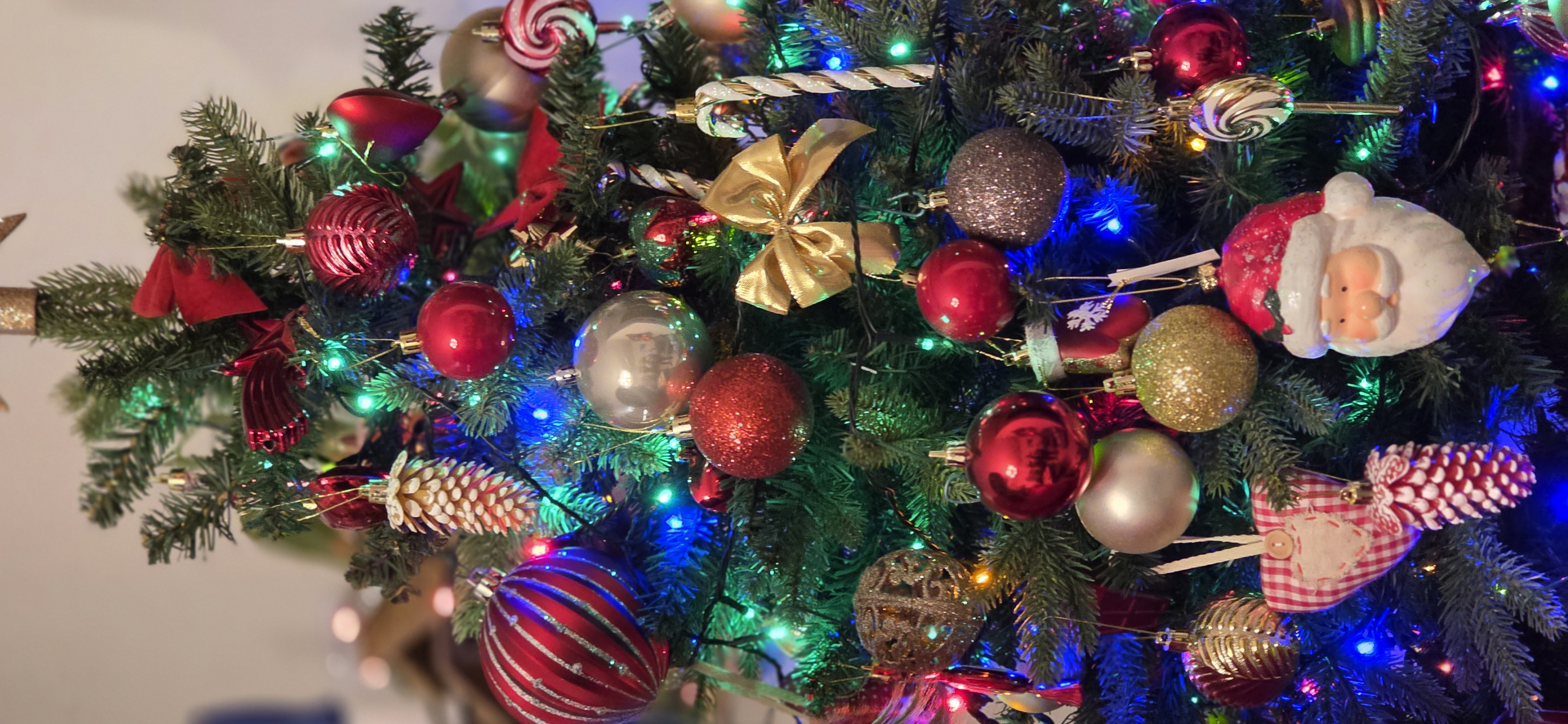
My property photo shooted by phonecam
Le luci intermittenti, di un color ambra stanco e magnetico, pulsano ancora tra i rami carichi di memorie, proiettando ombre lunghe e incerte sulle pareti di una stanza che sembra improvvisamente troppo vasta, troppo silenziosa. È una danza lenta, quella dei filamenti elettrici, un battito cardiaco artificiale che tenta disperatamente di tenere in vita un’atmosfera ormai evaporata, lasciando dietro di sé quel retrogusto dolce e insieme amarissimo che chiamiamo nostalgia. Guardo l'albero, questa sentinella di aghi verdi e riflessi vitrei, e mi rendo conto che non è più il centro radioso di una festa, ma il monumento funebre di un tempo brevissimo eppure infinito che è appena scivolato via tra le dita, come sabbia dorata e finissima.
C'è una malinconia densa, quasi tattile, che si deposita sui tappeti e si infiltra nelle fessure dei mobili, un’umidità dell’anima che nasce quando il rumore dei brindisi si spegne e resta solo il ronzio sommesso del frigorifero in cucina. Natale è passato, è un’eco che rimbomba ancora nei corridoi, un profumo sbiadito di cannella pungente e di scorze d’arancia bruciate che si mescola all’odore pungente del pino resinoso. Ogni pallina di vetro, appesa con una cura che oggi appare quasi commovente nella sua ingenuità, riflette una versione distorta e rimpicciolita del mondo circostante, catturando frammenti di volti, di risate cristalline, di abbracci frettolosi ma necessari, che ora abitano il regno dei ricordi immediati.
Fisso una sfera di un rosso scarlatto e profondo, così lucida da sembrare bagnata, e vedo riflessa la mia stessa immagine, un profilo solitario che interroga l’assenza. Il Natale è una promessa che si rinnova ogni anno con una ferocia instancabile, un’illusione collettiva e magnifica che ci convince, per pochi giorni, che il tempo possa fermarsi, che le ferite possano rimarginarsi sotto lo strato candido di una neve ideale, che i silenzi tra le persone possano essere colmati da una melodia familiare e rassicurante. E invece, eccoci qui, sul versante opposto della festa, a fare i conti con il vuoto che la pienezza ha lasciato, un vuoto che non è privazione, ma consapevolezza del trascorrere inesorabile dei giorni.
L’albero è un testimone silenzioso e immobile. Ha visto le mani tremanti scartare regali che promettevano felicità effimere, ha ascoltato confessioni sussurrate sotto l’effetto di un vino generoso e sincero, ha sentito il peso delle aspettative che ogni anno carichiamo sulle spalle di questo periodo così fragile. Ora, le sue decorazioni sembrano stanche, quasi appesantite dalla gravità di un anno che preme per entrare, per sostituire il vecchio con il nuovo, la magia con la routine. Le ghirlande dorate, che solo pochi giorni fa splendevano di una luce quasi divina, appaiono ora come catene dorate che tentano di trattenere un fantasma, un'emozione che è già diventata storia, già diventata ieri.
Sento il bisogno di toccare un ramo, di sentire la consistenza ruvida e vera di quella natura portata dentro casa per esorcizzare il gelo esterno. Le dita sfiorano un angelo di porcellana dalla veste opaca e gli occhi vitrei, un oggetto che sembra possedere una propria, malinconica saggezza. È una nostalgia liquida quella che provo, una sensazione che scorre sottopelle e che non cerca soluzioni, perché non c’è cura per la fine di un incantesimo se non l’attesa paziente di quello successivo. Mi chiedo dove vadano a finire tutte le speranze che abbiamo appeso a questi rami, se si dissolvano con il vapore del respiro o se rimangano incastrate tra gli aghi, pronte per essere riposte in una scatola di cartone polverosa, insieme alle luci aggrovigliate che nessuno avrà voglia di sciogliere l’anno prossimo.
Il buio fuori dalla finestra è un velluto pesante e nero, interrotto solo dal riflesso delle luci dell’albero sul vetro, che crea l’illusione di un bosco luminoso sospeso nel nulla. È un’immagine di una bellezza straziante e solitaria. Il Natale appena trascorso è stato un banchetto per i sensi e per il cuore, ma la sua fine è una dieta forzata di realtà. Ci si ritrova a guardare i resti delle candele consumate, le macchie di cera colorata sui mobili, i frammenti di carta da regalo rimasti negli angoli più nascosti, come reperti archeologici di una civiltà che è esistita per una settimana e poi è svanita nel nulla.
C’è una strana nobiltà in questa tristezza post-festiva. È la prova che abbiamo amato, che abbiamo sperato, che abbiamo permesso a noi stessi di essere vulnerabili di fronte al rito. Non è la nostalgia del regalo mancato o del cibo terminato, ma la nostalgia di quella sospensione incredibile in cui tutto sembrava possibile, in cui il tempo si era arreso alla bellezza e la gentilezza appariva come l’unica moneta di scambio accettabile. Ora che il mondo riprende il suo moto accelerato e indifferente, l’albero resta lì, come un ultimo baluardo di un sogno che non vuole svegliarsi.
Guardo le luci che sfumano verso il basso, dove i rami sono più larghi e accoglienti, e penso a quanto sia umano cercare calore in un oggetto inanimato. Abbiamo bisogno di questo simulacro verde per ricordarci che la vita continua anche nel cuore dell’inverno, che c’è una scintilla che persiste nonostante il buio circostante. La malinconia che mi avvolge è una coperta pesante ma necessaria, mi costringe a guardare indietro per poter poi guardare avanti. Il Natale non è un giorno, è uno stato mentale che ci mette a nudo, che ci spoglia delle nostre armature quotidiane per lasciarci soli con i nostri desideri più puri e spaventosi.
Ogni anno prometto a me stesso di non lasciarmi coinvolgere, di guardare alle feste con il distacco di un osservatore cinico e moderno, e ogni anno fallisco miseramente. Cado vittima di questa nostalgia anticipata, di questo dolore sordo che accompagna la gioia. Perché la vera essenza del Natale non risiede nel suo svolgimento, ma nel suo essere sempre, irrimediabilmente, sul punto di finire. È una bellezza che brilla più forte proprio perché è destinata a spegnersi.
Le ombre si allungano ancora, il silenzio diventa quasi solido, interrotto solo dal crepitio impercettibile del legno che si adatta alla temperatura della stanza. Mi siedo sulla poltrona di fronte all’albero, abbandonandomi a questo flusso di pensieri senza meta. Non c’è fretta di riporre tutto, non c’è fretta di cancellare le tracce di questo passaggio sacro. Voglio abitare questa nostalgia, voglio sentirla bruciare lentamente come una brace sotto la cenere. È una forma di rispetto per i giorni che sono stati, per le risate che hanno riempito l’aria e per i silenzi che hanno detto più di mille parole.
Forse il segreto è proprio questo: accettare che la luce debba affievolirsi per permetterci di apprezzare l’alba successiva. L’albero, con la sua stanchezza regale e la sua eleganza dimessa, mi insegna la dignità della fine. Non c’è nulla di tragico in un Natale che se ne va, se non la nostra incapacità di lasciarlo andare senza un pizzico di rimpianto. Ma è un rimpianto fertile, un terreno umido da cui nasceranno nuovi sogni, nuove attese.
Mentre continuo a fissare quel bagliore intermittente, sento che il cuore si calma, trovando un suo ritmo regolare in sintonia con quel battito elettrico. La nostalgia si trasforma gradualmente in una gratitudine silenziosa e profonda. Sono grato per questo dolore sottile, perché è la conferma che sono ancora capace di provare incanto, che le ciniche logiche del mondo non hanno ancora del tutto soffocato il bambino che cercava la magia tra i rami di un abete.
Il Natale è appena passato, sì, eppure, guardando questo albero che brilla nell'oscurità, sento che non se ne andrà mai del tutto. Rimarrà depositato in un angolo della mente, come una polvere di stelle dorata, pronta a brillare di nuovo non appena il freddo tornerà a bussare alle porte. Resto ancora un momento, in questo spazio atemporale tra ciò che è stato e ciò che sarà, a contemplare l’ultimo riflesso di una festa che è stata, ed è ancora, un’ancora di salvezza nell'oceano inquieto dell’esistenza.
Nostalgie!
What a feeling!...
Thanks, @margarety
@tipu curate !
Upvoted! Thank you for supporting witness @jswit.
Thank you very much!