How Charlie Munger made billions by thinking backwards
Charlie Munger spent decades producing returns that most investors can only dream about, yet some of his most important investing lessons run directly against the instincts of modern finance.
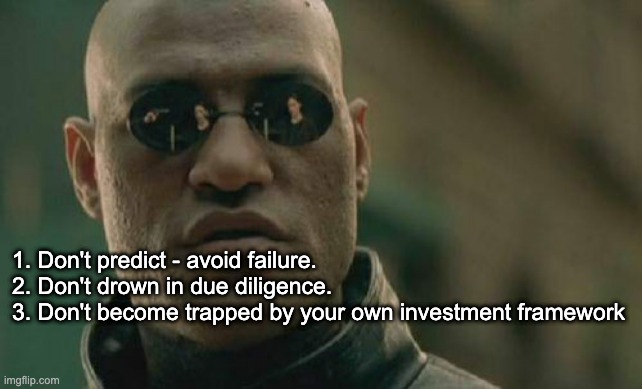
- One of them is that prediction is massively overrated. When Munger served as a military weather forecaster, he approached the job differently from everyone around him. Instead of asking how to make the most accurate forecast, he asked a much darker question: how do I kill a pilot? After thinking it through, he concluded there were only a few ways to do it consistently. Either send an aircraft into icing conditions it could not handle or put it in a situation where it would run out of fuel before reaching a safe landing point. Once he identified those failure modes, his job became remarkably simple: avoid them at all costs.
This inversion framework became a cornerstone of Berkshire Hathaway's investment philosophy. Most investors spend their lives searching for the next Amazon, the next Nvidia or the next technological revolution that will produce life-changing returns. Munger's approach was often the opposite. Instead of obsessing over identifying future winners, he focused on avoiding permanent losers. Avoid excessive leverage. Avoid businesses with fragile economics. Avoid management teams that cannot be trusted. Avoid industries where competition destroys profitability. Avoid situations where a single mistake can wipe out years of gains.
The insight is uncomfortable because it suggests that investing success depends less on brilliance than on consistently avoiding stupidity. In a world where investors are rewarded for making bold predictions, Munger built his fortune by systematically eliminating obvious ways to fail.
- His second idea is even more controversial. Munger argued that most due diligence is not a sign of intelligence but a symptom of insecurity. That statement sounds absurd in an industry that worships research, analysis, models, expert calls, consultant reports, channel checks and endless spreadsheets. Yet Munger repeatedly observed that the weakest decision-makers often compensate by collecting more information rather than improving their understanding.
As he put it, the weaker they are as thinkers, the more due diligence they do. The point is not that information has no value. The point is that information and understanding are not the same thing. Many investors believe that reading another 500 pages will reduce uncertainty, when in reality they have already identified the handful of variables that matter and are simply searching for emotional comfort.
Munger pointed to Berkshire's financing of the Anadarko transaction as an example. The company controlled premier acreage in the Permian Basin, the most valuable oil-producing region in the United States. Berkshire received preferred securities with an attractive yield, substantial downside protection and exposure to capable operators. The critical variables were obvious. The decision did not require months of investigation because the central facts driving the outcome were already visible.
Modern finance often creates the illusion that every investment decision can be reduced to an exhaustive checklist. Munger believed the opposite. The highest-value skill is identifying the few factors that actually matter and then having the confidence to act before everyone else finishes reading documents that are largely irrelevant.
- His third lesson may be the most important because it explains how Berkshire evolved from a good investment vehicle into one of the greatest wealth-compounding machines in history.
According to Munger, Berkshire's most successful investments often emerged when Buffett and Munger abandoned the very rules that had previously made them successful. The best example is See's Candies. Today, investors discuss the acquisition as if its brilliance was obvious. In reality, Buffett and Munger nearly failed to buy it. The company appeared expensive compared to the types of statistically cheap businesses they had traditionally pursued. They were anchored to a framework that prioritized low valuations and tangible assets. By those standards, See's did not look particularly attractive.
Munger later admitted that Berkshire was only barely smart enough to make the purchase. A partner repeatedly argued that they were analyzing the situation incorrectly. What mattered was not the accounting metrics but the quality of the business itself. Customers loved the product. The brand possessed extraordinary pricing power. Capital requirements were minimal. Every year the company generated cash far in excess of what was needed to operate the business.
The acquisition changed Berkshire's intellectual framework forever. Instead of searching exclusively for cheap businesses, Buffett and Munger began searching for exceptional businesses. That shift laid the foundation for later investments such as Coca-Cola and many of Berkshire's most successful holdings. In hindsight, the real return from See's was not the cash it generated but the lesson it taught.
The irony is remarkable. One of the greatest investing records in history was partly built by recognizing that the framework responsible for previous successes had become too restrictive.
Taken together, these three ideas reveal something profound about how Munger viewed investing. He did not believe superior results came from predicting the future more accurately than everyone else. He did not believe they came from gathering more information than everyone else. And he did not believe they came from rigidly following a predefined system. Instead, he believed superior results came from understanding reality more clearly than everyone else, identifying the few variables that truly matter, avoiding obvious mistakes and remaining intellectually flexible enough to abandon cherished ideas when the evidence demanded it.
Most investors spend their careers trying to become smarter than the market. Munger spent his trying to become less foolish than the competition.
Full video with a lot of interesting stories and insights: