From Fiat Money to Machine Tokens: The Next Financial System
The internet is moving toward a system where traditional fiat money probably will not disappear officially, but will slowly lose its central importance, because once almost all economic activity becomes digitally measurable and connected in real time, societies no longer need to rely entirely on abstract currencies to organize economic life, while programmable tokens linked directly to energy use, computing power, AI access, robotic work, data generation, logistics systems and network permissions become more practical and economically relevant than the monetary models inherited from the industrial age.
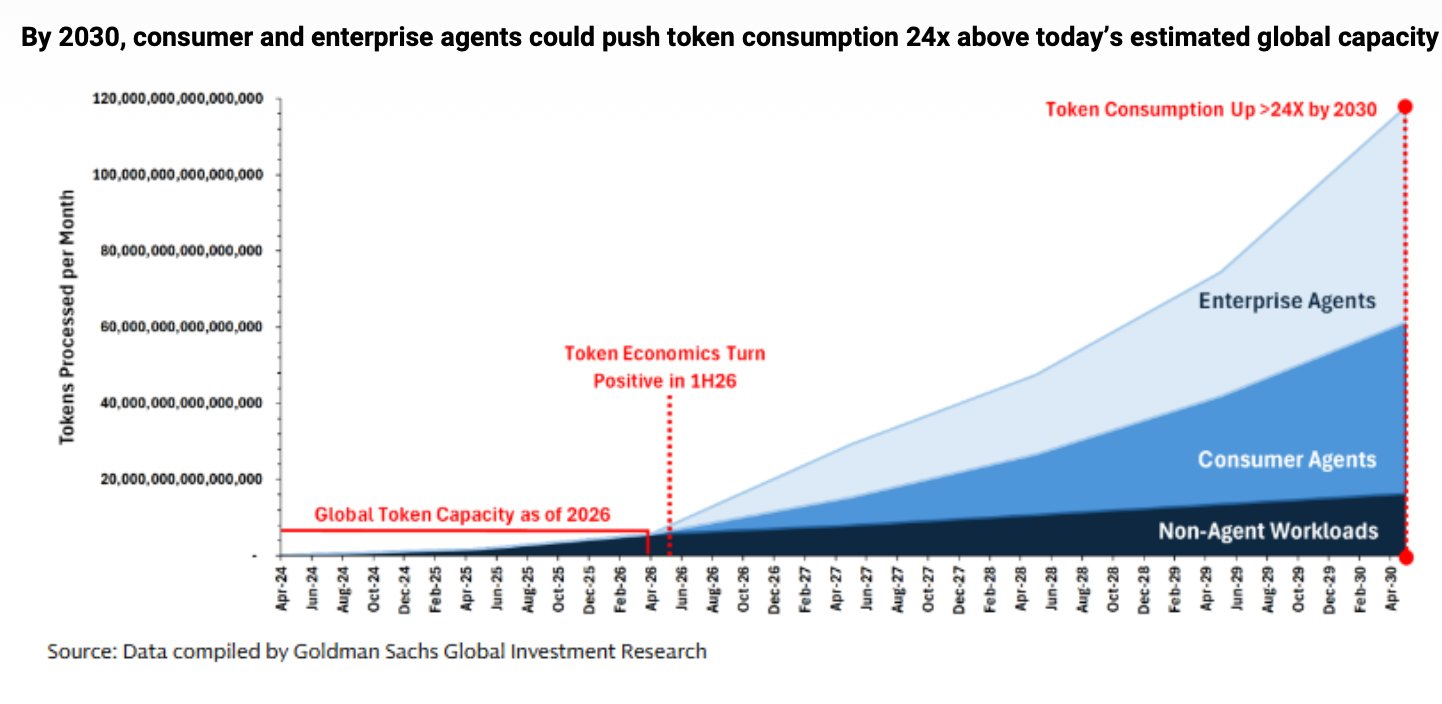
The important transition is that future economies may stop measuring value mainly through profit, revenue or GDP and instead evaluate systems according to operational activity inside digital networks, meaning that the importance of a company or platform will increasingly depend on how much computation runs through its infrastructure, how many AI agents depend on its protocols, how much energy it controls, how frequently its tokens circulate and how necessary its digital ecosystem becomes for automated coordination between humans, machines and software systems.
As humanoid robotics and autonomous AI agents begin participating directly in economic activity at scale, the traditional logic of banking may become increasingly outdated, because machines do not psychologically “trust” money in the human sense and do not need bank accounts or symbolic fiat abstractions, but instead require immediate access to electricity, cloud computing, maintenance systems, navigation rights, software permissions, execution priority and machine-speed settlement infrastructure, all of which can be coordinated more efficiently through programmable token systems than through legacy banking architecture designed around slow human verification and institutional intermediaries.
Under these conditions, finance itself may stop existing as a separate layer above the economy and instead become embedded directly into infrastructure, because power grids become financial systems, AI computation becomes a form of liquidity, supply chains become programmable transaction networks, robotics fleets become autonomous economic actors and internet platforms evolve into tokenized ecosystems where every interaction simultaneously represents payment, authorization, ranking, resource allocation and computational activity inside continuously operating machine-driven networks.
At the same time, the internet itself may eventually become almost free at the basic access level, because satellite systems, mesh networking, AI compression technologies and collapsing transmission costs are making raw connectivity increasingly abundant, while the true scarcity shifts upward into intelligence and cognition, meaning that people may no longer pay primarily for internet access itself, but instead for access to superior AI systems, advanced analytics, predictive models, autonomous agents, proprietary datasets, algorithmic reputation systems and synthetic intelligence capable of generating economic and strategic advantages in real time.
The ultimate consequence is that the central struggle of future finance may no longer revolve around banks, interest rates or even national currencies, but around control over token ecosystems governing energy access, computational hierarchy, machine coordination and information privilege, because whoever controls the dominant tokenized infrastructure connecting AI agents, robotics systems, digital platforms and global data flows may ultimately control the operational foundation of civilization itself, reducing traditional banking institutions to secondary intermediaries inside a machine-native economic order.