How to Write a Marketing Strategy on One Page
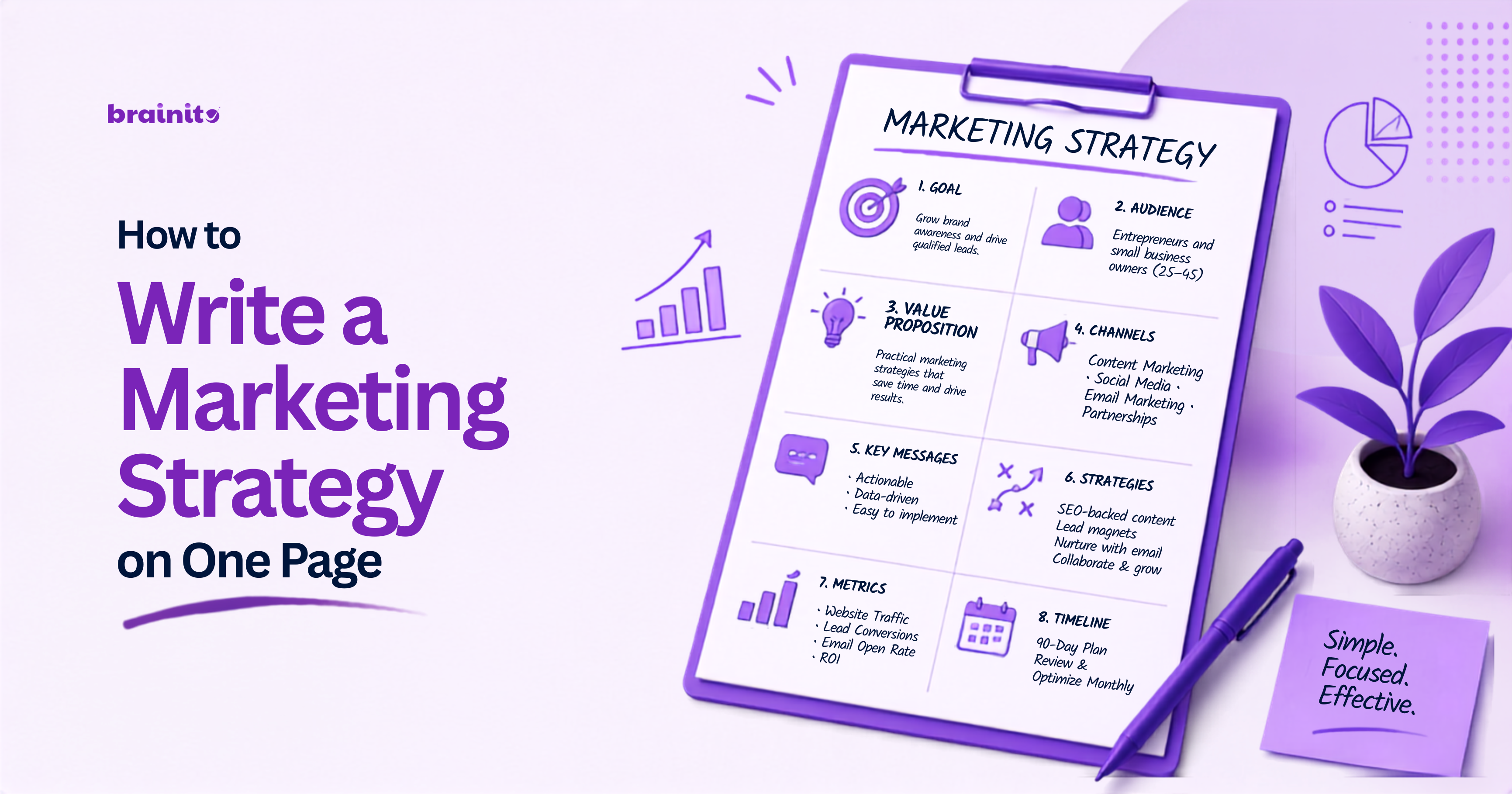
When business owners and founders think of a marketing strategy, they often imagine a massive, sixty page corporate document filled with complex market analysis, detailed SWOT grids, and hypothetical growth projections. They spend weeks drafting this masterpiece, print it out, place it in a fancy binder, and completely forget about it. The document sits on a shelf, gathering dust, while the team continues to publish random social media posts and run disjointed ad campaigns.
A marketing strategy is completely useless if it is too complicated to implement. In the fast paced digital environment of 2026, you do not need a massive corporate document to build a successful brand. You need absolute focus and extreme clarity. The most successful businesses operate on a simple, actionable strategy that fits on a single sheet of paper. This lean format forces you to cut out the fluff and focus entirely on the core drivers of growth. Here is exactly how to write a highly effective marketing strategy on one page.
Section 1: Define Your Target Audience and Their Biggest Pain Point
The absolute foundation of any marketing strategy is knowing exactly who you are talking to. If you try to sell to everyone, you will end up selling to no one. Your messaging will become diluted, generic, and completely forgettable in a crowded marketplace.
On your single sheet of paper, write down a concise definition of your ideal customer. Include their primary demographic traits, such as their industry, job role, or average budget. More importantly, write down their single most painful daily frustration. What is the specific, high cost challenge that keeps them awake at night? Your entire marketing campaign and product development roadmap must focus entirely on solving this specific pain point.
Section 2: Craft Your Irresistible Value Proposition
Your value proposition is your digital elevator pitch. It is a single, clear sentence that explains exactly how your product solves the customer's problem, what concrete benefits they can expect, and why they should choose you over the competition.
Do not use vague corporate jargon like "we provide innovative solutions." Be brutally literal. If you sell a time tracking tool, your value proposition should say "We help freelance designers track their billable hours in one click so they can invoice clients with absolute accuracy." A clear, benefits driven value proposition hooks the right audience immediately, and it guides your team to write consistent, high converting copywriting across all marketing channels.
Section 3: Select Your Primary Acquisition Channels
There are hundreds of different marketing channels you can use to grow your business, including Google Ads, search engine optimization, content marketing, public relations, and influencer partnerships. Attempting to use all of these channels simultaneously is a guaranteed way to exhaust your budget and burn out your team.
You must choose a maximum of two primary acquisition channels to start with. If your target audience consists of corporate executives, focus entirely on LinkedIn content and targeted direct email campaigns. If you sell high visual e-commerce products, focus on Instagram ads and micro influencer partnerships. Master these two chosen channels completely, achieving predictable profitability, before you even think about expanding into new marketing networks.
Section 4: Define Your Conversion Mechanism
Getting traffic to your website is only half the battle. You must have a structured, frictionless mechanism to convert casual website visitors into warm, sales ready leads or paying customers.
Define your conversion pathway clearly. If you run a high ticket consulting business, your conversion mechanism is a free fifteen minute strategy call. If you sell software, your mechanism is a fourteen day free trial with no credit card required. If you are building an email list, your mechanism is a highly valuable free checklist, template, or calculator. Write down the exact steps a user must take from their initial click to their final purchase.
Section 5: Track Your Three Core Success Metrics
To know if your marketing strategy is actually working, you must track your performance. However, monitoring fifty different metrics will quickly lead to analysis paralysis and wasted resources.
You must choose a maximum of three core success metrics that are directly tied to your company's revenue growth. For example, track your Cost Per Acquisition, your Monthly Recurring Revenue, and your Customer Lifetime Value. Write these three metrics prominently at the bottom of your page. Review these numbers weekly to see if your strategic efforts are moving the business forward.
To easily draft, organize, and share your one page marketing plan with your team and stakeholders, you should leverage the Brainito Marketing Strategy tool. This tool provides a structured, visual template that guides you through every step of the planning process, ensuring you can scale your brand with absolute focus and zero confusion.
Written by:
Brainito Intelligence
www.brainito.com