Traditional vs Digital Marketing (With Local Examples)
Traditional vs Digital Marketing (With Local Examples)
Marketing is evolving rapidly, especially in Pakistan, where businesses are now balancing between traditional and digital methods. The big question is: Which one is more effective today?
Traditional Marketing: Still Powerful Locally
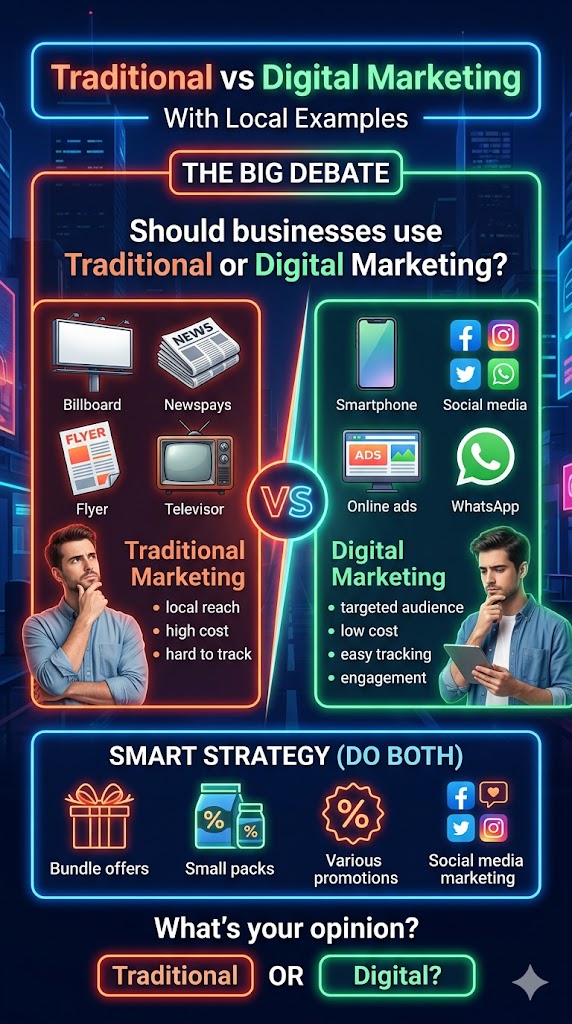
Traditional marketing includes billboards, flyers, newspapers, and TV ads. In many local areas and villages, this method is still highly effective. For example, small shops often promote their products through banners, wall posters, or announcements in local markets.
This approach works well because it directly targets people in a specific location. However, it can be expensive and difficult to measure results.
Digital Marketing: Growing Fast
Digital marketing uses platforms like Facebook, Instagram, and WhatsApp to reach customers online. It allows businesses to target specific audiences, track performance, and adjust strategies in real time.
For example, many local clothing brands now promote their products through Facebook ads or WhatsApp groups, reaching customers beyond their physical area.
Key Differences
Reach: Traditional (local) vs Digital (global + local)
Cost: Traditional (higher) vs Digital (flexible)
Tracking: Traditional (limited) vs Digital (detailed analytics)
Engagement: Traditional (one-way) vs Digital (interactive)
Which One is Better?
The answer is not simple. In cities, digital marketing is growing fast, but in rural areas, traditional methods still work effectively. Smart businesses combine both strategies—for example, using banners locally and promoting the same product on Facebook.
Conclusion
The future of marketing is not about choosing one over the other—it’s about integration. Businesses that use both traditional and digital marketing wisely will achieve better results.
💡 The best strategy is: Think local, market digital, and combine both for success.