Common Martech Infrastructure Challenges and Tips to Solve Them
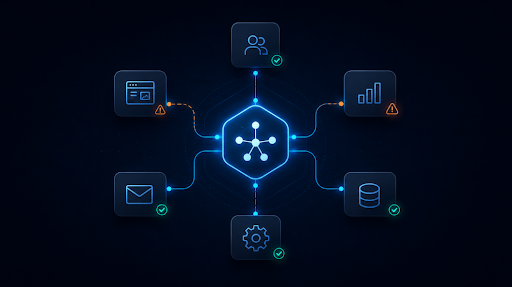
Modern marketing teams depend on fast data movement, connected customer journeys, and reliable performance visibility. However, many martech environments have evolved over time through disconnected tools and department-specific decisions.
As a result, the underlying infrastructure often becomes more complex to manage than the tools themselves. Campaigns take longer to launch, reporting becomes harder to trust, and personalization feels inconsistent.
In this article post, we’ll explore the most common martech infrastructure challenges businesses face and practical ways to solve them. Plus, how the right martech software solutions can help enterprises connect existing systems, reduce operational friction, and build a more scalable marketing foundation.
But first, let’s understand;
Why Is Martech Infrastructure Important?
Martech infrastructure is the foundation that allows marketing technology systems to work together. It includes the integrations, APIs, data flows, workflows, governance rules, and reporting layers that support marketing execution.
A strong infrastructure helps marketing teams access reliable customer data, launch campaigns faster, connect loyalty, CRM, CMS, and campaign systems, reduce manual data handling, and adapt to new tools and customer expectations.
This enables customer data, content, and incentives to collaborate effectively, supporting engagement, retention, and growth.
Common Martech Infrastructure Challenges
Martech infrastructure challenges usually appear as campaign delays, reporting issues, inconsistent customer experiences, or too much manual work.
But the root cause is often deeper: systems are not connected in a way that supports modern marketing operations. Below are the most common challenges that companies face:
Fragmented Customer Data
Customer data often lives across many platforms. A CRM may store contact details, a loyalty system may track member activity, an e-commerce platform may hold purchase history, and a campaign tool may manage engagement data.
When those systems do not communicate properly, marketing teams cannot build a complete customer view. This leads to weak segmentation, duplicate messages, irrelevant offers, and missed opportunities to engage customers at the right moment.
Manual Data Movement
Many marketing teams still rely on CSV exports, spreadsheets, manual uploads, and one-off list preparation. These processes may seem manageable at first, but they create delays and increase the risk of errors.
Manual data movement also limits responsiveness. If a campaign depends on data that is several days old, personalization and timing become less effective.
Poor System Integration
A martech stack may include strong individual tools, but if the integrations between them are weak, the overall system underperforms. CRM, CMS, loyalty, analytics, and campaign platforms need to exchange data reliably.
Poor integration often results in disconnected workflows, inconsistent records, delayed updates, and heavy dependence on IT for routine marketing changes.
Inconsistent Reporting
Marketing leaders need reliable performance visibility. But when every platform reports data differently, teams can struggle to understand what is actually working.
One system may show campaign engagement, another may show conversions, and another may show revenue or loyalty activity. Without a connected reporting layer, teams spend more time reconciling numbers than improving strategy.
Limited Personalization Capability
Personalization depends on current and accurate customer data. If systems cannot share information quickly, teams cannot respond to customer behavior in a meaningful way.
For example, a customer who recently purchased, redeemed a reward, or updated a preference may still receive a generic message because the campaign platform does not have the latest data.
Rigid Workflows and Approval Processes
Enterprise marketing often involves multiple teams, markets, brands, and approval layers. If campaign workflows are managed through email threads, spreadsheets, or disconnected tools, execution becomes slow and hard to track.
Rigid workflows make it difficult to launch campaigns quickly, localize content, manage compliance reviews, or coordinate teams across regions.
Weak Governance and Security Controls
Martech infrastructure often handles sensitive customer data, consent preferences, loyalty information, and campaign activity.
Without clear governance, teams may sync too much data, give broad platform access, or create integrations that are difficult to monitor. This can increase privacy, compliance, and operational risk.
Practical Tips to Solve Martech Infrastructure Challenges
Build a Clear Customer Data Strategy
Start by defining which customer data is most important for segmentation, personalization, consent, loyalty, and reporting. Then identify where that data lives and which platforms need access to it.
This creates clarity before integrations are built and helps prevent duplicate, outdated, or conflicting customer records.
Strengthen System Integration With APIs
APIs help CRM, CMS, loyalty, e-commerce, analytics, and campaign platforms exchange data in a structured way. They reduce manual work and allow systems to trigger actions based on real customer activity.
A strong API layer can support audience syncs, loyalty updates, content personalization, reporting feeds, and connections between legacy and modern systems.
Reduce Manual Campaign Operations
Manual exports, list uploads, and spreadsheet cleanup should be minimized wherever possible. These tasks slow down campaigns and increase the risk of errors.
Automating repeatable processes such as suppression lists, lead routing, loyalty updates, and campaign triggers helps marketing teams move faster with more reliable data.
Create a Unified Reporting Layer
Separate dashboards often create separate versions of performance. A unified reporting layer connects campaign, customer, loyalty, revenue, and engagement data into a clearer view.
This helps teams understand how marketing activity affects customer behavior, conversion, retention, and business outcomes.
Design Workflows Around Real Marketing Processes
Martech workflows should reflect how campaigns actually move from planning to launch. This includes creation, updates, approvals, localization, compliance review, and reporting.
When workflows are designed around real processes, teams can reduce bottlenecks, track ownership, and launch campaigns with fewer delays.
Summing It Up
Martech infrastructure should make marketing easier to execute, measure, and improve. By solving data, integration, workflow, reporting, and governance gaps, businesses can get more value from the tools they already use.
And with the right martech software solutions, marketing teams can move faster, personalize more confidently, and build a stronger foundation for long-term growth.