Brisk walking once a week helps reduce belly fat
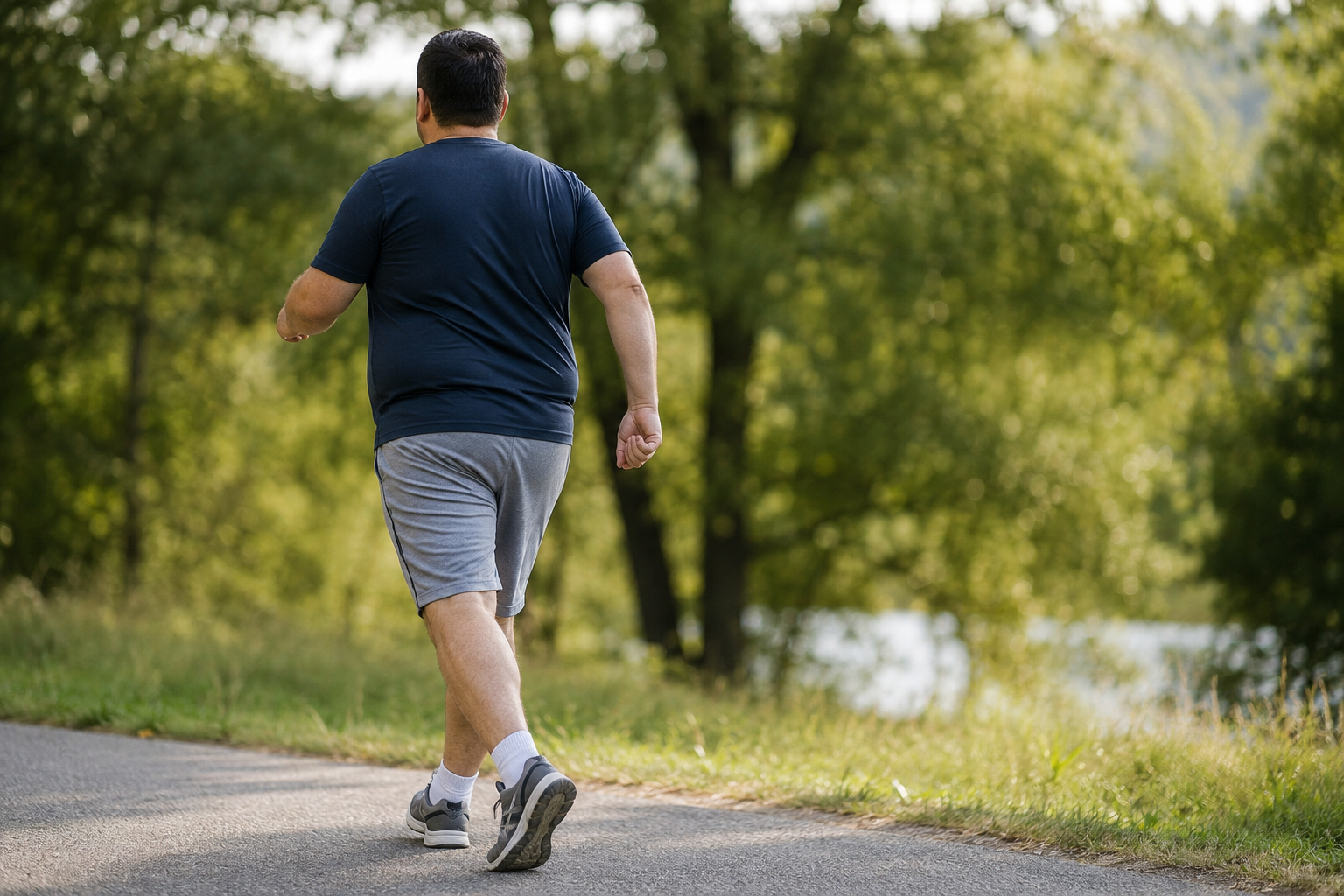
Fast walking once a week sounds almost too modest to matter. We are used to hearing a very different message: if you want to lose abdominal fat, you need to train three, four, five times a week, reorganize your schedule, buy proper sportswear, count every calorie, and behave like a person preparing for a race. And then real life enters the room. Work runs late, children need attention, the weather is bad, the knees ache a little, and by Wednesday the beautiful plan from Monday already looks like a moral failure. That is why the idea of one serious walking session per week is so interesting. Not because it is magic, and not because it cancels the value of daily movement, but because it gives many people a door they can actually walk through.
The study that brought attention to this approach looked at adults with central obesity, meaning fat concentrated around the waist and abdomen. This is not just a cosmetic detail. Belly fat, especially the deeper visceral fat around internal organs, behaves almost like an active metabolic organ. It is linked with insulin resistance, chronic low-grade inflammation, higher cardiovascular risk, fatty liver disease, and type 2 diabetes. In other words, the waistline often tells us something that body weight alone may hide. Two people can have the same number on the scale, yet very different health risks depending on where the fat is stored and how active their metabolism is. The research described adults with abdominal obesity who performed interval brisk walking either once a week or three times a week, with both groups reaching the same total weekly load of 75 minutes. After 16 weeks, both walking groups reduced fat mass, body fat percentage, and waist circumference, while also improving cardiorespiratory fitness.
That last detail is the key. The once-weekly group was not simply strolling for ten minutes and hoping for a miracle. They accumulated a meaningful amount of exercise in one session. The body still had to work. The heart rate rose, breathing became more active, muscles consumed energy, and the cardiovascular system received a training signal. The difference was not whether the load existed, but how it was distributed across the week. For some people, three shorter sessions are easier. For others, one planned session on a weekend is far more realistic. Medicine often gives people correct advice that fails because it does not fit into their lives. A plan can be scientifically beautiful and practically useless at the same time.
Brisk interval walking is also clever because it sits in a comfortable middle zone. It is more purposeful than an ordinary walk to the shop, but less intimidating than running or gym training. During the faster segments, you walk with enough speed to feel that the body has noticed the demand. Breathing becomes deeper, conversation is still possible but less effortless, and the legs begin to work with intention. Then comes a slower segment, where breathing settles and the body prepares for the next push. This alternation is simple, almost primitive, but physiologically meaningful. It lets people spend time at a higher intensity without feeling trapped in continuous strain.
For abdominal fat, this matters because the body responds not only to how many calories are burned during the session, but also to repeated metabolic signals. Exercise improves how muscles use glucose, helps insulin work more effectively, influences fat oxidation, and can gradually shift the balance between storing and mobilizing energy. Of course, no walking program can outpace constant overeating, poor sleep, and heavy alcohol intake. But it can push the system in the right direction. Think of it less like “melting fat” and more like changing the internal conditions under which fat is stored. The body becomes a little better at handling fuel.
There is also a psychological advantage here that should not be underestimated. Many people fail not because they are lazy, but because the entry point is too steep. When someone hears “exercise three to five times per week,” they may already feel defeated. One missed session turns into guilt, guilt turns into avoidance, and avoidance quietly becomes another month of doing nothing. A once-weekly brisk walking routine can lower that barrier. It tells a person: start with one appointment with your own body. Put it in the calendar. Protect it. Do it properly. Then build from there if you can.
This does not mean that once-a-week training is the best possible plan for everyone. More frequent movement is still valuable. Short walks after meals, using stairs, standing up during long sitting periods, light strength work, gardening, housework, cycling, swimming — all of these help. The point is different: one concentrated, well-structured walking session may be much better than waiting forever for the perfect fitness routine. Health often improves not from heroic gestures, but from habits that survive contact with Monday morning.
A practical version of this approach could begin with a simple 75-minute session once a week, assuming the person is generally able to walk safely. The first 10 minutes should be easy and unhurried. Let the joints warm up, let breathing settle, let the body understand that this is not a sudden emergency. Then begin intervals. For example, walk briskly for 3 minutes, then slow down for 2 minutes. Repeat this pattern for 45–55 minutes, and finish with 10 minutes of gentle walking. The fast part should feel like effort, not punishment. A useful test is this: you can say a short sentence, but you would not want to deliver a long speech. If you are gasping, dizzy, or feeling chest discomfort, the pace is too high and you should stop.
For beginners, it is better to start smaller. A person who has not exercised for years does not need to prove anything in the first week. Forty minutes may be enough at first: 10 minutes easy, 20 minutes of mild intervals, 10 minutes easy. After two or three weeks, the duration can gradually increase. The body adapts better to progressive demands than to sudden enthusiasm. Sudden enthusiasm is responsible for many sore knees, irritated heels, and abandoned plans.
Shoes matter more than people think. Brisk walking is repetitive: step after step, hundreds and then thousands of times. Comfortable shoes with decent cushioning and a stable heel can make the difference between a habit and a painful experiment. The route matters too. A flat park path, a quiet embankment, a safe neighborhood loop, or even a treadmill are all reasonable options. Uneven surfaces may be pleasant, but for someone with excess weight or joint problems, they can add unnecessary stress.
People with heart disease, uncontrolled high blood pressure, diabetes complications, severe obesity, chest pain, fainting episodes, or significant joint disease should speak with a clinician before starting a more intense walking routine. This is not because walking is dangerous in general; it is because the safest exercise plan is the one matched to the person in front of us. A 35-year-old office worker and a 68-year-old man with coronary disease should not begin at the same intensity just because the word “walking” sounds harmless.
In the second half of the week, do not treat the once-weekly session as permission to become completely sedentary. That would be a common trap. The main walking session can be the anchor, but the small movements between it and the next session are the threads that hold the habit together. A 10-minute walk after dinner two or three times a week, standing up every hour during desk work, taking stairs for one or two floors, walking while making phone calls — these actions are not glamorous, but they reduce the long silent blocks of sitting that modern life creates.
Food should support the walking, not compensate for it with a reward feast. A brisk 75-minute walk is useful, but it does not give the body immunity from sweet drinks, large portions, and late-night snacking. For reducing abdominal fat, a realistic eating pattern usually works better than a dramatic diet. Protein at breakfast, vegetables at lunch and dinner, fewer liquid calories, less refined flour and sugar, and a calmer evening meal can already change the direction. You do not need to turn the kitchen into a laboratory. You need fewer situations where the body receives more energy than it can reasonably use.
Track progress with more than the scale. Waist circumference once every two weeks is often more informative. Measure at the same time of day, under similar conditions, without pulling the tape tight like a suitcase strap. Also notice breathing, walking speed, sleep quality, energy, and how clothes fit. Fat loss is not always linear. Water retention, salt, hormonal changes, constipation, and muscle adaptation can blur the picture on the scale. The waist and physical endurance often tell a more honest story.
The best recommendation is to make the session almost boringly repeatable. Same day, similar time, familiar route, clear plan. When a habit requires too many decisions, it becomes fragile. When Saturday morning means walking shoes by the door and a known route ahead, the brain has less room to negotiate. And after a few weeks, something pleasant may happen: the session stops feeling like a medical obligation and starts feeling like personal territory. One hour when the phone can be quiet, the body can work, and the week can reset.
So yes, brisk walking once a week can be a meaningful tool for reducing belly fat, especially when it is structured, consistent, and paired with sensible everyday choices. It is not a loophole in biology. It is a realistic strategy. For many people, that is exactly what health advice has been missing: not another perfect plan, but a plan that can actually be lived.
Source of the material: https://medpedia.ru/news/bystraya-khodba-raz-v-nedelyu-umenshayet-zhir-na-zhivote/