“Cryptocurrency in 2015: Bitcoin, Ethereum, Altcoins, Trading, Mining, and Blockchain Trends”
- Bitcoin in 2015: The Digital Gold
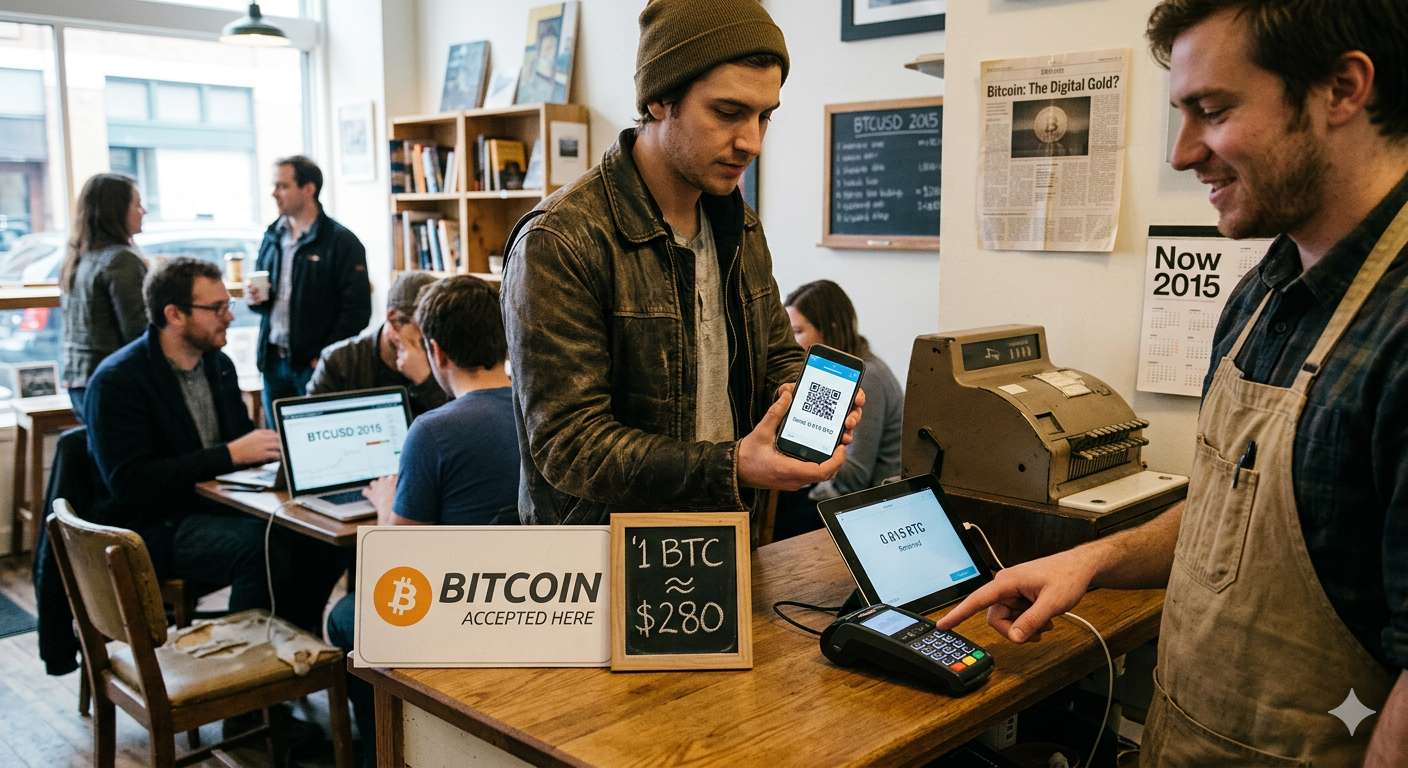
In 2015, Bitcoin was the most popular cryptocurrency in the world. Its price ranged roughly between $200–$300, which is very low compared to today. Many people referred to Bitcoin as “Digital Gold” because it was scarce, secure, and not easily devalued. During this time, many new investors started buying Bitcoin, and some early success stories later showcased the massive potential of cryptocurrency investments.
ne major reason for Bitcoin’s popularity was its decentralized nature. It operated without control from any government or bank, allowing fast international transactions and providing financial freedom. In 2015, several businesses began accepting Bitcoin as payment, which increased its adoption.
Bitcoin was initially used mainly for transactions, but investors also started seeing it as a valuable asset for holding and trading. Despite market fluctuations and occasional volatility, Bitcoin maintained its position as the leader of cryptocurrencies. Its growth during 2015 laid a strong foundation for future adoption and innovation in the crypto world.

- Ethereum Launch: A New Era for Blockchain
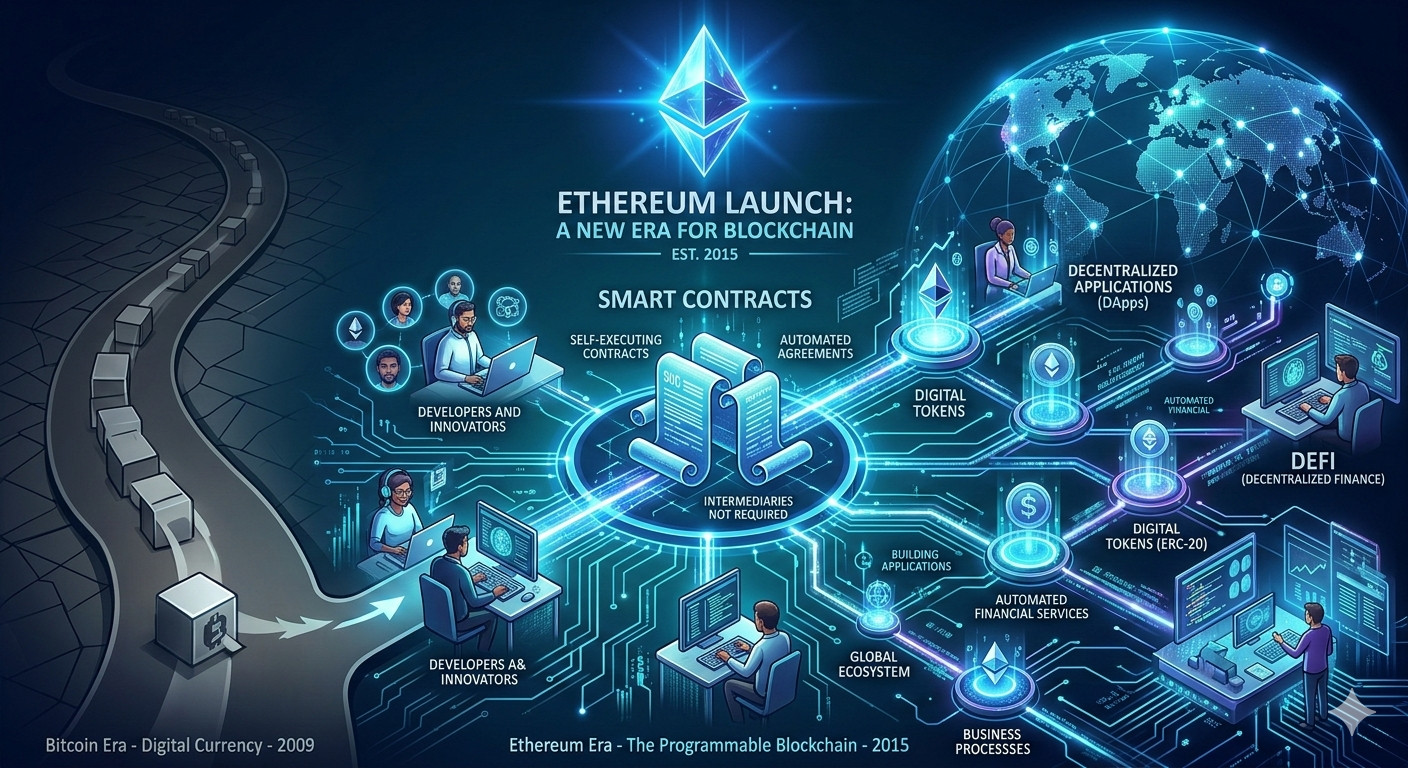
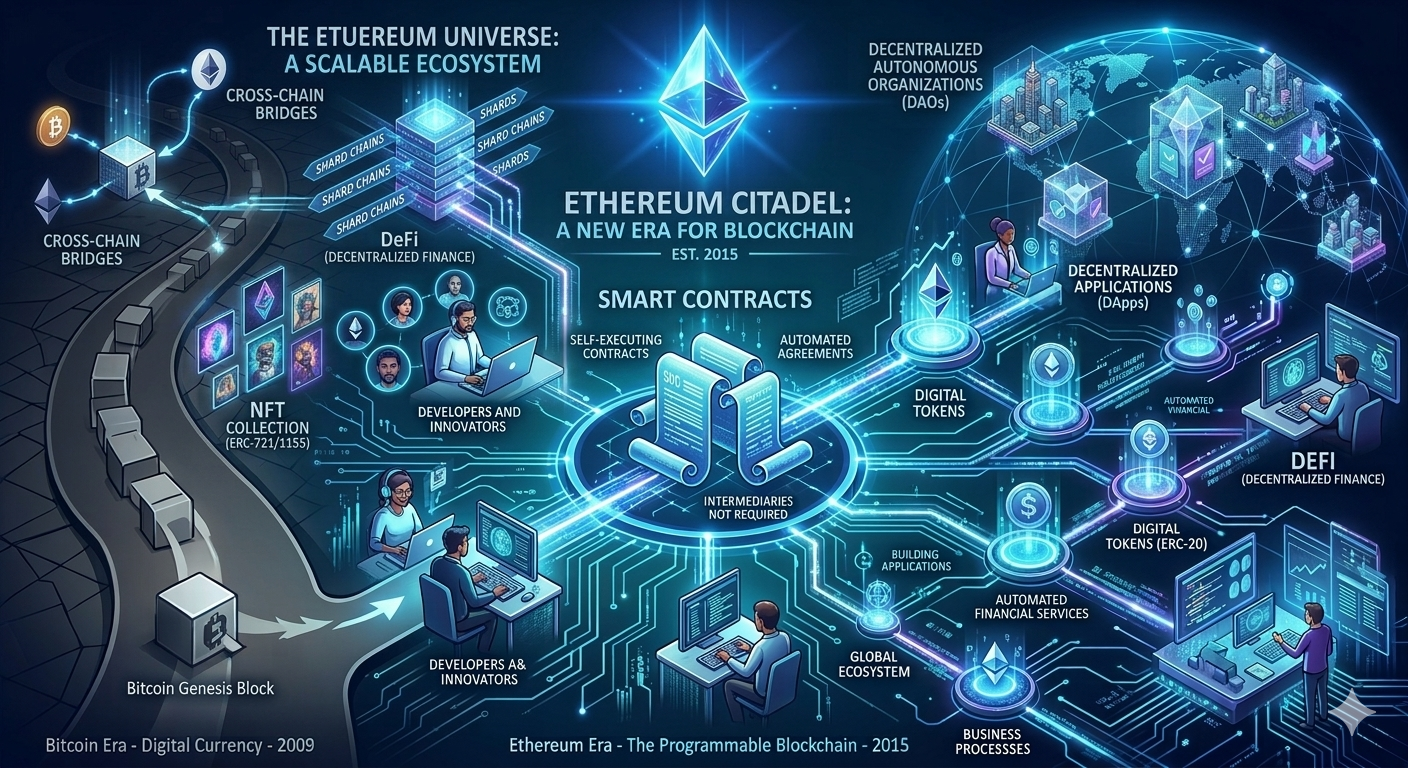
Ethereum was launched in 2015, opening a new era for blockchain technology. Its most important feature was smart contracts—self-executing contracts that operate automatically without the need for intermediaries.
Ethereum immediately attracted developers and investors, who began experimenting with new applications, including decentralized finance (DeFi) and digital tokens. Unlike Bitcoin, which is primarily a digital currency, Ethereum served as a development platform for building decentralized applications (DApps).
In 2015, Ethereum demonstrated that blockchain could do more than just record transactions. It could power entire ecosystems of automated contracts, financial services, and business processes. This innovation inspired the creation of thousands of new projects and highlighted Ethereum’s potential to transform industries. By the end of 2015, Ethereum had firmly positioned itself as a blockchain platform not just for currency, but for innovation, programming, and smart automation.
- Top Altcoins of 2015
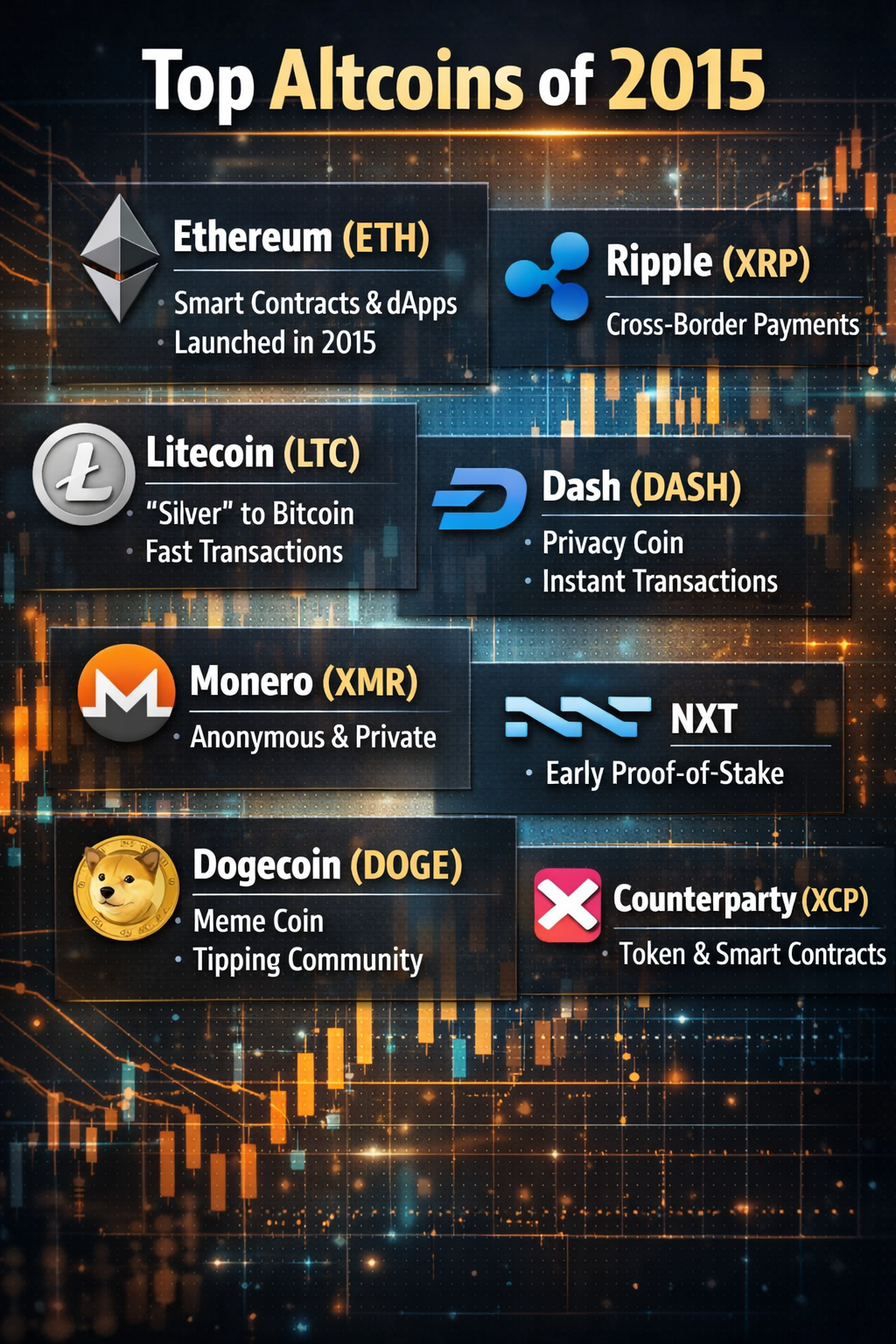
Alongside Bitcoin, several altcoins started gaining popularity in 2015. Notable examples include Litecoin, Ripple, and Dash. These coins were created to serve as alternatives to Bitcoin, each with unique features.
Litecoin offered faster transaction times and lower fees compared to Bitcoin. Ripple was designed for financial institutions and cross-border payments. Dash focused on privacy, security, and user-friendly transactions.
By 2015, altcoins had diversified the cryptocurrency market. Investors began exploring these alternatives, seeing potential beyond Bitcoin. Developers were experimenting with new features and improvements, pushing the technology forward. Altcoins helped illustrate that cryptocurrency was not just about digital money but about creating innovative financial and technological solutions.
- Crypto Trading in 2015: Beginner’s Guide
In 2015, cryptocurrency trading was still in its early stages, but it was gaining attention from both investors and tech enthusiasts. Newcomers often faced challenges because exchanges were fewer, and online trading platforms were not as user-friendly as today. Popular exchanges like Coinbase, Kraken, and Bitstamp were used by early traders to buy and sell Bitcoin and altcoins.
Beginners needed to learn how to manage digital wallets, private keys, and basic security practices. They also had to understand the volatility of cryptocurrency prices—sudden price jumps or drops could result in big profits or losses. Despite these risks, trading offered exciting opportunities for those who studied the market trends carefully.
Many 2015 traders followed forums like Bitcointalk and Reddit to gain insights into market sentiment and upcoming coin launches. Early investors learned the importance of diversification, not putting all funds into a single cryptocurrency. Overall, 2015 was a year where beginner traders explored the potential of cryptocurrency, experimenting cautiously while setting the stage for a growing global market.



- Blockchain Technology in 2015
By 2015, blockchain technology had evolved beyond being just the foundation for Bitcoin. Ethereum’s launch introduced programmable blockchain networks, enabling smart contracts and decentralized applications (DApps). Blockchain was recognized as a revolutionary tool for transparency, security, and decentralization.
Companies started exploring blockchain for supply chain management, financial services, and identity verification. Its tamper-proof ledger allowed users to record transactions securely without intermediaries. While adoption was limited, 2015 marked the beginning of enterprise interest in blockchain technology.
For developers, blockchain opened a world of possibilities. Ethereum allowed them to create automated systems that could run independently, reducing reliance on traditional institutions. 2015 showed that blockchain was more than just a currency system; it could transform industries, governance, and business operations in unprecedented ways.



- Crypto Communities and Forums
The growth of cryptocurrency in 2015 was closely tied to online communities and forums. Platforms like Bitcointalk and Reddit’s r/Bitcoin and r/CryptoCurrency became hubs for discussion, news, and technical guidance. Investors and developers shared updates, solved technical issues, and debated the future of coins and blockchain technology.
These communities were essential for spreading awareness about new cryptocurrencies and blockchain projects. Early adopters learned about investment opportunities, potential scams, and market trends. Crypto communities also fostered collaboration, allowing developers to work on innovative ideas like altcoins and decentralized applications.
By 2015, these online forums had become a backbone of the cryptocurrency ecosystem, helping a global network of enthusiasts stay connected, informed, and engaged.


- Major Events in Crypto 2015
2015 was a significant year for cryptocurrency, with several key events shaping its growth. Bitcoin continued to dominate, but Ethereum’s launch captured global attention. New altcoins entered the market, providing diversity and innovation.
There were also challenges: some exchanges experienced technical issues or minor hacks, reminding users of the risks involved. Regulatory discussions began in various countries, addressing concerns about money laundering and financial security.
Despite these hurdles, 2015 marked the transition from niche experimentation to broader recognition. Investors, developers, and businesses started taking cryptocurrencies seriously, laying the groundwork for a much larger market in the years to come.




- The Risks of Investing in Crypto in 2015
Cryptocurrency in 2015 offered exciting opportunities, but it also carried significant risks. The market was volatile, and prices could swing dramatically in short periods. Scams, phishing attacks, and exchange hacks were common threats.
Investors had to learn safe practices, such as using secure wallets, keeping private keys protected, and avoiding suspicious projects. Diversification was also essential—placing all funds in a single coin could result in total loss.
Despite the risks, early investors who approached the market with caution often gained valuable experience and insights. Understanding security, market trends, and proper investment strategies was critical. 2015 highlighted that while cryptocurrency could be profitable, responsibility and knowledge were key to avoiding major losses.


- Mining Cryptocurrency in 2015
Mining was one of the main ways to earn cryptocurrency in 2015. Bitcoin mining required specialized hardware called ASICs (Application-Specific Integrated Circuits), which allowed miners to solve complex cryptographic problems. Mining rewarded participants with newly minted coins.
Litecoin and other altcoins also allowed mining, often using GPUs (graphics processing units) instead of ASICs. Mining was energy-intensive, and efficiency mattered—miners competed to solve blocks faster than others.
2015 saw the early stages of mining pools, where miners combined resources to increase their chances of earning rewards. Mining was both technical and competitive, requiring knowledge of software, hardware, and network participation.

- The Future of Crypto: Lessons from 2015
2015 provided several lessons about cryptocurrency and blockchain. Bitcoin proved the viability of decentralized money, Ethereum demonstrated programmable blockchain, and altcoins showcased diversity and innovation.
The year emphasized the importance of security, informed investment, and community participation. Investors and developers learned that crypto could be highly profitable, but careful planning and caution were essential.
Many of the trends and technologies from 2015 set the foundation for the rapid growth of cryptocurrencies in later years. It showed that blockchain and crypto were not just a fad—they had the potential to transform finance, technology, and global commerce.