Japan's Rate Hike & Bitcoin: Navigating the Tides of Global Monetary Policy
Title: Japan's Rate Hike & Bitcoin: Navigating the Tides of Global Monetary Policy
Intro: The Bank of Japan (BoJ) recently made a historic move, raising interest rates for the first time in 17 years, ending an era of negative rates. This decision reverberates far beyond Japan's borders, sending ripples across global financial markets, including the volatile world of cryptocurrencies. For Bitcoin and other digital assets, this shift in monetary policy presents a complex interplay of opportunities and challenges.
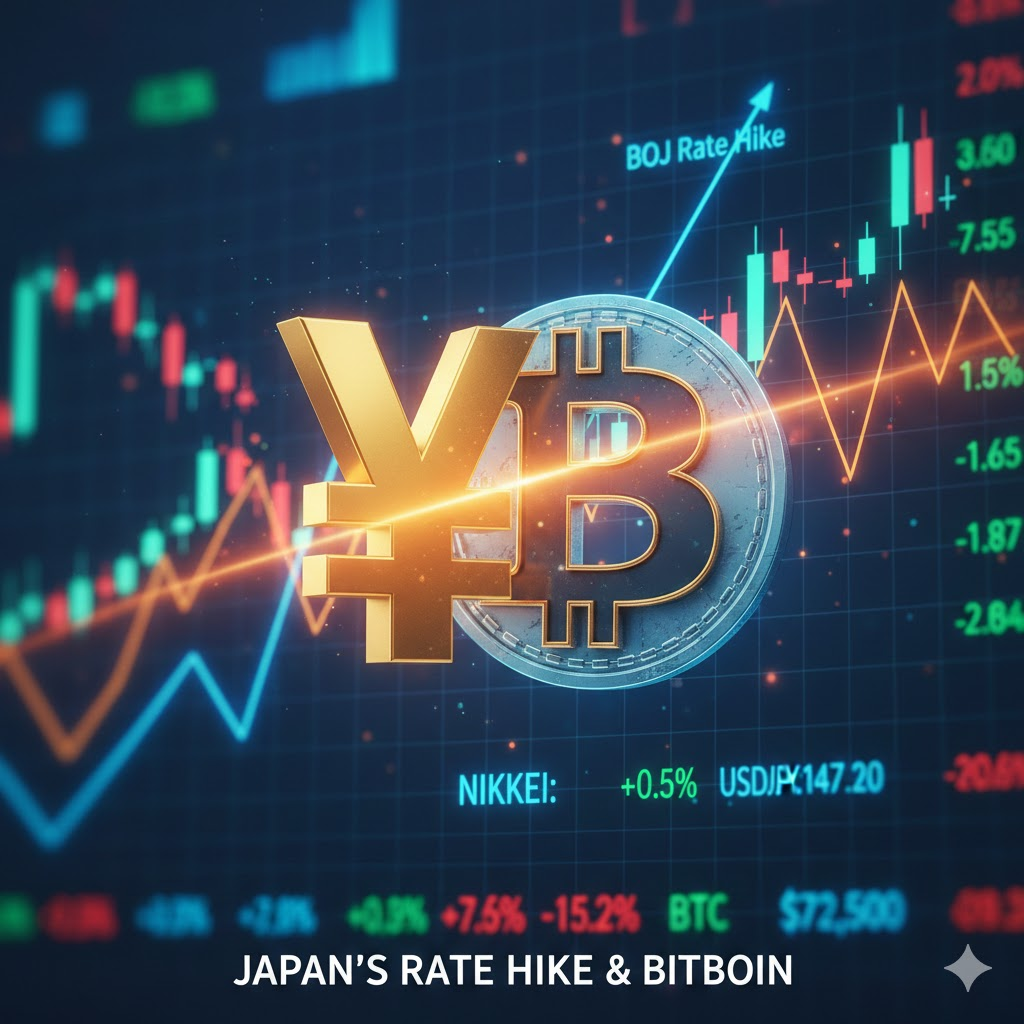
The BoJ's Historic Decision For years, Japan stood as an outlier, maintaining negative interest rates to combat deflation and stimulate economic growth. The recent pivot marks a significant shift, signaling confidence in Japan's economy and an attempt to normalize monetary policy amidst rising global inflation. This move aligns Japan more closely with other major central banks that have been tightening their policies.
Impact on Traditional Markets Typically, an interest rate hike strengthens the domestic currency, as higher rates make a country's assets more attractive to foreign investors seeking better returns. It can also cool inflation by making borrowing more expensive, potentially slowing down economic activity. For global investors, this might mean a reallocation of capital, as yield becomes more accessible in traditional, lower-risk assets.
How Does This Affect Bitcoin?
Risk-Off Sentiment & Liquidity Drain: Historically, Bitcoin has been sensitive to global liquidity and risk appetite. When traditional assets like government bonds offer higher yields, some institutional investors might reallocate funds away from "riskier" assets like Bitcoin. A stronger Yen could also impact the global carry trade, potentially reducing the pool of cheap capital that often flows into speculative assets.
Dollar Strength & Bitcoin Correlation: The BoJ's hike could indirectly influence the US Dollar. If the Yen strengthens significantly, it could put downward pressure on the Dollar (depending on other factors). A weaker Dollar has often shown an inverse correlation with Bitcoin, making it more attractive as an alternative store of value. However, the primary effect might be more related to overall global risk sentiment.
Inflation Hedge Narrative Revisited: One of Bitcoin's core narratives is its role as an inflation hedge. While Japan's hike aims to tame inflation, the global inflationary environment remains a concern. If other major economies continue to grapple with persistent inflation, Bitcoin's appeal as a digital gold could persist, especially for those seeking alternatives to fiat currencies.
Japanese Investor Behavior: Japan has a significant and tech-savvy investor base, with a notable presence in the crypto space. Higher domestic yields might encourage some Japanese investors to shift a portion of their capital from crypto back into traditional Japanese assets. Conversely, if local investors view Bitcoin as a superior long-term store of value against future fiat debasement (despite the hike), their conviction might remain strong.
Global Macro Environment: The BoJ's move contributes to a broader global tightening cycle. As more central banks normalize policies, the era of ultra-low interest rates and abundant liquidity, which fueled much of Bitcoin's early bull runs, is fading. This necessitates a more mature and resilient Bitcoin market, less reliant on "easy money" and more driven by fundamental adoption and technological innovation.
Conclusion: Japan's interest rate hike is a significant macroeconomic event that will undoubtedly influence Bitcoin's trajectory. While the immediate reaction might be complex – potentially leaning towards a risk-off sentiment – Bitcoin's long-term value proposition remains tied to its decentralization, scarcity, and technological innovation. Investors will need to keenly observe how global liquidity shifts and how traditional markets react, as these factors will continue to shape the crypto landscape.
What are your thoughts on the BoJ's decision and its potential ripple effects on Bitcoin? Share your insights in the comments below!