Modular Cleanroom Panels vs. Traditional Drywall: Which Is Right for You?
Modular Cleanroom Panels vs. Traditional Drywall Construction — Fundamental Differences
How Modular Panel Systems Are Engineered (Tongue & Groove, Cam-Lock, Clip-In)
A cleanroom panel system is a factory-engineered enclosure. Panels are manufactured off-site with precision-cut edges and pre-finished surfaces. They connect using one of three joint methods:
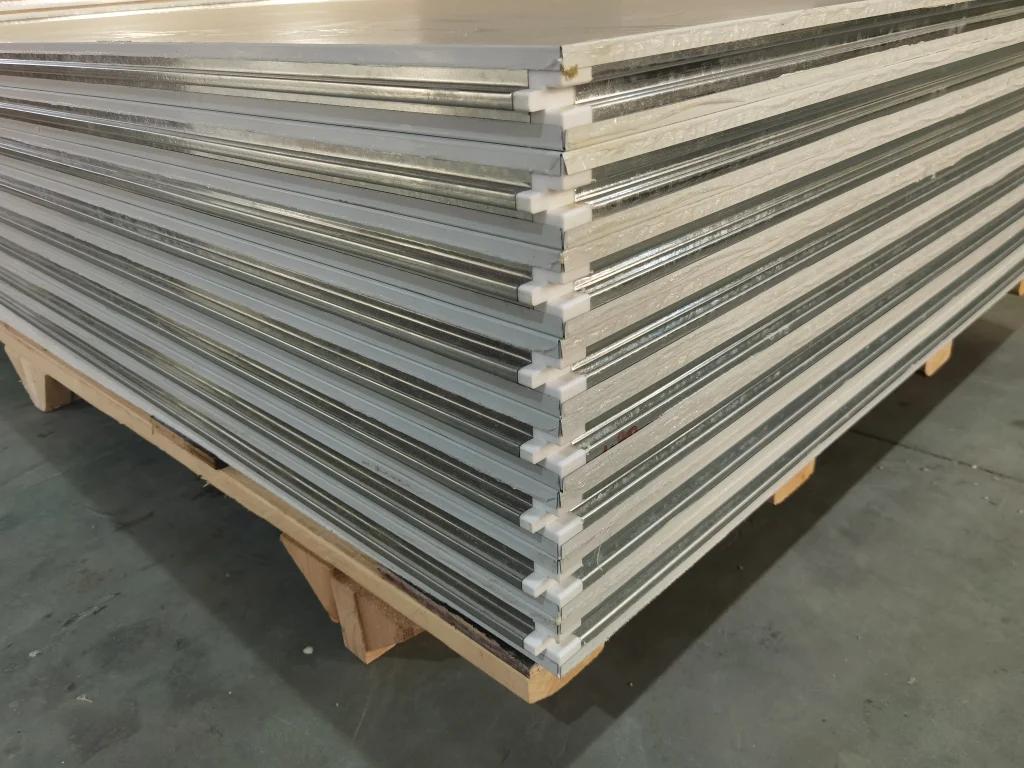
Tongue & Groove:Panels interlock and are sealed with silicone. Cost-effective for ISO 7–8 rooms.
Cam-Lock:A mechanical fastener pulls panels tightly together without visible hardware. Preferred for ISO 5–6 and GMP environments.
Clip-In:Panels snap into aluminum extrusion frames. Easy to remove for reconfiguration.
All three methods create a smooth, flush wall surface with consistent joint gaps controlled to ±0.5 mm at the factory — a tolerance that field-built drywall simply cannot match.
How Traditional Drywall/Plastered Cleanrooms Are Built
Drywall cleanroom construction follows the same process as commercial interior buildouts: metal stud framing, gypsum board screwed to studs, joints taped and mudded, sanded, primed, and painted with epoxy or polyurethane coating. The entire process depends on multiple trades (framers, drywall hangers, tapers, painters) working in sequence.
The result can be acceptable for lower-classification cleanrooms, but every joint is hand-finished on site, and the final surface quality depends entirely on the skill of the taping crew.
Side-by-Side Feature Comparison Table
cleanroom wall panel
Feature
Modular Cleanroom Panels
Traditional Drywall
Manufacturing
Factory-controlled
Field-built
Joint Tolerance
±0.5 mm (factory-set)
±2–3 mm (hand-finished)
Surface Finish
Pre-coated steel/SS, Ra 0.6–1.6 μm
Painted gypsum, Ra 1.6–3.2 μm
Typical Thickness
50–100 mm (with insulation core)
125–150 mm (studs + double-layer board)
Fire Rating
Up to 2 hours (rock wool core)
Up to 2 hours (Type X gypsum)
Reusability
85–95% reusable
0% (demolish and landfill)
Moisture Resistance
High (steel/SS faces, sealed core)
Low (gypsum absorbs moisture)
Construction Speed & Project Timeline Comparison
Modular Panels — Typical Installation Rates (m²/day) and Total Project Duration
An experienced cleanroom panel crew installs 40–60 m² of modular cleanroom wall panels per day, including trim, coving, and silicone sealing. Panels arrive on site pre-cut to room dimensions, so there’s minimal on-site fabrication.
For a 500 m² cleanroom, wall and ceiling panel installation typically takes 10–14 working days.
Drywall — Multi-Trade Coordination, Curing Times, and Typical Delays
Drywall construction for the same 500 m² space involves framing (5–7 days), boarding (4–5 days), taping and mudding (5–7 days, with drying time between coats), sanding (2–3 days), and epoxy painting (3–5 days with curing). Each trade must wait for the previous one to finish.
Total wall construction time: 25–35 working days — and that assumes no rework on taping quality.
Case Example: 500 m² ISO 7 Cleanroom — Modular (6 Weeks) vs. Drywall (14 Weeks)
From the projects we’ve completed, a 500 m² ISO 7 pharmaceutical cleanroom using modular panels reaches mechanical completion in approximately 6 weeks (including walls, ceiling, doors, and HEPA filter housing). The same room built with drywall typically requires 12–14 weeks. That 8-week difference translates directly into earlier production revenue — often worth far more than the panel cost premium.
Performance Comparison — Cleanliness, Seal Integrity & GMP Compliance
Joint Sealing — Factory-Controlled Panel Joints vs. Field-Applied Drywall Tape & Mud
Panel joints are the #1 contamination risk in any cleanroom wall. With a cleanroom panel system, the joint profile is machined at the factory. On site, the installer simply applies a continuous bead of FDA-compliant silicone into a consistent channel. The result is a repeatable, inspectable seal every time.
Drywall joints rely on paper tape embedded in mud compound. Even well-finished drywall joints develop hairline cracks over time due to building settlement and thermal cycling. Once the epoxy paint cracks at a joint, moisture penetrates the gypsum core — and particle shedding begins.
Surface Smoothness & Cleanability — Why Modular Panels Outperform Painted Drywall
Pre-coated steel panel faces achieve a surface roughness of Ra 0.8–1.6 μm straight from the factory. Epoxy-painted drywall typically measures Ra 1.6–3.2 μm, and that roughness increases with each repaint cycle as texture builds up.
Smoother surfaces mean fewer particle attachment points and more effective wipe-down decontamination — a measurable advantage during environmental monitoring.
GMP Auditor Perspective — What Inspectors Look for in Wall Construction
GMP auditors evaluate surfaces for three things: smoothness, imperviousness, and freedom from cracks. In our experience, drywall cleanrooms receive more audit observations related to wall condition than panel-built rooms — particularly around door frames, utility penetrations, and corner joints where taping quality is hardest to maintain.
Auditors cannot fail you solely for using drywall, but the maintenance burden to keep painted drywall audit-ready is significantly higher.
Cleanroom Wall Panels
Cost Analysis — Why “Cheaper” Drywall Often Costs More Long-Term
Initial Capital Cost Comparison (Material + Labor + Downtime)
Let’s be honest: modular cleanroom panels cost more upfront. For a typical ISO 7 cleanroom, modular panel wall construction runs $85–$140 per m² (material + installation), while drywall construction costs $55–$90 per m². That’s a 30–50% premium on day one.
But that comparison is incomplete without factoring in the timeline difference. If your facility generates $50,000/week in production revenue, an 8-week earlier start-up is worth $400,000. Suddenly the panel “premium” looks like a bargain.
Maintenance & Repainting Costs Over 10 Years
Epoxy-painted drywall requires repainting every 3–5 years to maintain GMP-acceptable surface conditions. Each repaint cycle costs $15–$25 per m² and takes the room out of service for 3–5 days. Over 10 years, that’s 2–3 repaint cycles: $30–$75 per m² in maintenance alone.
Modular cleanroom wall panels with factory-applied polyester or PVC coatings require zero repainting over a 20-year lifespan. Occasional silicone re-sealing at joints (every 7–10 years) costs roughly $5–$8 per m².
Reconfiguration & Expansion — Modular Reusability vs. Drywall Demolition
When your process changes and you need to move a wall, modular panels can be unbolted, transported, and reinstalled. You recover 85–95% of the original material. Drywall gets demolished, hauled to a landfill, and you start over from studs.
Total Cost of Ownership (TCO) Comparison Framework
Cost Element
Modular Panels (10-Year)
Drywall (10-Year)
Initial Construction (per m²)
$85–$140
$55–$90
Repainting (per m²)
$0
$30–$75
Joint Re-Sealing (per m²)
$5–$8
$10–$20 (crack repair + repaint)
Reconfiguration Value
85–95% recoverable
$0 (full demolition)
Downtime Cost
Lower (faster build)
Higher (longer build + repaint shutdowns)
Estimated 10-Year TCO/m²
$90–$148
$95–$185
The numbers speak clearly: drywall’s lower upfront cost is often erased — or reversed — within 5–7 years.
When Traditional Construction Still Makes Sense
We’re not going to pretend modular panels are the right answer for every project. There are legitimate scenarios where drywall or plastered construction wins.
Permanent Facilities with Zero Reconfiguration Needs
If your cleanroom will never change layout over its 25-year life, the reusability advantage of modular panels disappears. A well-built, well-maintained drywall cleanroom can serve a permanent facility adequately.
Irregular Room Geometries That Challenge Modular Sizing
Modular panels work best with orthogonal geometries. Curved walls, unusual angles, or complex multi-level interfaces are easier and cheaper to frame with studs. Panel manufacturers can accommodate custom angles, but the cost premium climbs steeply.
Ultra-High Classification (ISO 3–4) Requiring Fully Welded Stainless Walls
At the highest cleanliness levels, some semiconductor and pharmaceutical facilities require fully welded 316L stainless steel walls — not panel systems with joints, but continuous welded sheet metal. This is traditional construction by necessity, not by preference. Standard modular cleanroom panels with sealed joints are typically specified for ISO 5 and above.
How to Transition from Drywall to Modular Panels in an Existing Facility
Retrofit Assessment Checklist — Floor, Ceiling & Structural Requirements
Before committing to a retrofit, verify these items:
Floor flatness:Panel systems require ±3 mm levelness over any 3 m span. Existing floors may need self-leveling compound.
Ceiling structure:Can the existing ceiling grid or structure accept modular ceiling panels and HEPA filter weight?
Structural clearance:Modular panels are thinner (50 mm) than stud walls (125 mm+), potentially giving you back usable floor area.
Utility relocation:Existing in-wall conduit, piping, and ductwork must be remapped to panel-compatible routing.
Phased Conversion Strategy — Upgrading One Zone at a Time
Full facility shutdowns are rarely acceptable. From the projects we’ve completed for operating pharmaceutical plants, the most practical approach is phased conversion: upgrade one room or zone at a time while adjacent areas remain in production. The modular approach actually enables this — panel installation generates far less dust and debris than drywall demolition, reducing contamination risk to neighboring clean zones.
FAQ
Are modular cleanroom panels as structurally strong as drywall?
Yes — and in most cases stronger. A 50 mm steel-faced sandwich panel with a PU core has greater impact resistance and load-bearing capacity than double-layer 12.5 mm gypsum board on metal studs. Panels can support shelving, utility brackets, and pass-through boxes without additional blocking.
Can modular panels achieve ISO Class 5 or better?
Absolutely. Cam-lock modular cleanroom panels with silicone-sealed joints routinely achieve ISO 5 in pharmaceutical and electronics facilities. For ISO 5, the panel joint quality, HEPA filter coverage, and room pressurization work together — the panels alone don’t determine classification, but they are fully capable of supporting it.
How much can I save by reusing modular panels when expanding?
Based on our project data, clients who relocate or expand modular vs. stick-built cleanroom installations recover 85–95% of panel materials. This typically saves 40–55% compared to purchasing new panels — a significant budget advantage for growing biotech and contract manufacturing organizations that expect to reconfigure every 5–8 years.