The Boy Who Chased the Wind
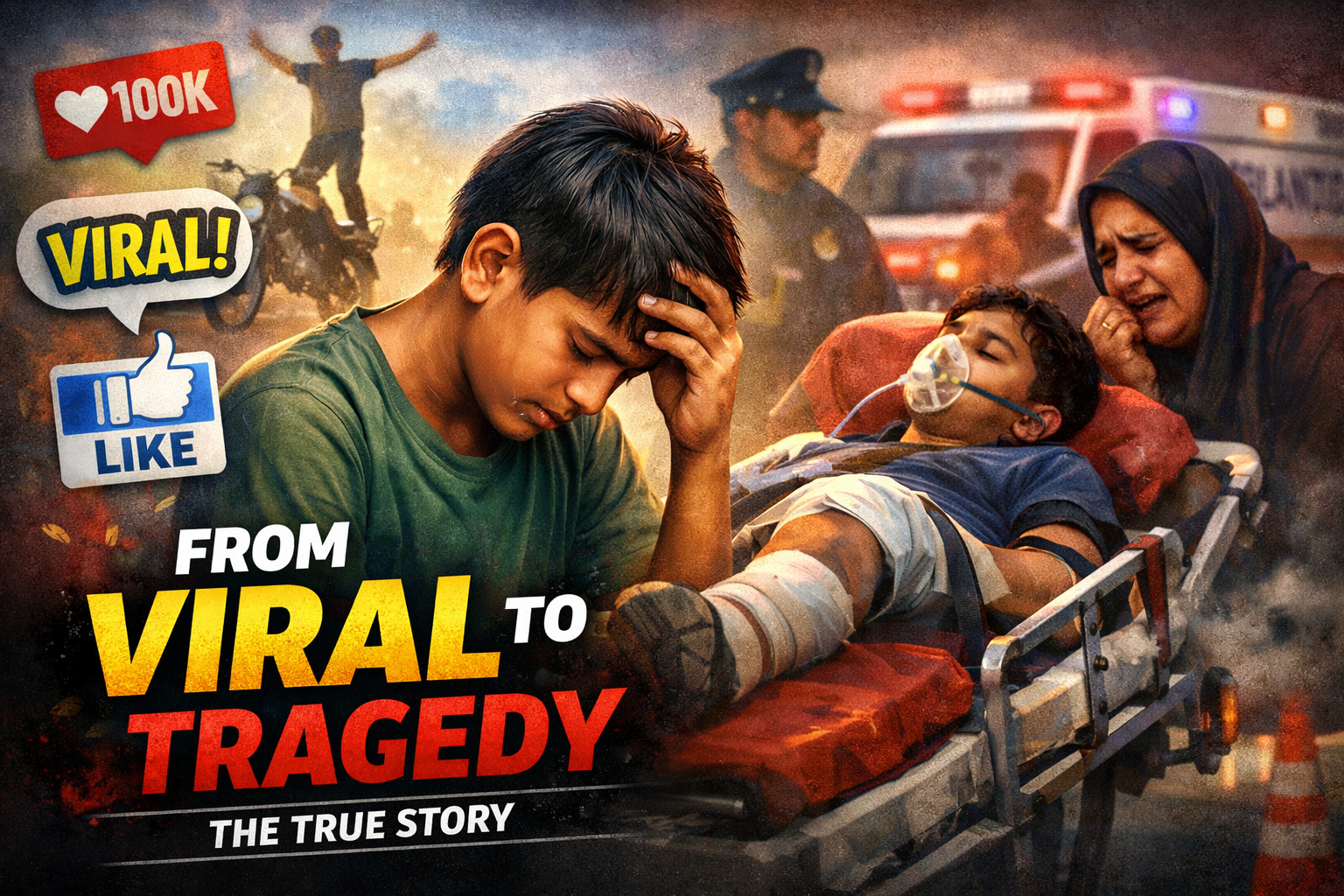
In a small town where everyone knew everyone, there lived a young boy named Hamza. He wasn’t poor, but he wasn’t rich either. What he really wanted was something different — he wanted to be seen.
Every evening, Hamza would sit on the roof of his house scrolling through short videos. Boys his age were becoming “famous” overnight. One was doing dangerous bike stunts. Another was pulling pranks on strangers. A third had become popular just by shouting rude jokes at teachers and recording their reactions.
Hamza felt invisible.
One day, he decided he would do something big — something bold — something that would “trend.”
He borrowed his cousin’s motorbike without telling him. He asked his friend to record a video while he rode standing on the seat, hands in the air, speeding down the narrow street. People shouted at him to stop. An old man barely moved aside in time. A small child started crying.
But the video was perfect.
By night, it was everywhere. Thousands of views. Hundreds of shares. Comments flooded in:
“Legend!”
“Fearless!”
“King of the streets!”
Hamza couldn’t sleep. His heart raced — not from fear, but from excitement. He had finally become someone.
The next day at school, students surrounded him. Even seniors nodded at him with respect. For the first time in his life, he felt powerful.
But that feeling didn’t last long.
Three days later, the same street where he had recorded his video was crowded again — this time not with cheers, but with sirens. Another boy had tried to copy Hamza’s stunt. He wasn’t as lucky. The motorbike slipped. He hit a pole.
He survived — but his leg did not.
When Hamza heard the news, the comments on his viral video felt different. The same video that made him famous now felt heavy. Each “like” felt like a stone in his chest.
The injured boy’s mother visited Hamza’s house one evening. She didn’t shout. She didn’t blame him. She simply said, “My son wanted to be brave like you.”
That sentence broke him.
Hamza deleted the video. But the views couldn’t be erased. The copies were still out there. The influence had already traveled further than he ever imagined.
For weeks, he stayed quiet. He avoided the roof. He avoided the screen. He avoided himself.
Then one afternoon, he did something no one expected.
He recorded another video.
This time, he stood in front of the camera without music, without filters, without stunts.
He spoke honestly.
He told the truth about why he did it. About how empty fame feels when it hurts someone else. About how chasing trends is like chasing the wind — you run fast, but you hold nothing.
The video didn’t get millions of views. It didn’t trend.
But it reached the right people.
The injured boy watched it from his hospital bed. He smiled faintly.
Years later, Hamza would tell younger students in his town, “It’s easy to go viral. It’s harder to be valuable.”
And that became the real trend — choosing courage over attention, responsibility over applause.
Moral:
Not everything that trends is worth following. Real strength is not in being seen — it is in being responsible.