Film Review: Moon (2009)
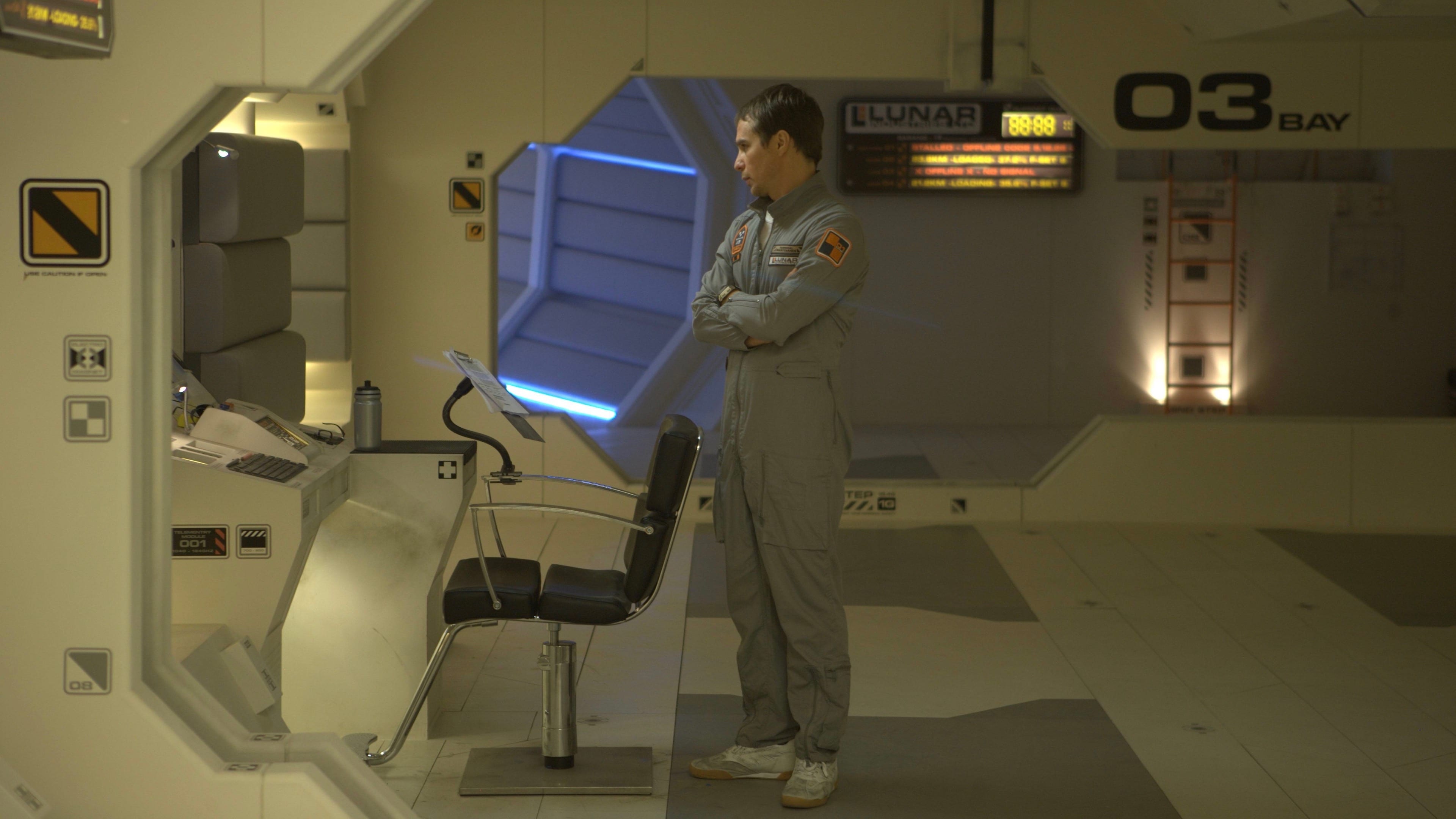
Science fiction has long been heralded as the "genre of ideas," yet in the hands of Hollywood, those ideas have all too often been squandered—reduced to mere pretexts for CGI-laden spectacles, bug-eyed monsters, or simplistic chase narratives. Duncan Jones's Moon, released in 2009, represents a deliberate and largely successful attempt to reverse this decline. The son of David Bowie posed a deceptively simple question: why could not a contemporary filmmaker produce something akin to Kubrick's 2001: A Space Odyssey? The answer, it transpires, lies not in budgetary excess but in creative restraint.
Set in the near future, Moon depicts a world where Lunar Industries has resolved Earth's energy crisis through the mining of helium-3 from the lunar surface. Sam Bell (Sam Rockwell), the sole inhabitant of a base on the dark side of the Moon, nears the completion of his three-year contract. His existence is one of crushing monotony and isolation, exacerbated by persistent communication failures with Earth and troubling visions of a young woman. When a routine excursion results in a serious accident, Bell awakens in the infirmary to a narrative of rescue and recovery related by GERTY (voiced by Kevin Spacey), the base's computerised assistant. His subsequent scepticism unravels a discovery that reconfigures everything he believed about his identity and purpose.
What distinguishes Moon is not merely its premise but its execution. Produced for the comparatively modest sum of five million dollars, Jones eschewed computer-generated imagery in favour of traditional model work. This aesthetic decision proves remarkably effective: the lunar base, with its pristine surfaces and advanced technological fittings, stands as a microcosm of futurist precision that ironically underscores the protagonist's psychological deterioration. The contrast between the sterile environment and Bell's internal turmoil generates a tension that no amount of digital wizardry could replicate.
Sam Rockwell, an actor whose career has been characterised by idiosyncratic supporting roles, delivers a performance of remarkable range and physical commitment. Required to carry virtually the entire narrative, he goes through Bell's transformation from weary functionary to something far more complex with nuanced credibility. Spacey's vocal performance as GERTY, meanwhile, provides an unsettling counterpoint—familiar yet alien, helpful yet potentially sinister.
The screenplay, by Nathan Parker from Jones's story, engages thoughtfully with the psychological and ethical implications of technological advancement. Rather than treating its central revelation as a mere twist, the film explores the ramifications with commendable seriousness. The result is a work that honours the tradition of "hard" science fiction whilst remaining accessible to general audiences.
Moon is not without its imperfections. The pacing occasionally falters, and certain narrative elements might strike viewers as predictable. Nevertheless, these are minor quibbles in a film that achieves so much with so little. Jones has crafted a work that recalls the intelligent science fiction of the late 1960s and 1970s—a period when the genre could accommodate both philosophical inquiry and humanist drama.
In an era when blockbuster science fiction has become synonymous with franchise-building and increasingly indistinguishable digital spectacle, Moon stands as a salutary reminder of what can be accomplished through ingenuity, performance, and narrative coherence. It is, quite simply, one of those films that, regrettably, they don’t make any more—except, on this occasion, they did.
Rating: 9/10
Blog in Croatian https://draxblog.com
Blog in English https://draxreview.wordpress.com/
InLeo blog https://inleo.io/@drax.leo
Substack https://draxster.substack.com/
BTC donations: 1EWxiMiP6iiG9rger3NuUSd6HByaxQWafG
ETH donations: 0xB305F144323b99e6f8b1d66f5D7DE78B498C32A7
BCH donations: qpvxw0jax79lhmvlgcldkzpqanf03r9cjv8y6gtmk9