Film Review: The American Carol (2008)
It is a curious thing how rapidly political satire can curdle into irrelevance. An American Carol, the 2008 offering from David Zucker—the man who gave us the riotous Airplane!—arrived on these shores a full year after its American theatrical run, by which point the joke, such as it was, had rather lost its punch. Indeed, one might argue the film was doomed from the moment it crossed the Atlantic, for the Croatian distributor Blitz saw fit to release it under the altogether misleading title I to je Amerika! Opaka i bez smisla ("And This is America! Wicked and Senseless"). This rather creative localisation was clearly calculated to obscure Zucker's true political allegiances; the original title, with its overt reference to Dickens, might have alerted audiences that they were in for a conservative polemic rather than the broad, apolitical spoof the translated title suggested.
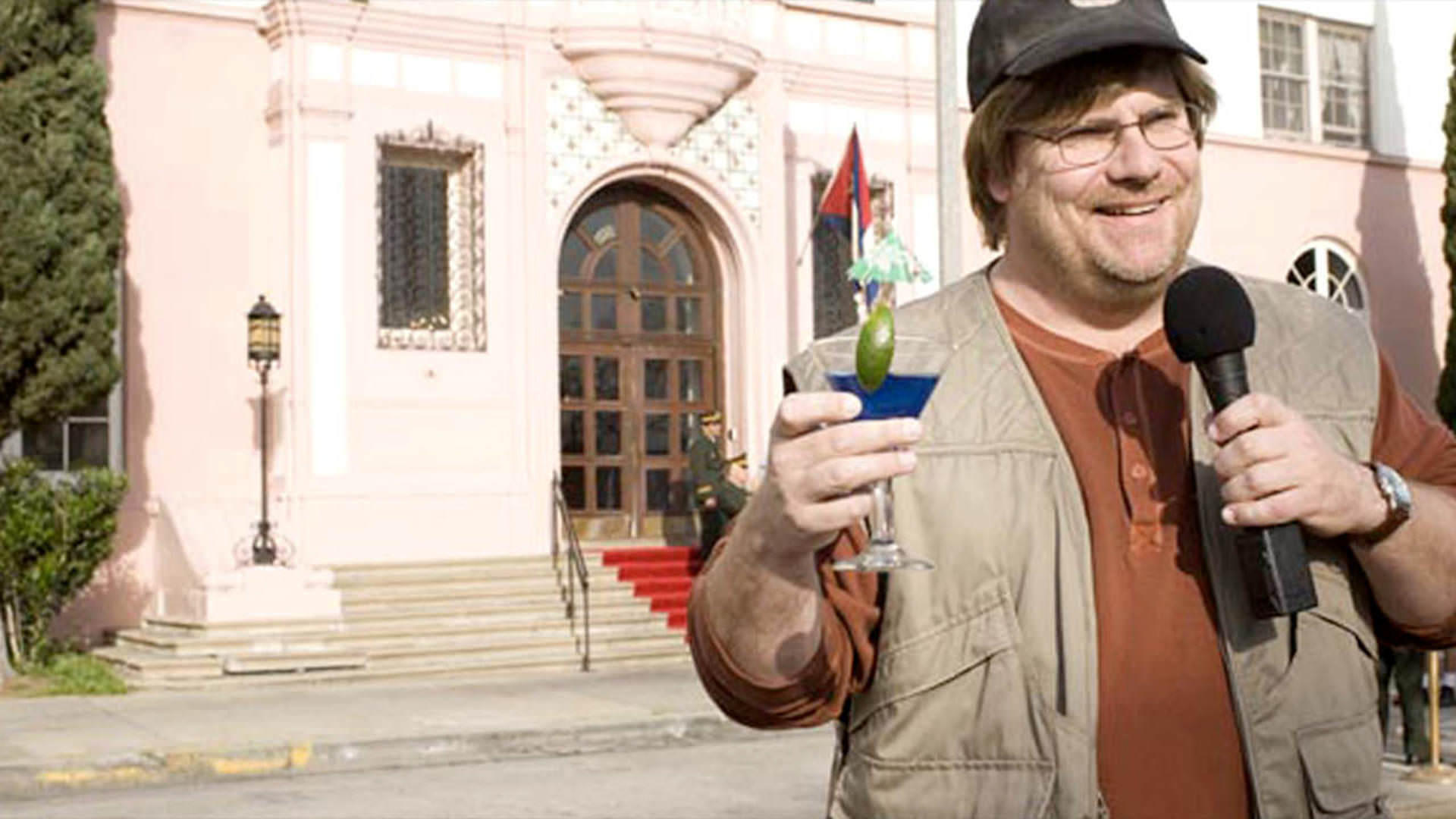
Zucker, once a card-carrying member of the Hollywood liberal establishment—a man who drank deep from the well of Democratic Party orthodoxy—underwent something of a conversion on the road to Damascus following the events of 11 September 2001. Like Saul becoming Paul, he emerged from the experience as a fire-breathing conservative Republican, eager to evangelise for the neoconservative cause. His chosen vessel for this transformation is a ham-fisted parody of Michael Moore, here reimagined as Michael Malone (played with gurning enthusiasm by Kevin Farley), a documentary filmmaker whose latest screed, Die You American Pigs, has earned him plaudits from the bien-pensant left but alienated the ticket-buying public. Malone finds himself in league with a Middle Eastern terrorist leader named Aziz (Robert Davi), who offers to fund his fictional feature in exchange for media credentials to a rally demanding the abolition of Independence Day as a "fascist" holiday. Cue the arrival of the Ghosts of Presidents Past—specifically John F. Kennedy (Chriss Anglin) and General George S. Patton (Kelsey Grammer)—who endeavour to disabuse Malone of his anti-American notions through a series of historical vignettes.
Zucker's task was always a tricky one: how to deliver a film that functions as agitprop without alienating those who do not already sing from the same hymn sheet. On this front, he achieves only partial success. His brand of humour has always been scattershot, and An American Carol is no exception. The early sequences, heavy with ethnic and cultural stereotypes, land with all the subtlety of a sledgehammer, whilst the "insider" gags—references to Fox News personality Bill O'Reilly, for instance—will sail clean over the heads of anyone not steeped in the minutiae of American cable television.
Where the film does find its footing, however, is in its skewering of Hollywood limousine liberalism. Zucker is at his most effective not when he is railing against Moore per se, but when he turns his sights on the hypocrisy of the entertainment industry's own progressive grandees—those who posture as champions of the downtrodden whilst living in the manner of feudal princes. James Woods appears as a sleazy talent agent, and Dennis Hopper pops up as a gun-loving judge, both essentially using their cameos to nail their conservative colours to the mast.
Yet for all this, Zucker's efforts are ultimately in vain. The film's central conceit—that America under the Bush administration represented the nadir of global civilisation, and that Michael Moore was its necessary scourge—collapsed the moment Barack Obama entered the White House. With the changing of the guard, America was magically transformed in the popular imagination from source of all evil to beacon of all that is good and right; Moore, once the darling of the festival circuit, found himself once more the marginal figure he had been during the Clinton years. And if Michael Moore has become irrelevant, how much more so is a film that exists solely to mock him?
An American Carol is not so much a conservative pamphlet as a relic of a very specific moment in time—one that had already passed before the film ever reached Croatian cinemas. That the distributor felt compelled to disguise its true nature behind a deceptive title speaks volumes about its commercial prospects and its political toxicity. As satire, it is blunt; as cinema, it is merely dated.
Rating: 4/10
(Note: The text in the original Croatian version is available here.)
Blog in Croatian https://draxblog.com
Blog in English https://draxreview.wordpress.com/
InLeo blog https://inleo.io/@drax.leo
Substack https://draxster.substack.com/
BTC donations: 1EWxiMiP6iiG9rger3NuUSd6HByaxQWafG
ETH donations: 0xB305F144323b99e6f8b1d66f5D7DE78B498C32A7
BCH donations: qpvxw0jax79lhmvlgcldkzpqanf03r9cjv8y6gtmk9