Film Review: The Lovely Bones (2009)
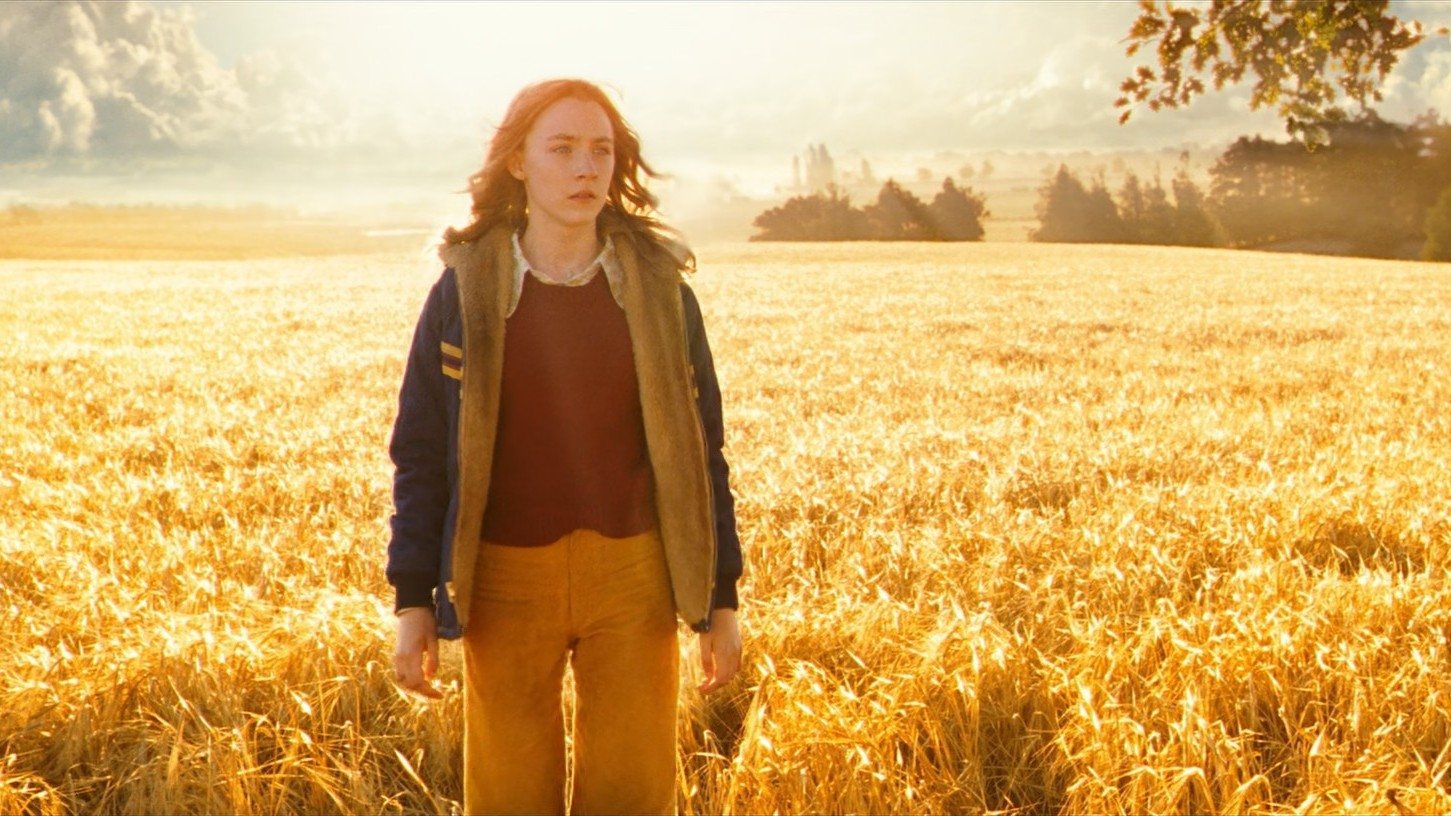
What appears compelling on the page frequently falters in translation to the screen, and Peter Jackson's adaptation of Alice Sebold's 2002 bestseller The Lovely Bones is a particularly dispiriting example of this phenomenon. The source novel's central conceit—narrating the aftermath of a child murder from the perspective of the deceased victim—undoubtedly possessed cinematic potential. Yet the resulting film emerges as a muddled, visually excessive work that squanders both its considerable cast and its director's proven talents.
Set in suburban Pennsylvania during 1973, the narrative centres upon fourteen-year-old Susie Salmon (Saoirse Ronan), whose carefree adolescence is brutally extinguished when she falls prey to her neighbour George Harvey (Stanley Tucci), a predator who lures her into a specially constructed underground bunker. Following her death, Susie discovers herself in a liminal afterlife—neither fully departed nor able to influence the world she has left behind. From this spectral vantage, she witnesses her parents (Mark Wahlberg and Rachel Weisz) crumble beneath the weight of grief, the police investigation led by Detective Fenerman (Michael Imperioli) stall inexorably, and her younger sister Lindsey (Rose McIver) mature into Harvey's subsequent object of obsession.
Jackson's appointment initially appeared astute. The director had previously demonstrated formidable skill with demanding literary adaptations (The Lord of the Rings trilogy) and with narratives concerning adolescent experience and violent transgression (Heavenly Creatures, 1994). However, his earlier foray into supernatural comedy with The Frighteners (1996) perhaps offered more pertinent warning. In The Lovely Bones, Jackson succumbs to the seduction of his own technical facility, lavishing excessive creative energy upon elaborate CGI sequences depicting Susie's afterlife—visual spectacles that, whilst undeniably impressive, serve the narrative not at all. These sequences devolve into distraction, an orgy of digital effects that repeatedly ruptures emotional engagement with the earthly suffering of Susie's surviving family.
More damaging still is the screenplay's chronic indecision regarding tone and genre. The script, credited to Jackson, Fran Walsh, and Philippa Boyens, lurches uneasily between mortally serious domestic drama, crime thriller, and ill-judged black comedy—the latter largely deriving from Susan Sarandon's turn as Susie's "wacky" grandmother, a performance that sits jarringly alongside the film's ostensible subject matter. This tonal incoherence is compounded by structural haste; in condensing Sebold's novel to feature-film length, the plot assumes a rushed, episodic quality that undermines the gradual accretion of grief and obsession the material demands.
The cast, uniformly accomplished, find themselves largely wasted. Wahlberg and Weisz are given insufficient room to develop the psychological complexity of bereaved parents, whilst Tucci's predator, though physically repugnant, remains somewhat underexplored. Ronan, then a rising young Irish talent, shoulders the film's emotional burden with commendable commitment, though even her considerable gifts cannot reconcile the contradictory demands placed upon her character—simultaneously innocent victim, omniscient narrator, and passive observer.
This high-profile failure might have "torpedoed" Ronan's nascent career. Thankfully, she has since established herself as one of the most consistently impressive performers of her generation, earning Academy Award nominations for Brooklyn (2015), Lady Bird (2017), and Little Women (2019), and winning the Oscar for the latter. Her subsequent success merely renders The Lovely Bones a regrettable footnote rather than a career-defining catastrophe.
Ultimately, The Lovely Bones represents a film of squandered opportunities—a technically proficient but emotionally hollow exercise that mistakes visual grandeur for narrative substance. Jackson's evident fascination with the metaphysical mechanics of the afterlife consistently overrides the human tragedy at his story's core, leaving audiences with impressive imagery but little lasting resonance. For a film concerned with the persistence of memory and the necessity of letting go, it is perhaps fitting that this particular adaptation merits little more than forgetfulness.
RATING: 3/10
Blog in Croatian https://draxblog.com
Blog in English https://draxreview.wordpress.com/
InLeo blog https://inleo.io/@drax.leo
Substack https://draxster.substack.com/
BTC donations: 1EWxiMiP6iiG9rger3NuUSd6HByaxQWafG
ETH donations: 0xB305F144323b99e6f8b1d66f5D7DE78B498C32A7
BCH donations: qpvxw0jax79lhmvlgcldkzpqanf03r9cjv8y6gtmk9