Television Review: Lost (Season 1, 2004 - 2005)
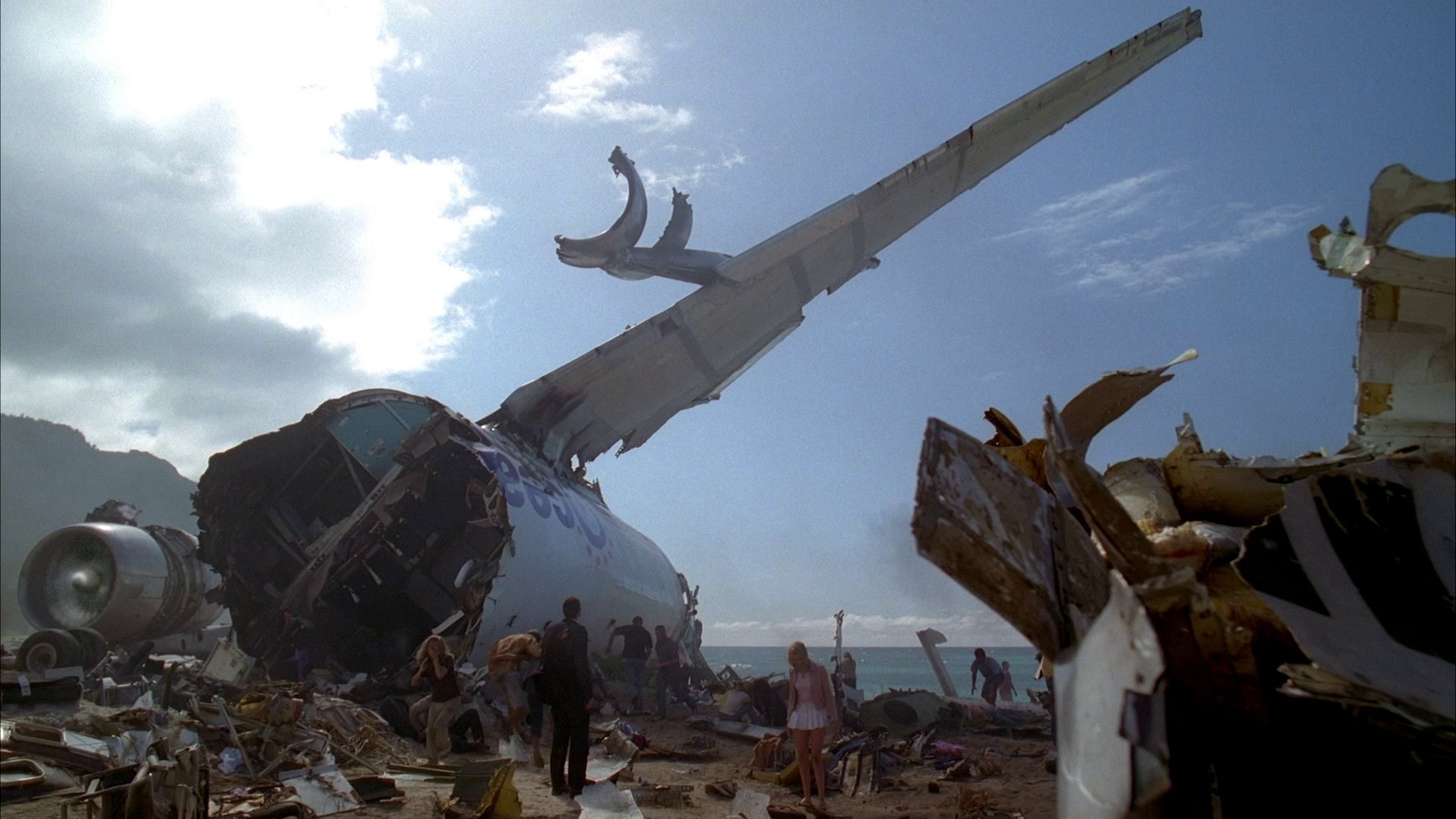
When Lost premiered on ABC in September 2004, it arrived not merely as a television programme but as a cultural phenomenon—a $12 million statement of intent that announced network television could compete with cinema in scope, ambition, and visual splendour. The two-part pilot, directed by J.J. Abrams and co-written with Damon Lindelof, remains one of the medium's most assured beginnings, introducing an ensemble cast of forty-odd survivors stranded on a mysterious South Pacific island following the crash of Oceanic Flight 815. Yet the trajectory of Season One charts a fascinatingly uneven course: from the seismic impact of its opening hours through a protracted mid-season slump, culminating in a finale that cemented the show's identity as a mystery-box narrative of unprecedented scale.
The pilot episodes established what would become the series' signature dialectic: the juxtaposition of paradise and purgatory. Filmed on the lush coasts of Oahu, the island presented as a postcard idyll rendered terrifying by context—blood, fire, and the unseen "monster" whose guttural roar announced that this would be no ordinary survival drama. Abrams' direction employed subjective, immersive storytelling; we experience the crash's aftermath through Jack Shephard's (Matthew Fox) disoriented perspective, his journey from bamboo thicket to beach revealing the surreal horror of the wreckage in incremental, devastating detail.
What distinguished Lost from its predecessors was not merely its budget—reportedly a record for a television episode that would stand for six years—but its structural innovation. The flashback device, introduced in the pilot and fully deployed in subsequent episodes, transformed the series from a straightforward survival narrative into a complex character study. Each episode would focus on a particular survivor, interweaving their island present with their pre-crash past, creating a Rashomon-like tapestry of hidden identities and buried trauma. This format allowed the show to introduce a sprawling ensemble—including the fugitive Kate (Evangeline Lilly), the roguish Sawyer (Josh Holloway), the enigmatic John Locke (Terry O'Quinn), and the Iraqi communications expert Sayid (Naveen Andrews)—with remarkable economy while simultaneously generating mystery around each figure.
The early episodes established a formidable standard. *Walkabout * (Episode 4), in which Locke's pre-crash life as a paraplegic corporate drone is revealed—culminating in the devastating twist that the island has miraculously restored his ability to walk—remains a high-water mark. As co-creator Lindelof framed it, this episode served as a litmus test: it revealed whether audiences would invest in characters reacting to mysteries rather than merely the mysteries themselves. Terry O'Quinn's performance, transforming from pathetic corporate drone to serene hunter, anchored what many consider the season's finest hour.
By the midpoint of Season One, however, a troubling pattern had crystallised. The necessity of filling a twenty-two-episode broadcast order forced the narrative into an agonisingly slow crawl, with episodes increasingly feeling like mechanical exercises in checklist storytelling. The character-centric formula—present-day island crisis intercut with revelatory flashback—began to feel less like organic storytelling and more like a series of boxes to be ticked.
Hearts and Minds (Episode 13) exemplifies this phenomenon. Focusing on Boone Carlyle (Ian Somerhalder) and his stepsister Shannon (Maggie Grace), the episode reveals their quasi-incestuous relationship through flashbacks that feel engineered for shock value rather than psychological insight. The present-day plot, in which Locke subjects Boone to a hallucinatory "vision quest" that culminates in the apparent death of Shannon—only to reveal it as a drug-induced hallucination—employs one of television's most annoying clichés. The powerful shock of Shannon's apparent death is completely neutered by the reveal, a narrative cheat that even the less perceptive viewer would see coming.
Similarly, Whatever the Case May Be (Episode 12), focusing on Kate's backstory as a bank robber, is frequently cited as a textbook example of "filler." The flashback reveals her criminality but adds little to our understanding of her core motivation, while the present-day plot concerning a locked briefcase feels like narrative wheel-spinning. The episode is frequently criticised by fans and reviewers as a narrative placeholder... a deliberate slowdown that delays broader plot progression.
This mid-season sag reflects the inherent tension between the show's mythological ambitions and the practical realities of network television production. The flashback structure, initially revolutionary, risked becoming a crutch—an obligatory pause in the serialised narrative to deliver psychological exposition that often felt schematic rather than revelatory. The "disposable survivor" phenomenon became increasingly apparent; background characters like Scott Jackson were introduced merely to be culled, raising stakes without affecting core relationships.
Throughout Season One, Lost established what would become its central thematic engine: the conflict between faith and reason, embodied respectively by Locke and Jack. This philosophical tension permeates the season's strongest episodes and provides the intellectual scaffolding for its most compelling mysteries.
White Rabbit (Episode 5), despite being a step down in narrative thrust from Walkabout, delivers essential character work for Jack, exploring his "fixer" complex through flashbacks to his relationship with his alcoholic father, Dr. Christian Shephard. The episode's climax—Jack discovering his father's empty coffin in the jungle and smashing it in a cathartic release—symbolically enacts his acceptance of leadership, culminating in his speech urging the survivors to "live together, or die alone."
The religious allegory becomes more overt in The Moth (Episode 7), where Charlie's heroin withdrawal is explicitly compared to a moth struggling to escape its cocoon. While Dominic Monaghan's performance captures the jittery agony, shame, and defiant vulnerability of withdrawal, the symbolism is so heavy-handed that it flattens narrative tension. Locke's role as a spiritual guide—offering Charlie his drugs only if he asks for them three times, arguing that "the struggle itself is necessary to strengthen its wings"—establishes him as the island's first and most zealous apostle.
This theological dimension reaches its apotheosis in Deus Ex Machina (Episode 19), where Locke's faith is subjected to a severe, almost biblical trial. His deteriorating physical condition—fearing a return to paralysis—culminates in a vision that leads to the discovery of the Beechcraft and Boone's catastrophic injuries. The episode's title, referring both to the theatrical device of divine intervention and the literal "god from the machine" of the hatch's illumination, encapsulates the series' willingness to employ narrative cheats in service of spiritual questioning. The episode's most enduring legacy, however, is the ambiguous radio transmission—debated for years as either "We're survivors of Oceanic Flight 815" or the far more chilling "There were no survivors"—demonstrating how a single, poorly heard line could fracture audience perception and fuel years of obsessive analysis.
Lost is inescapably a product of its post-9/11 moment, and Season One engages with the geopolitical anxieties of its era with surprising directness. Sayid's character, in particular, functions as a complex commentary on the War on Terror. In Pilot, Part II, he is instantly suspected of terrorism based solely on his appearance and ethnicity—a prejudice he complicates by confessing his service in the Iraqi Republican Guard during the First Gulf War. Confidence Man (Episode 8) explores torture and its ethical quagmires through Sayid's interrogation of Sawyer, resonating with contemporary debates surrounding US intelligence agency methods.
The episode Solitary (Episode 9) introduces Danielle Rousseau, the French scientist who has survived sixteen years on the island, through Sayid's capture and interrogation. The philosophical irony of naming the island's mysterious inhabitant after Jean-Jacques Rousseau—the philosopher who idealised the "state of nature"—invites interrogation of whether this stripped-down existence represents noble purity or Hobbesian nightmare. Sayid's flashback, revealing his defection from the Republican Guard after refusing to execute his childhood love, adds profound moral complexity to a character who might have been reduced to stereotype.
The show's treatment of these themes is not always subtle. The coincidence-laden plotting—Sawyer meeting Jack's father in a Sydney bar, various characters crossing paths in pre-crash flashbacks—sometimes strains credibility. Yet the series' willingness to engage with torture, prejudice, and the erosion of civilised norms under duress gives Season One a grim, timely weight that transcends its genre trappings.
The three-part season finale, Exodus, encapsulates both the strengths and limitations of Season One's approach. Originally conceived as a feature-length conclusion before being fractured for broadcast scheduling, the finale struggles against its structural constraints. Part I delivers unforgettable character moments—the raft launch set to Michael Giacchino's soaring score, the revelation of the Black Rock, the introduction of Ana Lucia Cortez (Michelle Rodriguez) in flashback—yet feels like a prologue straining against its artificial boundaries.
Part II suffers most from the tripartite division, feeling less like a coherent episode and more like an abruptly truncated second act. The dynamite sequence—homaging Clouzot's The Wages of Fear—provides superb tension, and Dr. Arzt's spectacular demise offers darkly comic relief. Yet the raft subplot feels engineered more for fan service than organic narrative tension, while the flashbacks largely falter.
It is Part III that delivers the season's most devastating turns. The raft's destruction and Walt's abduction by "The Others" transforms potential triumph into a devastating loss that immediately raises the stakes. The hatch's opening, with Locke and Jack peering into the abyss, provides a perfect visual metaphor for the series itself. These cliffhangers—Walt's kidnapping, the raft survivors scattered, the hatch illuminated—demonstrate the show's commitment to deepening mystery over neat resolution.
The practical production reality behind Walt's abduction—actor Malcolm David Kelley's impending puberty making his ageing faster than the show's timeline could accommodate—reveals the occasionally ad hoc nature of the storytelling. Yet this narrative workaround nonetheless serves the series' thematic concerns: the island's mysterious forces operate beyond human comprehension, and escape is never straightforward.
What elevates Season One above its narrative contrivances is the calibre of its ensemble cast. Terry O'Quinn's Locke remains the standout, his performance investing even the most morally questionable actions—sabotaging Sayid's radio, subjecting Boone to psychological torture—with terrifying, persuasive conviction. Josh Holloway transforms Sawyer from a stock antagonist into a figure of profound tragedy through episodes like Confidence Man and Outlaws, his portrayal of wounded rage papering over cracks in mechanically plotted character studies.
Matthew Fox anchors the series as Jack, his performance evolving from controlled professionalism to feverish desperation as the season progresses. The chemistry between Fox and Holloway, and the emerging romantic triangle with Lilly's Kate, provides essential human stakes amid the mythology. Naveen Andrews brings gravitas to Sayid, while Jorge Garcia's Hurley offers crucial comic relief that never undermines the character's underlying pathos—particularly in Numbers (Episode 18), where his lottery curse is revealed with macabre efficiency.
Michael Giacchino's score deserves particular mention. His music, employing sweeping orchestral movements and eerie, percussive textures, externalises the island's dual nature—its beauty and lurking terror. The Exodus raft launch sequence, scored with a stirring, tragic piece that underscores not hope, but a profound sense of loss, exemplifies how the music shapes the emotional landscape.
Season One of Lost is, ultimately, a study in asymmetrical impact. Its beginning was a seismic television event; its conclusion would set the template for six seasons of obsession-worthy, frequently frustrating storytelling. The pilot remains one of the medium's greatest and most influential beginnings,"establishing a revolutionary template that would be dissected and imitated for years. Yet the season's middle stretch reveals the strain of sustaining mystery over twenty-two episodes, with filler episodes and narrative conveniences threatening to undermine the innovative spark.
What saves Season One is its commitment to character. Even at its most mechanical—the flashback structure occasionally feeling like checklist storytelling—the performances and emotional truths ground the supernatural elements in recognisable human pain. The philosophical tension between Jack's rationalism and Locke's faith, the exploration of trauma and redemption through characters like Sawyer and Charlie, and the post-9/11 interrogation of civilisation's fragility give the season intellectual and emotional heft beyond its genre trappings.
The finale's cliffhangers—Walt abducted, the hatch opened, the survivors divided—demonstrate the show's core methodology: answering immediate questions only to unveil deeper, more baffling ones. This approach would eventually become contentious, with the series' conclusion proving divisive among fans and critics. Yet in Season One, the mystery box remains compelling precisely because the characters reacting to it are so fully realised.
Lost Season One is a landmark of early twenty-first-century television—a network behemoth that proved broadcast television could produce event storytelling with the scale of blockbuster cinema and the serialised depth of the novel. It is flawed, occasionally repetitive, and sometimes frustratingly evasive. But it is also genuinely revolutionary, establishing templates for character-driven mystery that would influence television for decades. For that one season, audiences were not merely viewers; they were stranded alongside the survivors of Oceanic 815, suddenly cast into a thrilling, terrifying, and utterly compelling new world with no map and no certainty of rescue. It was, unquestionably, one of television's most influential beginnings—and a promise, however imperfectly kept, of narrative possibilities yet to be explored.
(NOTE: All reviews can be accesed via this link.)
Blog in Croatian https://draxblog.com
Blog in English https://draxreview.wordpress.com/
InLeo blog https://inleo.io/@drax.leo
BTC donations: 1EWxiMiP6iiG9rger3NuUSd6HByaxQWafG
ETH donations: 0xB305F144323b99e6f8b1d66f5D7DE78B498C32A7
Thank you for sharing on steem! I'm witness fuli, and I've given you a free upvote. If you'd like to support me, please consider voting at https://steemitwallet.com/~witnesses 🌟