Television Review: The Shield (Season 5, 2008)
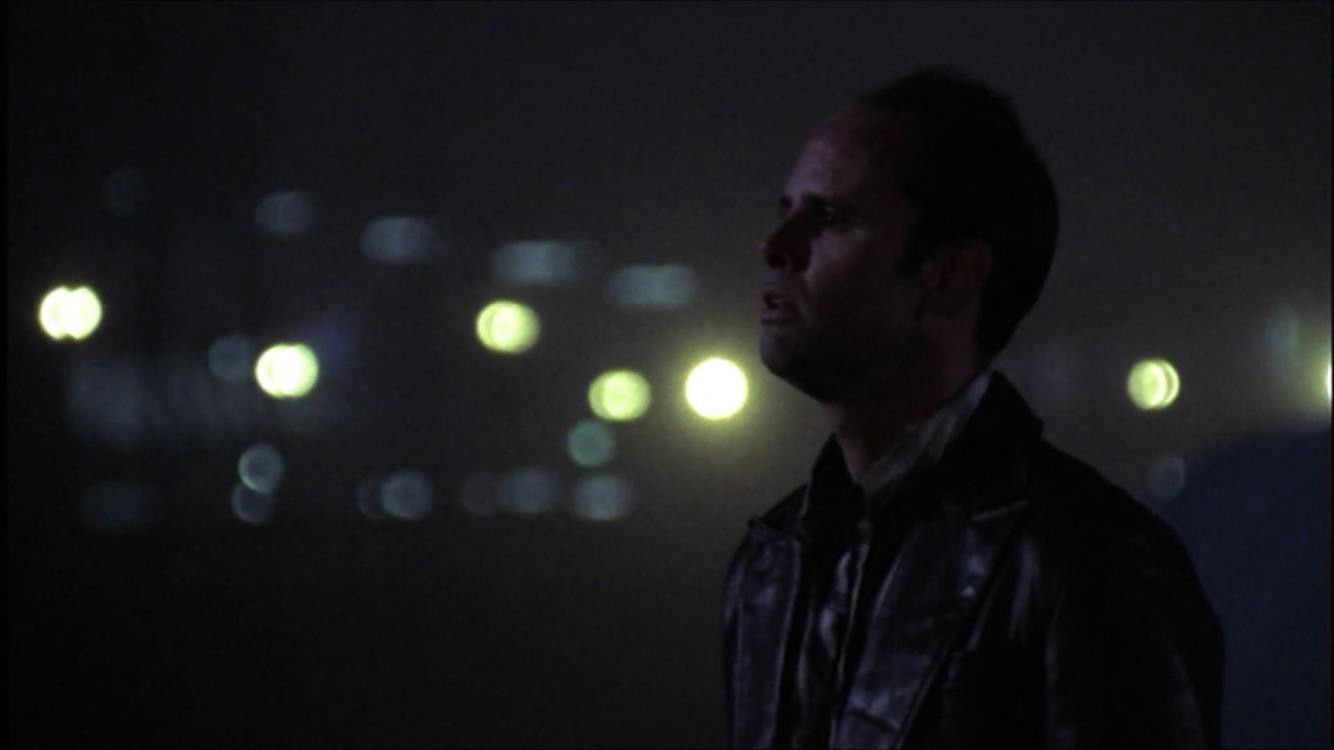
Season Five of The Shield represents the moment the series entered its definitive "endgame." Across eleven taut episodes, the narrative trajectory that had been building since Detective Vic Mackey murdered Terry Crowley in the pilot finally crystallised into something inevitable: the reckoning was no longer a question of "if," but "when" and "how." That this season delivers some of the programme's most electrifying moments whilst simultaneously exposing the structural limitations of its storytelling formula makes it a fascinating, if occasionally fractured, achievement in serialised television.
The season's most immediately striking element is the arrival of Forest Whitaker as Lieutenant Jon Kavanaugh of Internal Affairs. Brought in to replace Glenn Close's Captain Rawling, Whitaker imbues Kavanaugh with a chilling, quiet intensity that elevates the entire production. From his first appearance in Extraction, where he places Lemansky under arrest with the quietly terrifying question "Who do you think we really want?", Kavanaugh establishes himself as Vic's most formidable adversary—not because he is more violent, but because he is more patient. Unlike street criminals or political climbers, Kavanaugh operates through institutional means, weaponising bureaucracy, surveillance, and psychological pressure to dismantle the Strike Team from within.
The genius of this characterisation, as the season progresses, lies in his function as a dark mirror to Mackey himself. By the time we reach the eponymous eighth episode, Kavanaugh, the parallels have become unmistakable. Here, the writers—capitalising on a production error whereby Whitaker forgot to remove his wedding ring—craft a devastating portrait of a man whose professional obsession has destroyed his personal life. Kavanaugh's ex-wife Sadie, suffering from mental health difficulties, fabricates a rape accusation that leads to a harrowing institutional confrontation. When Vic witnesses this vulnerability via surveillance camera, Kavanaugh responds not with strategic detachment but with venomous impulse, charging Lem and having him publicly arrested. The episode makes its thesis explicit: remove the badge and the particular notion of "doing the right thing," and there is disturbingly little to differentiate the IAD investigator from the corrupt detective he hunts. Indeed, Kavanaugh's willingness to throw his ex-wife] to the wolves after her breakdown, as one review notes, demonstrates a capacity for coldness that surpasses even Vic's established moral code—after all, Vic had previously risked his life to save informant Emolia despite her betrayal.
The season's narrative architecture centres upon the methodical entrapment of Curtis "Lem" Lemansky, identified correctly by Kavanaugh as the Strike Team's "weakest link" by virtue of possessing the most conscience. What follows is a protracted psychological siege that showcases both the series' strengths and its occasional frustrations. On one hand, the sustained tension of Lem wearing a wire—his silent laptop communication with Vic in Jailbait, his physical manifestation of guilt through crippling stomach problems—demonstrates The Shield at its most gripping. The writers excel at deferring payoff, steering characters to precipices only to yank the narrative rug away at the last moment.
Yet this same approach reveals a structural weakness. By Trophy (Episode Five), the reviewer identifies a paradox: "the show teaches us to expect the unexpected, yet the need to sustain the season-long arc makes the actual unexpected (Vic's arrest) impossible." When Vic orchestrates an elaborate sting using a bugged softball trophy to publicly humiliate Kavanaugh, the twist feels less like genuine dramatic surprise and more like narrative necessity—a contractual obligation to prolong the inevitable. The knowledge that this is merely episode five of eleven undercuts the tension; we know Kavanaugh cannot succeed yet, so his defeat feels preordained rather than earned.
This structural constraint extends to the procedural elements. Throughout the season, standalone cases range from the genuinely harrowing to the forgettably sensationalist. At its best, as in Tapa Boca, the programme explores crimes of genuine moral horror—a pregnant woman murdered and her unborn child cut from her womb, perpetrated by teenagers whose half-baked, grotesque scheme offers a devastating commentary on cyclical violence. At its worst, as in Smoked (Episode Nine), the series descends into soap-operatic contrivance: the sudden appearance of Terry Crowley's brother delivering a bizarre, biblical tirade represents rare but significant narrative sloppiness that undermines the gritty realism upon which the show's power depends.
The season's handling of secondary characters proves similarly uneven. Officer Tina Hanlon's introduction as Danny Sofer's mentee had potential to explore the Barn's toxic masculinity and cyclical mentorship. Instead, her narrative devolved into repetitive demonstrations of incompetence—drawing her weapon on an undercover officer, mishandling detainees—followed by chastisement. Her promotion via blackmail after the discovery of locker-room spy cameras offers darkly comic commentary on institutional corruption, yet feels more like narrative machinery than character development. More successful is the serial killer subplot involving Kleavon Gardner, which provides Detectives Dutch Wagenbach and Claudette Wyms with some of the season's most affecting material—particularly Claudette's devastating collapse following an interrogation in Man Inside, where professional victory is purchased at dire personal cost.
Where Season Five truly distinguishes itself is in its finale, Postpartum. The extended 67-minute runtime affords the narrative space to balance profound tragedy with the series' characteristic, often jarring, levity. Lem's death—murdered by Shane Vendrell in a moment of tragic miscalculation—succeeds because it is both structurally inevitable and emotionally devastating. Kenny Johnson and Walton Goggins deliver performances of exceptional nuance: Lem's weary resignation, Shane's panicked desperation culminating in the concealment of a live grenade in a bag of food. The aftermath, with the entire Barn gathered at the scene and Vic's ironic vow to find the killer who stands beside him, closes the season on a cliffhanger of profound moral corrosion.
The finale also demonstrates the writers' willingness to embrace tonal complexity. Counterbalancing Lem's tragedy are subplots involving Danny Sofer giving birth and Dutch investigating a community volunteer (Ally Walker) whose secret life as a prostitute provides necessary comic relief—if "darkly comic" can describe a scenario involving psychological manipulation and interrogation-room liaisons. This juggling of the grotesque, the tragic, and the absurd remains The Shield's signature achievement, reflecting the messy, multifaceted reality of urban policing.
Season Five's truncated eleven-episode run, a pragmatic correction following Season Three's dilution, intensifies the narrative pressure to beneficial effect. The series' moral engine—interrogating the cost of corruption, the nature of loyalty, and the impossibility of redemption—finds its fullest expression here. If the season occasionally stumbles into formula or prolongs conflict beyond natural breaking points, these are the acceptable costs of serialised storytelling. What remains is a devastating portrait of institutional rot and personal tragedy, anchored by powerhouse performances from Whitaker, Chiklis, Goggins, and CCH Pounder.
By the time the credits roll on Postpartum, the Strike Team has been irreparably fractured, Kavanaugh's crusade has descended into personal vendetta, and Vic Mackey's inevitable downfall has shifted from possibility to certainty. Season Five seals the characters' fates, ensuring that the remaining seasons can only document the collapse. It is television that understands its own end from its beginning—and has the courage to make that ending hurt.
(NOTE: All reviews can be accesed via this link.)
Blog in Croatian https://draxblog.com
Blog in English https://draxreview.wordpress.com/
InLeo blog https://inleo.io/@drax.leo
BTC donations: 1EWxiMiP6iiG9rger3NuUSd6HByaxQWafG
ETH donations: 0xB305F144323b99e6f8b1d66f5D7DE78B498C32A7