Television Review: The Shield (Season 6, 2007)
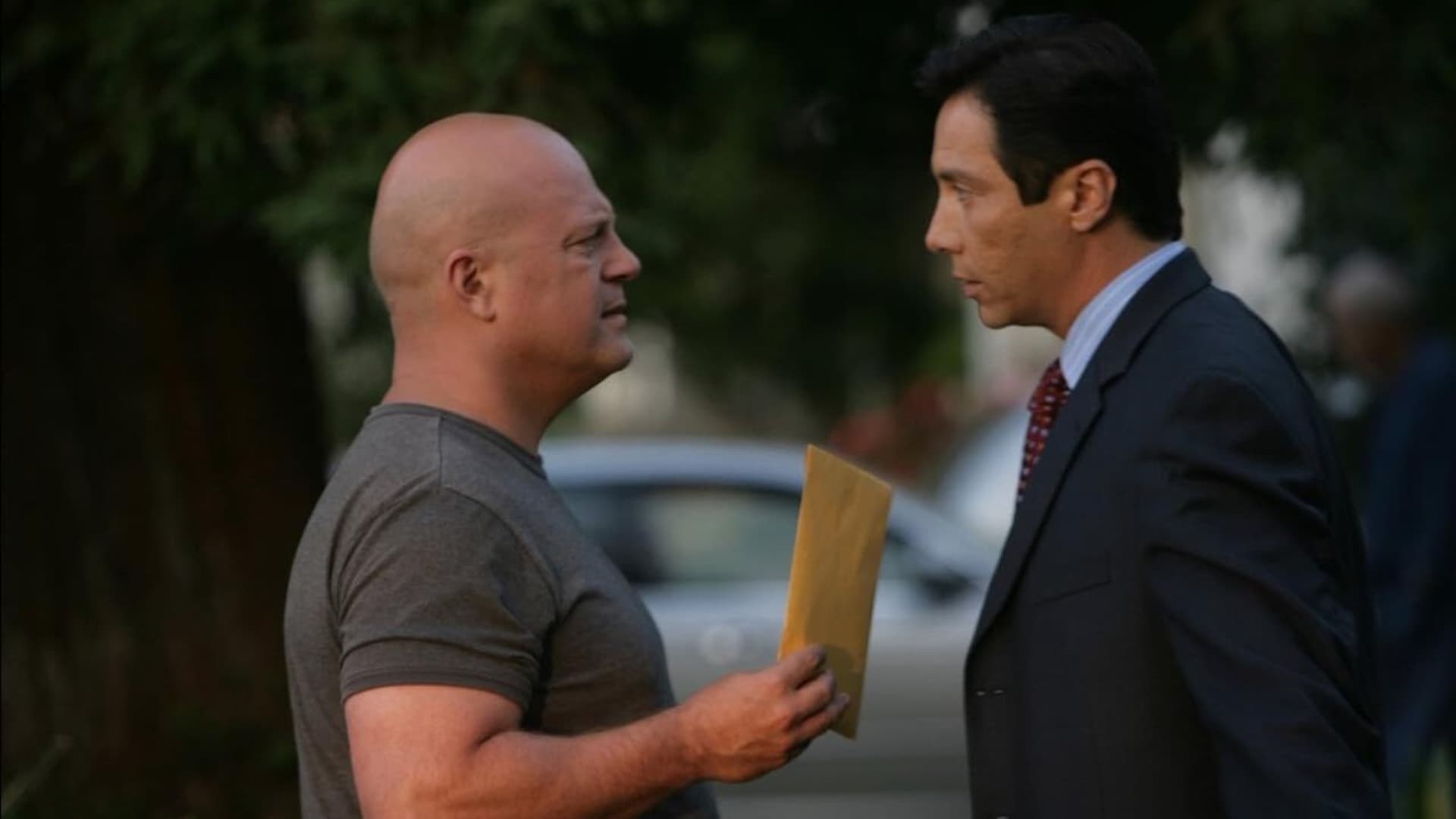
The sixth season of Shawn Ryan's uncompromising police drama The Shield presents itself as a curious anomaly within the show's otherwise stellar run. Broadcast in the spring of 2007 as the penultimate chapter of the series, this ten-episode arc finds itself trapped between the catastrophic reverberations of preceding events and the uncertainty of its own conclusion. What emerges is a season of profound moral reckonings and exceptional performances, yet one fundamentally compromised by the hesitation of its network and the resultant lack of narrative closure.
Season Six opens in the immediate aftermath of Curtis "Lem" Lemansky's murder—a death that serves as the destructive fulcrum around which every subsequent episode pivots. The premiere, On the Jones, establishes the emotional terrain with a grim twenty-one-gun salute performed by Vic Mackey, Shane Vendrell, and Ronnie Gardocki at their fallen comrade's grave. It is a potent image: three corrupt officers granting military honours to a man whose death they unwittingly set in motion. Yet, the episode functions merely as competent table-setting, lacking the visceral shock that characterised the fifth season's conclusion.
The season's dramatic zenith arrives early, with Baptism by Fire (S6X02) delivering not only the strongest instalment of the run but one of the series' most poignant character farewells. Lieutenant Jon Kavanaugh, portrayed with magnificent intensity by Forest Whitaker, reaches the terminus of his obsessive crusade against Vic Mackey. The episode's brilliance lies in Kavanaugh's recognition that his pursuit of justice has transformed him into the very monster he sought to destroy—planting evidence, manipulating witnesses, eroding the ethical foundations he claimed to defend. His voluntary confession to Captain Claudette Wyms and subsequent imprisonment represents a rare moment of moral clarity. The final prison confrontation between Kavanaugh and Vic, wherein the disgraced lieutenant warns Mackey that he stands merely at the precipice of his own eventual downfall, ranks amongst the show's most memorable exchanges. The episode functions as a self-contained tragedy whilst clearing the narrative board for what was expected to be the final descent.
Contemporary resonance haunts Back to One (S6X03), wherein Vic Mackey's misguided quest for vengeance against Salvadoran gang boss Guardo Lima produces some of the most harrowing sequences in the series' history. The extended torture scenes—during which Vic threatens sexual violence against Guardo's pregnant girlfriend and ultimately executes an innocent man—prove nearly unwatchable not merely for their graphic brutality, but for their uncomfortable evocation of the Abu Ghraib scandals that still dominated American consciousness. The irony proves devastating: Vic tortures and murders an innocent man whilst the actual killer, Shane, pleads for mercy from the sidelines. This episode functions as allegory for the Iraq War itself—a chaotic, violent descent into depravity predicated upon false intelligence and vindictive certainty.
The revelation of Shane's culpability in Chasing Ghosts (S6X06), directed with characteristic restraint by Frank Darabont, demonstrates The Shield at its most subversive. Where lesser dramas would deploy this secret as climactic ammunition for a bloody confrontation, Ryan and co-writer Adam E. Fierro opt for prolonged, anticlimactic messiness. Vic's discovery that his best friend murdered Lem produces not violence but disgust—a silent departure that speaks louder than any exchange of gunfire. Michael Chiklis and Walton Goggins deliver career-defining performances in these moments, communicating years of history, resentment, and grudging respect through gaze and gesture alone. This refusal of conventional catharsis elevates the series above its procedural contemporaries, affirming that trauma lingers in silences rather than resolving in explosions.
Walton Goggins emerges as the season's MVP, his portrayal of Shane's psychological disintegration proving genuinely extraordinary. From suicidal recklessness in the premiere through his confession to wife Mara in Haunts (S6X05) and his desperate alliance with Armenian mob heiress Diro Kesakian, Goggins communicates Shane's devastation through small gestures and haunted expressions. The character's arc—from voice of reason during Vic's torture spree to broken man contemplating Mexican exile—represents perhaps the most compelling trajectory of the season.
However, the season's structural integrity suffers considerably from production uncertainties. The writers' discovery that FX had commissioned a seventh season midway through production fundamentally compromised the narrative architecture. Episodes 7 through 10 increasingly function as delaying tactics rather than genuine developments—bridge episodes designed to maintain tension rather than resolve it. Exiled (S6X07) introduces the concept of mutually assured destruction between Vic and Shane, yet treats Shane's domestic troubles with Mara as filler. The Math of the Wrath (S6X08) squanders the promising introduction of Franka Potente as Diro Kesakian on transitional plotting. By Spanish Practices (S6X10), the season finale, the accumulation of deferred resolutions produces the series' weakest finale—a 61-minute instalment that should have delivered crescendo yet manages only whimper.
The finale's central failure manifests in its refusal to commit. Vic's forced retirement, repeatedly established as imminent, remains suspended through the discovery of an Epstein-sized archive of blackmail material. Diro Kesakian, positioned as a formidable antagonist, simply flees to Germany—her departure necessitated by Potente's scheduling conflicts rather than dramatic logic. This is a stalling tactic, and indeed the entire final act feels like narrative wheel-spinning, setting pieces for a seventh season that the writers had not originally envisioned.
Nor do the supporting narratives warrant unqualified praise. The Dutch Billings partnership, once a source of cynical amusement, descends into petty farce involving stolen mobile telephones and romantic humiliations that recall secondary school melodrama rather than gritty police drama. Billings' cruel manipulation of Dutch's unrequited feelings for Tina Hanlon, culminating in the revelation of her sexual liasion with Detective Hiatt, feels juvenile and petty—intrusions from a different genre entirely. Meanwhile, Hiatt himself, portrayed by Alex O'Loughlin, fails to establish genuine chemistry with the established ensemble, functioning as physical counterpoint rather than authentic dramatic presence.
The season additionally suffers from occasional lapses into awkward mysticism—most notably Corrine Mackey's dream sequence involving Lem in The New Guy (S6X04), which the reviewer identifies as the closest The Shield ever approached to fantasy. Such sequences disrupt the gritty realism that constitutes the show's aesthetic foundation, feeling forced and immersion-breaking.
Yet beneath these compromising elements, Season Six retains the brutally moral universe that distinguished The Shield from its contemporaries. Vic Mackey's continued descent—from vengeful torturer to blackmailing politician to man discovering his own obsolescence—refuses the redemption arcs that lesser shows would demand. His family life collapses with logical inevitability; his daughter Cassidy's hostility upon discovering her father's illegitimate son, his desperate attempts to manufacture surrogate Lems through doomed idealists like Vantes, all demonstrate a man incapable of recognising the walls closing around him. When the reviewer observes that Vic breaks down before his colleagues at Mission Cross Hospital, watching another surrogate son die, the moment captures the character's essential tragedy: a man of supreme tactical competence yet profound moral blindness, desperate to substitute institutional loyalty for genuine human connection.
In the end, Season Six of The Shield is a deeply flawed yet intermittently brilliant transitional chapter. Its first half delivers some of the series' most devastating character work, particularly in Kavanaugh's exile and Shane's disintegration. Yet its latter episodes, constrained by production uncertainties, sacrifice narrative momentum for prolonged suspense. Walton Goggins' performance remains a wonder, and Michael Chiklis continues to anchor the proceedings with ferocious commitment. Nevertheless, the season ultimately serves as preamble rather than climax—a protracted exhalation before the final breath. For a series renowned for refusing compromise, this hesitation proves its most disappointing quality.
(NOTE: All reviews can be accesed via this link.)
Blog in Croatian https://draxblog.com
Blog in English https://draxreview.wordpress.com/
InLeo blog https://inleo.io/@drax.leo
BTC donations: 1EWxiMiP6iiG9rger3NuUSd6HByaxQWafG
ETH donations: 0xB305F144323b99e6f8b1d66f5D7DE78B498C32A7