Television Review: The Shield (Season 7, 2008)
When The Shield returned to American television screens in September 2008 following a fifteen-month hiatus, it did so burdened by considerable expectation. Shawn Ryan’s creation had, over six preceding seasons, established itself as perhaps the most uncompromising examination of police corruption ever committed to the medium. The seventh season was explicitly designed as a farewell, a definitive conclusion promising that Vic Mackey’s crimes would finally catch up with him. Yet what unfolds across these thirteen episodes is a narrative of fits and starts, of brilliant moments diluted by meandering subplots, ultimately coalescing into one of television’s most devastating—and divisive—finales.
The season’s opening instalments reveal a series caught in something of a holding pattern. The premiere, Coefficient of Drag, establishes the parameters of Vic’s moral collapse with admirable clarity: he threatens the life of his best friend’s pregnant wife, orchestrates gang warfare between Armenian and Mexican factions, and presides over Ronnie Gardocki’s transformation from the Strike Team’s most professional member into a cold-blooded executioner. Yet, there is a troubling familiarity to these developments—repetitive stays of execution that the series had granted its anti-hero in previous years. The much-vaunted “blackmail box” containing compromising materials on Los Angeles politicians becomes a rather flimsy MacGuffin, driving the action without ever achieving the mythic weight the writers clearly intended.
Episodes two through five—Snitch, Money Shot, Genocide, and Game Face—represent a mid-season lull. These instalments are competent but unremarkable, marking time before the curtain falls. The Armenian-Mexican gang war subplot grows increasingly convoluted, relying upon chance encounters and elaborate deceptions that strain credulity. There is a particular weakness in the season’s reliance upon random acts of fate as primary plot devices, noting that these contrivances add a layer of artificiality to an otherwise gritty realism. Indeed, the plotting occasionally borders on the baroque: Vic’s scheme to manipulate city controller Robert Martin into releasing funding for an Armenian Genocide memorial, designed to prolong ethnic conflict, collapses when Mexican assassins murder Martin at a commemoration ceremony. Such narrative gymnastics, whilst undeniably dramatic, suggest a writers’ room struggling to manufacture momentum from increasingly exhausted material.
The season’s pivot point arrives with Animal Control and Bitches Brew, episodes six and seven. Here, the interpersonal dynamics that have always powered the series finally reassert themselves. Vic, having accepted Ronnie’s counsel that Shane must pay for Lem’s murder, attempts to engineer his former partner’s death during a staged Armenian-Mexican summit. He secretly removes the bullets from Shane’s firearm, ensuring his vulnerability during the anticipated shootout. That Shane survives through sheer chance proves devastating to Vic’s plans, but narratively invigorating for the viewer. The moment when Shane realises Vic’s treachery—the ultimate ‘wham’ moment—permanently shatters any hope of reconciliation and transforms the season from a procedural chess match into a genuine thriller.
The back half of the season accelerates with grim inevitability. Parricide (episode eight) witnesses Vic’s resignation from the LAPD after Shane, now a wanted fugitive, exposes the full extent of Strike Team corruption to Corrine. This development strips the narrative of its institutional framework, reducing the conflict to its essential elements: two former friends hunting one another through Los Angeles’s criminal underbelly. The episode should be praised for its symbolic fatalities—the death of Vic’s career, the disintegration of the Strike Team, the shattering of familial bonds—whilst the plotting remains somewhat overcooked, balancing too many serial killer storylines that dilute the central narrative’s impact.
Episodes nine through eleven—Moving Day, Party Line, and Petty Cash—trace parallel descents. Vic, now badgeless, discovers that his authority derived entirely from institutional affiliation; without the LAPD, he possesses no leverage over the streets he once ruled. Shane, burdened by pregnant wife Mara and ailing son Jackson, squats in foreclosed mansions, a poignant visual metaphor for lives built upon stolen foundations. Party Line is particularly resonant, airing as it did during the 2008 global financial crisis, when viewers in America and across the globe were grappling with their own grim financial futures. The Vendrells’ temporary residence in luxury, followed by violent eviction, mirrors the broader cultural moment of collapsed certainties.
The season’s final two episodes achieve genuine greatness. Possible Kill Screen—the title referencing a video gaming glitch wherein skilled players advance beyond programmed limits—delivers one of the finest episodes of the series. Vic’s 45-second confession, delivered with sociopathic calm to horrified ICE agents, represents Michael Chiklis’s career-defining performance. The sequence’s power derives not from revelation—viewers have long known Vic’s crimes—but from the character’s unmasking, his abandonment of the “street superhero” persona he has maintained throughout. Simultaneously, Walton Goggins’s Shane descends into genuine tragedy: during a botched robbery, Mara accidentally kills a woman and sustains injuries that leave her in intolerable pain, whilst Shane, forced to consume drugs at the scene, proves unable to assist his suffering wife.
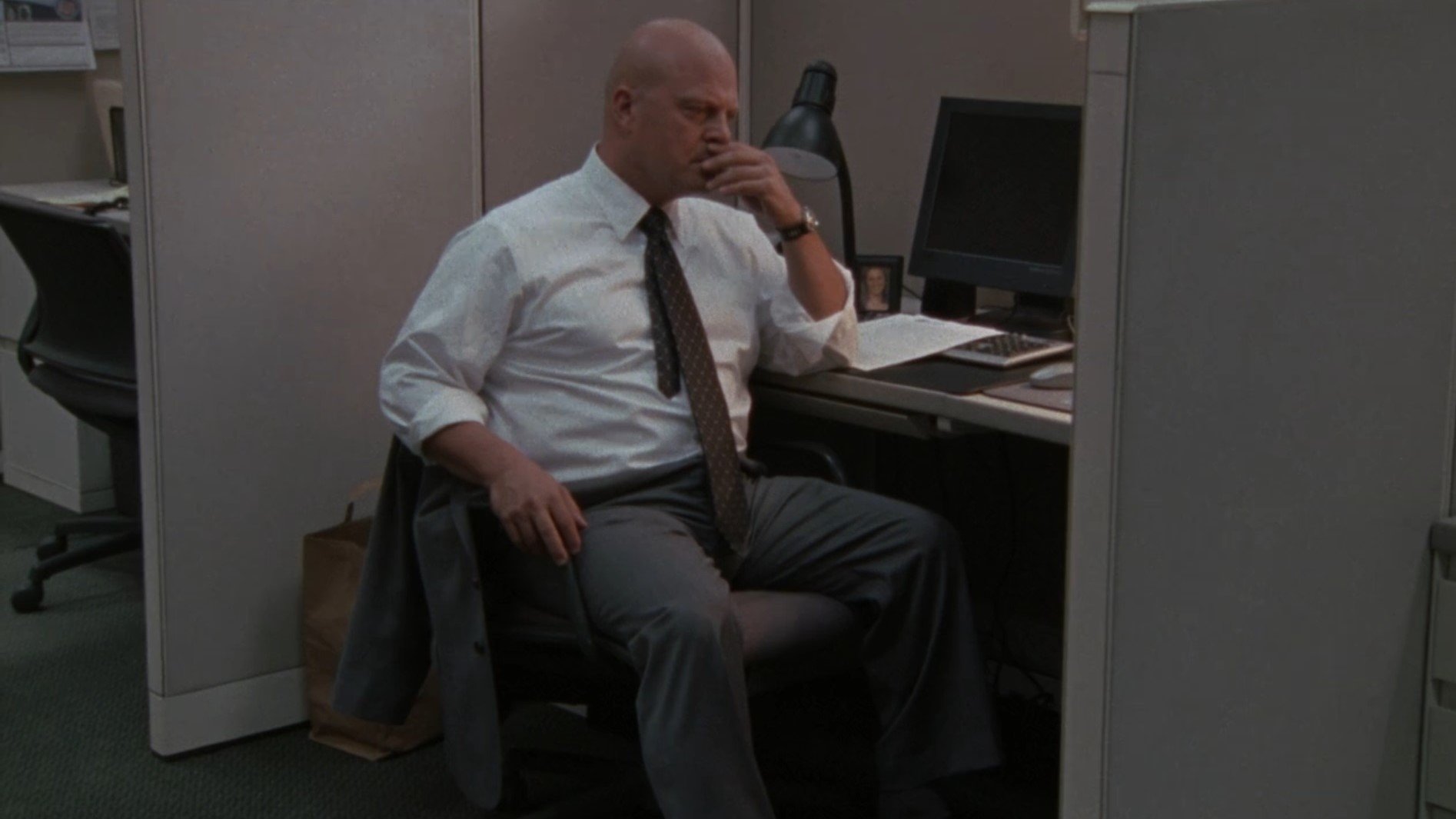
The finale, [Family Meeting], directed by Clark Johnson (who also helmed The Wire’s conclusion), distributes three fates among the surviving Strike Team members. Shane, learning that Vic’s federal immunity renders any potential deal impossible, poisons Mara and young Jackson before turning his weapon upon himself—a denouement inspired by the real-life Chris Benoit tragedy. Ronnie, betrayed by Vic to secure his own escape, is arrested in the Barn’s interrogation room, his tears of triumph turning to devastation. Vic himself receives what the reviewer terms a fate worse than prison: consigned to a federal desk job, stripped of fieldwork, separated forever from Corrine and his children who enter witness protection.
This tripartite ending—death, imprisonment, and bureaucratic burial—proves intellectually satisfying if emotionally uneven. Whilst Vic’s cubicle-bound future represents fitting punishment for a man too clever to get caught but too damned to escape his demons, the finale lacks the definitive closure of The Wire’s -30-. Certain subplots, including the political aspirations of Robert Huggins and the Lloyd Denton serial killer thread, resolve messily or not at all. Julian and Danny, significant figures in earlier seasons, receive mere cameo appearances.
Ultimately, Season Seven of The Shield succeeds despite its flaws because it honours the series’ central premise: actions have consequences, and corruption corrodes everything it touches. Based on individual episodes, this a season of solid craftsmanship rather than consistent brilliance. Yet the cumulative effect proves devastating. Vic Mackey’s final image, retrieving his weapon from a desk drawer and staring into the middle distance, captures the essence of the tragedy: a predator caged not by bars but by paperwork, his violence rendered impotent, his family lost forever. It is not the ending viewers wanted, but it is, perhaps, the ending they deserved.
(NOTE: All reviews can be accesed via this link.)
Blog in Croatian https://draxblog.com
Blog in English https://draxreview.wordpress.com/
InLeo blog https://inleo.io/@drax.leo
BTC donations: 1EWxiMiP6iiG9rger3NuUSd6HByaxQWafG
ETH donations: 0xB305F144323b99e6f8b1d66f5D7DE78B498C32A7