Television Review: The Sopranos (Season 2, 2000)
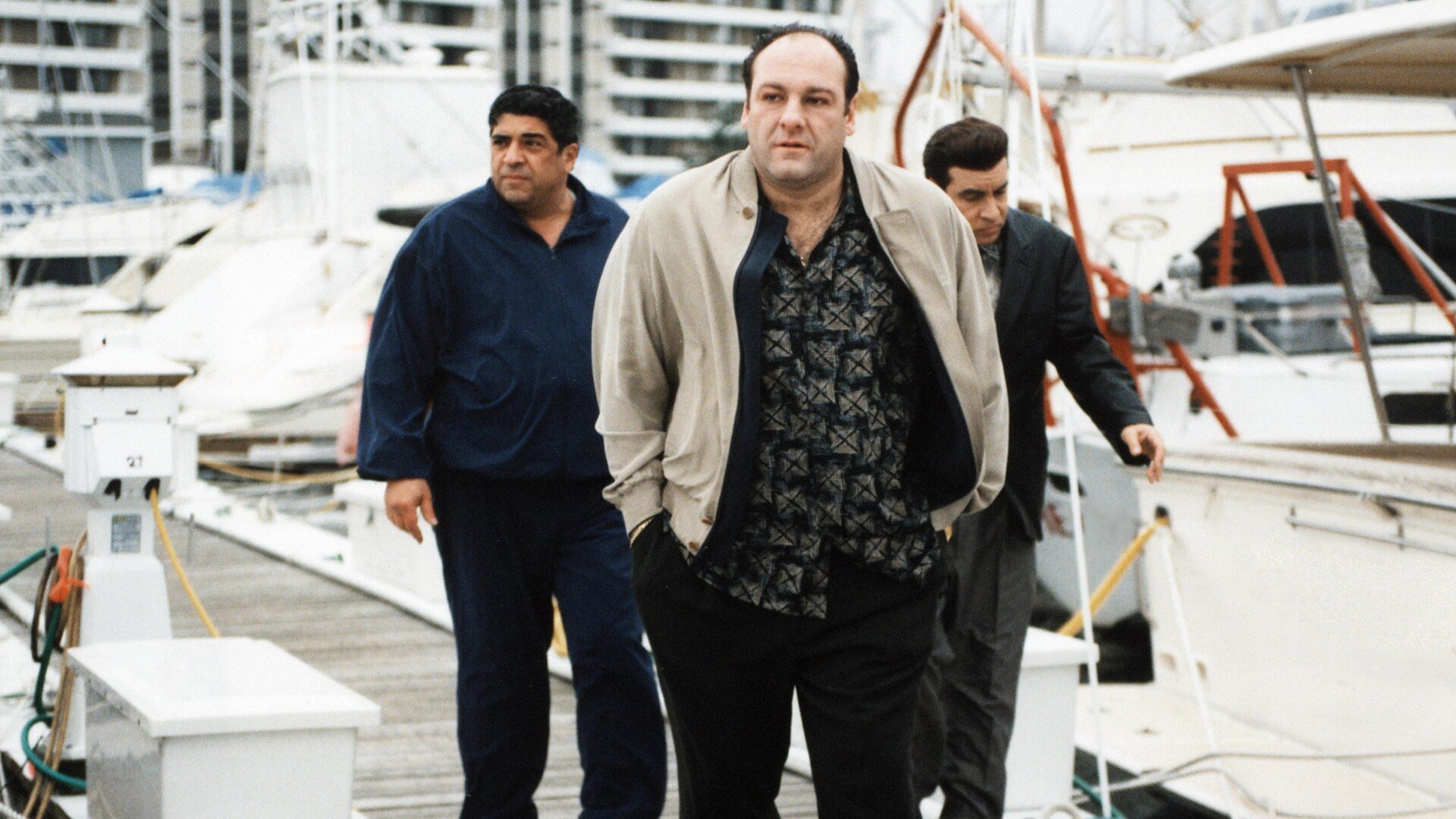
David Chase's The Sopranos had already redefined television drama with its first season, but Season 2 (2000) proved that the series was not merely a flash of brilliance but a sustained artistic endeavour of remarkable depth.
Season 2 is, at its core, a meditation on entropy. Where Season 1 established Tony Soprano's struggle to balance his dual identities as mob boss and suburban father, Season 2 interrogates the sustainability of that precarious equilibrium. The opening episode, Guy Walks into a Psychiatrist's Office, masterfully recaps prior events while immediately introducing new tensions: the return of Pussy Bonpensiero, the manipulative arrival of Janice, and Tony's renewed psychological crisis. The episode deftly balances moments of dark humour with serious themes surrounding mental health and familial dysfunction, setting a tone that would permeate the entire season.
The season's preoccupation with decline is most potently expressed through the character of Big Pussy. His arc—from mysterious absence to suspected informant to tragic execution in the finale—provides Season 2 with its narrative spine. Do Not Resuscitate intricately explores the themes of old age, frailty, and human transience, themes that resonate throughout Pussy's storyline. His eventual fate in Funhouse is not merely a plot resolution but a philosophical statement: in Tony's world, betrayal is met with absolute, unforgiving finality. The dream sequences that precede Pussy's death—featuring a talking fish confessing on a snowy Asbury Park boardwalk—are commednable for their surreal power, representing some of the most memorable and talked about scenes of the entire series. This willingness to embrace psychological abstraction within a crime drama was revolutionary for television in 2000.
The season's character work is consistently excellent, though not without occasional missteps. Tony's journey is particularly compelling; as he consolidates power within the DiMeo family, his personal life grows increasingly fraught. Episodes like The Happy Wanderer and House Arrest explore Tony's anxiety when stripped of criminal activity, suggesting that his pathology is inextricably linked to his profession. The absence of criminal activity may be exacerbating Tony's anxiety. This underscores the show's central thesis: for Tony, violence is not merely a means to an end but a fundamental component of his identity.
New characters enrich the narrative tapestry. Richie Aprile, introduced in Toodle-Fucking-Oo, is immediately established as a formidable threat. David Proval's performance is singled out for bringing "a captivating blend of roguish charm and simmering darkness" to the role. Richie's volatile nature and resentment towards Tony create sustained tension, though his abrupt elimination by Janice in The Knight in White Satin Armor feels somewhat premature—a narrative choice that may have disappointed viewers invested in that particular conflict.
The introduction of Furio Giunta in Commendatori adds another layer of complexity. His recruitment from Naples represents Tony's attempt to import loyalty untainted by FBI suspicion, yet Furio's presence also foreshadows future complications.
One of Season 2's most notable characteristics is its structural ambition. Rather than building towards a single climactic finale, the season resolves major storylines in its penultimate episode, The Knight in White Satin Armor, before concluding with the more contemplative Funhouse. This approach was notably unique for television at the time and would later become a more common narrative strategy in subsequent series. It demonstrates Chase's confidence in his audience's ability to engage with complex storytelling.
However, this ambition occasionally comes at the expense of pacing. Several episodes—Toodle-Fucking-Oo, Big Girls Don't Cry, D-Girl, and Bust Out—are somewhat like "filler," serving to introduce characters or themes without advancing the central narrative in meaningful ways. D-Girl, in particular, features heavy-handed Hollywood satire and existential philosophy references, which create a sense of detachment from the show's usual narrative. While these episodes contain strong individual moments—Christopher's screenwriting workshop, Carmela's near-affair with Tony Musto—they sometimes feel like detours rather than integral chapters.
Yet even these comparatively weaker episodes contribute to the season's thematic richness. The Happy Wanderer's exploration of gambling addiction, for instance, provides a poignant parallel to Tony's own compulsions, while From Where to Eternity (written by Michael Imperioli) offers a thoughtful meditation on faith and mortality through Christopher's near-death experience.
The season's technical achievements deserve particular mention. The cinematography in Commendatori captures Naples' breathtaking visuals that contrast sharply with New Jersey's gritty aesthetic, while the dream sequences in Funhouse employ surreal imagery that some of the reviewers compared favourably to Fellini's 8½. The use of music is equally sophisticated: Frank Sinatra's "It Was a Very Good Year" bookends the season with ironic poignancy.
In retrospect, Season 2 of The Sopranos represents a crucial period of consolidation. It takes the innovations of Season 1 and deepens them, exploring psychological complexity with greater assurance while expanding the show's thematic scope. While not every episode achieves the heights of the series' best work, the season as a whole maintains an impressively high standard.
The execution of Big Pussy in Funhouse stands as one of television's most powerful moments, not merely for its narrative impact but for its emotional weight. This willingness to dispense with a major character underscores the show's commitment to realism over sentimentality, a principle that would define The Sopranos throughout its run.
One might say that Season 2 is a proper, substantial piece of work—occasionally uneven, but always intelligent, often profound, and never less than compelling. It confirmed that The Sopranos was not a one-season wonder but a series capable of sustaining artistic excellence over the long term. For viewers willing to engage with its psychological depth and moral ambiguity, Season 2 remains as rewarding today as it was upon its original broadcast in the year 2000.
(NOTE: All reviews can be accesed via this link.)
Blog in Croatian https://draxblog.com
Blog in English https://draxreview.wordpress.com/
InLeo blog https://inleo.io/@drax.leo
BTC donations: 1EWxiMiP6iiG9rger3NuUSd6HByaxQWafG
ETH donations: 0xB305F144323b99e6f8b1d66f5D7DE78B498C32A7