Television Review: The Sopranos (Season 6 Part I, 2006)
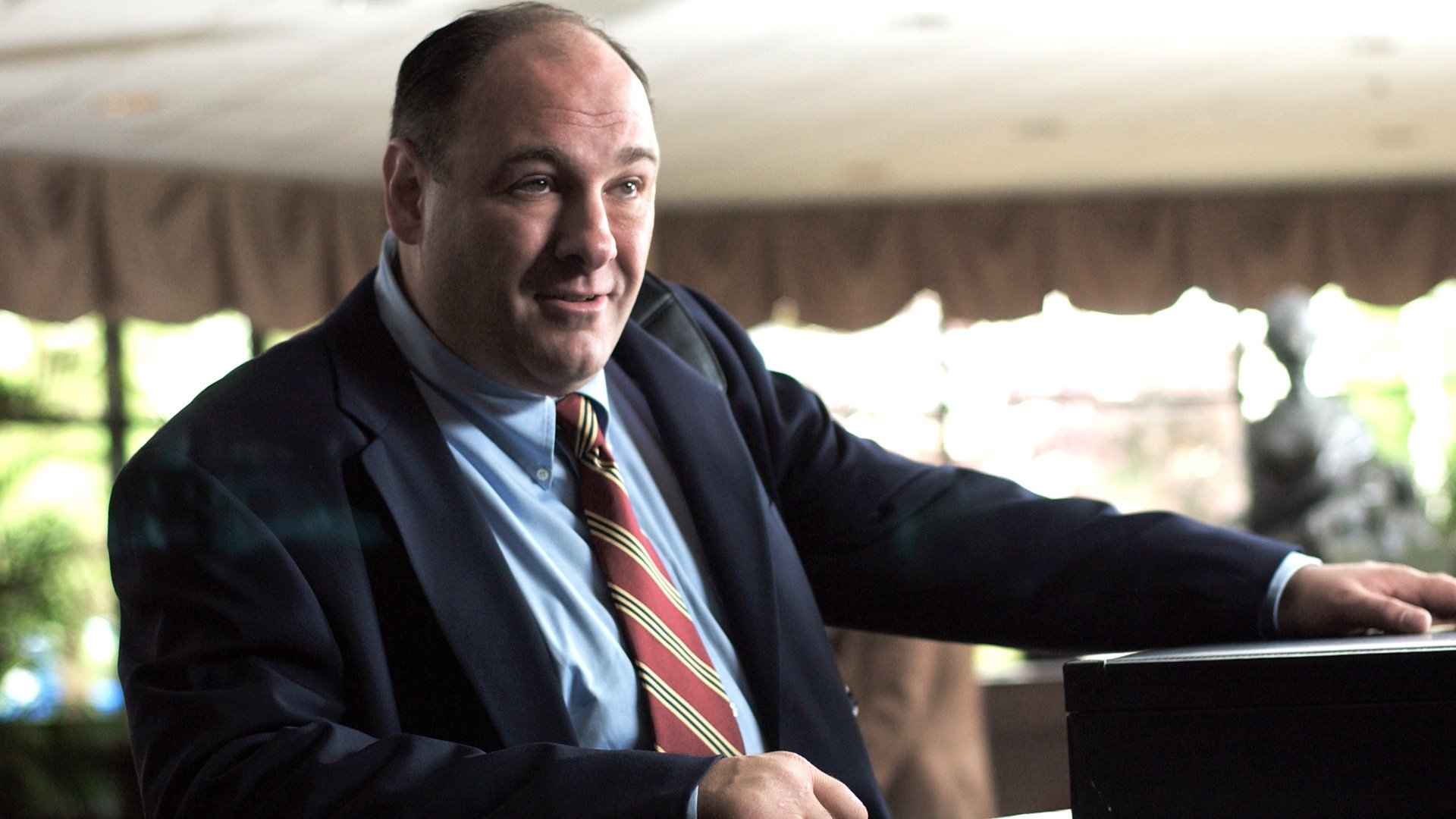
By the time The Sopranos returned for its sixth and final season in March 2006, the series had already redefined the parameters of television drama. Yet Season 6, Part I—comprising twelve episodes broadcast between March and June of that year—arrives not as a triumphant victory lap, but as a protracted meditation on decay, performance, and the impossibility of escape. While the first half of the final season showcases the series' enduring ambition and thematic richness, it is also marked by structural unevenness, tonal dissonance, and a growing preoccupation with its own mortality that occasionally tips into self-indulgence.
The season opens with Members Only, an episode that immediately signals David Chase's refusal to offer easy re-entry points for lapsed viewers. The William S. Burroughs voiceover, invoking Ancient Egyptian concepts of the soul, is at once hypnotic and alienating—a deliberate barrier between the audience and the narrative. Critics note that this intellectual posturing, while audacious, risks distancing viewers emotionally, substituting philosophical abstraction for the visceral character work that defined earlier seasons. Eugene Pontecorvo's suicide, trapped between FBI coercion and Mafia obligation, is rendered with chilling banality, yet the episode's cliffhanger conclusion—Uncle Junior shooting Tony—feels like a calculated tease, a concession to genre convention that sits uneasily with the series' otherwise anti-formulaic ethos. The premiere establishes a pattern: bold ideas hampered by execution that prioritises meta-commentary over emotional resonance.
This tension between ambition and accessibility deepens with Join the Club and Mayham, the two-part coma arc that forms the season's conceptual centrepiece. Tony's purgatorial journey as "Kevin Finnerty", a milquetoast salesman in Costa Mesa, represents Chase at his most experimental. James Gandolfini's performance as the unmoored Tony is universally praised—a masterclass in vulnerability that ranks among his finest work. Yet the dream logic, while thematically rich (exploring identity erosion, cognitive decline, and the fear of irrelevance), suffers from glacial pacing and a tonal disconnect from the "real-world" hospital scenes. The parallel to the BBC's Life on Mars, which premiered months earlier, further complicates the episode's claim to originality. While the creative risks are admirable, the payoff is uneven.
Where the season finds greater success is in its character-driven subplots, particularly those exploring the fragility of identity within the Mafia's rigid codes. The Fleshy Part of the Thigh delivers one of the series' most devastating character moments: Paulie Walnuts learning that his beloved aunt Nucci is, in fact, his biological mother, and that his cherished Italian heritage is a fiction. Tony Sirico's performance oscillates between rage and vulnerability, rendering Paulie's existential crisis with profound pathos. Similarly, Live Free or Die uses Vito Spatafore's flight to New Hampshire to interrogate the Mafia's hypermasculine theatrics against a backdrop of evolving social attitudes. The episode's quiet dignity—Vito glimpsing a life unshackled from performative masculinity—is juxtaposed with the brutal inevitability of his eventual fate, underscoring the series' central thesis: in this world, authenticity is lethal.
Yet even these stronger episodes are not without flaws. Mr. & Mrs. Sacrimoni Request, directed with understated precision by Steve Buscemi, is praised for its thematic cohesion around façades and performance. Johnny Sack's tearful breakdown at his daughter's wedding, weaponised by Phil Leotardo, is a masterstroke of tragicomedy. However, critics note that a subplot involving Christopher's dealings with Middle Eastern associates feels jarringly anachronistic, a ham-fisted nod to post-9/11 paranoia that undermines the episode's otherwise nuanced critique of institutional hypocrisy.
The season's structural challenges become increasingly apparent as it progresses. Luxury Lounge exemplifies the pitfalls of episodic storytelling in a serialised narrative. While Artie Bucco's struggle to maintain legitimacy amidst credit card fraud is steeped in pathos, Christopher's misadventures in Hollywood feel like a redundant retread of earlier seasons, squandering runtime on a narrative dead-end. The decision to sideline Vito's storyline, though bold, leaves the episode feeling oddly weightless—a sense of marking time before the season's endgame.
This sense of narrative inertia deepens with Johnny Cakes and The Ride. The former is praised for its thematic economy, weaving together Vito's doomed romance, Tony's precarious restraint, and A.J.'s humiliating implosion to argue that reinvention is a myth. Yet critics note that a promising scene involving the Mob's obsolescence in the face of corporate chains is underdeveloped—a tantalising missed opportunity. The Ride, meanwhile, suffers from tonal whiplash: Christopher's harrowing study of addiction and guilt is diluted by the broad comedy of Paulie's festival fiasco, creating a structural imbalance that prevents the episode from achieving the emotional impact of the series' finest hours.
By the time the season reaches its ersatz finale, Kaisha, the cumulative effect of these structural and tonal inconsistencies becomes undeniable. Rated as a placeholder rather than a culmination, the episode is criticised for its liminality—neither a proper ending nor a true beginning. Phil Leotardo's convenient heart attack, defusing the escalating war between the DiMeo and Lupertazzi families, feels like a deus ex machina that undermines the season's otherwise meticulous pacing. Tony's hospital visit to Phil, wherein he shares his near-death epiphany, teeters on maudlin, while Christopher and Julianna's relapse arc reeks of melodramatic contrivance. Even A.J.'s rare moment of growth—his relationship with Bianca Delgado—is undercut by the knowledge that Chase's storytelling ethos thrives on subversion, conditioning viewers to expect regression rather than renewal.
What emerges from this critical synthesis is a portrait of a series grappling with its own legacy. Season 6, Part I is undeniably ambitious, tackling themes of mortality, identity, and institutional decay with a sophistication rarely seen on television. Yet it is also a season marked by creative fatigue—a sense that Chase and his writers, having exhausted the narrative possibilities of the Mafia genre, are increasingly preoccupied with deconstructing the very form they helped to elevate. The result is a collection of episodes that are often brilliant in isolation but lack the cohesive momentum of earlier seasons.
One might say that Season 6, Part I is rather like a fine wine that has been left open too long: the bouquet remains complex, the finish intriguing, but the vitality has begun to fade. For devotees of the series, these twelve episodes offer much to admire—Gandolfini's towering performance, Sirico's career-defining turn as Paulie, and Chase's unwavering commitment to moral ambiguity. Yet for those seeking the visceral impact and narrative propulsion of The Sopranos at its zenith, this first half of the final season may prove a somewhat frustrating experience.
Ultimately, Season 6, Part I serves less as a triumphant conclusion than as a protracted farewell—a series saying goodbye to its characters, its audience, and perhaps to the very notion of television drama as it once knew it. Whether this introspective, often melancholic approach represents artistic maturity or creative exhaustion is a question that each viewer must answer for themselves. What remains undeniable, however, is that even in its twilight, The Sopranos continues to challenge, provoke, and reward those willing to engage with its uncompromising vision. As Tony himself might say: fuhgeddaboudit—but only if you can.
(NOTE: All reviews can be accesed via this link.)
Blog in Croatian https://draxblog.com
Blog in English https://draxreview.wordpress.com/
InLeo blog https://inleo.io/@drax.leo
BTC donations: 1EWxiMiP6iiG9rger3NuUSd6HByaxQWafG
ETH donations: 0xB305F144323b99e6f8b1d66f5D7DE78B498C32A7