Television Review: The Sopranos (Season 6 Part II, 2007)
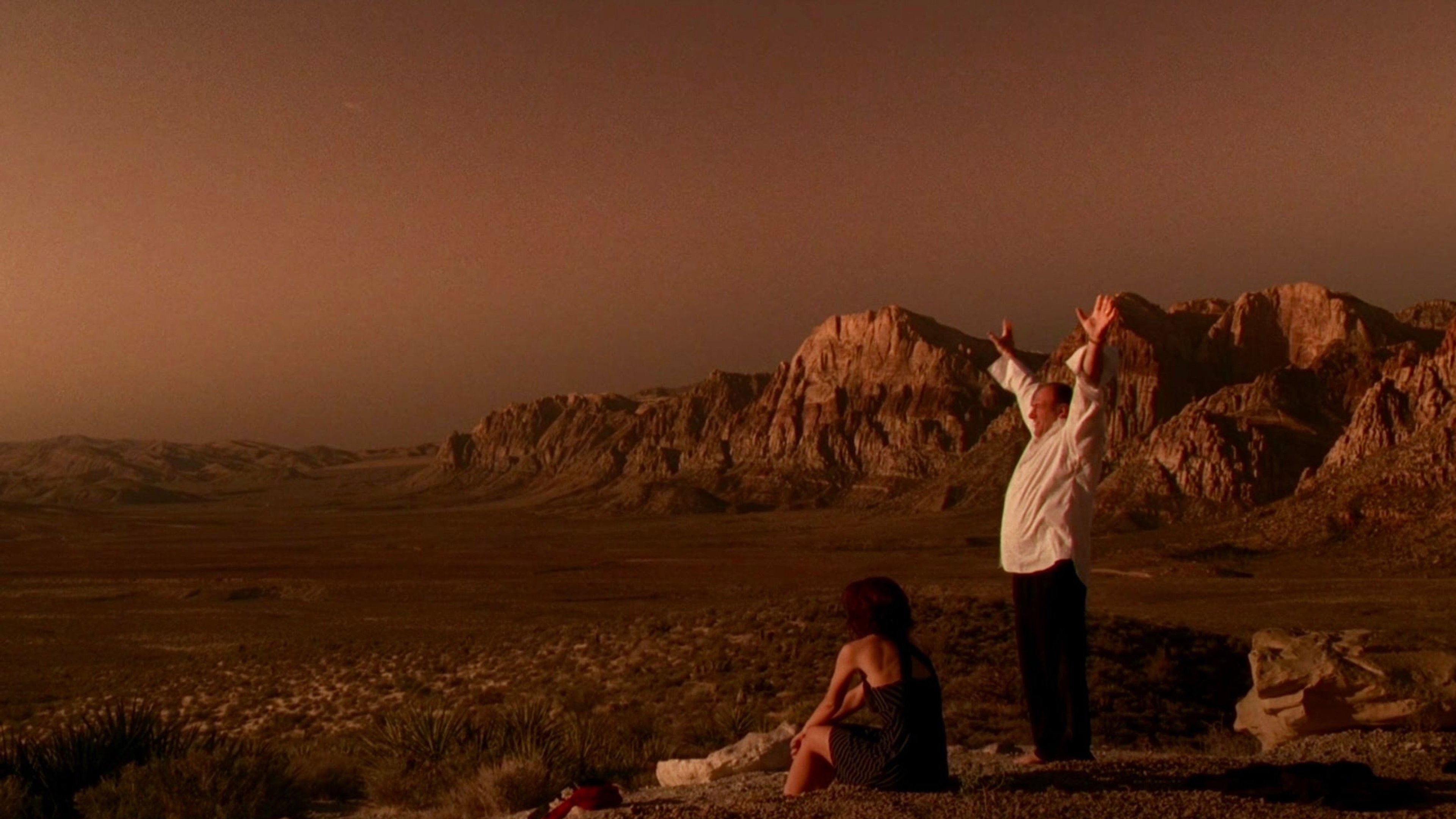
When The Sopranos returned for its final episodes in the spring of 2007, the cultural landscape had shifted. Television drama had matured, audience expectations had heightened, and David Chase's groundbreaking series found itself under the microscope of a viewing public desperate for closure. Season 6, Part II, comprising episodes thirteen through twenty-one, represents not merely a conclusion but a systematic deconstruction of everything that had come before. This final act emerges as a work of profound ambition, uneven execution, and ultimately, polarising legacy—a fittingly contradictory capstone to television's most influential drama.
From the opening moments of Soprano Home Movies, the narrative establishes a deceptive tranquillity. The lakeside retreat, with its rustic charm and familial bonding, initially suggests a pastoral interlude. Yet seasoned viewers recognise this as a feint; Chase's universe thrives on subverting hope. What begins as contemplative character study swiftly unravels into psychological horror, most notably in Bobby Baccalieri's tragic transformation from gentle underling to reluctant killer. The episode functions as a bridge between acts—a tranquil prelude to the carnage awaiting in the series' final episodes. Bobby's initiation into violence signals the collapse of Tony's inner circle; there are no redemptions here, only reckonings.
This pattern of dismantling continues throughout the arc. Stage 5 crystallises the tension of impending doom through Johnny Sack's terminal decline. Vincent Curatola's portrayal of the once-formidable boss, reduced to a skeletal figure confronting mortality with weary resignation, becomes one of the series' most poignant arcs. Yet the emotional weight of Johnny's storyline is partially undermined by jarring celebrity cameos—Sidney Pollack and Peter Bogdanovich—which feel incongruous rather than enhancing. This misstep reflects a broader tendency in the final season: a self-indulgent reliance on Hollywood luminaries that occasionally disrupts the narrative's immersive realism.
Perhaps the most devastating thematic thread running through Part II is the impossibility of breaking free from the Soprano legacy. The younger generation—AJ and Christopher Moltisanti—serve as tragic emblems of this futility. In Walk Like a Man, both characters are thrust into the spotlight, their struggles framed as a generational collapse. AJ's tentative steps toward adulthood—stable relationship, honest employment—are obliterated by abandonment and depression, culminating in a perverse "recovery" achieved only through participation in violence. Christopher's arc offers a requiem for the possibility of change; his sobriety and filmmaking success prove fragile shields against the gravitational pull of mob life. His gratuitous murder of J.T. Dolan, devoid of strategic value, underscores a disintegration that feels both thematically resonant and, at times, narratively strained.
These arcs occasionally veer into melodrama. AJ's transformation feels abrupt, leaning on shock value over psychological plausibility, while Christopher's murder of Dolan strains credulity, reducing a complex character to a plot device. Yet the episode has deeper purpose: The Sopranos refuses to offer solace, insisting that some bloodlines are curses, and some doors, once opened, cannot be closed.
As the series barrels toward its conclusion, mortality looms over its sprawling cast. Remember When trains its lens on two figures already marooned in irrelevance: Paulie "Walnuts" Gualtieri and Corrado "Junior" Soprano. Both men, relics of a bygone era, embody the show's central theme—the corrosive weight of the past. Paulie's existential precariousness, triggered by Larry Boy Barese's FBI cooperation, lays bare his dependence on a world that no longer values him. Junior's confinement to a mental institution, where he weaponises his dementia to resurrect his former persona, offers a grotesque metaphor for the mob's senescence: the once-cunning schemer reduced to a hollow figure, his mind and agency obliterated.
The episode's title proves a masterclass in thematic economy, evoking both wistfulness and irony. These men are prisoners of their histories, incapable of evolving beyond them. Yet Remember When is not without flaws. Tony's sudden financial ruin—a result of reckless sports betting—strains credulity, feeling like a lazy narrative shortcut to raise tension. Similarly, Doc Santoro's murder, while visceral, lacks the moral complexity of earlier hits, relying on real-world mafia lore rather than the show's signature psychological depth.
The Blue Comet, the penultimate episode, finally delivers the apocalyptic reckoning teased throughout the season. The conflict between the DiMeo and Lupertazzi families unfolds not in grand finale fashion but in a brutal, anticlimactic crescendo that obliterates Tony's professional and personal stability. Bobby Baccalieri's assassination, Silvio Dante's near-fatal injuries, and the indiscriminate violence that ensues capture the show's signature nihilism. Yet the episode falters in its handling of Dr. Melfi's abrupt termination of therapy with Tony. Reduced to a contrived, over-the-top confrontation, the scene devolves into melodrama, alienating viewers who had grown accustomed to their layered dynamic. Lorraine Bracco's public dissatisfaction with her character's exit is understandable; the episode's handling of the therapy arc feels rushed and tonally off-kilter.
Made in America, the series finale, epitomises the paradox of concluding a masterpiece. Praised by critics as a masterclass in ambiguity, it has also become one of the most divisive finales in television history. The episode's refusal to resolve central tensions or provide definitive answers—coupled with its abrupt tonal shifts and unresolved character arcs—left many feeling betrayed. Tony's resurgence feels tonally inconsistent with the show's earlier nihilism, while the infamous diner scene, with its cut-to-black conclusion, sparked decades of speculation rather than satisfying closure.
The finale's ambiguity, once seeming avant-garde, now feels like a narrative crutch, avoiding the difficult task of confronting the series' central themes head-on. Even fan theories—such as the widely accepted "Tony dies" interpretation—fail to satisfy because they rely on speculation rather than earned storytelling. The episode's brilliance lies in its refusal to provide answers, but its failure to acknowledge the series' thematic throughlines leaves it feeling hollow.
Viewed collectively, Season 6, Part II emerges as a work of profound ambition marred by creative exhaustion. The final episodes suffer from rushed pacing, contrived plot devices, and a reliance on spectacle over subtlety. Celebrity cameos disrupt narrative immersion; character arcs are truncated or resolved through convenient contrivances; and the relentless bleakness occasionally veers into self-parody.
Yet these flaws exist alongside the season's thematic rigour. The Sopranos refuses to pander, demanding audience engagement with its moral ambiguity and unresolved tensions. Its exploration of legacy, mortality, and the illusion of control resonates powerfully, even when execution falters. The political commentary—particularly regarding post-9/11 institutional corruption and the weaponisation of national security rhetoric—feels eerily prescient, elevating the narrative beyond mere mob drama.
One might say that Season 6, Part II is a programme of extraordinary ambition that occasionally stumbles under the weight of its own expectations. It is neither the flawless triumph some critics proclaimed nor the catastrophic disappointment some fans decried. Rather, it is a complex, contradictory, and ultimately human conclusion to a series that redefined television drama. Like Tony Soprano himself, it is flawed, fascinating, and forever resisting easy categorisation.
The final judgement, perhaps, is that The Sopranos ended as it lived: provocatively, imperfectly, and insistently on its own terms. For viewers willing to engage with its ambiguities and endure its bleakest moments, Part II offers a rich, rewarding, and deeply unsettling meditation on power, family, and the stories we tell ourselves to survive. For those seeking neat resolution, it remains a source of enduring frustration. That this divide persists nearly two decades later is, in itself, a testament to the series' enduring power to provoke, challenge, and confound. In the end, The Sopranos did not give us the ending we wanted; it gave us the ending we deserved—a mirror held up to our own capacity for confronting the unresolved. And that, perhaps, is the most Sopranos conclusion of all.
(NOTE: All reviews can be accesed via this link.)
Blog in Croatian https://draxblog.com
Blog in English https://draxreview.wordpress.com/
InLeo blog https://inleo.io/@drax.leo
BTC donations: 1EWxiMiP6iiG9rger3NuUSd6HByaxQWafG
ETH donations: 0xB305F144323b99e6f8b1d66f5D7DE78B498C32A7