What Is the Meaning of Namaste?
If you have ever taken a yoga class, visited India, or even just seen the word on a coffee mug at a bookstore, you have probably wondered at some point about Namaste meaning. It is one of those words that has traveled far from its roots and landed in places its original speakers probably never imagined. Gym studios in California, greeting cards, Instagram captions, and wellness retreats across the country have all adopted it in one way or another.
But here is the thing. Most people using the word have only a surface-level understanding of what it actually means. And once you dig into the real story behind it, you realize that Namaste carries a lot more weight than a simple hello or goodbye. It is a word rooted in ancient philosophy, cultural identity, and a very specific way of seeing other human beings.
Whether you are planning a trip to India, deepening your yoga practice, or just genuinely curious about where this word comes from, this breakdown will give you everything you need to understand it properly.
Literal Translation From Ancient Sanskrit Language
To understand what is the meaning of Namaste, you have to start with the language it comes from. Namaste is a Sanskrit word, and Sanskrit is one of the oldest languages in the world. It is the classical language of ancient India and the foundation of many South Asian languages spoken today. It is also the language in which many Hindu scriptures, philosophical texts, and Vedic hymns were originally written.
The word Namaste breaks down into three parts. "Nama" means bow. "As" means I. "Te" means you. Put it all together and the most direct translation is "I bow to you." Some translations expand it slightly to "I bow to the divine in you" or "the divine in me bows to the divine in you," which begins to hint at the deeper meaning behind the word.
It is worth knowing that Namaste is not the only form of this greeting. In some parts of India, you will hear "Namaskar," which comes from the same Sanskrit root but carries a slightly more formal tone. Both are used widely and both share the same core meaning. The word has been part of Indian linguistic and cultural tradition for thousands of years, long before it made its way into Western vocabulary.
Spiritual Message of Honoring Inner Light
This is where the word gets genuinely interesting. The literal translation is "I bow to you," but the spiritual interpretation goes much further than that. In Hindu philosophy, there is a belief that every living being carries a divine spark within them. This inner light, sometimes referred to as Atman, is considered the true self, the part of a person that is connected to something greater than individual identity.
When someone says Namaste with that understanding in mind, they are not just offering a polite greeting. They are acknowledging the presence of that divine quality in the person standing in front of them. They are saying, in effect, that the sacred part of me recognizes and respects the sacred part of you.
This is a significant idea. It means that Namaste, at its fullest, is an act of humility and recognition. It levels the ground between people because it treats every person as carrying something worth honoring. It does not matter what your job is, where you come from, or what you own. The greeting acknowledges something deeper than all of that.
For Americans who encounter this word in yoga spaces or wellness contexts, understanding this layer of meaning changes the whole experience of hearing or saying it. It is not just a trendy sign-off. It is a centuries-old way of seeing people with genuine respect.
Cultural Role in Indian Daily Life
So what is the meaning of Namaste in the context of everyday life in India? In practice, it functions as a standard greeting, similar to how Americans say hello, good morning, or goodbye. You will hear it when someone walks into a room, when they are introduced to someone new, when they are leaving, and sometimes just as a passing acknowledgment on the street.
It is used across age groups, though it carries a particular weight when spoken to elders or people in positions of respect. In many Indian households, children greet their parents and grandparents with Namaste as a sign of reverence. Teachers receive it from students. Religious figures receive it from those who come to seek guidance.
In formal settings, like business meetings or official gatherings, Namaste is often used instead of a handshake, particularly between people who are not well acquainted. This became especially relevant during the COVID-19 pandemic, when health experts around the world noted that the no-contact nature of the Namaste greeting made it a smart and dignified alternative to physical greetings.
The gesture and the word together form a complete cultural act. In India, Namaste is not just something you say. It is something you do with your whole body, and the combination of the word and the gesture carries the full meaning of the greeting.
Gesture Significance With Folded Hands
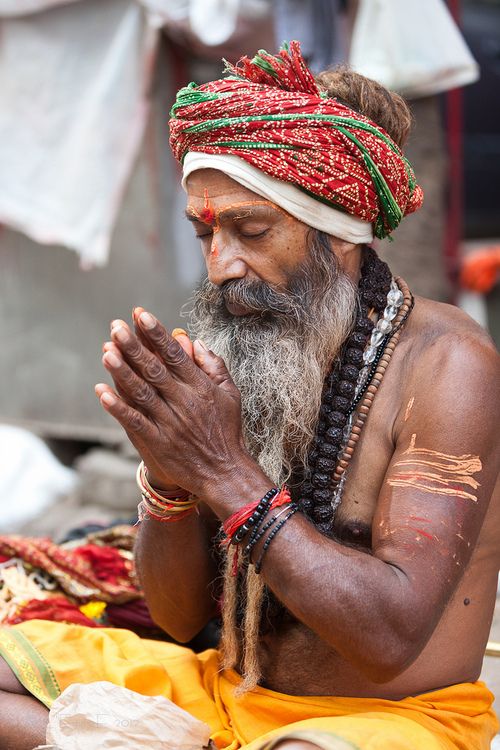
You cannot talk about what is the meaning of Namaste without talking about the hands. The greeting almost always comes with a specific physical gesture known as Anjali Mudra. You bring your palms together in front of your chest, fingers pointing upward, and bow your head slightly. In some more reverent contexts, the hands are raised closer to the forehead or even above the head.
This gesture has its own layers of meaning. In Hindu tradition, bringing the palms together symbolizes the meeting of two halves, the left and right, the giving and receiving, the self and the other. The heart center, where the hands rest during the gesture, is considered the seat of the soul in many Indian spiritual traditions. Pressing the palms together at the heart while bowing slightly is a physical expression of the same idea the word carries: I see the divine in you and I honor it.
The bowing of the head is also significant. Lowering your head is a universal gesture of humility and respect. Combined with the pressed palms, it creates a full-body greeting that communicates far more than words alone could.
For American travelers visiting India for the first time, learning this gesture and using it appropriately will go a long way. Locals appreciate when visitors make the effort to engage with the culture respectfully, and using Namaste with the proper gesture shows a level of awareness and courtesy that people notice.
Use in Religious and Secular Contexts
One of the more interesting things about Namaste is how comfortably it moves between religious and everyday secular settings. In religious contexts, it is used when entering temples, greeting priests, and during prayer and ritual. It is a way of showing reverence not just to other people but to deities and sacred spaces as well.
In secular settings, it functions as a straightforward social greeting with no particular religious weight attached to it. Most people using it in daily conversation in India are not consciously thinking about Sanskrit philosophy every time they say it. It is simply the natural way to greet someone, the same way Americans say "how are you" without necessarily expecting or wanting a detailed answer.
This dual life of the word is important for Americans to understand, especially those who encounter Namaste in yoga studios and wellness spaces. In those contexts, the word often carries more deliberate spiritual intention than it might in a casual street greeting in Mumbai. Neither use is wrong. The word is flexible enough to hold both, and that flexibility is part of what has made it travel so well across cultures.
What matters is that the person using it has some understanding of where it comes from. Using Namaste without any awareness of its background is not necessarily disrespectful, but understanding it does make the experience of using it more meaningful for everyone involved.
Pronunciation Tips for Non-Native Speakers
A lot of Americans who use the word Namaste are not entirely sure they are saying it correctly, and that is a fair concern. The good news is that the pronunciation is not as complicated as it might look on paper.
Here is a simple breakdown. Say "nah" as in the sound you make when you are about to say "nah, I am good." Then say "mah" like the first syllable of "mama." Then finish with "stay" exactly as you would say the English word stay. Put it together and you get "nah-mah-stay," with the emphasis landing gently on the last syllable.
The most common mistake American speakers make is over-emphasizing the first syllable or pronouncing the "a" sounds too short and clipped. In Sanskrit, vowel sounds tend to be open and held slightly longer than in English. So let the vowels breathe a little and you will be close to how it sounds when spoken naturally in India.
If you are planning to travel to India and want to use Namaste as a greeting, practicing it a few times before you go is worth the effort. Indians are generally warm and appreciative when visitors try to engage with the language and culture, even imperfectly. The attempt itself communicates respect.
Why Intention Matters When Saying Namaste
This brings us to probably the most important point when thinking about what is the meaning of Namaste. The word itself is only part of the equation. Intention is the other half.
In its original cultural and spiritual context, Namaste is not a performance. It is a genuine acknowledgment of another person's worth and inner life. When it is said with that awareness, even briefly, it carries real meaning. When it is said without any thought behind it, it becomes just another word, like saying "have a nice day" on autopilot while already looking at your phone.
This is not a criticism of how Namaste has been adopted in American culture. Language travels, words evolve, and that is not always a bad thing. But the people who get the most out of using Namaste, whether in a yoga class, on a trip to India, or anywhere else, are the ones who take a moment to connect with what they are actually saying.
You do not need to be Hindu or practice yoga or have visited India to use the word meaningfully. You just need to approach it with some awareness of its roots and a genuine intention to honor the person in front of you. When you do that, Namaste becomes something worth saying.
https://www.travelosei.com/hello-india/namaste-meaning
FAQs
- What is the meaning of Namaste in its simplest form?
At its simplest, Namaste means "I bow to you." At a deeper level, it means "the divine in me recognizes and honors the divine in you." Both meanings are valid depending on the context in which the word is used. - Is it okay for Americans to say Namaste?
Yes, using Namaste respectfully and with some understanding of its background is perfectly appropriate. What matters most is that you are not using it dismissively or purely for aesthetic reasons without any awareness of where it comes from. - Is Namaste a religious word or a cultural greeting?
It is both. Namaste has roots in Hindu philosophy and is used in religious settings, but it is also a standard everyday greeting across India with no specific religious requirement attached to it. - How do you correctly pronounce Namaste?
The correct pronunciation is "nah-mah-stay," with open vowel sounds and a gentle emphasis on the final syllable. Avoid clipping the vowels too short, which is the most common mistake among English speakers. - Why do yoga teachers say Namaste at the end of class?
Yoga teachers use Namaste at the end of class as a way of honoring the students and the shared experience of the practice. It comes from the word's spiritual meaning of recognizing the inner light in one another, which fits naturally into the closing of a yoga session.