Lady Without an Ermine
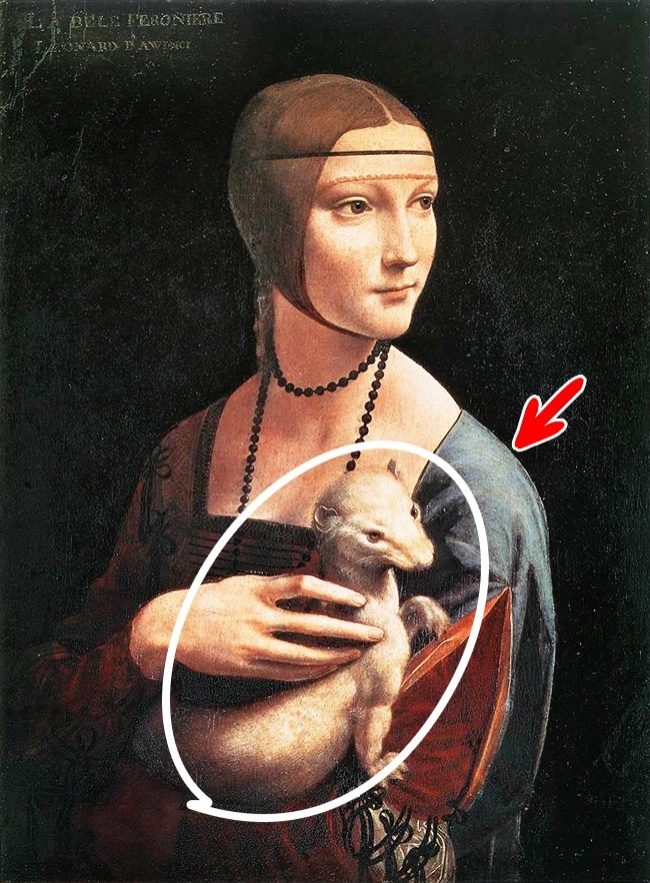
In the original version of the famous painting Lady With an Ermine, there was no ermine. Leonardo da Vinci drew the gray animal and the blue cloak later. For the final version, he even made the animal larger and colored it white. It is assumed that the lady in the picture is the mistress of Duke Ludovico Sforza, and he himself is depicted as an ermine. This animal was the symbol of Sforza’s house.
Life and Death From Different Angles
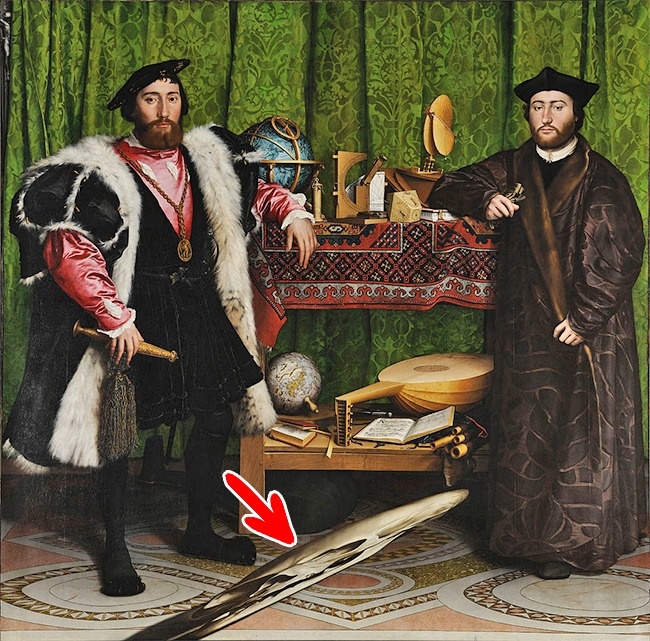
The strange object placed in the foreground of The Ambassadors is a skull. Hans Holbein the Younger did a trick: when we look straight at the painting, we see a person immersed in a routine. Death now is almost an illusion not worth any attention. But at the "right" angle, death turns into the only reality, a reality that distorts the life we know.
A Face in a Jug
Bacchus, one of the most famous paintings by Caravaggio, looks rather ordinary, but a group of experts managed to see something peculiar inside the wine jug: a miniature self-portrait of the artist.
A Fig Sign to the Pope
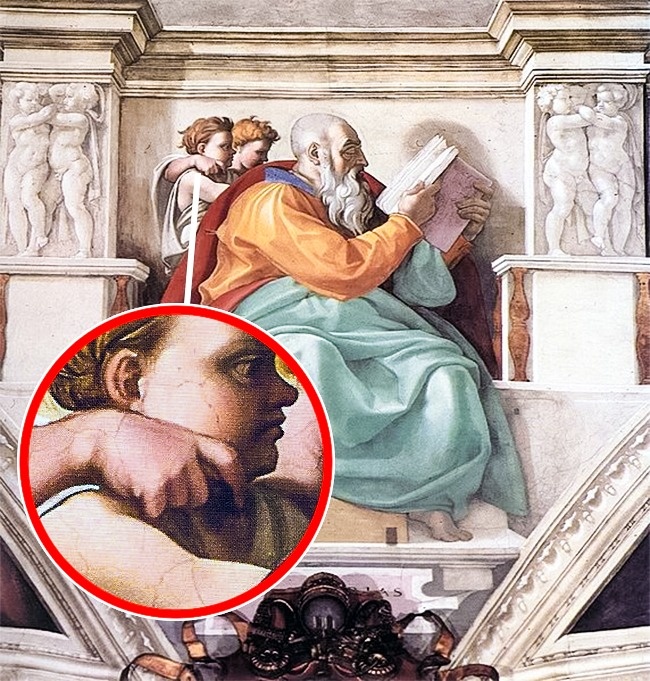
The conflict between Pope Julius II and Michelangelo led to the fact that one of the angels near Prophet Zechariah in the Sistine Chapel mural (the prophet was based on Julius II), folded his fingers in a fig sign. This gesture was thought to be indecent, so people got the hint.
Van Gogh’s Turbulence
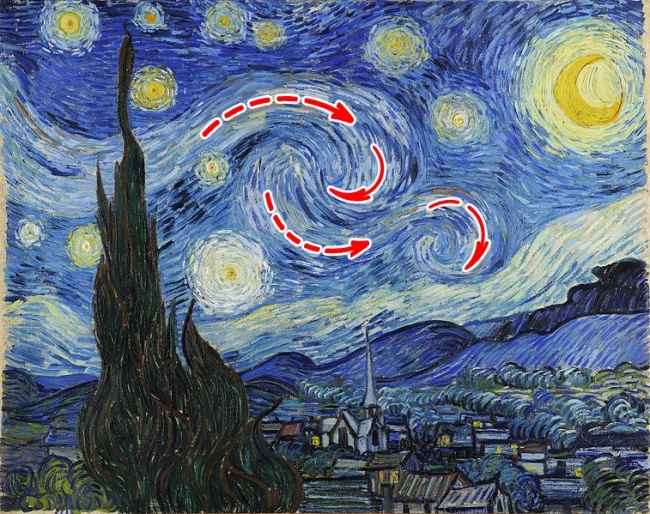
In 2004, scientists observed vortices of clouds, dust, and gas around a distant star. Interestingly, this phenomenon reminded them of The Starry Night by the Dutchman. After studying the painting, the researchers came to a conclusion: it can be argued that Van Gogh captured one of the most difficult concepts in physics and mathematics — turbulence — on canvas.
Persephone and Hades
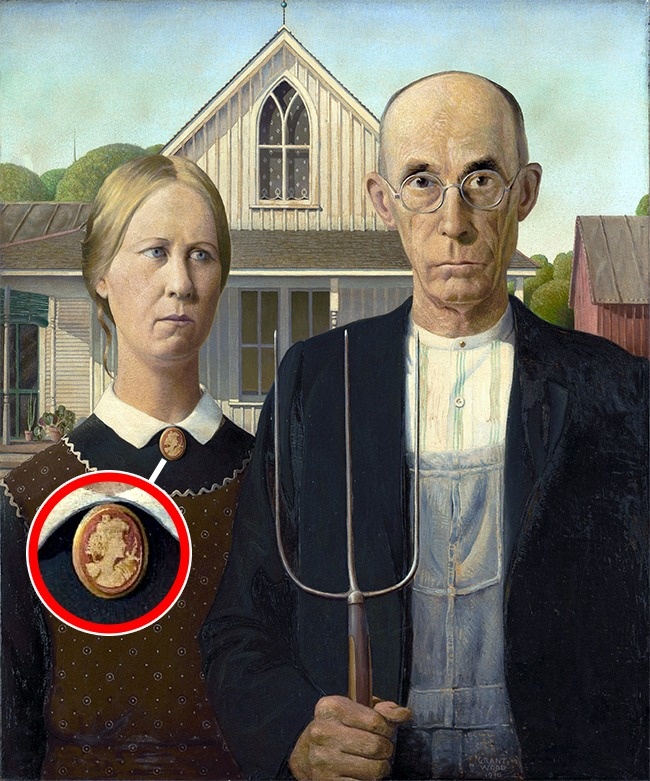
Take a look at this brooch: it shows Persephone, the Greek goddess of harvest and queen of the underworld. According to legend, Persephone was kidnapped by Hades, and the pitchfork in the hands of the farmer is just like Hades’s trident. Grant Wood has scattered many details around: for example, the stitching on the man’s denim overall, the stripes on his shirt, the window frames, and even the plant in the background mimic the shape of the pitchfork.
Male or Female?
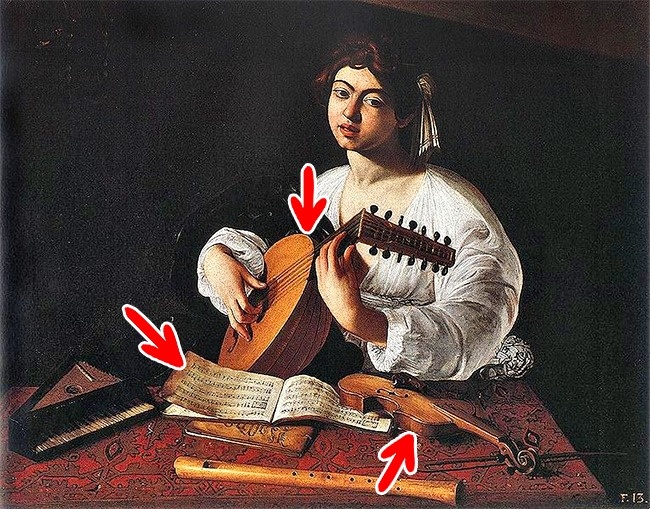
For a long time, the person in this painting by Caravaggio was considered a woman. Only at the beginning of the 20th century did art critics see a young man in the lute player. A few signs indicate this: the notes are the bass part of Jacques Arcadelt’s "You know I love you and adore you," as well as the lute and the violin, considered male instruments in Caravaggio’s time.
The da Vinci Code
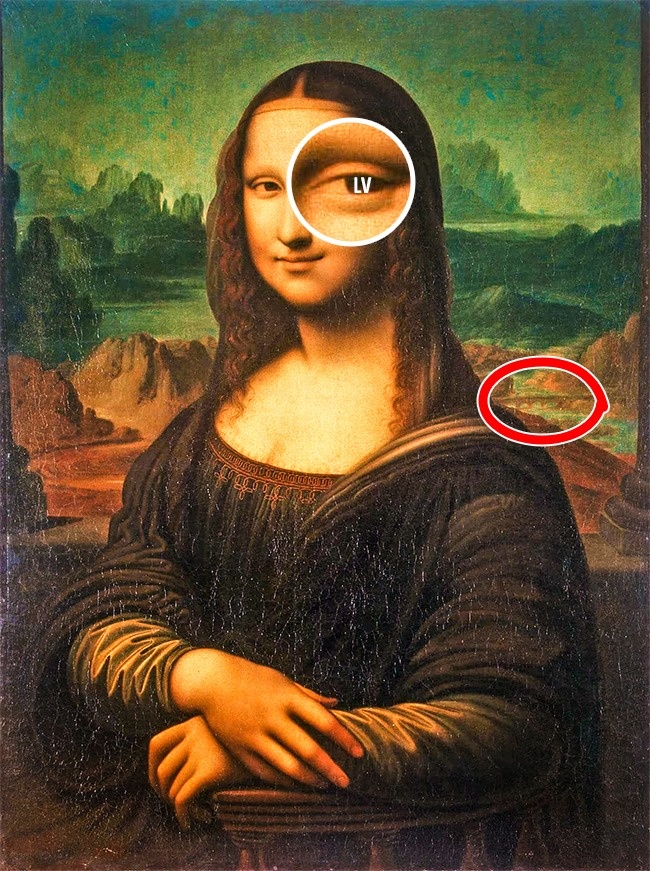
Members of Italy’s National Committee for Cultural Heritage found the letters "LV" in the right eye of the Mona Lisa. They could indicate the name of the artist, Leonardo da Vinci. Another find is symbols in the bridge, appearing to be the number 72. It is believed that the bridge (destroyed in 1472) behind the woman’s left shoulder is in the Italian city of Bobbio. Perhaps this way Leonardo wanted to hint at the setting.
The Whale That Wasn’t
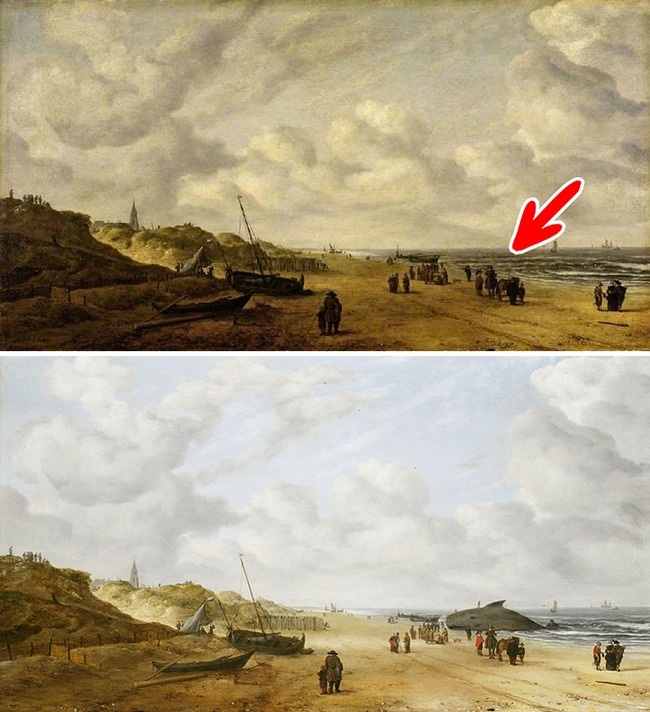
This very modest landscape has concealed the truth for 150 years. A restorer, cleaning the surface of the picture, found on it a painted whale, washed up on the shore. The artist Hendrick van Anthonissen decided to paint over it, thinking a work without a dead animal would be more popular with the audience.









What a great post. You made art 'interesting' in a "cluedo" way.
Thanks bro