How to Find Keywords That Trigger Perplexity Citations
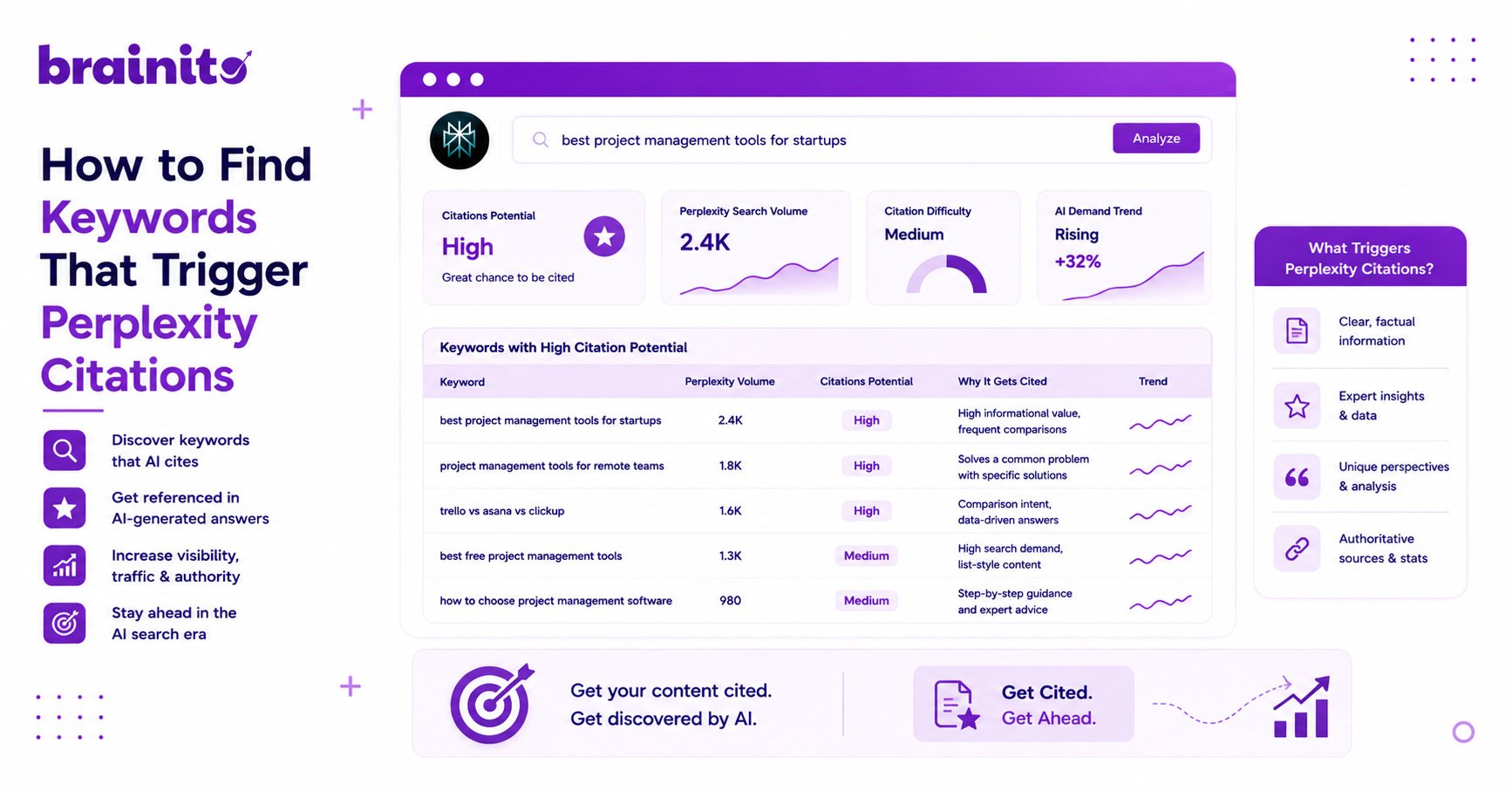
The way people find information on the internet is undergoing a massive revolution. For over two decades, search engine optimization meant optimizing your website to rank in the standard list of blue links on Google. Today, millions of users are bypassing traditional search engines entirely. Instead of scrolling through pages of search results, they are using conversational answer engines like Perplexity to get immediate, synthesized answers to their questions.
Perplexity acts as an automated researcher. When a user types a query, the platform searches the web in real time, reads the most relevant pages, and compiles a comprehensive answer. Crucially, the platform includes small, clickable citation numbers at the end of its sentences, linking directly back to the source websites. If your website is cited, you receive highly qualified, deeply engaged traffic. Here is exactly how to find the keywords that trigger these valuable Perplexity citations.
Focus on Informational and Complex Queries
Perplexity is not used for simple, one word searches. If a user just wants to know the weather or the price of a stock, they will likely use Google. Users turn to Perplexity when they have complex, multi part questions that require synthesis and explanation.
Your keyword research must focus on conversational, informational queries. Look for keywords that start with words like why, how, what, or compare. For example, instead of targeting a keyword like "CRM software," you should target a conversational query like "what is the best CRM software for a small real estate team that integrates with Gmail." These highly specific, long tail questions are exactly what users type into Perplexity, and they are the primary queries that trigger rich citations.
Identify the Existing Sources the AI Trusts
Perplexity does not pull information from random, unverified web pages. The engine is programmed to trust websites that demonstrate high authority, accuracy, and topical depth. Before you write content, you must identify which sources Perplexity is already citing for your target keywords.
Open Perplexity and type in a few conversational questions related to your niche. Look at the citations at the top of the generated answer. Are they pulling data from massive forums like Reddit or Quora? Are they citing official government databases, academic papers, or industry whitepapers? Knowing which platforms the AI trusts allows you to understand the level of depth and formatting required to win a citation. If the AI is citing a Reddit thread, you can easily outrank it by publishing a structured, authoritative article on your own website.
Structure Content for the AI Parser
To get cited by Perplexity, your content must be incredibly easy for an artificial intelligence model to read and extract. When Perplexity crawls your site during a real time search, it only has a fraction of a second to analyze your text and determine if it answers the user's question.
You must structure your articles logically. Use clear, descriptive headings that match the exact questions your users are asking. Directly below the heading, provide a concise, direct answer in one or two sentences. This is called the bottom line up front method. Once you have answered the question directly, you can use the rest of the section to provide supporting data, bulleted lists, and detailed examples. This clean formatting makes it incredibly simple for the AI crawler to grab your text, summarize it, and apply a citation link to your page.
Prioritize Factual Accuracy and Original Data
AI engines are highly sensitive to factual contradictions. If your article contains outdated statistics or unverified claims that contradict the rest of the web, Perplexity's retrieval system will flag your content as unreliable and refuse to cite it.
You should always support your claims with verified data, expert quotes, and original research. If you can publish unique, proprietary statistics about your industry, you will become an irresistible source for the AI. When other websites reference your data, and Perplexity crawls those references, your homepage authority will grow exponentially, making you a default recommendation in your niche.
The Importance of Fast Page Loading Speed
Because Perplexity retrieves web content in real time to formulate its answers, it cannot afford to wait for slow websites to load. If your page takes more than two seconds to load, the Perplexity crawler will abandon the connection and move on to a faster alternative. You must optimize your website's technical performance, compress your images, and utilize a fast hosting server to ensure the AI bots can access your content instantly.
Finding conversational keywords and tracking which questions trigger AI citations manually can be incredibly difficult. To automate your workflow and find the exact search terms that will get your brand recommended inside these revolutionary platforms, you should use the Brainito Perplexity keyword research tool. This tool analyzes semantic trends and conversational search volume, giving you the exact blueprint required to dominate the age of AI search.
Written by:
Brainito Intelligence
www.brainito.com